


FW
Louis Vuitton holds global travelling exhibition in Wuhan
Luxury brand Louis Vuitton Malletier, a fashion house and luxury goods brand of LVMH, the largest luxury group globally, has chosen Wuhan as the first stop for its new global traveling exhibition.
The exhibition, which opened on October 31 will continue till December 6. The show will explore the 160-year history of the brand - from its early days as a trunk maker in Paris to a brand that is synonymous with luxury.
Boasting a population of 11 million, the capital of Hubei province, Wuhan, has returned to normality, with the residents treating one of the world's strictest lockdowns as a distant memory and getting back to the pre-pandemic lifestyle. It has paved the way for brands like LV to expand and leverage this normality while the world is still grappling with the shocks of the second wave of coronavirus.
China is the largest market for luxury goods globally and important too for brands like Louis Vuitton. The brand held a menswear show in Shanghai in early August.
Lauren Guthrie to be the new Vice President of VF Corporation
Lauren Guthrie has been appointed as new Vice President-Global Inclusion and Diversity, VF Corporation, reports Fashion Network
In the role, Guthrie will lead VF’s global I&D efforts and directing, developing and operationalizing the company’s strategy, with a focus on transformational change, the company said.
Guthrie, who has worked with VF and its subsidiary The North Face for over five years, previously served as VF's vice president, Council to Advance Racial Equity (CARE) and inclusion and diversity for the Americas region. In the role, she developed and activated the CARE program to enhance VF’s external racial equity initiatives while also creating more opportunities to support the BIPOC workforce throughout VF and its brands.
Prior to this, Guthrie served as The North Face's vice president of regional merchandising, Americas. Prior to her time with VF, she also served as senior director and general manager of Old Navy's performance active category; director of global merchandising of women's running footwear for Nike; and as senior merchandiser for Levi's men's tops and bottoms, North America, among other roles.
Fashion retailers to simplify raw material supply chains: GlobalData
As per data analytics firm GlobalData, fashion retailers are planning to simplify their raw material supply chains and implement design and manufacturing processes that will allow apparel and footwear to be more easily recycled.
Among the latest slew of recyclable fashion innovations, German sportswear maker Adidas’ new UltraBoost DNA Loop, a piece of performance footwear developed as part the company’s ongoing “Made to be Remade” project. The shoe is manufactured using a single material type and without glue, meaning that it can be ground down, melted and made into a new shoe.
Elsewhere in Europe, Swedish fast fashion giant H&M has recently launched the first retail model of a garment-to-garment recycling system, entitled Loop, at a store in its home country. The system, which allows store visitors to see their old clothes being transformed into fibers and yarns that will be used to produce new knitwear pieces, was developed by the Hong Kong Research Institute of Textiles and Apparel.
Other retailers are betting on education, with PVH Corp, the New York-based parent company of Calvin Klein and Tommy Hilfiger, highlighting its recently launched “Circularity 101” training program for employees as a key achievement in its latest corporate responsibility report.
London-based e-commerce retailer Asos, on the other hand, has introduced an educational program for its designers in collaboration with the Centre for Sustainable Fashion at the London College of Fashion.
Developed after more than 200 members of the e-tailer’s design team underwent the training, Asos’ debut circular fashion collection was made with a number of core circularity principles in mind. These include a mono-material pledge and a commitment to designing products which can be easily taken apart, both of which facilitate the recycling of pieces once their owners are finished with them.
Hugo Boss registers €15 million operating profit in Q3
After reporting losses in the second quarter, German fashion giant Hugo Boss recorded €15 million operating profit in the third quarter. However, the brand’s quarterly revenue fell by 24 per cent on a currency-adjusted basis to €533 million, says Fashion Network.
The company’s digital and Chinese focus is perfectly understandable given that sales in mainland China rose 27 per cent during the quarter and online sales saw a massive leap of 66 per cent as the company opened 24 more markets to e-tail sales between June and August.
And while physical stores remained challenged, the company was upbeat. With the vast majority of its own stores back in operation, the group’s own retail business recorded a considerably more robust performance compared to the first half of the year, with own retail revenues down by only 20 per cent, currency-adjusted.
However, while local demand in key markets picked up noticeably, sales to touristsdropped by 21 per cent in Europe despite encouraging signs of demand bouncing back in key markets such as the UK and France.
H&M launches Jeans Redesign project
Inspired by natural simplicity, H&M has launched under H&M Jeans Redesign project, to offer men’s denims in select stores worldwide and online at hm.com. The collection comprises three jean styles, two jackets, an overshirt, tote bag and a bucket hat – all made from denim with a modern workwear vibe – in a color palette of light grey, washed black, mid-blues and deep indigo.
The collection rethinks the design and production of denim products, furthering the brand’s aim of becoming fully circular in all our processes. With workwear silhouettes and details, the three jean styles in the Jeans Redesign collection are slim and straight, regular straight and a more relaxed shape, while the workwear jacket has three patch pockets to the front, the trucker jacket has a zip fastening and the overshirt has two patch pockets over the chest.
As a Strategic Partner of the Ellen MacArthur Foundation, H&M is working together with other companies, governments and cities, academic institutions, emerging innovators, small and medium sized enterprises and more to accelerate the transition to a circular economy. The Jeans Redesign project celebrates its denim expertise and designs pieces that are durable, timeless and easy to repair, while also aging with a beautiful patina.
CinteTechtextil China to be held annually from 2021
From 2021, CinteTechtextil China will be held annually rather than biennially. Following on from a successful 14th edition in September this year, Asia’s leading event for the entire technical textiles and nonwovens industry will be held from June 13–15, 2021 at the National Exhibition and Convention Center in Shanghai. This will be the first instance that CinteTechtextil will take place at this fairground. The recently completed 2020 edition attracted 409 exhibitors and 15,326 visits at the Shanghai New International Expo Centre.
CinteTechtextil China’s product categories cover 12 application areas, which comprehensively span the full range of potential uses of modern textile technologies. These categories also span the entire industry, from upstream equipment and raw materials providers to finished fabrics, chemicals and other solutions. This full coverage of product groups and application areas ensures the fair is an effective business platform for the entire industry.
The 2021 fair will be held concurrently with the textile machinery fair ITMA ASIA + CITME, which takes place from 12 – 16 June. CinteTechtextil China is organized by Messe Frankfurt (HK) ; the Sub-Council of Textile Industry, CCPIT; and the China Nonwovens & Industrial Textiles Association (CNITA).
Bolt Threads opens new office in Netherlands
US-based biotech company Bolt Threads has opened an office in Arnhem, the Netherlands, to support its supply chain created to scale its Mylo material, a sustainable leather alternative made from mycelium.
Bolt specializes in creating environmentally friendly and sustainable materials for the apparel industry and other consumer products. The Netherlands emerged as Bolt’s clear choice for expanding in Europe due to the country’s position as a leader in sustainability.
Mylo, built from the mycelium cells of fungi, has made a wave as an innovative development in the consumer biomaterials industry. The company has well-known partners in the apparel and fashion sector, including Stella McCartney.
This year, Bolt announced a new consortium through partnerships with Adidas, Lululemon, Kering and McCartney to invest in the development and production of Mylo-made products. Products from this unprecedented Mylo consortium will be available for purchase starting in 2021.
New orders make Bangladesh RMG immune to second COVID-19 wave
 Bangladesh readymade garment export to the European Union is likely to remain unaffected even if the second COVID-19 wave takes a more serious turn, reports The Business Standard. Work orders for the next spring/summer season in the country are pouring in with enquiries for next winter season also increasing. Apparel makers have shipped their Christmas and winter orders, to be sold from mid-November, says BGMEA.
Experts demand quick release of raw materials
To continue positive developments, Bangladeshi government and entrepreneurs need to adopt new strategies, says, Sayema Haque Bidisha, Research Director-South Asian Network, Economic Modelling (Sanem). Moreover apparel businesses need to enhance their manufacturing efficiency and curtail lead times to 30-45 days. And the government should ensure a quick release of imported raw materials for RMG manufacturers, she adds. It should also persuade apparel buyers and retailers against cancelling orders or stopping new placements till next January at least.
Partial lockdowns to curb second COVID-19 wave
As new COVID-19 cases continue to surge, governments across Europe are introducing new measures to deal with it. France has introduced a night-time curfew while Spain, the Netherlands and the Republic of Ireland have gone for partial local lockdowns. Germany, Italy, Denmark, Belgium, Portugal and Greece have also introduced measures to control the second wave. The only country that has not introduced any lockdown measures is Sweden. Yet, many of its citizens are voluntarily maintaining social distancing and have started working from home where possible.
Economic constraints are forcing countries to opt for partial lockdowns instead of complete shutdown, opines Ashikur Rahman Tuhin, Former Director, BGMEA. Shutting down of economic activities during the first wave hardly resulted in any positive outcome. Hence, WHO has recommended continuance of economic activities with compliance to its health safety protocols, says Fahmida Khatun, Executive Director, Center for Policy Dialogue.
No impact on new orders
The second COVID-19 wave has not impacted orders from European buyers as their online sales have increased significantly and physical shops remain open. Buyers continue to place new orders with Bangladeshi suppliers as they get more profits from suppliers.
Fazlee Shamim Ehsan, CEO, Fatullah Apparels said, Bangladeshi apparel exporters have been receiving new orders for the next summer season though the quantity of these orders has reduced. However, he calls this more a seasonal issue than the pandemic effect.
India’s cotton production to touch 29.3 billion in 2020-21: USDA
 A ‘Cotton and Products Update’ report by USDA estimates heavy rains in Central and Southern India will impact the quality of the cotton yield this year. India’s cotton production is expected to reach 29.3 million 480-lb bales in marketing year (MY) 2020/21. The First advance estimates for 2020-21, published by the Ministry of Agriculture and Farmers Welfare’s (MOAFW), estimate national average yields to be around 491 kg per hectare.
On September 21, the Committee on Cotton Production and Consumption (COCPC), published revised estimates for MY 2018/19 and MY 2019/20. And as per revised estimates, cotton production in MY 2019/20 is estimated at 27.9 million 480 lb. bales. As of October 22, new crop arrivals of long staple variety cotton in Punjab, Haryana and Rajasthan reached 1.5 million 170 kg bales. The Cotton Corporation of India is procuring supplies in these states at 5-6 percent higher prices than current market rates. It has commenced procurement under the MSP program from the northern Indian states of Punjab, Haryana, and Rajasthan.
Cotton consumption to reach 22.7 million bales
Under the MSP program, the Indian government aims to procure 12.5 million 170-kg bales of seed cotton in MY 2020-21. Cotton consumption in MY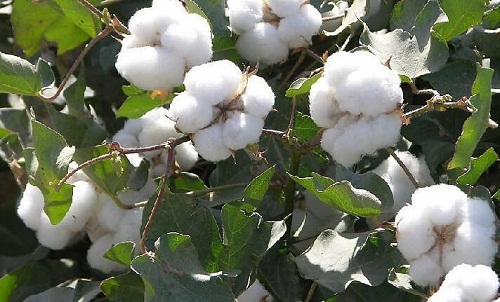 2020/21 is likely to reach around 22.7 million 480-lb bales, claims USDA. In October, cotton yarn prices increased by 2.3 per cent, while fiber prices rose by eight per cent. Though mill buying and mill consumption has improved due to new export orders, domestic retail demand remains subdued. For August 2020 IIP estimates textile manufacturing to have declined by 16 per cent as compared to August 2019. Cumulatively, textile manufacturing declined by 49 per cent during fiscal year 2020-21 (April/August) as compared to 2019-20.
Raw cotton exports increase 54 per cent
Highest cotton exports since MY 2011-12 were recorded in the months of August and September 2020. As per FAS analysis, exports of raw cotton increased by 54 per cent in September as against the previous month. Top export destinations were Bangladesh, China and Vietnam. Of these, shipments to Bangladesh constituted 40 per cent of the total volume. Cotton fabrics export grew 25 per cent in volume terms in September. Top destinations were: Australia, Korea, Sri Lanka and the United States.
Cotton yarn/fabrics exports increase 15 per cent
Ministry of Commerce estimates, exports of cotton yarn/fabrics/made-ups, handloom products to have increased by 15 per cent in value in September 2020 as compared to the same period last year. However, the cumulative value of these exports between April-September declined 20 per cent, compared to same period last year. Similarly, exports of readymade garments increased 10 per cent in September. The cumulative value of exports from April – August fell by 40 per cent compared to the same period last year.
An opportunity to tap the Australian market
Freight rates for October have risen sharply from $300 to $800, particularly for Middle Eastern, European, North and South American ports. Availability of containers has worsened even at major ports like Mundra and Nhava Sheva (Mumbai), while the situation at inland container depots is worse.
The USDA report says, United States, Egypt, and Mali are top cotton suppliers in 2020. Almost 57 per cent of their cotton has been shipped to Tuticorin port for mills in Southern India. Meanwhile Chinese mills have either lowered or ended their use of Australian cotton, presenting India with an opportunity to increase its share in the Australian cotton market.
Italian textile machinery exports decline in Q3 2020: ACIMIT
The Association of Italian Textile Machinery Manufacturers (ACIMIT), has announced figures for the period ranging from July to September 2020.
Exports of Italian textile machinery declined in Q3 2020, although domestic orders increased by 20 per cent, signaling that Italian textile manufacturers are getting back to business.
The index of orders intake for textile machinery, as compiled by the Association of Italian Textile Machinery Manufacturers (ACIMIT), for the period ranging from July to September 2020, decreased by 26% compared to the same period in 2019. The index value was attested at 72.4 points (2015 basis = 100).
Orders on foreign markets declined by 31 per cent, with an absolute index value of 68.2 points. However, an increase of 20 per cent was recorded domestically compared to the third quarter of 2019, with an absolute index value of 112.6 points.
ACIMIT represents an industrial sector that comprises roughly 300 manufacturers (employing around 12,000 people), which produce machinery for an overall worth of around 2.3 billion euros, of which 82% are exported. Creativity, sustainable technology, reliability and quality are the hallmarks that have made Italian textile machinery worldwide leaders.











