FW
Lenzing to build two new facilities to reduce carbon footprint
Lenzing is planning to build two new facilities: a pulp plant in Brazil, which will export green energy to the local power grid; and a state-of-the-art, carbon-neutral lyocell fiber production site in Thailand. The company says the factories will be the major contributors to driving down its carbon footprint in the coming 18 months.
In December, Austria-based specialty fiber and textile producer Lenzing Group received a Double A rating for its corporate sustainability efforts in the areas of global climate and forests stewardship, as part of CDP’s 2020 Climate Change Report.
Lenzing is the only first-time discloser to earn a double ‘A’ score on CDP’s Climate A List, earning it a spot in the top 2.8 percent of disclosing companies.
While last year was the first year that Lenzing shared data with CDP, it’s been innovating on the climate front for some time. In 2018, Lenzing became the first wood-based fiber manufacturer to join the UN Fashion Industry Charter for Climate Action and adopt science-based targets; and the company recently pledged to halve specific carbon emissions by 2030 and to be fully carbon neutral by 2050.
In 2020, Lenzing launched TextileGenesis™ — a blockchain-enabled platform that will ensure complete traceability for all TENCEL-branded fibers in finished garments – helping the textile industry's journey toward complete transparency. The company has also completed the implementation of CO2-reducing energy solutions at two of its production sites.
CDP’s A grade for Lenzing’s forest stewardship places it in the company of only 15 other companies to earn the recognition. As part of its “Naturally Positive” sustainability strategy, Lenzing launched a reforestation project in Albania in 2020 — which will see 20 hectares of degenerated land recultivated with forest and fruit trees, in cooperation with the local population and various NGOs. So far, approximately 3,600 fruit, deciduous and conifer trees have been planted in an area affected by erosion and flooding.
Member countries unlikely to benefit from RCEP
The Regional Cooperation Economic Partnership (RCEP) is unlikely to bring immediate significant benefits for its developing member countries in terms of flow of goods and services or major infrastructure investments, analysts and economists said.
The pact needs to be ratified by all countries, which may take time, and has different levels of tariff reductions for each country and product, the experts told the Reuters Global Markets Forum.
That means labour-intensive countries may get more imports than exports, particularly during the pandemic, over the short-term.
The RCEP is seen as a China-backed alternative to the U.S.-led Comprehensive and Progressive Agreement for Trans-Pacific Partnership (CPTPP).
The pact has no provisions to improve labour rights in member countries, which has been exacerbated by the COVID-19 pandemic to justify reductions in formal wages and conditions, said Kate Lappin, Asia Pacific regional secretary at Public Services International. " Lappin said.
Lappin said she expected RCEP to benefit countries with developed industrial policies - namely China, Japan, Korea and Australia, along with New Zealand in terms of agricultural products - that support growth of higher value industries.
Cifra creates new range of anti-viral garments
Drawing on technological expertise developed in the sportswear world Cifra has created Warp Mask, an exclusive generation of anti-viral garments and accessories made using Q-SKIN powered by AMNI VIRUS-BAC OFF. As per a Knitting Industry report,the innovative polyamide yarn, developed in the Solvay Group’s research laboratories, is distributed and produced in Europe by Fulgar, which for several seasons has worked with Cifra to create cutting edge clothing solutions.
Q-SKIN powered by AMNI VIRUS-BAC OFF is effective against bacterial growth and virus transmission, thanks to the antiviral and antibacterial agent permanently incorporated into its polymer matrix, Fulgar explains. Electrical affinity with the proteins in the external structure of the virus means that this agent prevents fabrics becoming a host surface for virus and bacteria, thus reducing the risk of contamination, it adds. The yarn’s antiviral properties have been tested by an independent laboratory in line with the international textile protocols set out in the ISO 18184 standard for the determination of antiviral activity of textile products, Fulgar says.
In fact, the antiviral and antibacterial properties of Q-SKIN polyamide powered by AMNI VIRUS-BAC OFF are permanent, so garments including this yarn provide long-lasting benefits that remain unaltered over time, unlike clothing given dye treatments whose effect is limited by the number of washes the items have undergone, says the Castel Goffredo based fibre producer.
Brands support Circular Fashion initiative in Bangladesh
Major fashion brands, including H&M, M&S and C&A, are supporting the Circular Fashion Initiative in Bangladesh that aims to use more recycled materials in clothing production and significantly cut planet-heating emissions from manufacturing by 2030.
As per Fashion Network, the Circular Fashion Partnership, brings together more than 30 international brands, Bangladeshi recycling firms and garment manufacturers in a push to reuse textile waste from clothing factories to create new products.
If successful, the initiative could be replicated in other countries, such as Indonesia and Vietnam, and help cut the broader fashion industry’s emissions, said the Global Fashion Agenda (GFA), a nonprofit body that is leading the new scheme.
In 2018, the sector’s greenhouse gas (GHG) emissions were just over 2 billion tonnes, a figure that needs to be halved by 2030, to be in line with global climate goals, said the GFA.The partnership would cut carbon emissions from clothing production and demand for raw materials, which include fossil fuels, by slimming down the amount of waste and increasing the use of recycled materials over virgin materials, she noted.
Under the 2015 Paris climate accord, nearly 200 countries agreed to slash greenhouse gas emissions to net-zero by mid-century and limit global average temperature rise to “well below” 2 degrees Celsius above preindustrial times.
China’s Challenge Fashion’s new SEZ will modernize Pakistan’s textile sector
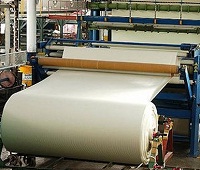 Already an exporter of $45 million textile products to Pakistan annually, Chinese private undertaking Challenge Fashion now aims to set up a Special Economic Zone in Pakistan. As per a Pakistan Today Profit report, Challenge has many global clothing and accessories brands like adidas, Icebreaker, Polartec, The North Face, Smartwool, Uniqlo, and Reebok as customers. One of the most admired and appreciated apparel producers of China, the group deals in outdoor and sports apparel and has been involved in the technical circular knit business for nearly two decades.
Eyeing $1billion exports in 3 years
Known as the one of the top three innovative textile companies in China, Challenge Fashion has a very creative product line and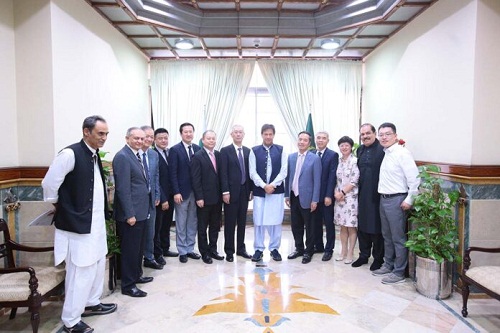 offers some of the most sustainable products in the textile industry. The group plans to invest $150 million in Pakistan over the next three years. This will help to not only create 20,000 jobs but also increase its exports to $1billion over the next five years. This investment will also make Pakistan one of the most preferred FDI destinations and encourage others to invest in it.
Challenge aims to set up this SEZ in the vicinity of Lahore. Like most SEZs, this SEZ will also help modernize the Pakistani textile industry besides increasing its foreign investments and offering a better balance of payments. It will also help urbanize areas surrounding the SEZ.
Fiscal benefits for Pakistan’s SEZs
Pakistan has various industrial areas offering variety of benefits. Its Punjab district has 26 industrial estates, while Sindh has 30, Baluchistan has seven and Khyber Pakhtunkhwa has 12. Though some of these estates, located in larger cities have been successful, others located in remote areas have failed to stimulate economic growth as they lack skilled labor and basic facilities.
Some of prominent SEZs include Sialkot, known for its sports goods and surgical instruments, Faisalabad and Gujranwala. These SEZs now plan to switch to another model either under the Federal or Provincial Governments or in collaboration with the private sector. They enjoy several fiscal benefits like a one-time exemption from custom duties and taxes for all capital goods imported into Pakistan for their development, operation and maintenance and exemption from income taxes for a period of ten years.
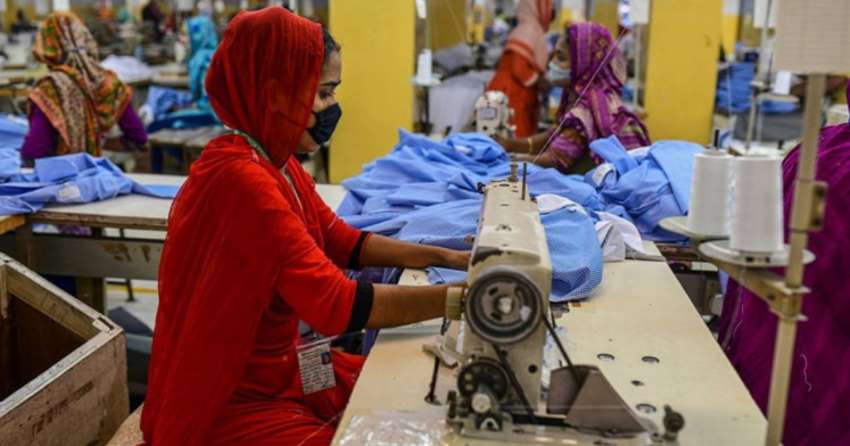
Challenge Fashion plans to set up the SEZ on 80 acre near the Lahore-Kasur road. Currently, categorized as agricultural, the land is yet to be converted into an industrial land by the Lahore Development Authority. The company has already set up a 370,000 sq. ft. stitching facility as a part of this project. Housing 4,000 employees, the facility exported products worth $70 million this year, which it hopes to increase to $100 million next year.
Creating demand can ease smaller brands’ entry into China’s luxury brand
 A recent Bain & Company report estimates Chinese consumers will account for 50 per cent of luxury sales by 2025. However, the report does not expect smaller luxury brands to grow as Chinese people do not prefer buying luxury items from small brands, says Elsepeth Cheug, Global BrandZ.
Three years ago, Tmall launched another platform Luxury Pavilion, which currently has 66 per cent global luxury brands on board. The platform was launched by Sebastian Badault, Managing Director-France and International Director-Fashion & Luxury, Alibaba. The platform has big players such as Chloe, Cartier, Lanvin, Balenciaga, and Burberry Beauty alongwith small labels like Zadig & Voltaire, shoe designer Pierre Hardy, and Ines de la Fressange.
Finding the right local partner
Nicolas Cano, Head-Business Development, Tmall Luxury informs, 50 more luxury brands have joined the pavilion since March 2020, bringing the total number of brands to 200. Though some of these brands make 80 per cent of their overall revenue on the platform, they are not yet ready for the Chinese market says Badault
Chloe Reuter, Reuter Communications, a luxury intelligence agency based in Shanghai says, any company that aims to work in China needs to first find the right local partner. It can explore the complex social media landscape in China to form new partnerships like Heytea and Rihanna’s beauty label, Fenty Beauty, or the San Francisco-based fashion brand Everlane’s collaboration with Seesaw Coffee and Ele. Ron Wardle, Head, Yooma, advises these companies to create demand for their products overseas before launching them in Chinese market. He urges them to use overseas activation agencies like VIP.com and Avenue51.
Consolidating their home market
However, Tom Griffiths, Commercial Director, Verb China, warn companies to go slow on China expansion. He feels, the quickest way to succeed in China is to first find a suitable investor. It is important for companies to find their customers and get their revenues back quickly, he adds.
Cheung points to the strategy used by Tripollar, who focused on consolidating its beauty home devices market before entering China. The company entered the China market in partnership with Chinese drama ‘Perfect Partner’ One of the first brands to launch in US’s luxury CBD market, Lab to Beauty faced several challenges like low brand awareness, newness of the CBD category and competition from existing beauty and personal care brand, while it entered the Chinese market.
The brand has been working with many US-based Chinese KOLs to increase brand awareness and launch new products through Western and Chinese social media channels. It will continue to include additional China-based KOLs for future expansion and expect China to contribute a larger percentage to sales.
KPR Mill’s Q3 profits up 21 per cent
Coimbatore-based vertically integrated company KPR Mill’s Q3 results are robust driven by strong demand for textile products. Revenue during the period grew 21 per cent in year-over-year basis to Rs 929.6 crore, with textile division (87 per cent of sales) posting 19 per cent Y-o-Y growth. With healthy order book and sustained demand for casual wear, apparel volumes went up 12 per cent Y-o-Y to 22.6 million pieces.
The average realisation/piece also firmed up 9 per cent to 163 per piece, translating to value growth of 22 per cent Y-o-Y to Rs. 369 crore (40 per cent of sales). Export order book at the end of Q3 was healthy at Rs 600 crore and revenue from yarn and fabric division (44 per cent of sales) grew 16 per cent Y-o-Y to Rs. 412 crore. It plans to expand its garment division. As on Q3, FY21, it has outstanding debt worth Rs. 556 crore and cash balance worth Rs. 350 crore.
STAR Network becomes stronger as four apparel associations join the group
Four apparel manufacturers associations from Turkey, Indonesia and Morocco have now joined the Sustainable Textile of the Asian Region (STAR) Network. STAR is a platform for Asian RMG manufacturers that drives better purchasing practices in the global textile and garment industry.
The four associations are: Indonesian Textile Association (API), Turkish Clothing Manufacturers Association (TCMA), Istanbul Ready-Made Garments Exporters’ Association (IHKIB) and Moroccan Association of Textile & Clothing Industries (AMITH). They have joined the initiative on ‘Manufacturers Payment and Delivery Terms’. The platform formed in 2016 with nine member associations from six Asian countries. They include: Bangladesh Garment Manufacturers and Exporters Association, Bangladesh Knitwear Manufacturers and Exporters Association, China National Textile and Apparel Council, Garment Manufacturers Association in Cambodia, Myanmar Garment Manufacturers Association, Pakistan Hosiery Manufacturers and Exporters Association, Pakistan Textile Exporters Association, Towel Manufacturers Association of Pakistan and Vietnam Textile and Garment Association.
The initiative, started by the STAR Network, supported by GIZ FABRIC, the International Apparel Federation and the Better Buying Institute, highlighted their plans at the recent OECD Forum on due diligence in the garment and footwear sectors on February 3, the release said. This marks a joint global effort led by manufacturers to establish a common position on payment and delivery conditions in the industry.
The STAR Network, GIZ FABRIC, IAF and Better Buying have come together to create the safe space for manufacturers to jointly draft a set of minimum expectations and outline recommendations and the best practices related to payment and delivery conditions. ‘This includes establishing certain red lines and core principles that they deem essential for fair legitimate business,’ said a press release.
IAF, ITMF, ITC come together to launch Standards Convergence Initiative
The International Apparel Federation (IAF) and the International Textile Manufacturers Federation (ITMF) together unveiled Standards Convergence Initiative (SCI), an initiative to accelerate reduction of audit and standard fatigue. The forum was launched at the side session of OECD Forum on Due Diligence in the Garment and Footwear Sector held online from February 1 to 5. The SCI will be a wide platform to discuss and develop a strategy and tools to accelerate reduction of audit and standard fatigue in the global clothing and textile industries.
The auditing conduct of standard holders, along with brands, retailers and other buyers’ decisions determines if the industry is are moving in right direction of less unnecessary overlap of audits and standards. Therefore, one of SCI’s first steps, in collaboration with the International Trade Centre will be to create transparency in the conduct of the main standard holders, brands and retailers and 3rd party standard holders, measuring to what extent they are contributing to the reduction of audit and standard fatigue.
The SCI has identified four yardsticks to judge standard holders’ commitment to reduce audit and standard fatigue. These include: willingness to harmonize standards; compliance with OECD and ILO guidelines; use of existing platform to avoid audit duplication; global certification of auditors.
These criteria will provide a foundation for a structural monitoring of standard holders’ efforts to reduce audit and standard fatigue that will be carried out by ITC. During the session at the OECD Forum, the ITC explained how its unique Standards Map Database will be used to measure and monitor standard convergence in the industry. First results of the monitoring are expected in the third quarter of 2021.
Besides monitoring exercise, the SCI will foster collaboration between different stakeholders each working on a partial solution. And, because large brands and retailers sticking to their own standards block the reduction of standard fatigue, the SCI will continuously call on these brands and retailers to either drop their proprietary standards in favour of 3rd party standards or to collaborate in other ways that observably reduce audit and standard fatigue.
Government to launch schemes to promote MMF apparel, technical textiles
Indian textiles ministry is coming up with a scheme to promote identified man-made fibre apparel and technical textile products to increase its share in global market. Smiriti Irani, Textiles Minister told Parliament the textile sector is the sixth largest exporter of textiles and apparels in the world. The share of the country's textiles and apparel exports in mercantile shipments was 11 per cent in 2019-20.
She said, the government has decided to extend the benefit of the Scheme for Remission of Duties and Taxes on Exported Products (RoDTEP) to all export goods with effect from January 1, 2021. The Cabinet has approved Production-Linked Incentive (PLI) scheme in the 10 key sectors to enhance India's manufacturing capabilities and exports. MMF (man-made fibre) segment and technical textiles are included among the 10 key sectors with approved financial outlay of Rs 10,683 crore over a five-year period.
She also said during crop year (2020-21), cotton production stood at 371 lakh bales. Till February 3, 2020-21, the government procured 90.39 lakh bales worth Rs 26,432 crore at minimum support price (MSP), benefitting 18.67 lakh farmers.