For decades, resale existed in the margins of the apparel economy, thrift stores, peer-to-peer marketplaces, and charity bins quietly absorbing what mainstream fashion discarded. That hierarchy has now inverted. What was once the afterlife of clothing has become one of retail’s fastest-growing frontiers, and the industry’s biggest names are no longer watching from the sidelines. They are buying back into their own closets.
The global secondhand apparel market, valued roughly at $210 billion in 2025, is on track to grow to over $535 billion by 2026. Growth is running nearly three times faster than traditional retail. In a sector where single-digit gains are often celebrated as victories, resale’s double-digit expansion reads less like a niche trend and more like a structural rewrite of the fashion business model.
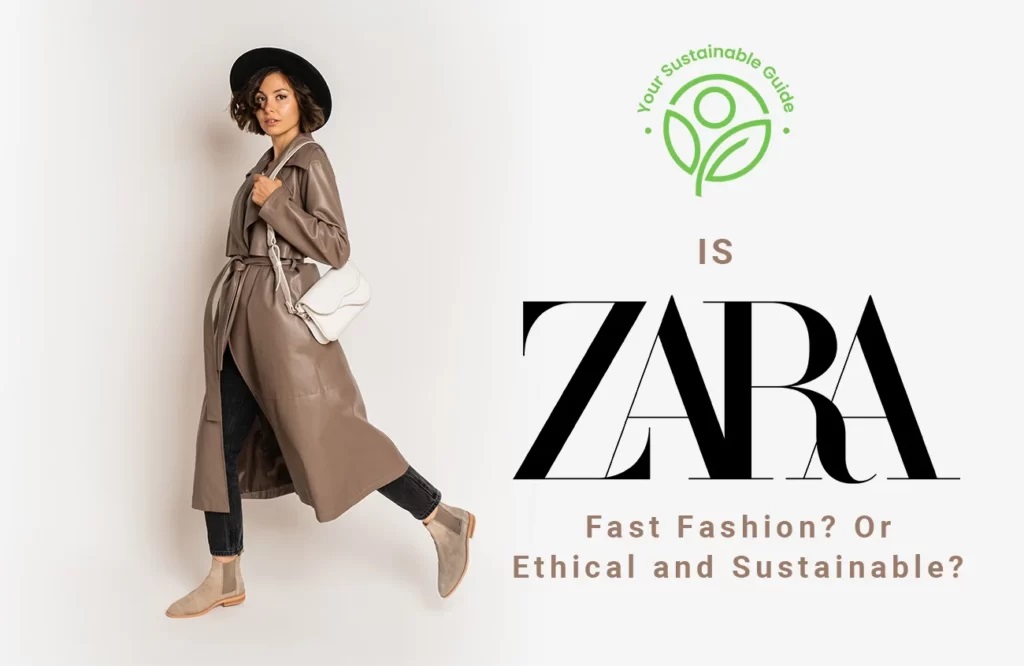
When the world’s largest fashion groups start treating resale not as a sustainability experiment but as core infrastructure, it signals something larger than optics. It signals that the economics have tipped. Few moves showcase this shift more clearly than those of Inditex, parent of Zara. After generating €35.9 billion in 2024 revenue and posting continued gains through 2025, the group has chosen not to cede the secondhand economy to third-party apps. Instead, it is internalising it. Through Zara Pre-Owned, the company is attempting to capture margin not once, but twice, on the same garment, first at initial sale and again at resale while collecting the most valuable commodity of all: lifecycle data. This is no longer about clearing old stock. It is about owning the entire lifespan of a shirt.
Growth that surpasses traditional retail
The difference between resale and conventional retail becomes stark when viewed side by side. Secondhand apparel is expanding at an annual pace of roughly 12.6 per cent, while traditional apparel retail limps along at about 2.4 per cent. By 2026, resale alone is projected to reach $535 billion in value, whereas primary retail remains stuck in low single-digit growth.
The drivers behind each segment reveal why the gap is widening. Resale thrives on sustainability concerns and what analysts increasingly call ‘value hacking’ consumers extracting maximum utility and residual value from every purchase. Traditional retail, by contrast, still leans on seasonal drops and trend cycles, a formula that struggles in an inflation-conscious world.
Women’s apparel dominates the resale mix, accounting for over half the category’s volume. That concentration matters: it aligns resale with fashion’s most frequent buyers and fastest inventory churn, ensuring a steady pipeline of supply. The implication is clear. Resale isn’t cannibalising the core market; it is becoming the core market’s growth engine.
Regulation turns waste into financial liability
If growth is one catalyst, regulation is another. The European Union has moved beyond rhetoric to enforcement. Extended Producer Responsibility (EPR) rules now require brands to finance the collection, sorting and recycling of textile waste. For high-volume retailers, those costs are no rounding error. Every unsold or discarded garment carries a financial burden.
Against that backdrop, resale morphs from a marketing initiative into a balance-sheet strategy. Keeping garments in circulation lowers disposal fees and demonstrates longevity metrics that regulators increasingly reward. An item that ends in landfill is now an expense. The same item traded through a brand’s own app is an asset with recoverable value. That simple reframing is pushing boardrooms toward circularity faster than any climate pledge ever did.
Durability becomes a profit lever
The resale economy is also quietly rewriting how clothes are made. Fast fashion historically optimised for speed and cost, not endurance. But resale economics punish disposability. A garment that fails after a handful of wears cannot generate second-cycle revenue.
As a result, durability is becoming commercially rational. Rivals such as H&M and Shein have accelerated their own recommerce plays. Shein’s Exchange platform, in particular, has expanded across Europe in part to counter criticism of its ultra-fast model while demonstrating that its products can have a second life.
Meanwhile, consumer psychology is evolving just as quickly. Shoppers increasingly evaluate garments the way they might electronics or cars: with an eye on resale value. Industry surveys suggest that well over half now consider what an item might fetch later before buying it today. Clothing is no longer purely expressive; it is quasi-financial. In that environment, quality stops being a cost centre and becomes an investment.
Beyond the immediate transaction lies a deeper prize information. Direct-to-consumer resale platforms give brands visibility into what was once a black box: how long customers keep items, how frequently they resell, which fabrics retain value, which silhouettes depreciate fastest. That data flows back into design studios and buying teams, shaping decisions months before collections hit the floor. Resale thus doubles as real-time market research.
Trade-in credits further tighten the loop. Instead of cashing out to independent platforms, customers receive brand currency, effectively pre-committing their next purchase. Loyalty ceases to be promotional and becomes structural. Marketplaces like ThredUp report that secondhand is increasingly embedded in everyday budgets, with many younger shoppers funding new purchases by selling old ones. The closet has become both wardrobe and wallet.
Inside Zara’s ecosystem
The most telling example of recommerce as operating model rather than side project is unfolding inside Zara’s ecosystem. Since launching across multiple European markets and the US, Zara Pre-Owned has integrated resale, repair and donation directly into the brand’s primary app, which attracts tens of millions of daily visitors. By embedding recommerce into the same interface customers already use to shop, the company has removed the friction that historically kept resale on separate platforms. The results point to a powerful flywheel.
Users who participate in resale engage more frequently with the brand than those who only buy new. Nearly half of sellers reinvest their digital credit almost immediately into fresh seasonal collections, accelerating revenue velocity. And by using its global network of more than 5,500 stores as drop-off hubs, Zara cuts reverse-logistics costs dramatically compared with pure-play digital marketplaces such as Vinted or Depop, which must build standalone collection systems. Scale, once a blunt instrument for pushing volume, becomes a surgical tool for circular efficiency.
Inditex’s continued investments, running into billions annually in logistics upgrades and textile-to-textile recycling suggest the group sees recommerce not as an adjunct business but as the backbone of its next growth phase. The ambition is nothing less than to transform from the archetype of fast fashion into a leader of commercial circularity.
From linear sales to lifetime ownership
What is unfolding across global apparel is not simply the rise of thrift chic or sustainability marketing. It is a reconfiguration of who controls value. For years, brands relinquished ownership the moment a product left the store. Now they are clawing it back tracking, repairing, reselling and monetising each piece multiple times. The old linear model of make, sell, discard is giving way to a loop in which garments behave more like assets than consumables.
In that loop, the winners will not necessarily be those who produce the most clothing, but those who extract the most value from every item already made. Resale began as retail’s afterthought. It is quickly becoming its operating system.