FW
Morrocon textile companies accused of labor exploitation
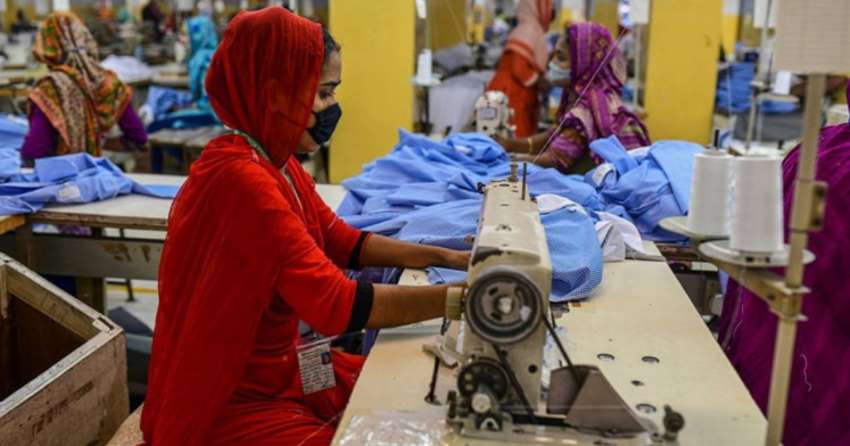
Clandestine Moroccan textile companies that supply to renowned European brands, including Zara and Mango subject their workers to inhumane conditions, reports Morroco Daily News.
Spanish news outlet Cadenaser put a spotlight on the recent Tangier tragedy, an event that claimed 29 people. On February 8, floods stormed a residential villa that hosted an illegal sweatshop. A short circuit caused the death of 28 workers. Dozens of men and women worked at the clandestine textile factory.
The incident caused uproar among Moroccans, with the event making international headlines. The situation also brought attention to the lack of monitoring in textile factories.It also cited NGOs in Morocco denouncing exploitation and the inhumane working conditions in illegal textile factories across the country.
The organizations also called on Europe to push for a law that will end such tragedies. The textile industry makes up 54 per cent of Morocco’s informal sector.
The statistics indicate that more than one million textile workers in Morocco, including mostly women could be working in “secret” sweatshops.
Huntsman appoints new head of strategic marketing for Polyurethanes India Sub-continent Business
Huntsman, the global manufacturer and marketer of differentiated chemicals, today announced the appointment of Gurmeet Kaur as the Head of Strategic Marketing for the Polyurethanes India sub-continent business, effective February 15, 2021. In her role, Gurmeet is responsible for the execution of Huntsman’s strategy for Polyurethanes division to achieve differentiated growth and create effective value proposition for customers through sustainable delivery of solutions based on evolving market trends.
Commenting on the occasion, Rahul Tikoo, Managing Director – India sub-continent, Huntsman, said “We are pleased to welcome Gurmeet to the Huntsman family. The India Sub-continent is an important market for Huntsman Corporation, and we are confident that Gurmeet’s expertise will enable us to further strengthen our innovation and solutions-driven customer-centric approach. With her rich understanding of the B2B landscape, we look forward to leading the Polyurethanes business to its next phase of growth and success.”
With over fifteen years of experience in marketing and strategy development, Gurmeet has worked with renowned organizations where she was responsible for driving the development and execution of business strategy and growth initiatives in India. Her most recent stint was with Honeywell as Marketing Director for Transportation Systems Business. Gurmeet is a Post-Graduate in Management from the Indian School of Business (ISB), Hyderabad and Bachelor of Technology in Chemical Engineering from Harcourt Butler Technological Institute (HBTI), Kanpur. At Huntsman, Gurmeet will report to Rahul Tikoo, Managing Director – India sub-continent, Huntsman Corporation.
India’s wool exports reach $181.23 million in 2019-20
In 2019-20, export of woollen yarn, fabrics, made ups etc. reached $181.23 million. As per India Brand Equity Foundation report, export of woollen yarn, fabrics, made ups etc. export between April 2020 to October 2020 was $ 56.51 and for the month of October 2020 it was $9.83 million. The export of raw wool valued accounted for 2020 US$ 80,000 from April to October 2020.
US and EU are key export destinations for Indian wool and wool-blended products. Indian exporters are geographically diversifying their exports to other regions such as the Middle East, Latin America, South East Asia, and East Asia to increase their footprint globally.
Major importers of woollen yarn, fabrics and made-ups in FY19 were China, Italy, Japan Korea, UK and US.
India is the ninth-largest producer of wool in the world with a global production share of nearly 2 per cent. India’s wool consumption is expected to reach 260 million kgs by 2019-20. The wool industry is concentrated in Punjab, Haryana, Rajasthan, Uttar Pradesh, Maharashtra and Gujarat. Punjab accounts for about 35 percent of the wool production units in India, followed by Maharashtra and Rajasthan.
VDMA plans webtalk on technologies for fine-gauge fabrics
VDMA plans to organize a webtalk on ‘Technologies for fine-gauge fabrics in the circular knitting industry’ on February 17, 2021.As per Textile Today, circular knitted fabrics in fine gauges are used in sportswear, home wear as well as in underwear and lingerie. They offer an optimal combination of yarns, circular knitting machines, needles and dyeing.
Wolfgang Mueller, Mayer & Cie will discuss challenges in fine-gauge circular knitting at the webtalk. He will also present an optimal fine-gauge set-up for circular knitting machines. Yarn selection, yarn feeding, stitch formation and takedown are the four key factors for a premium product in the knitting process.
Roland Simmendinger, Groz-Beckert, will make a presentation on the high precision technology of circular knitting machine elements. The presentation will illustrate the challenges to knit a high-quality fine gauge fabric.
Ralf H Stange, will showcase solutions in dyeing fine gauge circular fabrics.
Government to promote MMF and technical textiles under PLI scheme
The Indian government is planning to promote MMF and Technical Textile under Production Linked Incentive (PLI) scheme. It is also forming the Focus Product Incentive Scheme (FPIS) under the ambit of Production Linked Incentive (PLI) Schemes. The scheme aims to create global champions in MMF apparel and technical textiles and capturing substantial share in global trade in these segments. The scheme will provide incentive from 3 to 15 per cent on stipulated incremental turnover for a period of five years after one year gestation period for brownfield investment and two years gestation period for Greenfield investment.
The Ministry of Textiles also plans to introduce a New Textile Policy. The new policy will thrust on enhancing export performance and creating better employment opportunities. The New Textile Policy is being formulated in consultation with various associations, industry bodies, State Governments and other stakeholders representing subsectors viz. Cotton, Silk, Jute Wool, Handloom, Handicrafts, Powerloom etc.
Budget 2021-22 also plans to launch a Mega Integrated Textile Regions and Parks scheme (MITRA) to attract large investment and employment generation in the sector to further boost domestic manufacturing and to create world class infrastructure at one place with plug & play facilities. This will enable textile industry to achieve size and scale to become globally competitive and also create global champions in exports. Under the scheme, the government will set up seven mega textile parks over three years.
Luxury brands trading via Fartech
Growing number of luxury fashion brands are choosing to distribute and trade via Farfetch, an online fashion marketplace founded by Portuguese entrepreneur José Neves. Farfetch recently secured $1.1billion investment from rivals Alibaba and Richemont, the Swiss watch and jewellery group, as well as €50 million personal investment from François-Henri Pinault, the billionaire founder of luxury group Kering.
As per Financial Times, Farfetch and its new financial backers intend to expand in China, the world’s second-largest and fastest-growing luxury market. It connects consumers with brands, earning a commission of about 30 per cent on each sale, and has a sophisticated distribution system whose technology can match supply with demand.
Under a system that Neves calls ‘direct e-concessions’, brands decide what they sell on the Farfetch platform and set their own prices to avoid discounting that could damage their high-end image.
Neeves believes that the blurring of online and physical store shopping creates a big opportunity for both models of the fashion industry, especially in China.
West Bengal to make textiles into a 70,000 crore industry in 5 years
The West Bengal government aims to make the state’s textile industry into a Rs 70,000 crore industry in the next three to five years. Currently, the industry is worth Rs 35,000 crore. The state has also decided to set up a taskforce to implement the target. Amit Mitra, Finance and Industries Minister says, textile exports from Bengal is 2.7 per cent of the total exports from the country. In the next three-five years, this will increase to 10 per cent. The readymade garment sector in Metiabruz, currently worth Rs 15,000 crore, will increase to Rs 25,000 crore in the next few years.
The state currently employs over two lakh people and aims to focus on export of hosiery to Europe, South East Asia and the US. It will set up a spinning mill in Howrah at Jagdishpur. The state government also plans to set up a poly fiber manufacturing unit in Haldia. The total investment in the project would be Rs 500 crore. Haldia has raw materials for the polyester industry as Haldia Petrochemical (HPL) produces this.
Gokuldas Exports to re-employ 1,257 workers
Garment manufacturer Gokuldas Exports has decided to re-employ 1,257 workers laid off as the H&M supplier closed one of its factory near Mysuru. As per an agreement signed this month with Gokuldas, two Indian unions and global federation IndustriALL will allow Garment and Textile Workers' Union (GATWU) to negotiate in any factory where at least 20 per cent of the workers were members.
The factory in question was the only one among more than 20 facilities which was unionized, IndustriALL said. According to the agreement, the laid-off workers will be rehired in other Gokaldas factories by August. In several garment-producing countries -- from India to Cambodia and Myanmar -- activists say factory bosses have used the economic fallout from the pandemic as an excuse to target and fire union members while keeping on non-unionized workers.
The lay-offs were illegal under Indian federal labor law because Gokaldas' management had not engaged with the state government before closing the factory, according to a report in December by the Alternative Law Forum - a legal research group. Hundreds of workers at the factory protested for about 50 days after the mass firing, and continued to do so despite threats from bosses at Gokaldas.
Smart Voice honors winners C.L.A.S.S Icon competition
Winners of the 2021 edition of C.L.A.S.S. Icon competition and Sustainability Formula were honored during the Smart Voice, the C.L.A.S.S. Manifesto for Responsible Fashion, An international award for visionary creatives in the fashion world, C.L.A.S.S. Icon Award honors professionals who convey the values of sustainability to a wider audience.
Gilberto Calzolari, the first winner of the award, said his mission as C.L.A.S.S. ICON is to make people understand that commitment and sustainability can and must go hand in hand with beauty and elegance. C.L.A.S.S. presented its Manifesto for Responsible Fashion, which summarizes the values that C.L.A.S.S. has been researching, communicating and developing since 2007: the role of the ethical company and its transparent production, the importance of traceable and healthy products, with total respect for people and the environment and a commitment to a circular economy with a positive impact that also means safeguarding the seas, the ocean, the use of water, energy and resources.
Pakistan to reduce customs duty on synthetic fibers
Adviser to the Prime Minister on Commerce Razak Dawood has said that the government will take measures in the coming budget to reduce the custom duty for increasing exports of synthetic fiber (technical exports).
The adviser stated this while briefing the Senate Standing Committee on Commerce about draft Textile and Apparel Policy 2020-25, which envisages rationalization of custom tariffs and taxation regime and offers Rs925 billion incentives for growth of textile and apparel exports to $19 billion by 2024-25.
The adviser on commence said that Pakistan has been heavily relying on 70 percent cotton exports and 30 percent man-made fiber (synthetic fiber), whereas, in other countries, situation was vice versa, with 70 percent technical exports and 30 percent cotton.
The adviser said he was struggling to dismantle the custom duty imposed to increase the revenue collection after going into the International Monetary Fund (IMF) programme. The additional custom duty two percent was abolished and in budget, three percent duty will also be abolished, he added.
He said that when the government went into the IMF program, the IMF contention was that Pakistan revenue collection is very low and there is need to increase it. Therefore, the government decided to impose two percent, four percent, and seven percent, addition custom duty, he said, and added that now he was fighting to abolish it. The adviser also sought the committee’s support for removal of custom duty on imports as said that the Federal Board of Revenue (FBR) may resist it on the contention of revenue increase.