FW
Common shared goals can boost circularity in European fashion industry
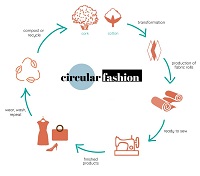 Though experts believe that a circular European apparel industry has the capacity to lessen the impact of textile waste it produces, the idea has not been adopted by mainstream producers. As per a GreenBiz report, the European fashion industry fails to invest in circular projects. According to Conor Hartman, COO and Vice President-Business Development, Circ, very few brands invest in sustainability and technological solutions for a circular economy and support laws for them.
Some fashion companies are slowly incorporating sustainability into their operation, says Lauren Phipps, Senior Analyst, GreenBiz. Prominent amongst them is Levi’s which launched its first resale offering known as SecondHand and H&M launched its first in-store garment-to-garment recycling system known as Loop.
Collaboration between supply chain players
According to Karla Magruder, Founder, Accelerating Ciruclarity, though people across the textile supply chain are individually involved in recycling, they do not necessarily work towards the same goal. If they are made to work together, they can help the industry tackle some of its sustainability challenges.
One of these includes ensuring newly launched recyclable products are actually recycled at their end-of-life and easily made into a new product. Home textiles company Coyuchi ensures this by confirming each of its supply chain links understands their role in the industry.
Boosting circular fashion principals across products
Fashion Technology Company Circ aims to recycle 10 billion garments by 2030. The company produces 100 billion clothing items each year, notes Hartman. Its recent $8million Series A funding round was led by Patagonia and joined by Marubeni America, Card Sound Capital and Alante Capital. The company’s technology can give textile waste made from cotton or polyester or poly-cotton blends, a new life. In 2021, it aims to produce garments across the world using this technology.
France recently banned textile landfilling of unsold inventory by retailers and brands. Hartman believes, if these retailers can be made to work together, they can bring about a great change in the industry. In November last year, the Massachusetts Department of Environmental Protection proposed to ban textiles from disposal in the sale. The European Union also plans to launch a new textile strategy to introduce durable, reusable, repairable, recyclable and energy-efficient products. This will boost fashion companies’ adoption of circular fashion principals across their products.
Global Fashion Agenda launches Circular Fashion Partnership
Global Fashion Agenda has launched the cross-sectorial project Circular Fashion Partnership including the global brands Bershka, Bestseller, C&A, Gina Tricot, Grey State, H&M Group, Kmart Australia, Marks & Spencer, OVS, Pull & Bear, Peak Performance and Target Australia.
The project also includes partners like Reverse Resources, The Bangladesh Garment Manufacturers and Exporters Association (BGMEA) and P4G. It facilitates circular commercial collaborations between major fashion brands, textile and garment manufacturers, and recyclers to develop and implement new systems to capture and direct post-production fashion waste back into the production of new fashion products.
In addition, the partnership seeks to find solutions for the COVID-19 related pile-up of deadstock and to engage regulators and investors around the current barriers and economic opportunities in the country.
Through collaboration among the participants, the partnership aims to build a successful business model for adopting more circular processes. It plans to facilitate a decrease in textile waste and increase the use of recycled fibres, distributing value throughout the fashion value cycle and generating economic benefits in Bangladesh by accelerating the fiber recycling market.
The Woolmark Company launches new digital platform
Taking its Wool Lab online, the Woolmark Company has launched a new platform called the Wool Lab Digital. The new platform for fabric and yarn is dedicated to the innovative essence of the curated sourcing guide, reinventing its offering to meet the needs of the global industry
While the structure and functionality of the digital platform have been adapted, the core of The Wool Lab remains the same. It is freely accessible to everyone in a dedicated area of www.woolmark.com. To access this platform, users need to register and will then be able to go through the guide and choose a selection of wool fabrics and yarns in which they’re interested. They will immediately receive an email with the details of their chosen swatches along with the contact information of the applicable manufacturers that the user can contact to request samples.
The Wool Lab Digital will present four macro-trends and will suggest fabric innovations that are most suitable. Two of the macro-trends will be released on the platform in February, with the other two coming in May. The first two are In Motion, which is dedicated to clothing for people who are always on the move, whether for work or leisure; and Hybrid, dedicated to hybridization in all its facets.
India’s wool exports reach $181.23 million in 2019-20
In 2019-20, export of woollen yarn, fabrics, made ups etc. reached $181.23 million. As per India Brand Equity Foundation report, export of woollen yarn, fabrics, made ups etc. export between April 2020 to October 2020 was $ 56.51 and for the month of October 2020 it was $9.83 million. The export of raw wool valued accounted for 2020 US$ 80,000 from April to October 2020.
US and EU are key export destinations for Indian wool and wool-blended products. Indian exporters are geographically diversifying their exports to other regions such as the Middle East, Latin America, South East Asia, and East Asia to increase their footprint globally.
Major importers of woollen yarn, fabrics and made-ups in FY19 were China, Italy, Japan Korea, UK and US.
India is the ninth-largest producer of wool in the world with a global production share of nearly 2 per cent. India’s wool consumption is expected to reach 260 million kgs by 2019-20. The wool industry is concentrated in Punjab, Haryana, Rajasthan, Uttar Pradesh, Maharashtra and Gujarat. Punjab accounts for about 35 percent of the wool production units in India, followed by Maharashtra and Rajasthan.
COVID-19 driving the growth of value apparel market: GlobalData
A new report from GlobalData says the economic uncertainty risen in the wake of the pandemic is driving consumers to seek value for money with Asia emerging as the new epicenter of the value apparel market by 2024. As per Business of Fashion, the APAC region will account for nearly 50 per cent of worldwide value apparel sales within the next years. Against this, Europe will account for 26 per cent, the Americas’ 22 per cent and the Middle East and Africa’s 3 per cent. Between 2019 and 2024, value apparel sales are set to grow worldwide by $42.2 billion.
While China will continue to be the largest apparel market in terms of sales by 2024 India will become the third largest and fastest growing value apparel market surpassing UK. In 2019, China was the largest value apparel market in terms of sales followed by the US and the UK.
COVID-19 leads to sharp decline in apparel imports by the US: OTEXA
As per an OTEXA report, the global pandemic led to a 23.46 per cent decline in US’ apparel imports in 2020. The largest apparel supplier to the US, China noted a 39.16 per cent decline in its apparel shipments during the year. China’s market share declined to 23.65 per cent from 29.68 percent a year earlier and 33 per cent in 2018.
Shipments by other suppliers, Cambodia, Pakistan and Vietnam showed considerable growth during the past year and are likely to continue, along with Bangladesh, India and Indonesia, said Julia Hughes, President, United States Fashion Industry Association in a Sourcing Journal report.
Among the other top tier countries, Vietnam countered tariff threats by the Trump administration as did Cambodia whose apparel imports increased during the pandemic. While Vietnam’s shipments fell by 7.25 percent to $12.57 billion its market share rose to 19.62 from 16.18 percent in 2019. Imports from Bangladesh declined 11.73 per cent to $5.23 billion last year.
Cambodia was the only supplier whose shipments increased by 5.45 percent to $2.82 billion. Imports from Indonesia fell by 20.09 percent to $3.52 billion for the year, while India’s shipments declined by 25.58 percent to $3.02 billion and Pakistan’s dipped by 4.17 percent to $1.4 billion.
Global denim market to grow 6.20%: Report
As per a new Denim Market report, global denim market will grow at 6.20 per cent during the forecast period of 2020 to 2027. Growing demand for recycled denims manufactured using plastics and other materials will create new opportunities in this market, says the report.
Rising urbanization and growing disposable income will enhance the growth of the denim market by 2027 supported by the growing popularity of denim shirts, increasing trend of stretchable denim jeans by blending cotton with synthetic material, easy availability of raw material, rising government initiative to enhance the product manufacturing and increasing promotion of denim wear. However, this growth is likely to be hampered by the rising prevalence for inexpensive woollen wear, availability of alternatives in the market, fluctuation in the cost of raw material and changing fashion and consumer preference.
The Denim Market analyzes the growth leading denim organizations and their thought process and methodologies to maintain their brand image in this market. The report helps new entrants understand the level of competition in the market and helps them strengthen their roots.
India’s cotton fiber exports to increase by 4 lakh bales in 2020-21
Cotton Association of India projects the coutnry’s exports of cotton fiber will increase by 4 lakh bales to 54 lakh bales for the season 2020-21 (October to September). Cost advantage in the international market helped India export about 29 lakh bales of cotton by end of January 2021.
Nearly 60 per cent of these shipments were executed during the first four months of the 2020-21 season. Data shows that in the initial four months of the season October 2020 to January 2021, cotton exports have touched highest in past three years. During the comparable period in 2018-19, cotton exports were reported at 24 lakh bales and in 2019-20 it was at 20 lakh bales.
Traders attributed the jump in exports to the lower prices and better quality of the initial crop. Meanwhile, in its crop estimate for the month of January, CAI has retained the crop size for the year at 360 lakh bales. However, of the total projected supply of about 499 lakh bales for the season, first four months have reported total supply of 389.25 lakh bales.
Opening stock at the beginning of the cotton season on October 1, 2020 was estimated at 125 lakh bales. Of the 499 lakh bales supply projection, barring 125 lakh bales of opening stock, crop size for the current season is likely to be 360 lakh bales and 14 lakh bales of imports.
CIFRA launches anti-bacterial and antiviral athleisure collection
CIFRA has launched a new antiviral collection made with exclusive Q-SKIN® yarn powered by AMNI VIRUS-BAC OFF, which guarantees permanent anti-viral activity. The innovative yarn was developed by the Rhodia-Solvay Group and is distributed by Fulgar, a leader in the sector of high-tech and eco-sustainable yarns. This extraordinary polyamide yarn is effective against the proliferation of bacteria and the spreading of viruses, thanks to the antiviral and antibacterial agent permanently incorporated into its polymer matrix.
The technical characteristic of this new yarn prevent antiviral and antibacterial agents from entering onto the skin or into the environment. Unlike garments treated with dyeing finishes that have limited functionality and lose theirs with washing, the antiviral and antibacterial properties of Q-SKIN® polyamide powered by AMNI VIRUS-BAC OFF are permanent.
This special, soft, and easy to wash polyamide fiber also guarantees freshness and comfort, contributing to the thermal well-being of the wearer. WKS technology guarantees the practicality of seamless and warp-knit garments, truly unique in the sector, which is designed to offer differentiated functionality thanks to body-mapping.
Bangladesh spinning mills increase focus on synthetic yarns
To cut their reliance on cotton yarns, local Bangladeshi spinning mill owners are choosing to invest more in the synthetic yarn segment. As per a Textile Today report, leading spinning mills, including Envoy, Matin Spinning of DBL Group, Maksons, Square, and Shasha Denim, are investing in synthetic yarn. According to Mohammad Ali Khokon, President, Bangladesh Textile Mills Association (BTMA), demand for cotton yarn has fallen by 35 per cent on the global market as most buyers are preferring synthetic and mixed yarn-based fabrics
Hence, sister concern of DBL Group, Matin Spinning Mills has decided to invest Tk1.86 billion to set up a special yarn unit to manufacture synthetic yarn. The Matin Spinning special yarn unit will increase the company’s daily production capacity by 10 tones and the assessed turnover will grow by Tk1 billion per year, as per the Dhaka Stock Exchange website.
Similarly, Envoy Group plans to invest Tk1.25 billion in setting up a synthetic yarn unit. The new unit will produce 12 tonne of yarn per day and will come into operation by October. One of the top 10 spinning mills in the country, Maksons Group has also decided to invest around Tk100 million in three new spinning units in Mirsarai Economic Zone.
While a concern of Maksons Group, Metro Spinning will invest Tk3.40 billion in a unit while Maksons Spinning Mills will dispense Tk2.54 billion and Tk3.48 billion into 2 other units, according to company insiders.
Square Textiles will invest Tk300 million while Mozaffar Hossain Spinning Mills has already invested Tk2.50 billion to increase synthetic yarn production. Shasha Denim has also signed a deal with the Bangladesh Export Processing Zone Authority (BEPZA) to lease 8 plots in the Dhaka Export Processing Zone (DEPZ) area for future business expansion.