


FW
Bangladesh eyes technical textiles to meet 100bn export target
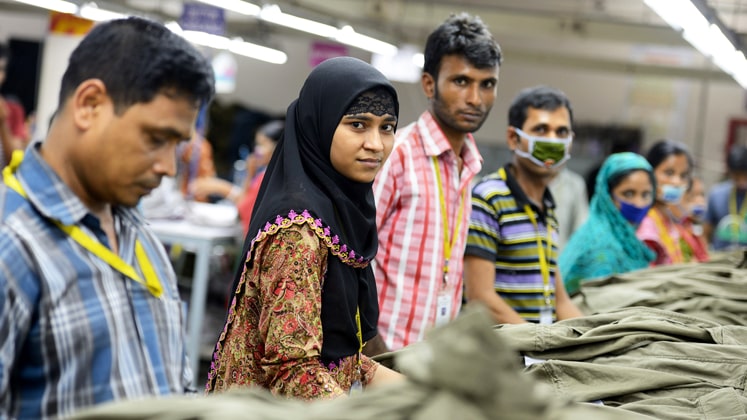
Second only to China, Bangladesh carved out an awe-inspiring success story in the global RMG supply. Exports worth USD 42 billion last year contributed to an 83% of its total export volume. Whilst the RMG sector in Bangladesh continues its growth, the two-year long pandemic and the drop in demand for RMG imports from the West thereafter created an economic crisis for the nation. The Bangladesh Garment Manufacturers and Exporters Association (BGMEA) have targeted the USD 100 billion mark of export by 2030. After the hit it took in the last two years, Bangladesh is keen to diversify its RMG portfolio.
This is where technical textiles present an opportunity. Futuristic technical textiles used in planes, cars, and firefighters’ uniforms and protective clothes are not what comes to mind in the RMG sector but this category represents a huge potential for Bangladesh’s diversification plan. Textile technology has become increasingly commercially viable and is experiencing rapid increase in demand. Garments made of technical textiles can offer many qualities which traditional garments cannot; they can be antibacterial, insect repellent, flame retardant, odorless and much more, allowing the wearer to reduce risks and bodily harm.
Manufacturers of technical textiles use both natural and manmade raw materials. Manmade materials, which currently account for 40% of total fiber consumption across the entire textile industry, include items like polyester, nylon, acrylic and polypropylene. The global market for technical textile is projected to reach $208.5 billion by 2024 from $178.92 billion in 2020. Its market is assumed to reach $298.1 billion by 2030. Europe represents the largest regional market for technical textiles, accounting for an estimated 28.8% share of the global total.
The Asia Pacific dominated the technical textile market with a share of 45.9% in 2019. China is the largest exporter of technical textile products with a share of 24%. This is followed by USA, Germany and Republic of Korea with a share of 10%, 9%, and 4% respectively. Within the Asia Pacific region, China and India are two leading countries in the technical textile sector. India is the world second largest polyester producer and its market size is USD 19 billion. India has set up a scheme within an average growth rate of 15-20% to increase their domestic market size of technical textiles to USD 40-50 billion at 2024; through market development, technological development, international technical collaborations, marketing and investment promotion.
Bangladesh has a lot of work cut out for it as they venture into the technical textile segment. In 2010, the Bangladeshi technical textiles consumption market value was USD 281.1 million and production value was USD 252.2 million. Whilst the pandemic may have been doom and gloom for Bangladesh’s RMG sector, the silver lining came in the form of technical textiles as demand for gloves, mask, PPE kits, etc. grew. During this production process, Bangladesh realised it lacks the infrastructure, research facilities and skilled labour to compete significantly in the global market. The government of Bangladesh has launched various conduct schemes and policies for technical textile manufacturers to make them globally competitive.
Rise in apparel export to US rings in cheer, future uncertain
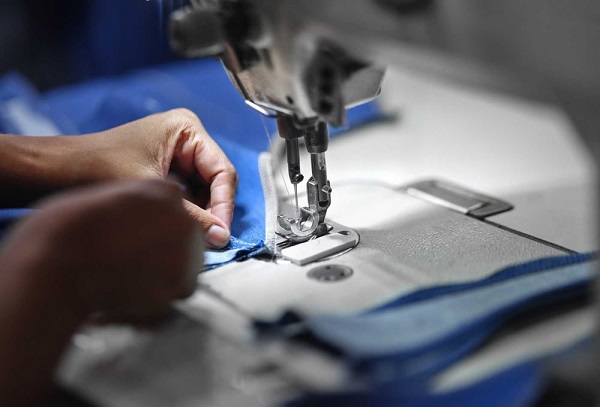
The pandemic rang in bad tidings for apparel exporters in Asia and South East Asia as the dip in US’ imports was significant. Compared to imports worth USD 111.033 billion in 2019, in 2020 imports worth USD 89.596 billion were registered. The trend took an upward turn in 2022 as The US Department of Commerce released figures for the first half of this year. The latest import figures indicate that US economy is witnessing fast recovery, and the world’s largest economy is continuing to support economic recovery in developing countries.
The import of textiles and apparel by the US continues grew at high rate and rose by 30.97 per cent to USD 66.308 billion in the first six months of 2022, compared to $50.626 billion in the same period of 2021. With 26.80 per cent share China continues to be the largest supplier of textiles and clothing to the US, followed by Vietnam with 13.87 per cent. According to the Major Shippers Report, “Apparel constituted the bulk of textiles and garments imported by the US in January-June 2022, and were valued at $49.578 billion, while non-apparel imports accounted for $16.729 billion.” In contrast, import of apparel to the EU experienced a dramatic drop of 80%.
Man-made fibres constituted the largest chunk at USD 33.4 billion, with cotton coming in second at 29.5 billion. Products from silk and vegetable fibres accounted for USD 1721.6 million whereas wool products stood at USD 1648.5 million.
China retains its pole position as the largest exporter to the US. The US textile and apparel imports volume from China in Jul 2022 reached 3.21 billion, down by 9% year-on-year. The imports value reached 3.59billion USD, up by 26.7% year-on-year. US apparel imports value from China in Jul 2022 toppled 1.27 billion USD, up by 22.7% year-on-year. The textile industry of China is the largest manufacturer and exporter in the world with an export turnover of USD 266.4 billion. Low-cost production, raw material quality, industrial structure, modern high-tech machinery, label development and work process in domestic consumer and global market contribute to China’s unshakeable leadership in this sector. The output volume of China textile industry accounts for more than half of the global market.
Other gainers have been Bangladesh up by 60.3%, Indonesia up by 60.27 %, India up by 57.2%, Cambodia up by 52.5% and Pakistan up by 50% year-on-year. The non-apparel sector also experienced a growth surge as Cambodia’s exports rose by 73%, Vietnam by 29% and Italy by 27.5%. Turkey was the only nation that lost ground up to 8%. However, with all figures released, the ASEAN countries collectively experienced the best in this growth surge whilst India and Bangladesh did not.
It should be noted that US apparel imports enjoyed a decent growth but started to face softening demand. Thanks to consumers’ spending, in the first half of 2022, US apparel imports went up 40% in value and 24% in quantity from a year ago. However, the US economy remains highly uncertain in the medium term and it might see many US fashion companies to turn more conservative in placing orders.
Paris Fashion Week begins
Paris Fashion Week is being held from September 26 to October 4, 2022.
In addition to the fashion shows, many showrooms are bringing together foreign delegations to present the creations of many brands for spring-summer 2023. The biggest names in fashion are sending their models down the runway to showcase only the best of the best for the warmer seasons. There are show-stopping looks from the fashion week classics such as Balenciaga, Chanel, Valentino, MiuMiu and Louis Vuitton. An abundance of talented, but lesser-known designer brands such as Dice Kayak or Ungaro are also expected to be present. Some fresh looks can be expected from the brand Off-White on runways bringing streetwear to high fashion.
Sphere will be at the center of the event and will showcase seven emerging brands.Camera Showroom Milano will make its return after five seasons of absence and will offer the collections of some 30 ready-to-wear and accessories brands.The DACH Showroom will feature the creations of 17 brands and designers. The Swedish Fashion Council will present eight brands. Eight brands will be present from Hong Kong and nine from South Korea. There will be five Japanese women’s fashion and accessories brands.Influencers make fashion more accessible and are the key to linking the modern day to the unchanging classiness of Paris Fashion Week.
Esprit launches innovation hubs in New York and London
Esprit is launching two new global innovation hubs. These will be in New York and London. Called Esprit Futura, the hubs are a part of the group’s digital strategy to reimagine customer engagement experiences by converting data into insights, igniting the brand’s international expansion in line with the rapidly escalating pace of digital change in the current environment of fashion retail. With New York and London both globally connected cities with pronounced cultural influences, the brand’s digital and creative innovation will be closely linked to the two fashion capitals.
Esprit Futura New York will serve as the company’s international center for creativity and design, a source of ideas and concepts for its branding strategy. The London facility will serve as the brand’s center for customer experience innovation, offering customers omnichannel connections to the Esprit network. Esprit Futura Amsterdam, the brand’s first physical hub, will remain the core for e-commerce and technology growth.
Lifestyle fashion brand Esprit based in Hong Kong is in the process of transforming into a global company with creative minds and processes in key cities enabling consumers to be connected to the brand on a multi-dimensional level. This will enable Esprit to adapt to major challenges in fashion and the macro environment in order to propel it into the future.In addition, Hong Kong will continue to be the worldwide administrative headquarters for finance, sourcing, and operations.
Indian polyester, cotton prices decline sharply
Polyester-cotton, poly spun and recycled polyester prices have witnessed a steep fall in India.
Poor demand and a downward trend in cotton and cotton yarn prices have caused the decline. The declining prices of polyester yarn have left mills in disarray as they have already been facing losses in cotton yarn.
There is no sign of improvement in buying in domestic or export markets. Cheaper cotton and cotton yarn have added to the woes of polyester yarn. Mills are offering even lower prices as buyers remain absent. The declines in polyester yarn prices have left spinning mills in losses during the last week. The mills are now facing a disparity of Rs5 to Rs10 per kg for polyester yarn due to the recent decrease. Polyester-cotton, poly spun and recycled yarn prices also witnessed a steep fall of up toRs25 per kg in Ludhiana due to weaker demand and declining cotton and cotton yarn prices.
The downward trend continues in cotton prices in north India as arrivals are increasing gradually. Spinners’ buying continues to remain weak. Cotton arrivals increased to 6,500 bales of 170 kg in the north Indian region and cotton prices decreased byRs300 per maund of 37.2 kg.
Eloquii launches plus size wedding range
Eloquiiis launching a wedding collection for sizes 14 and above. The collection is in different fabrics that include the likes of satin, lace, tulle and sequins. The 50-piece collection comprises jumpsuits, slip dresses and formal gowns.
Eloquii is a clothing brand specifically dedicated to dressing sizes 14 to 28. Based in the US and founded in 2012, Eloquii offers women plus size fashion, clothes, and accessories. The company designs trend-leading, fast fashion apparel and brings trend-driven, feminine, polished fashion from the runways, working on a compressed design cycle and dropping new styles every week.
More than 60 per cent of women in the United States are a size 14 and up, but they continue to be underserved. Women are having a hard time identifying their own body shape, which informs how they shop. Women often misidentify their body shape. They may consider themselves to be hourglass-shaped when they are not and are actually pear-shaped. This discrepancy happens because of the way brands market and sell their clothing.For many retailers, extended sizing means simply making straight-sized garments in larger sizes, a process that neglects the fact that women have different sizes and shapes. Of the 62,000 specialty stores in the US, only 2,000 of them focus on plus size women.
Fast fashion challenges luxury brands
Established disruptor brands the likes of Shein, ASOS, Boohoo, and PrettyLittleThing, who are maturing at their peak, are hot on the heels of luxury brands in terms of conversations surrounding fashion. So says leading consumer intelligence platform Talkwalker.
As sustainability continues to dominate and define the fashion industry, challenger fast fashion brands are shaking things up, by developing products people want at the price and convenience level consumers now demand.For both luxury fashion houses and fast fashion brands, sustainability and ethics are hot topics.
Luxury houses are keeping a close eye to align with new consumer behaviour. Fast fashion brands have a big challenge ahead to align with consumers’ growing demand for ethical change.Luxury brands are spoken about more by consumers, but not necessarily favoured, with sustainability, customer service and support as key conversation drivers. Fast fashion, on the other hand, is surrounded by more operational conversations focusing on convenience and service.
For the newer challenger fashion brands struggling to break through into mainstream media despite their maturity, social media platforms such as Twitter dominate the conversations. Those driving online conversations are often largely from younger demographics. This is overwhelmingly true for the fast fashion brands where mostof conversations are from the social profiles of millennials or younger.
Vardhman, India profit up 273 per cent
Vardhman Textiles’ yearly profit has shot up by 273 per cent. Ebitda has risen by 144 per cent. However, profit margins have taken a hit thanks to the steep price rise of cotton per candy.But this worry seems to be fading away as cotton prices have come down significantly since May 2022.
Vardhman Textiles is India’s largest vertically integrated textile manufacturer that is engaged in manufacturing cotton yarn, synthetic yarn, woven fabric, sewing thread, acrylic fiber, tow and garments.
It is also one of the largest exporters of cotton yarn to the US and the EU.In its yarn business; it has a spindle count of 1.2 million, providing it a production capacity of 670 MT a day. Its cutting-edge spinning technology sourced from global leaders makes it a preferred choice of customers worldwide, owing to the quality of products and flexibility for product customization. It is also one of the first movers in the manufacturing of recycled yarns in India.
The company’s balance sheet is quite strong with the debt-to-equity ratio at 0.2 and free cash flows have also improved. The current P/E ratio of 6.82 is far better than that of peers. The P/B ratio of the company stands at only 1.35 compared to the sector’s average of 5.95.
Looming uncertainties worry luxury brands betting china
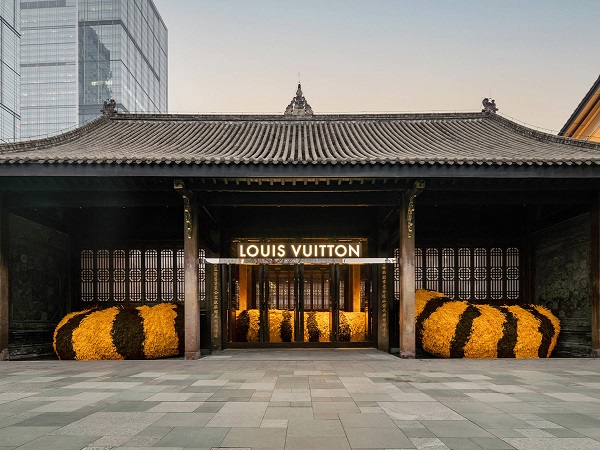
Some luxury brands are estimating a negative impact of -10 to -40 percent of revenue this year thanks to fresh lockdowns in major Chinese cities. Given the primary signs of recession in North America and Europe, the reliance on China as the engine for the growth in luxury is much less certain than in 2021. On top of this, the posh hospitality sector is suffering quite dramatically in China as most international travel has come to a standstill while domestic travel decreased significantly. This is reiterated by Bain & Company - domestic sales of personal luxury goods in China jumped 48 percent in 2020 and 36 percent in 2021, totaling nearly 471 billion yuan ($70.7 billion), a near doubling in just two years and then crashed in 2022.
Increasing challenges for luxury brands
However, the overall positive outlook for China is not changing. The country is consistently increasing its share of global wealth and more of its population is able to afford luxury purchases and experiences. However, there are massive challenges: Luxury must deal with rapidly evolving customer expectations, the fastest rise of Gen Z clientele in any country within the world, and an increasingly strong national sentiment where affluent customers change preferences towards domestic premium and luxury brands. Nike and Adidas had to find out the hard way over the last 18-24 months how fast local rivals like Anta and Li-Ning were able to outpace them, resulting in significant sales and market share losses.
For the first time in many decades, geopolitics poses a big risk to the operations of international brands on the mainland. Over the last months, we witnessed the sudden exit of luxury brands from Russia with the war in Ukraine and just how fast entire markets can be lost. Just in case of an escalation of the already increasing tensions in Southeast Asia and China’s ambitions with Hong Kong and Taiwan, the high dependency of luxury brands on China are often troubling. China is becoming the most important challenge for luxury brands. It has been already for many years, but the stakes are much higher now. A new level of strategic excellence and much higher managerial expertise in global portfolio management, global capabilities, and global empathy is what is required now. The “all eggs in one basket” strategy that helped many luxury brands to punch in significant growth over the last years, especially in 2021, can easily backfire. Luxury brands will have to recalibrate their global footprint, turn Europe back to a growth market, and expand in North America – all of this while these regions may head into recession. Still, China will remain a key marketplace for luxury brands. However, the upper the stakes get, the more western brands have to radically adapt their structures and capabilities to continuously play to win. If luxury brands hoped that 2022 are going to be “a walk in the park,” they were overly optimistic.
Import duties create price disparity
It should be noted that price disparity continues to plague the domestic purchase of luxury goods in China, where the difference from European prices can be as high as 40%. The huge Chinese duties on luxury goods led to the success of the Hainan Duty Free Store up until 2021. This is an indication that luxury brands might be better off investing in duty free hubs like Hainan to continue attracting domestic purchase.
As luxury brands are questioning on their presence and profitability in China, it seems closing down retail experiences can only do such brands more than good. Instead, they might want to expand to the second tier cities to mop up new clientele.
US banned Chinese cotton yarns enter Indian market
The US ban on textiles originating from the Xinjiang province of China has compounded the problems for India's cotton yarn spinning industry.
The Chinese yarn that can't go to the US is now finding its way into the Indian market at cheaper rates, further reducing the demand for domestic cotton yarn that has already been down.
So the domestic industry has been affected adversely.Most mills have either shut down their spindles or have gone for making substitute fibers like viscose, polyester etc.
India's yarn exports in August 2022 fell to less than one-third of the normal monthly yarn exports. Export orders for Indian yarn, textile, garments, etc. are very low, while Indian domestic cotton and yarn prices are still higher by 23 per cent than New York futures prices.
The entire spinning industry is depressed. Exports have fallen by 70 per cent. Indian yarn exported to China and Bangladesh gets converted into fabric and garments and then gets exported to Europe and the US. A fall in garment imports by Europe and the US due to recessionary pressures, in turn, has already cut the demand for Indian yarn from China and Bangladesh. The impact due to the US ban on fabrics from Xinjiang has added to that.











