


FW
H&M Q3 sales up three per cent despite pulling out of Russia
For the third quarter H&M net sales increased by three percent. The reported gross margin was 49 percent. Increased raw materials and freight prices as well as a stronger US dollar resulted in substantial cost increases for purchases of goods.
A cost and efficiency program is being initiated by H&M to further streamline the business. The savings from the program is expected to become visible in the second half of 2023. Agreements have been signed with developers of new solar farms to secure access to renewable energy for many years to come. This will help the H&M group reach its carbon reduction targets as well as securing energy prices for parts of its own operations.
The autumn collections were well received and sales in September 2022 were up on the previous year.
In the third quarter the company decided to pause sales and wind down the business in Russia. This had a significant effect on the company’s sales and profitability. Sales then gradually improved, despite a heat wave in several European countries and some remaining delays in the supply of goods. H&M has undertaken initiatives to meet customers’ expectations. This involves ensuring the best customer offering for all the brands and the best customer experience.
Hanoi Fabric show will be held in November
Hanoi Fabric 2022 will be held in Vietnam, November 23 to 25, 2022. Several groups and pavilions will be coming from China, Taiwan, Korea and India.
Hanoi, situated in north Vietnam, is emerging as a new production base in the country. Costs of labour, production and land are lower compared to Ho Chi Minh City. The country is investing in developing the infrastructure of north Vietnam and many local and international textile and garment factories have already moved to north Vietnam.
With the world’s reopening after Covid, Vietnam’s textile and garment manufacturing is resuming. As Vietnam is very dependent on imported raw materials, garment enterprises need to import over 70 per cent fabrics and garment accessories for their production.
Vietnam is the world’s third largest exporter of garments. But the industry is facing many difficulties including a steep fall in export orders due to soaring inflation in major markets and rising input costs. China’s strict pandemic control, where more than 50 per cent of raw materials for the Vietnamese textile and garments are sourced, has pushed up input costs.
In addition, the EU has introduced new regulations on the textile industry, including replacement rates, green products and switching from fast fashion to sustainable fashion, which makes it harder for Vietnamese apparel products to enter this region.
Bangladesh exports face EU carbon tax
Bangladesh’s apparel exports to the European Union may have to abide by the carbon border adjustment mechanism (CBAM).
The EU has moved to impose the carbon tax initially in five sectors -- cement, iron and steel, aluminium, fertilizer and electricity -- from January 2023.Although Bangladesh’s major export items like apparel, leather and footwear are not included in the CBAM, these are among the 63 sub-sectors that are identified as sectors with a risk of carbon leakage and the EU might include these later on.
Bangladesh’s major competitors have either already established or are in the process of developing carbon markets locally. China launched its carbon market in 2021 while Vietnam and India are in the process of establishing their internal carbon market. Vietnam wants to formally launch its carbon market in 2028. So the CBAM can disproportionately affect Bangladesh relative to other countries. Though Bangladesh is one of the lower carbon emitters, there has been a sharp rise in emissions. With many green garment factories, Bangladesh has already taken a considerable stepe forward. However, several additional challenges like excessive water use, weak labour standards and inadequate waste management might continue to harm export prospects. Export firms have to ensure sustainable production practices.
Dow develops sustainable practices in Ethiopia
Dow, a materials science company, is helping develop more sustainable manufacturing processes within the fast-growing fashion industry in Ethiopia.
Through education, training programs and business consultancy capabilities, the project paves the way for improved sustainable chemical and waste management practices along the textile value chain. Dow supports the textile value chain in implementing more sustainable chemical and waste management practices and making a positive social, environmental, and economic impact. The focus is on building awareness and capabilities of factory management and workers across the textile supply chain to implement and maintain an effective sustainable chemical management system based on industry best-practice.Sustainable chemical management consultancy capabilities have been setup through a network of trained local consultants.The project has been able to establish sustainable structures for training in the environmentally and ecologically responsible disposal of chemicals and waste.
The environmental impact of textile and garment manufacturing is a key challenge as the industry sector in Ethiopia booms.Ethiopia has the potential to become one of the leading textile and apparel hubs in Africa. Alongside this growth, there are opportunities to improve chemical management and prevent water pollution. In recent years, the country has attracted foreign investments for new textile and garment manufacturing facilities and several international brands and retailers have shifted their textile and garment sourcing to Ethiopia.
Unpredictable fashion trends in post-pandemic high-end branded market
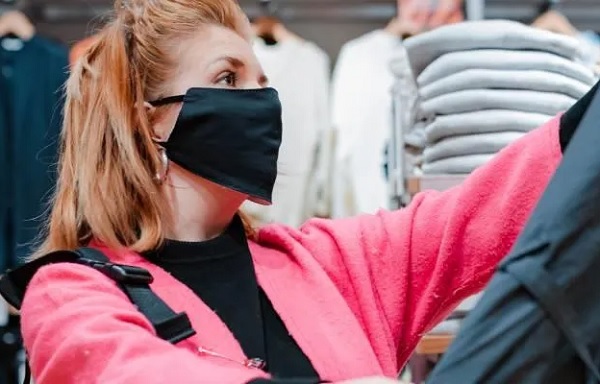
From Covid-19 lockdown times to economic slowdowns, the pandemic has hugely affected health, wealth and happiness parameters around the world. The cost of living for each income bracket has now changed and a brand strategy of smart retail intelligence is now the strongest line of defence for a company against economic uncertainty.
To cut down costs, consumers are now pulling the plug on the more expensive homeware items such as furniture, kitchen equipment and electrical sales. Home appliances are undergoing a major shift as compared to last year while absorbing price inflation from shipping and materials.
The Work-From-Home office market equipment is not needed anymore as customers return to work and demand lessens. Even last year at this time in the fag end of the pandemic, only 13% of US home office items were on sale with discount depths averaging 21%, whereas now around 31% of the range stands reduced with discounts being 7pp deeper YoY.
Luxury brand segment observes ‘Buy expensive but buy lesser’
However, all is not lost as customers are still spending the same or even more in certain segments relevant to their specific economic and lifestyle segments. Luxury bags become more exclusive and the price of luxury’s status symbol, the woman’s handbag, is showing an upward trajectory compared to the earlier pre-covid and during covid years. The average selling price in the global high-brand market in 2022 has experienced a 10% increase vs. 2021 and 12% vs. 2019. The Italian luxury fashion house Fendi known for its fur and leather goods is driving up this elevated pricing architecture, as every fashionable woman must have a Fendi bag along with her little black dress in her closet. A Fendi bag described as being a “Baguette” silhouette has marked an 18% increase compared to 2021, and 16% to 2019.
This is because the high-end luxury market has more flexibility to raise prices on best-selling bags and trends in high demand as the well heeled customers in this segment are less likely to be as impacted by rising prices of inflation. Also, the bags category is subject to higher price hikes due to their intricate construction, expensive textiles and expensive manual labour. Most are aspirational brands with a cult following and are seen as a lucrative investment as they sell easily even as seconds or pre-loved.
Sneakers doing better than sportswear
Sneakers continue to become more expensive, particularly as UK retailers, have raised prices by 9% year on year. Customers are still eager to pay the 2%-9% lift in sneaker prices, with the majority of SKU sell outs up 56% over the past three months versus YoY. However, lower-income shoppers are becoming increasingly priced out of the market. So this is not economically viable. Sportswear isn’t seeing such broad price variances as other areas as the return to work culture increases with an average selling price of sweatpants and hoodies dropping between 1%-3%.
Kids school wear market remains unaffected
The recession hasn’t affected the kidswear market too much as cash-strapped parents still need to splurge on their children, as the recent back-to-school period in September shows. Faced with new guidelines regarding affordable schoolwear, along with the high cost of living, many UK retailers are freezing or reducing school uniform pricing. The proportion of own-brand schoolwear in stock that falls in the full price bracket of £5-£10 has increased from 18% to 23%, while the £10-£15 price point maintains the greatest proportion of products.
With a strong determination to follow latest trends, the luxury fashion market is an unpredictable one even in these economic slowdown times with customers buying more expensive but fewer haute style pieces and this is what is keeping the industry revved up.
EU reforms to curtail fast fashion’s green-washing gimmicks
Fast fashion brands are aware of the consumer mindset change towards sustainable fashion. In a bid to appear environmentally-conscious, many fast fashion brands are paying lip service to sustainability, resulting in deceiving consumers with “green-washing”. The European Union has seen through these gimmicks and has set up regulations as per document “EU Strategy for Sustainable and Circular Textiles (Strategy)” that fast fashion brands will have to adhere to as it wants to end the hazards of fast fashion by 2030. The European Environment Agency has expressed concern on the fashion sector’s contribution towards environmental and climate change as garments used in Europe has the fourth largest impact compared to many sectors.
Not so green
Brands claim to be sustainable but only include a small percentage of recycled materials in collections and advertise that as “green”, or “circular” without being transparent or addressing the entire life-cycle of their products. Some brands focus on down-cycled materials (PET bottle, fishing nets, etc.) instead of implementing fibre-to-fibre recycling. Clothing companies promote in-store take-back programs, which actually incentivizes guilt free consumption but does not propose a viable solution. Green claims in the fashion industry cover many aspects of the clothing production process, either linked to climate (neutrality), circularity (recycling), or materials (natural and recycled fibres). In that respect, the European Commission (EC) launched in 2020 an initiative, under the EU Green Deal, on ‘substantiating green claims’ with the view to tackle the issue of green-washing. It notably states that ‘companies making ‘green claims’ should substantiate these against a standard methodology to assess their impact on the environment. Executive vice president for the European Green Deal, Frans Timmermans said, “It’s time to end the model of ‘take, make, break, and throw away’ that is so harmful to our planet, our health and our economy.” Virginijus Sinkevičius, the EU commissioner for the environment, oceans and fisheries, said “The EU wants fast fashion out of the fashion business by 2030. Textiles placed on the EU market should be long-lived and recyclable, made to a large extent of recycled fibers.”
EU puts out checks
The European Commission has proclaimed an expansion of eco-design rules for the fashion industry, which is also applicable for a wider variety of products outside the industry. The eco-design rule begins with the manufacturing of textiles and includes being much more environmental-friendly by being circular, energy efficient and have greater durability. There the emphasis is more on sustainability through fibre-to-fibre recycling, where old discarded clothes are fed back into the fashion industry as new products to be used in similar end-applications.
An innovative way to track the lifecycle of fashion products is the introduction of digital product passports that hold account of the entire lifecycle of each clothing item, from the textile used to the circularity and repairing of such items. As per the EU regulations, all fashion products are required to have their individual digital product passport that will keep a close check on attempts at green-washing. The fashion industry will also have to redo labels on items using polymers as they are being considered as not normal by the EU.
The EU regulations have been strategically planned to initially phase out green-washing and hold fast fashion brands accountable. With this set of regulations, it is expected that fast fashion will be replaced by sustainable fashion by 2030.
Burberry appoints creative head
Daniel Lee is chief creative officer of Burberry. He will be based at Burberry’s headquarters and report to chief executive officer, Jonathan Akeroyd.
Born and raised in England, Daniel Lee is an award-winning designer and one of the most exciting British creative talents of his generation. From 2018 to 2021, Daniel served as creative director at Bottega Veneta, where he helped reinvigorate the Italian luxury brand. He was previously director of ready-to-wear design at Celine, which he joined in 2012, and he has also worked at Maison Margiela, Balenciaga and Donna Karan. He is an exceptional talent with a unique understanding of today’s luxury consumer and a strong record of commercial success. In his new role, Daniel will oversee all Burberry collections. He will present his debut runway collection at London Fashion Week in February 2023.
Burberry is a British luxury brand. As the pandemic effect eases Burberry’s boutiques are all open back up fully. Burberry has been pursuing a fusion between social media celebrities and the blockchain, including the launch of NFTs in the gaming world. Burberry’s ultra-savvy marketing drives are helping the company win new style-hungry customers across the world, desperate to get their hands on a slice of the brand and willing to pay full price for the privilege.
What is triggering Indian corporates to get into designers’ space?

With the only thing constant in life being change, there’s a brand new trend in the Indian fashion industry that is changing the dynamics of business houses. Fashion designers are now tying up with big corporate houses, as just designing and selling couture is no longer enough and they desperately need to expand their customer base with more accessible price points supported by a wider product portfolio and distribution network. Currently, Aditya Birla Fashion and Retail Ltd (ABFRL) and Reliance Brands Ltd (RBL), are betting huge on Indian designers with a number of tie-ups with renowned designers, and legacy brands to jumpstart their global and domestic marketing and distribution networks by joining forces with leading retail companies.
RBI and ABFRL ties up with various design houses
Earlier in 2022, RBL had bought a 51 percent majority stake in couture brand Abu Jani Sandeep Khosla and all their supplementary offerings, which included GULABO by Abu Sandeep, ASAL by Abu Sandeep and MARD by Abu Sandeep. After that Jani and Khosla have become the newest additions to an impressive line-up for Reliance who have tied up with renowned designers such as Satya Paul, Raghavendra Rathore, Ritu Kumar, Anamika Khanna, Manish Malhotra, Rahul Mishra, and Abraham & Thakore among others. Around six of these partnerships took place in just the past year proving that this trend is here to stay in the long run. RBL has entered into a partnership with Rahul Mishra into a 60:40 joint venture to create a new ready-to-wear brand.
The collaboration trend was started by ABFRL when in 2019 it acquired a 51 percent stake in designers Shantanu & Nikhil’s company Finesse International Design. It has quickly followed this with tie-ups last year that includes a 51 percent stake in designer Sabyasachi Mukherjee’s fashion house as well as establishing a new company with designer Tarun Tahiliani which launched a contemporary men’s ethnic wear brand called Tasva, and together they have a goal of selling Rs 500 crore worth of men’s ethnic clothes and accessories in five years. Now ABFRL’s latest is, its 51percent stake in House of Masaba Lifestyle, owned by designer Masaba Gupta. This brand is planning to achieve annual revenues of around Rs 500 crore in the next five years with a product portfolio that will include everything from garments and accessories to lifestyle products while focusing on building a huge domestic brand for the new generation of digital-first customers.
Smooth transition from western to Indian designer brands
Although ABFRL and RBL have specialized in western wear brands for many years, they are now interested in Indian designers mainly due to the affordability factor. ABFRL owns and markets huge brand names such as Louis Philippe, Van Heusen, and Allen Solly while RBL, as part of Reliance Industries, has partnered with more than 60 global brands including Burberry, Coach, Jimmy Choo, Diesel, and Michael Kors, among others. But unlike the men’s western wear market, there are various Indian designers who have a versatile product portfolio, and since these brands are reasonably priced, it makes sense to enter into a partnership or even acquire them
As per Edelweiss, the ethnic wear market in India is pegged at $20 billion, of which 70 percent is unorganized and this is the segment that the big retailers are tapping. Industry experts are of the opinion that may be after 10-20 years, some of the big corporate houses will acquire the smaller design companies fully or tie up with the bigger names. As the corporates continue their tie-ups with design house and create a bridge between high-end luxury and pret-a-port lines, more Indians will be wearing designer brands.
Streetwear brand Natural Cotton Color gets eco label
Natural Cotton Color has received the Friend of the Earth label. Friend of the Earth certifies sustainable agriculture and livestock products.Backed by many years of experience, the organization has also developed certification requirements for sustainable clothing and fashion products. The aim of the label is to stimulate and favor change toward fashion that is more respectful of the environment and workers.
Natural Cotton Color, founded in 1995 as streetwear fashion, has women’s and men’s pieces made of organic cotton and silk, with handcrafted details and several innovations.Another differential of the brand is the use of organic cotton jacquard colored with silk and the use of denim that does not go through the dyeing process, a differentiated fabric that has a patent applied for. The group works exclusively with fashion products made from cotton that is naturally colored. The company also uses flat fabrics made on handlooms.Among the handcrafted techniques, the labyrinth embroidery is applied by artisans directly on the pieces.
Another innovation of the company is the tracking of the fabrics, which allows the consumer to read information such as the location, origin, and production process of the pieces. Natural Cotton Color has already receivedthe international certification of organic product Ecocert.
Nigeria develops transgenic cotton
Nigeria has developed two varieties of transgenic cotton. These are aimed at addressing the issues of low yields, high production costs and insect attacks on cotton farms. Advanced technological tools like genetic engineering in crop production generate yields at economically viable scales for Nigerian farmers.
Nigeria commercialized its first genetically modified crop, Bt cotton, in 2018, aimed at revitalizing its comatose textile industry and boosting economic development. Pests reduce yields by up to 60 percent which has implications on farmers’ profits and have also been found to be detrimental to the environment.
BtCotton can produce 4.1 to 4.4 tons per hectare, compared to the local variety, which yields just 600 to 900 kilograms per hectare. Since Bt cotton can resist the devastating bollworm and tolerate sucking insects, it helps farmers reduce their use of pesticides, thus minimizing environmental impacts and lowering production costs. Transgenic hybrid cotton is cotton that has been genetically modified to include a gene from Bacillus thuringiensis, a soil bacterium used extensively for insect pest control in organic agriculture to provide pest resistance within the plant itself.
The textile industry in Nigeria was a major revenue-earner in the 70s. At its peak, between 1970 and1990, it comprised about 130 modern factories and supported numerous other ancillary firms.











