FW
September export of Bangladesh down 12 per cent
Bangladesh's apparel export earnings fell 12 per cent in the first 18 days of September 2022.
This fall in export receipts has been putdown to record inflation in the sector's major destinations fuelled by the ongoing Russia-Ukraine war. In the face of reduced consumer demand, a number of retailers, including Walmart, have already cancelled some orders. Besides, some buyers are requesting exporters to delay shipments or suspend orders ready for delivery.
The slowdown of apparel shipments was expected from August 2022 as most factories have been facing a fall in work orders, which is being reflected in export earnings.The fear is that it might continue till May 2023. The industry is experiencing a slowdown as retailers are stuck with too much inventory at their stores.The war-driven economic recession has badly affected clothing demand. Some knitting factories in Bangladesh have shut down because of order shortages that have continued over two months. Due to high inflation and increased bank interest rates in export destination countries, a number of buyers have been going slow in placing new orders over the last two months and many of them are asking to hold shipments.
Entrepreneurs are looking for new orders from new markets, especially from Japan, Korea and India, for the survival of the industry.
Domestic brands give tough competition to global ones in China’s apparel retail market

A surge in nationalist sentiment and growing hostility to foreign labels is compelling global fashion brands to reduce their footprint in China. A report by SCMP indicates, US clothing brand Gap is reducing its retail footprint in China by cutting down the number of stores to 143. And experts say, foreign brands in China continue to struggle with competition from domestic brands that offer cheaper products via live-streaming and e-commerce platforms.
Around 62 per cent of Chinese consumers bought clothes via e-commerce platforms in 2022, as per data from iiMedia Research while 58.5 per cent customers continue to buy clothes through traditional offline and online platforms. They spend between 201 and 600 yuan on clothing purchases while prices of brands like Gap and Zara range between 300-600 yuan.
Incorporating more local designs
The apparel industry in China continues to adopt more local elements to cater to the demands of young Chinese consumers, says the “China Youth Consumption Report” from iiMedia Research. Western firms’ boycott of Xinjiang cotton has accelerated this trend with search for Chinese clothing brands increasing 137 per cent, reveals Baidu’s 2021 big-data search report. Younger consumer sare also opting for Chinese brands, says Yanie Yanson, Founder, Pompom.
Swedish brand H&M’s sales declined 40 per cent Y-o-Y in fourth quarter 2021 fiscal as it publicly boycotted Xinjiang cotton. The brand closed its flagship Shanghai store in June though it returned to Tmall later. Owned by the Gap Group, Old Navy closed all stores and exited the Chinese market in March 2020 to expand business in North America. Similarly, British clothing brands Top Shop and New Look suspended operations in China in 2018 due to weak performance.
What’s more, monotonous designs are also preventing international fast fashion brands from expanding their business in China. Lower prices, diverse designs, and higher quality, are helping Chinese brands boost business locally. This has made the clothes market in China extremely competitive.
C.L.A.S.S. advocates smart production at White Sustainable Milano
C.L.A.S.S. or Creativity Lifestyle And Sustainable Synergy returned for the second time to White Sustainable Milano, Italy, September 22 to 25, 2022. The objective is to represent a selected and smart path of the production chain related to materials, technologies, production, customization, finishing processes and dyes that are increasingly less impactful on the environment.
An online space called C.L.A.S.S. Smart Shop is offering eco-high-tech materials representing a vast range of categories able to create a new generation of fashion. The Smart Shop is dedicated to students, designers and new generation brands who want to explore and test premium materials mixing style, innovation and responsibility, with high quality, transparency and responsible costs. International protagonists of the technological and digital transition will discuss important topics such as the digital product passport, greenwashing, innovative materials and technologies, regenerative agriculture and new frontiers of retail. C.L.A.S.S. highlights all the ingredients that can bring the next generation wardrobe to life by communicating the real value to the end consumer.
C.L.A.S.S. (Creativity Lifestyle And Sustainable Synergy) is an international eco-hub, which advocates for a new generation of fashion where the fusion of design, innovation, communication and responsibility shapes an informed and competitive business. C.L.A.S.S. supports the whole supply chain to trigger change in the system while activating values that speak clearly to contemporary consumers.
India’s second PLI scheme offers wider incentives
The second production-linked incentive (PLI) scheme for textiles is likely to offer incentives for manufacturing garments and home textiles. These categories cover blankets, bed spreads, and textile accessories like lace, button, and zippers. Three investment thresholds, of Rs 15 crores, Rs 30 crores and Rs 45 crores, are being considered, with double turnover as the criterion for incentives that would range between 8 and 10 per cent under the Rs 4200 crore scheme.
It is also likely to add a minimum number of stitching and sewing machines as another benchmark to avail the sops. The scheme is expected to attract investment and reduce the import dependence in textile accessories. Such value addition sectors are labor-intensive that require low investment but have a high potential to create jobs. Selected companies would have to achieve the minimum turnover, which is two times the investment, in the first year and then a 20 per cent increase in turnover over the previous year. In the first edition of the PLI scheme, the minimum investment required was Rs 100 crores and Rs 300 crores while the minimum turnover required to be achieved for incentives was Rs 200 crores and Rs 600 crores respectively.
Bangladesh tops green garment factory count
Bangladesh now has the highest number of green garment factories in the world with 150 such factories. Of these, some 44 are platinum rated, 93 gold rated, nine are silver standard and four are just certified. Currently, nine of the top 10 green garment factories in the world and 40 of the top 100 are located in Bangladesh. In recent years, a silent revolution has taken place in the garment industry of Bangladesh. In South Asia, Bangladesh has taken the lead in green initiatives. The world’s highest rated LEED platinum denim factory, knit factory, washing plant and textile mill all are situated in Bangladesh.
Bangladesh, the second largest readymade garment exporter in the world, has taken a leading position in sustainable green industrialization with the world’s several top ranked green factories. Indonesia is the second largest, with 40 green factories, followed by India with 30 and Sri Lanka with ten. After independence in 1971, Bangladesh was held up as an example of a failed state. People were used to thinking of the Bangladesh readymade garment industry as a place of forced labor, child labor and small factories. It’s hoped that about ten per cent of the total readymade garment sector in the next decade will use green technology.
Bangladesh apparel exports down 12 per cent in September
Bangladesh’s apparel exports fell 12 per cent in the first 18 days of September 2022. Due to high inflation and increased bank interest rates in export destinations, a number of buyers are going slow in terms of placing new orders over the last two months even if some of them are also asking to hold shipments as a result of which apparel shipments have taken a hit. Due to reduced consumer demand, a number of retailers have already cancelled some orders even if some buyers are requesting exporters to delay shipments or suspend orders.
However, Bangladesh’s denim exports to the US in the first seven months of 2022 rose by 46 per cent. In 2021, Bangladesh became the top denim exporter to the US for the second consecutive year. Currently, Bangladesh holds a 22 per cent market share of the US denim market. Bangladesh’s denim sector has improved a lot with huge investments in denim processing plants. The fabric used to be imported but now about 60 per cent is being sourced from domestic suppliers. A number of state-of-the-art fabric mills were established in the country due to the positive growth of denim. Bangladesh’s manufacturers now produce high-end products.
Vietnam’s Son Ha Garments inducts Coats Digital’s GSDCost
Son Ha Garment has implemented Coats Digital’s GSDCost and seen significant improvement in efficiency. The implementation has greatly reduced unnecessary staff hours that were wasted on demanding and burdensome manual tasks; improved on-time deliveries; significantly increased production efficiencies and ensured that a fair wage can be negotiated into accurate and transparent costing proposals. The adoption of GSDCost has also meant that Son Ha can factor in a fair wage into all its new, fact-based cost negotiations with its customers.
Son Ha Garment is a Vietnamese leisure and sportswear manufacturer. Coats Digital is the software business of Coats, the world’s leading industrial thread company and a trusted industry player. GSDCost is the international standard for establishing and optimizing accurate method-time-cost benchmarks for sustainable garment cost optimization and manufacturing excellence.
Coats Digital’s GSDCost method analysis and pre-determined times solution is widely acknowledged as the de-facto international standard across the sewn products industry. The solution supports a more collaborative, transparent and sustainable supply chain, in which brands and manufacturers establish and optimise International Standard Time Benchmarks using standard motion codes and predetermined times. This use of a common language and standards supports accurate cost prediction, fact-based negotiation, and a more efficient garment manufacturing process.
US Cotton Trust Protocol sets the stage for use of sustainable cotton across the globe
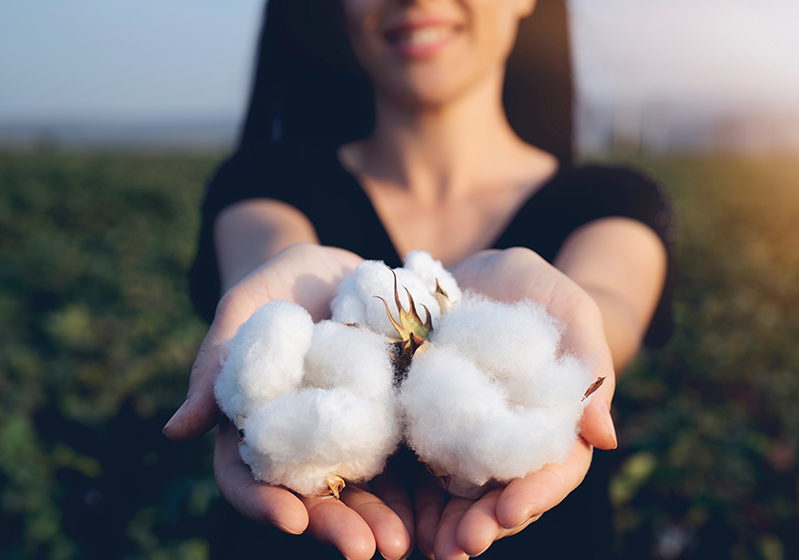
In November 2021, the COP26 summit held in Glasgow held up a red flag for global fashion industry and the need to act fast and now. According to McKinsey report, under the current trajectory, the fashion industry will overshoot greenhouse gas emissions needed to achieve a 1.5º C global warming pathway by over one billion metric tons.
Need to focus on sustainable cotton
Given this scenario, sustainable cotton plays a major role as one of the most used fibers. The US has been in the forefront of sustainable cotton cultivation for over three decades and in 2020, the country established the US Cotton Trust Protocol. It envisions setting a new standard in production of sustainable cotton where full transparency is at the core and continual development to establish a green footprint is a must. The US Cotton Trust Protocol has its origins in recognizing that the US cotton industry had an important role to play in the protection and preservation of the planet and that it must do so via a system that was measurable and quantifiable.
The US Cotton Trust Protocol recognizes growing expectation of brands and retailers to provide goods that have highly transparent supply chains and a robust sustainability profile and also provide evidence of this. This is becoming important as governments are imposing stringent regulations for the fashion and textile sectors about origin, source and sustainability of fibers in use.
A farm level, science-based program that sets a new standard in more sustainably grown cotton, the US Cotton Trust Protocol brings verifiable goals and measurements to cotton production – driving improvements in land use, soil carbon, water management, soil loss, greenhouse gas emissions and energy efficiency.
And as Gary Adams, president of the US Cotton Trust Protocol says, “The Trust Protocol measures, evidences and verifies sustainability credentials. With the Trust Protocol we are providing access to more sustainability grown cotton for brands and retailers, and science-based, data-led assurances that their consumers can have confidence in – something that has been lacking in the industry to date.”
Benefits for mills, manufacturers
Indeed, mills and manufacturers gain a lot when they join the Trust Protocol. The important benefit is being identified as part of a fully transparent supply chain and selected by brands and retailers as they look to source US cotton. In its two years, the Trust Protocol welcomed more than 800 mills and manufacturer members from Pakistan, Bangladesh, India, China, Latin America, Thailand, Indonesia, Vietnam, Turkey, Korea, Japan, Taiwan, the US and Western Europe. The program also added 40 global brands and retailers including J. Crew, Madewell, Levi Strauss & Co. and, Gap Inc. as well as global apparel manufacturer Gildan.
As per Mike Quinn, Vice President of Operations, Gildan/Frontier Yarns Inc, “As brands and retailers respond to customer demand for sustainability, mills are now joining the conversation. Membership in the program enables us to show we are an approved supply chain partner for brands and retailers who are sourcing more sustainably grown cotton.” Having set the benchmark, the US Cotton Trust Protocol is an inspiration for cotton-growing regions worldwide.
Egypt aims at doubling garment exports
Egypt is planning to double its garment exports. The clothing sector brings in $2.5 billion in exports annually. The plan is to increase annual exports by 8 to 15 per cent. An initiative will be launched to bankroll big and middle-sized industries with a five per cent interest rate, in the hope that this would help secure finances needed by the clothes sector.
Egypt’s textile exports increased 28 per cent during the first nine months of 2021. Exports of fabrics were up 17 per cent. The higher exports were driven by the gradual easing of restrictions in markets and the high vaccination rates across the world. Egypt wants to have stronger trade relations with Africa. Steps include taking part in international exhibitions in the African continent and setting up an Egyptian-African free trade zone.
The main countries Egypt is interested in are: Kenya, Zambia and Ivory Coast. Egypt plans to develop its textile industry with the objective of becoming the next textile factory of the planet. Machinery will be renovated and workers will be trained. The vision is to quadruple exports of textiles and garments by 2025. The aim is to support Egypt’s private sector upstream manufacturers’ competitiveness in the world markets.
Green Machine wins ITMF sustainability award
Green Machine has won the ITMF Awards 2022 in the sustainability and innovation category. Green Machine is the Hong Kong Research Institute of Textiles and Apparel’s research project. Green Machine is a hydrothermal treatment process that separates cotton polyester blends at scale by using only heat, water and a biodegradable green chemical. It has won a total of five awards since its launch in 2016.
Green Machine solves long-term challenges in recycling blended textiles. Everything going through the hydrothermal process can be reused. The separated fibers are ready for re-spinning. The cellulose powder decomposed from cotton can be turned into functional finishes or raw materials for textile application. The cellulose powder can even be transformed into a water retention agent for agricultural use. Green Machine has great potential to speed up the journey of sustainability and bring significant benefits to the textile industry and society as a whole.
ITMF Awards are organized by International Textile Manufacturers Federation which was founded in 1904 and which celebrates works of merit and notable achievements in the textile field. The category sustainability and innovation recognises achievements in the industry that have a focus on innovation, design, development and production. Such achievements must comply with the strictest standards of sustainability and respect for the environment.