FW
Textiles dominate Indian T&A exports
From January 2022 to August 2022, textiles took up the largest proportion of India’s textile and apparel exports.
Textiles had a 55 per cent share. Apparel had a 44 per centshare. Cotton yarn fabrics and products accounted for 33 per cent and chemical fiber yarn fabrics and products accounted for 13 per cent.
In terms of year-on-year changes, the growth rate of India’s textile and apparel exports continued to decline since the beginning of this year and turned negative in July and August, reducing by 14 per cent and 16 per cent respectively.
As for monthly changes, Indian textile and apparel exports did not perform well from July to August, yet a view from January to August reveals that India’s cumulative textile and apparel exports still achieved a year-on-year increase of six per cent, of which garments increased by 18 per cent while textiles declined by one per cent.
Exports of cotton yarn fabrics and products showed a negative year-on-year growth since May. Chemical fiber yarn fabrics and products began to see negative growth in July, and apparel exports also declined slightly from July to August. India’s cotton yarn fabric exports showed sign of slowdown as early as the second quarter of this year.
Texworld US in 2023
Texworld Evolution, Apparel Sourcing and Global Footwear Sourcing will be held in the US,January 31 to February 2, 2023.
The focus will be on transformation and invigoration.Reflecting the ever-changing climate of the globally connected industry, Texworld Evolution serves as a nexus for growth and the future of the largest sourcing event on the East Coast.
The three co-located events are set to bring attendees three full days of global sourcing, networking, education, workshops, curated trends and more. With a focus on expanding fashion textile, component, and apparel sourcing, the evolved and elevated show floor will feature multiple new product and service categories including finished footwear and design studios as well as exciting new partnerships to be announced soon.
In addition to the event’s mainstay features, the Lenzing Seminar Series, Textile Talks, and Texworld Trend Showcase, visitors can discover even more inspiration and innovation through live interactive workshops, informative demonstrations, and experiential activations. The event will also include enhanced networking events and enlarged meeting areas on the show floor to create a more inclusive, community building space for both attendees and exhibitors.
Material innovation in the textile industry is driving sustainability forward in new and exciting ways, and attendees can experience the latest steps in this journey at the show.
VF aims at higher revenue
VF Corp is following a strategy to accelerate revenue growth over the next five years. The strategy includes expanding into adjacencies that complement its current brands and tapping into consumer growth spaces, managing brands at different stages of growth as well as through mergers and acquisitions, and business development, and connecting directly with consumers and operating more efficiently, using consumer data and analytics, direct-to-consumer centric supply chains, for a digitally enabled consumer experience that also caters to international shoppers. The aim is to deliver superior returns to shareholders over the long term.
Coinciding with the five-year growth plan, VF Corp has cut its full-year 2023 guidance on the back of a disappointing second quarter. The current environment, a weaker than anticipated back-to-school performance at Vans and increasing inventories leading to a more promotional environment in North America in the fall are seen as the reasons for the lower-than-expected results.
Looking ahead, VF now expects total revenue to be up about five per cent to six per cent versus its previous outlook of at least seven per cent growth. The company is actively addressing challenges and is confident of generating consistent, sustainable growth across its brand portfolio over the long term.
VF Corp is the owner of Vans, Supreme, The North Face, Timberland, and Dickies.
US dominates Vietnam’s exports, UK too shows growth
Out of Vietnam’s garment exports in the first half of 2022 more than 50 per cent went to the US.
Japan is the second largest market for Vietnam. Exports to Japan in the first half of 2022 were nine per cent of Vietnam’s exports, South Korea eight per cent, China four per cent and Canada four per cent. Germany, UK, France, Netherlands, Australia, Belgium and Switzerland were the other markets of Vietnam with exports of more than one per cent each.
Vietnam’s garment exports to the UK were up 88 per cent in August 2022 as compared to August 2021. Vietnamese enterprises are taking advantage of the UK-Vietnam Free Trade Agreement to expand their presence in this market.The UK accounts for less than two per cent of Vietnam’s total export value of garments. However, with the advantage of lower tariffs thanks to the agreement, Vietnam has a big chance to expand its market share. Under the agreement, about 42 per cent of Vietnamese textile and garment exports will be liberalised at entry into force, while some garment products will see tariffs eliminated after six years.
Vietnam is the world’s third largest exporter of garments. But the industry is facing many difficulties including a steep fall in export orders due to soaring inflation in major markets and rising input costs.
Global secondhand apparel market grows at 14 per cent
Trends favor secondhand apparel, the global secondhand apparel market is growing at 14 per cent a year.
Easy availability and low cost, changing lifestyles and fashion tastes, and rapid penetration of online shopping platforms offering a wide range of secondhand apparel are some of the key factors driving demand. While living conditions have improved, and access to services has increased, global competition has resulted in the introduction of a variety of new product innovations such as the recycling of discarded clothing and selling it.
Shifting consumer behaviour, replacing rapid fashion purchases with resale, is one of the key factors driving demand for secondhand clothes.Consumers are switching to thrift to reduce harmful production as a result of growing awareness about ethics and sustainability.
The dresses and tops segment is showing significant growth. The women’s segment is expected to hold a share of around 46 per cent in the secondhand apparel market.The US holds a share of around 86 per cent in the North American secondhand apparel market.
Secondhand apparel market players are formulating strategies and are focusing on expansion of their business by introducing new brands and widening their inventory portfolio. They are also focusing on eco-friendly ways of carrying on business by introducing eco- friendly secondhand apparel.
Vietnam faces fall in export orders
Vietnam is facing reduced export orders for its textiles, garments and footwear.
This is mainly because of inflation in the US and EU, which is forcing consumers to tighten spending. Demand for high-end clothing items such as shirts and T-shirts made from recycled cotton fibers have slowed down in the second half of 2022.US customers have shortened the period of ordering exports to three months before the deadline for goods delivery instead of six months due to high inventories and inflationary pressures.
In the US and Europe, although world fuel prices have decreased, inflation in these markets is still high to make people tighten their spending. This has negatively impacted the textile and garment exports of Vietnamese enterprises because the two markets account for a large proportion of Vietnam’s textile, garment and footwear exports. So the leather and footwear industry is in inventory due to the reduced consumer demand.To cope with this situation, footwear enterprises have been forced to reduce overtime.
At the same time they are negotiating with partners to do orders that were signed during the pandemic for maintaining operations and ensuring employee income. Some companies are looking for short-term opportunities in the domestic market or are looking for orders in new markets.
Yarn Expo Shenzhen, concurrent events in Nov
Yarn Expo Shenzhen will be held November 2 to 4, 2022. This is a trade fair that highlights international yarn and fiber trends. Suppliers will be showcasing a wide selection of yarn and fiber advancements, from high-quality, natural products to innovative synthetics, as well as offerings in the sustainable and functional yarn categories.
In addition to the customary yarn and fiber categories, sustainable and functional materials will be a key focus at the fair.Following the success of the previous edition, which attracted 24,463 buyers, the 2022 fair will host a comprehensive array of forum sessions and seminars. Three other textile trade fairs will be held concurrently with Yarn Expo Shenzhen – Intertextile Shenzhen Apparel Fabrics, Chic, and PH Value. Together, these fairs represent the entire textile value chain and will provide a wide variety of sourcing options and networking opportunities to maximise business outcomes.
Shenzhen is home to thousands of designers, brands, and garment producers, connecting with major yarn and fiber manufacturers in categories such as women’s wear, men’swear, children’s wear, underwear, denim, and wool. With evidence attesting to the region’s manufacturing, consumption and export potential, Yarn Expo Shenzhen is a well-placed platform for industry players to reach out to key contacts and grow their businesses.
Fast Fashion grows at 7.7% CAGR despite dissent
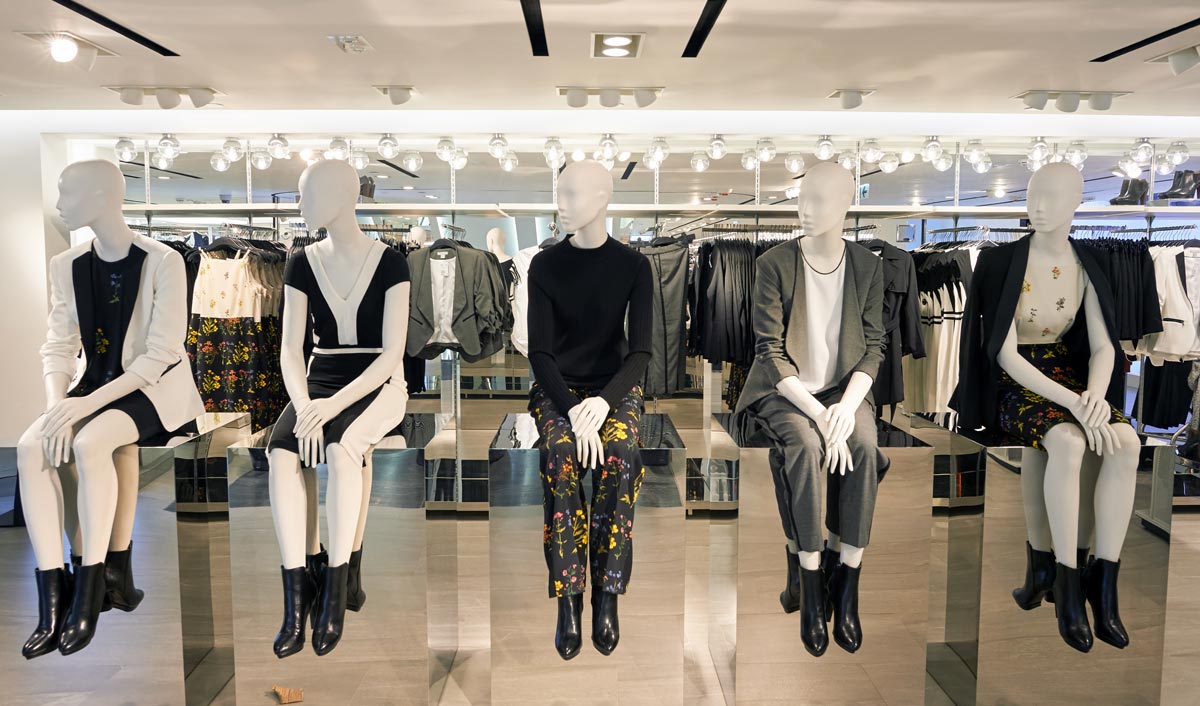
As underdeveloped countries transit to developing status, their retail sectors are getting better organised and enabling a large number of brands use the affordability and accessibility platforms to reach out to the masses. The global fast fashion market size is expected to grow from $91.23 billion in 2021 to $99.23 billion in 2022 at a compound annual growth rate (CAGR) of 8.8%. The fast fashion market is expected to grow to $133.43 billion in 2026 at a CAGR of 7.7%.
A growing number of dissenting voices are on the rise, yet not heeding the environmental concerns; fast fashion is on a trajectory to greater successes. The demand and popularity saw the rise of fashion brands like never before, Zara, H&M, Uniqlo, Forever 21, GAP and Primark being some of them.
The Rio Earth Summit in 1997 had already raised the green issues of the fashion industry in general and today it rings true, particularly for fast fashion. British fashion designer Stella McCartney expressed “I’m here today because I'm begging for policy to be put in place for the fashion industry,” she tells Forbes at the opening of her “Future of Fashion: An innovation conversation with Stella McCartney” exhibit at the Kelvingrove Art Gallery and Museum in Glasgow, on the sideline of the COP26 UN climate conference.
Is sustainable fashion really gaining grounds?
Harvard Business Review in a recently published article remains critical of the efforts that the fashion industry claims it is undertaking to be more sustainable and responsible. Clothing and accessories ranging from swimsuits to wedding dresses are marketed as carbon positive, organic, or vegan while yoga mats made from mushrooms and sneakers from sugar cane have come into the market, stoking the consumers’ environmental consciousness.
New business models including recycling, resale, rental, reuse, and repair are sold as environmental life savers. Harvard Business Review points out that these have really had little impact as the fashion industry’s environmental track record remains abysmal for the last 25 years. Post pandemic trickle effect percolating from celebrities to masses
Post pandemic, the consumer worldwide waking up to the stark realities of fast fashion and the promise of responsible consumption through sustainable fashion has come to the forefront.
Designers and media are playing their role, educating people of fast fashion’s excesses. Technology, research and development are introducing more viable and durable fabrics whilst economics is making the most of reuse and repair. Sustainable shopping is growing in popularity, particularly in developed nations. Brands such as Levi’s, Patagonia, Marine Layer and Reformation are focusing on quality over quantity with completely eco-friendly clothing lines.
Rentals are also being pushed just as much as pre-loved clothing, with e-commerce sites leading the way. “Renting formal attire is the better economical and environmental choice when it comes to finding a one-time-use outfit,” said Angela Nunes, a Rent-the-Runway representative. “Most formal pieces are produced cheaply, sold for large amounts, and are never worn again.”
It seems that the trickle effect has started, percolating from celebrities to masses. However, it remains to be seen if sustainable fashion can become a sustainable business model.
Bangladesh aims for Gulf market
Bangladesh’s garment makers are looking to expand their trade with the Gulf countries.
As of now three countries, China, India and Pakistan, currently control the Gulf market. Bangladesh’s garment manufacturers’ sales in their established markets, the EU and the US, are declining amid the political crisis in Europe due to Russia’s invasion of Ukraine. So to grow their business they also want to focus on the Gulf markets. For one delivery times to the Gulf are shorter.
To meet demand in the Middle East, however, the industry would first need to diversify its production, which is previously limited to the production of shirts and jeans. The GCC market is diverse and Bangladesh will undoubtedly need to put in a lot of effort. Of Bangladesh’s apparel exports 60 per cent goes to the European Union and 20 per cent to the US.
The current market situation in the Gulf, where imports have been increasing for the past few years, could present an opportunity for Bangladesh.Bangladesh will have opportunities to enter it, but needs to diversify on the supply side and also needs to improve its competitiveness. About 2.5 million Bangladesh expatriates live and work in Saudi Arabia, and another 7,00,000 in the United Arab Emirates.
Adidas unveils recyclable viscose tracksuit
Adidas has unveiled a viscose sportswear garment. Called Adidas by Stella McCartney, it is designed to demonstrate the potential of a circular fashion ecosystem. The tracksuit forms the pinnacle expression of the brand’s pilot circularity program. Consumers can wear it until it's worn out and then return it by scanning the QR code on the Adidas app. The product can then be sent back to the recycling stream where it can be broken down to be reused, ensuring less waste goes into the fashion eco-system. This launch moves Adidas closer to its goal to help end plastic waste.
The tracksuit has been made using 60 per cent viscose and 40 per cent organic cotton. Built on a foundation of comfort, the oversized tracksuit blends peach-soft material with a neutral light grey and black color paletteto provide a contemporary canvas for the next generation to move through the world.
The Adidas by Stella McCartney garment is Adidas’ milestone which demonstrates the successful implementation of the entire value chain to produce a commercial end-of-life garment. To create and test this garment Adidas joined forces with leading innovators in the fashion industry. The consortium collected and sorted post-consumer end-of-life textiles and regenerated them into a new textile fiber called Infinna.