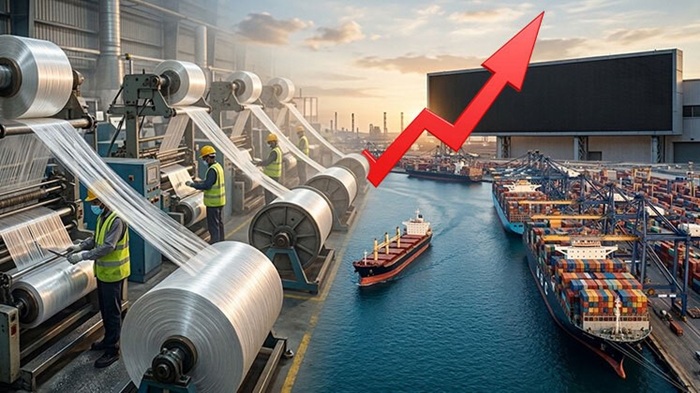
What began as a geopolitical escalation in the Gulf has rapidly metastasized into a full-scale industrial disruption for India’s textile economy. The effective closure of the Strait of Hormuz, has done more than rattle oil markets; it has ruptured the foundational supply lines of the global synthetic fibre chain.
For India, where the textile sector is deeply intertwined with imported petrochemical derivatives, the fallout has been swift and unforgiving. Nearly a fifth of the world’s crude oil and a disproportionate share of polypropylene exports flow through this narrow corridor. With Gulf-origin feedstocks such as naphtha and paraxylene suddenly constrained, Indian manufacturers are confronting an unprecedented raw material vacuum. Contracts are being renegotiated under duress, spot cargoes are disappearing, and force majeure clauses have moved from legal fine print to operational reality.
Polyester’s price spiral and the unraveling cost curve
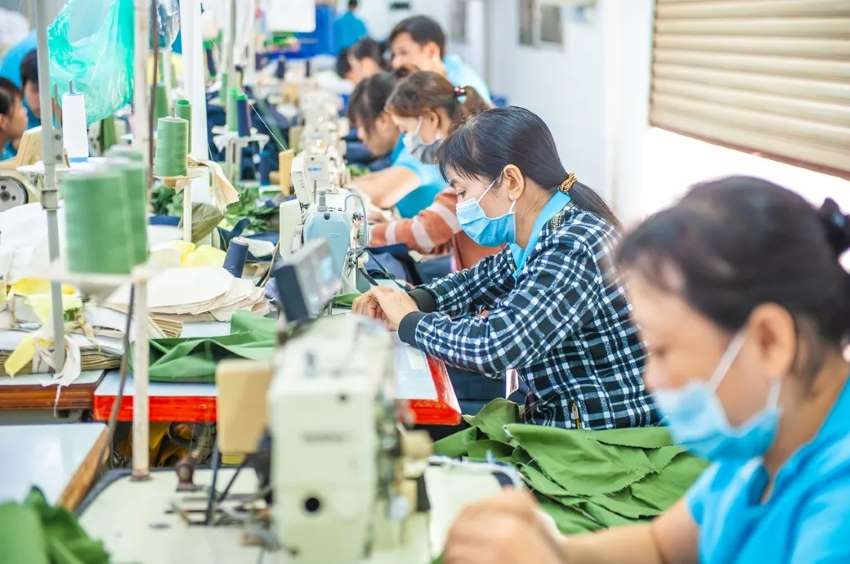
Inside India’s spinning mills and polymer plants, the crisis is manifesting as a sharp and immediate cost escalation. Polyester, the backbone of India’s mass-market apparel ecosystem, has become the first casualty of the feedstock squeeze. Prices have surged within days, compressing already thin margins and destabilizing procurement cycles. The scale of volatility is captured starkly in the movement of raw materials.
Table: Polyester price volatility
|
Raw Material |
Early Feb 2026 Price |
Mid-March 2026 Price |
% Change |
|
|
Polyester Staple Fibre (1.2D) |
Rs 102.25 /kg |
Rs 114.25 /kg |
+11.7% |
|
|
Purified Terephthalic Acid (PTA) |
Rs 74.50 /kg |
Rs 94.98 /kg |
+27.5% |
|
|
Polypropylene (PP) Raffia |
$1,000 /MT |
$1,310 /MT |
+31.0% |
|
|
Brent Crude Oil |
$82.00 /bbl |
$101.68 /bbl |
+24.0% |
|
The sharpest showck has come from Purified Terephthalic Acid, the critical upstream input for polyester production. A near 28 per cent spike in PTA prices within weeks has cascaded downstream, pushing polyester staple fibre costs up by double digits. Domestic giants such as Reliance Industries and Haldia Petrochemicals have responded with successive price revisions, reflecting the steep rise in imported naphtha costs, which have crossed the $800 per metric tonne threshold.
What makes this moment particularly destabilizing is not merely the magnitude of the increase, but its velocity. The synthetic fibre value chain, typically accustomed to gradual input shifts, is now operating in a near real-time pricing environment where procurement decisions carry immediate financial risk.
The long route around Africa and the cost of delay
As feedstock scarcity tightens, logistics has emerged as the second front of disruption. With the Gulf corridor effectively compromised, global shipping lines are abandoning traditional routes and diverting vessels around the Cape of Good Hope. This detour, while necessary, is proving economically punitive.
Transit times have stretched by as much as three weeks, a delay that is particularly damaging for India’s fast-fashion export clusters. In hubs like Tiruppur, where delivery schedules are calibrated to seasonal retail cycles in Europe, such delays threaten to render shipments commercially irrelevant upon arrival. The just-in-time model that underpins global apparel sourcing is being fundamentally challenged. Freight economics have deteriorated in tandem. Emergency conflict surcharges, sometimes reaching $4,000 per container—are now being layered onto already elevated shipping costs. For exporters, this creates a dual pressure point: escalating input costs at origin and shrinking reliability at destination. European buyers, facing their own demand uncertainties, are increasingly unwilling to absorb delays, raising the specter of order cancellations and contract penalties.
Domestic reallocation and the polymer supply crunch
The Indian government’s response has underscored the severity of the crisis. Invoking the Essential Commodities Act, the Ministry of Petroleum and Natural Gas has initiated a diversion of gas supplies toward priority sectors such as domestic cooking fuel and transport. While socially necessary, this move has had cascading industrial consequences.
Petrochemical facilities operated by ONGC Petro additions and GAIL have experienced curtailed gas allocations, forcing production adjustments and, in some cases, output reductions. The impact is particularly acute in polypropylene-based segments.
For manufacturers of nonwoven technical textiles, critical inputs for hygiene, medical, and filtration products, the result is a shortage within domestic market. Even locally sourced polymers are becoming difficult to secure, as supply is rationed and pricing becomes increasingly opaque. The term ‘supply desert’, once reserved for global shortages, is now being used to describe conditions within India’s own industrial ecosystem.
From China plus one to feedstock plus one
Yet, embedded within the disruption is the outline of a shift. For global brands already pursuing a China Plus One approach, the Hormuz crisis has introduced a new dimension: feedstock security. The conversation is no longer limited to diversifying manufacturing bases; it is extending upstream into the sourcing of raw materials themselves. India, with its growing man-made fibre ecosystem, is emerging as a potential beneficiary of this shift. The government’s Production Linked Incentive framework, anchored by over Rs 10,700 crore in committed investments, is now being reframed as a strategic hedge against global supply volatility. The focus is increasingly on high-performance fabrics and integrated value chains that reduce dependence on single-region feedstock pipelines.
This shift demands more than incremental capacity additions. It requires Indian manufacturers to reposition themselves as vertically integrated players capable of offering not just cost competitiveness, but supply assurance. In effect, the industry is being nudged toward a material science-led future, where resilience becomes as critical as scale.
A high-stakes decade for synthetic dominance
India’s textile sector stands at a complex inflection point. With ambitions to scale exports to $100 billion by 2030, the industry has been aggressively shifting towards MMF and technical textiles, segments that promise higher margins and global relevance. The current crisis, however, has exposed the fragility underlying this transition.
Historically anchored in cotton, India’s synthetic expansion revals its most significant shift since the dismantling of global textile quotas in the early 2000s. But unlike cotton, which is domestically abundant, synthetic fibres tie the industry to global energy markets and geopolitical fault lines.
The Hormuz blockade has made that dependency impossible to ignore. It has transformed distant geopolitical tensions into immediate operational risks, compressing timelines and forcing strategic recalibrations across the value chain.
What emerges from this disruption will likely define the path of India’s textile economy for the next decade. Whether the sector can convert this moment of stress into a platform for resilience will determine if India evolves into a true global hub for synthetic textiles or remains vulnerable to the next shock that ripples through a narrow stretch of water in the Persian Gulf.