


FW
Adidas Q2 profit down 28 per cent
Adidas’ operating profit fell 28 per cent in the second quarter.
The German-based apparel brand has trimmed its yearly profit outlook for the second time in three months, citing a deterioration of traffic trends in Greater China as well as a significant inventory build-up linked to lower consumer demand in Western markets as of September.Adidas, the world’s second-largest sports apparel manufacturer after Nike, is battling a unique series of challenges.
The company’s shares are down 65 per cent since January.Against a challenging macroeconomic market backdrop, the company is diligently focusing on all factors it can to maintain its growth momentum in western markets and to accelerate growth in Asia-Pacific. Now, for the third quarter, Adidas is reporting a preliminary four per cent rise in revenue. However, net income for the quarter is expected to drop 63 per cent from the same period a year ago.Adidas is finding itself saddled with excess inventory stemming from last year’s supply chain snags and foresees higher promotional activity during the remainder of the year to free up space for new merchandise. It is currently offering up to 65 per cent off on thousands of shoe and clothing styles.
The athletic footwear market as a whole is in a tough spot from shifting consumer preferences, softening demand and higher costs.
Bangladesh eyes technical textiles to expand RMG portfolio
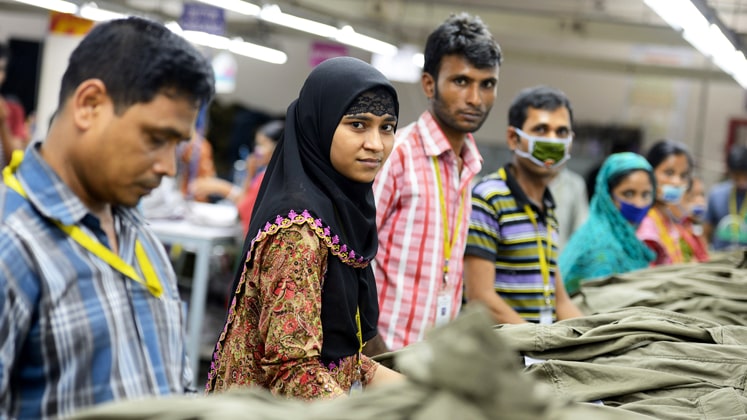
Second only to China, Bangladesh carved out an awe-inspiring success story in the global RMG supply. Exports worth $42 billion last year contributed 83 per cent to its total export volume. Whilst the RMG sector continues its growth, the two-year long pandemic and drop in demand for RMG imports from the West thereafter created an economic crisis for the nation. The Bangladesh Garment Manufacturers and Exporters Association (BGMEA) have targeted the $100 billion mark of export by 2030. After the hit it took in the last two years, Bangladesh is keen to diversify its RMG portfolio.
Technical textiles the way forward
This is where technical textiles present an opportunity. Futuristic technical textiles used in planes, cars, and firefighters’ uniforms and protective clothes are not what comes to mind in the RMG sector but this category represents a huge potential for Bangladesh’s diversification plan. Textile technology has become increasingly commercially viable and is experiencing rapid increase in demand. Garments made of technical textiles can offer many qualities which traditional garments cannot; they can be antibacterial, insect repellent, flame retardant, odorless and much more, allowing the wearer to reduce risks and bodily harm.
Manufacturers of technical textiles use both natural and manmade raw materials. Manmade materials, which currently account for 40 per cent of total fiber consumption across the entire textile industry, include items like viscose, nylon, acrylic and polypropylene. The global market for technical textile is projected to reach $208.5 billion by 2024 from $178.92 billion in 2020. The market is expected to reach $298.1 billion by 2030. Europe represents the largest regional market for technical textiles, accounting for an estimated 28.8 per cent share of the global total.
Asia Pacific lead market
Asia Pacific dominated the technical textile market with a share of 45.9 per cent in 2019. China is the largest exporter of technical textile products with 24 per cent share; followed by the US, Germany and Republic of Korea with 10 per cent, 9 per cent and 4 per cent share respectively.
Within the Asia Pacific region, China and India are two leading countries in the technical textile sector. India is the world second largest polyester producer and its market size is $19 billion. India has set up a scheme within an average growth rate of 15-20 per cent to increase their domestic market size of technical textiles to $40-50 billion at 2024; through market development, technological development, international technical collaborations, marketing and investment promotion.
Bangladesh has its work cut out as they venture into the technical textile segment. In 2010, the Bangladeshi technical textiles consumption market value was worth $281.1 million and production value was $252.2 million. Whilst the pandemic may have been doom and gloom for Bangladesh’s RMG sector, the silver lining came in the form of technical textiles as demand for gloves, mask, PPE kits, etc, grew. During this production process, Bangladesh realised it lacks the infrastructure, research facilities and skilled labor to compete significantly in the global market. The government of Bangladesh has launched various conduct schemes and policies for technical textile manufacturers to make them globally competitive.
As global garment sector regains post-pandemic,US to lead America market
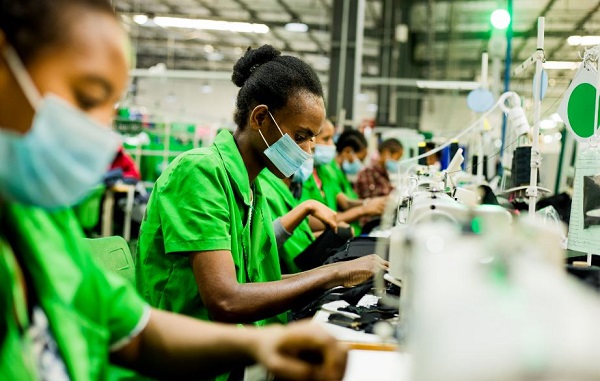 Worldwide, the value of the apparel market was worth nearly $527.1 billion in 2020, with a decline in CAGR by 0.6 per cent since 2015. Of course, it was expected as the Covid-19 pandemic had created a socio-economic upheaval that included disruption of supply chains, loss of consumer intent and an unpredictable future. However, 2022 is an indication that the sector is slowly coming back in to the game. Recovery and growth are forecasted to reach $842.7 billion by 2025 and $1,138.8 billion by 2030.
The US to be key growth driver
Forecast has it that the US will be the largest textile market for the North Americas as it continues to be the largest producer of cotton, largest exporter of raw cotton and the largest importer of raw textiles. The fashion sector in the US will contribute significantly as fast fashion with its online channel approach is also experiencing rapid growth. The emerging popularity of smart textiles will also play an important role and this particular niche segment will continue using optical fibers, metals, and various conductive polymers to interact with the environment.
Major companies are responding to increasing awareness and demand for sustainability by restructuring business models and investing in manufacturing practices that target sustainable products. For instance, DuPont’s plant-based pretend fur for performance fashion attire and Eastman’s usage of discarded carpet into new material is anticipated to open new growth avenues over the forecasted time-frame. The pandemic had acted as a restraint to the world market. International trade restrictions because of breakdown of supply chain and decline in textile product consumption amid the pandemic had a negative market impact. However, the market is anticipated to witness a powerful recovery throughout the forecasted time-frame because of government support and increasing public awareness concerning effective precautionary measures.
Cotton will remain number one
Cotton continues its pole position and accounting for nearly 40 per cent share of the world textile revenue in 2021. Cotton being the world’s most significant fiber is attributed because of its superior property like high strength, absorption, and color retention. China, India, and the US are the main producers of cotton and cotton-based merchandise within the world. Chemical-based textiles also play a vital role within the entire textile producing sector. Chemicals are definitely harmful for the environment but will continue to be used as mercerizing agents, neutralizers, leveling agents, binders, thickeners, and stain-removers within the textile trade. The reason is clear – substitutes that are as efficient are still under development. Wool-based textile accounted for 13.3 per cent of the market in terms of revenue in 2021. Wool primarily composed of H, carbon, sulfur, and gas, is extensively used to manufacture insulation merchandise like winter wears, blankets, carpeting, upholstery, and others. Alternative raw materials employed in the manufacturing of textiles are silk, minerals like glass fibers and asbestos, and other man-made material. Silk finds intensive use within the production of garments, surgical suture, parachutes, silk comforter, and numerous others having high strength and physical property is anticipated to drive the section growth over the forecast time-frame.
As the forecast shows a streak of positive growth, the manufacturing sector is bounding back with confidence.
India’s textile and apparel export face challenges with currency fluctuations, lack of FTAsz

The Indian textile and apparel sector’s export turnover from April to July 2022 was $12.89 billion. The data released by the Confederation of Indian Textile Industry (CITI) recently indicates this sector could face numerous challenges in future. Textile export sector took the biggest hit with a downgrade of 24.15 per cent whilst apparel exports was only 0.6 per cent. The total cumulative decline during July 22, according to CITI, stood at 15 per cent. Overall, apparel export sector stood in a far better position than the textile export sector.
However, Apparel Export Promotion Council (APEC) chairman Narendra Goenka is optimistic, as he believes the economic crisis faced by Sri Lanka, energy crisis in Bangladesh and floods in Pakistan leave an open area for India, which continues to have its raw material intact and can therefore, make up for losses by the end of the fiscal year. T Rajkumar, Chairman of CITI points out although the recession in developed nations slowed down demand for textile products, production disruptions in competing nations would allow India to gain ground. Textile is significant part of India’s merchandise exports worth $313 billion as it contributes 11 per cent and is also an important employer of skilled labor.
Falling currencies cause grief to Indian exports
Whilst the Indian currency is impacted by growing strength of the US dollar, the currencies of India’s competing nations such as Sri Lanka, Pakistan, Bangladesh and Vietnam, have experienced greater weakening compared to India rupee. This leaves India in a situation where it can’t compete cost-wise and is seeing itself being out priced in the global market. The cost of labor in India is no longer competitive either as these four countries have experienced high rates of unemployment suddenly find a huge workforce at extremely low rates. These are external factors that India has no control over and there is nothing it can do about it except seek alternatives to soften the blow.
Will Indian government’s support help?
Realizing the importance of keeping the textile and apparel export sector in good health, the government has stepped up its support but the question remains that will it be enough? The Union Budget of 2021-22 did include the establishment of textile parks which will provide a seamless operation from sourcing of raw material to end product which in turn will lower cost of manufacturing. The sector has also been included for allocations under the Production Linked Incentives (PLI) scheme. This scheme is designed to boost production in the manufacturing sector and attract not only domestic but foreign investments to strengthen it. However, CRISIL Research indicates textile parks and PLI may work out in the future but there is a lot more that needs to be addressed to arrest the decline of the textile and apparel exports sector.
The lack FTAs is also compounding the situation as India’s competitors enjoy a clutch of such deals as under-developed nations. At the moment, the Indian government is looking at two important FTAs with the UK and Australia, which when finalized, should ease the situation a bit but more is required. On July 1, 2022, India and the European Union went back to revive a nine-year-old negotiation towards and FTA that can be a game changer for the former.
The introduction of the Remission of Duties and Taxes on Export Products (RoDTEP) scheme targets the reduction of tax burden of exporting entities. The scheme has also been supported by additional structural reforms that should revive the textile value chain. Whilst the Indian government is trying its best to support the sector with restructures, reforms and incentives, they are not expected to have any significant impact for the next three to four years and the debate at this hour is will it be too little, too late?
Vietnam yearly yarn imports up, exports down
Vietnam's yarn imports moved up by 23 per cent year-on-year but declined by one per cent month-on-month and its exports dropped by 20 per cent year-on-year and seven per cent month-on-month.
In terms of countries, the main origins of yarn imports in September 2022 were China, Taiwan and Thailand. By country, yarn exports to China, South Korea and the US accounted for 47 per cent, nine per cent and four per cent respectively.Vietnam's textiles and apparel exports increased by 19 per cent year-on-year but dropped by 31 per cent month-on-month.
Vietnam’s cotton imports in September were down 11 per cent over the same period last year yet up five per cent from the previous month. Australia was the main source of Vietnam’s cotton imports in September, accounting for 53 per cent of total imports. Imports from US and Brazil accounted for 33 per cent and two per cent respectively.
Based on export value, Vietnam’s textiles and apparel exports in September dropped significantly compared with that in August, yet were still higher than that of last year.In September, Vietnam's textile and apparel exports declined significantly month-on-month and the exports value was well below the highest level of 2022, yet still showed positive growth from the same period of last year.
India: LMW net profit up 139 per cent
For the second quarter Lakshmi Machine Works net profit rose by 139 per cent. Net sales during the quarter increased by 50 percent.
Revenue of the textile machinery division was up 61 per cent. Revenue of the machine tool and foundry division was up 24 per cent. Total expenses rose by 47 per cent due to higher raw material costs, higher employee expenses and higher other expenses.
Lakshmi Machine Works is a leading textile machinery manufacturer in India and one among the three in the world to produce the entire range of spinning machinery. Lakshmi Machine Works provides spinning technology to Indian textile mills.The company is a leading textile machinery manufacturer and has brought out various innovative products during the year and worked towards its three pillars – automation, digitization and sustainability – with a greater focus on after sales and service.
Currently exports sales contribute to more than 40 per cent of the total revenue. The company has a strong presence in Bangladesh, Vietnam, Pakistan, Turkey, Indonesia, Iran, China and many African countries.
LMW Aerospace is involved in the production, assembly, supply of products and rendering of services for the aerospace industry. It is yet to commence operations.Lakshmi Machine is making the said investment in order to support working capital requirements of the wholly owned subsidiary company upon commencement of business operations.
Kornit offers complete digital solutions
Kornit Digital has a complete portfolio of high-volume digital production that empowers the industry to adapt for the new rules of supply and demand.
The direct-to-garment and direct-to-fabric solutions reflect the company’s dedication to ensuring brands and retailers can succeed in an industry often defined by waste and overproduction. The Kornit Apollo platform for highly automated, digital mass production on demand is an end-to-end system that ensures optimal total cost of ownership and the highest output per operator, with expected availability in mid-2023.Allowing the industry to realize the promise of on-demand, end-to-end fulfillment and production is the KornitX workflow solution as well as its new Smart Curing solution for delivery of highly durable and high-quality finished products. Holistically, the integrated Kornit portfolio enables companies to adopt lean and agile, on-demand fulfillment more effectively – from pixel to parcel to doorstep.
Kornit is a market leader in sustainable, on-demand digital fashion and textile production technologies. The company is writing the operating system for fashion with end-to-end solutions including digital printing systems, inks, consumables, and an entire global ecosystem that manages workflows and fulfillment. Headquartered in Israel with offices in the US, Europe, and Asia Pacific, Kornit Digital serves customers in more than 100 countries and states worldwide.
Kering Q3 revenue up 14 per cent
For the third quarter of 2022 Kering’s revenue was up 14 per cent compared to the third quarter of 2021.
Revenue in the directly operated store network continued to grow at a rapid pace, up 19 per cent on a comparable basis. All regions posted growth.Momentum remained very strong in Western Europe, supported by both local customers and tourists, particularly from the US. Conversely, this factor weighed activity in North America itself. In Japan, revenue rose sharply.
Performance in Mainland China was mixed, impacting sales in Asia-Pacific, where overall trends posted a notable improvement. Wholesale revenue rose two per cent. Yves Saint Laurent’s revenue was up 30 per cent. Bottega Veneta’s revenue was up 14 per cent. Kering’s solid performances in the third quarter underscore the strength of the group. Kering delivered sharp top-line growth, both versus last year and from pre-pandemic levels. The ongoing focus on the exclusivity of its brands and on the quality of their distribution is yielding very positive results and reinforces their positioning in their key markets.
Kering is a global luxury group that manages the development of a series of renowned houses in fashion, leather goods and jewelry. By placing creativity at the heart of its strategy, Kering enables its houses to set new limits in terms of their creative expression while crafting tomorrow’s luxury in a sustainable and responsible way. Kering has more than 42,000 staff members.
Global textiles face bad business scenario: ITMF
The global textile industry is facing dismal prospects. So says the International Textile Manufacturers Federation.
Indicators for order intake, order backlog, and capacity utilisation rate have fallen. The business situation is very bad in Asia, although improving. While all segments have found themselves in negative situations, spinners’ situation has plunged to an unprecedented level. Expectations have improved in South Asia, North and Central America, and Africa. Spinners have also better prospects for March 2023, globally, indicating potential relief.
Companies in north and central and especially in south America have seen order intakes increase while the Asian regions continue struggling with an unsatisfactory order situation. Order backlogs have fallen on an average across all regions. South America is an exception; both order intake and backlog have increased. Only dyers/finishers and knitters/weavers have experienced a small increase in order backlog. In all other segments order backlog has fallen. While the capacity utilization rate dropped globally in September 2022, it increased in South America.
Fiber producers registered a steady decrease in capacity utilization rate and home textile producers seem to have reversed their downward trend. Weakening demand, high raw material prices, high energy prices, and inflation are the four major concerns of the global textile industry for the next six months.
Global garments market grows at four per cent
The global garments market is growing at four per cent a year. High-end and luxury brands are moving towards a see-now-buy-now model, in order to capitalize on consumers inclination for discretionary expenditure, thereby appealing to their desire for instant gratification.
Reshoring (in the United States and Europe) and sustainable production are key strategies of manufacturers who are making significant investments in order to gain higher social acceptance, and to ensure faster deliveries with provisions for customizations.Women’s and men’s apparel generate 63 per cent of the revenue, and the rest is accounted for by hosiery, sports and swimwear, intimate apparel, and clothing accessories.
Garments marketed as fast-fashion designs have a high number of takers, especially in emerging markets. A rising middle class in emerging markets, along with their improved fashion-consciousness, is driving increased per capita expenditure. Market players are focusing on ensuring that the latest fashion trends can be incorporated into their offerings and they hit stores in a matter of weeks, resulting in the undercutting of specialist players who once led the industry.Most of the market is still controlled by brick and mortar stores. However, sale of garments online is expected to grow at a significant rate.











