FW
Can Hong Kong recover its reputation for luxury?

Year 2022 was the worst for Hong Kong, the already politically-charged South East Asian metropolis faced with a raging fifth wave of Covid-19 infections, stifling pandemic curbs, business closures, recession and falling home and stock prices. Known to be the priciest retail area in the world, Russell Street in Causeway Bay and Tsim Sha Tsui in Kowloon were veritable paradise for luxury shoppers, particularly from mainland China. From Hermès to Chanel, from Tiffany’s to Harry Winston, from Patek Philippe to Vacheron Constantin, Hong Kong’s luxury streets had them all.
Today, these areas are witnessing the departure of the famous names to be replaced by supermarkets, fast food restaurants and large dollar shops as Hong Kong has fallen from grace. Retail, along with commercial and residential spaces took a big hit and prices tumbled like never before. According to Cushman & Wakefield, a firm that tracks luxury retail space rents across the world, Hong Kong has been replaced by New York as the priciest.
Are heydays over for the city?
The metropolis will be among the region’s worst performers, overtaken by others that opened up earlier. Singapore, whose economy grew 4.4 per cent in the third quarter compared with the same period last year, upgraded its GDP forecast for the year to 3 to 4 per cent growth. Recently, Hong Kong downgraded its full-year economic forecast from between 0.5 per cent growth and 0.5 per cent contraction to a 3.2 per cent drop amid an ongoing recession. This was despite the second round of a consumption voucher scheme to boost the economy, which cost the government HK$68.1 billion (US$8.7 billion).GDP fell by 4.5 per cent in the third quarter from a year earlier, following a 1.3 per cent decline in the preceding quarter, while real GDP for January to September dropped by 3.3 per cent compared with the same period the previous year.
The city was also hit by global recession and incessant lockdowns in different parts of mainland China, which dealt a blow to production and Hong Kong exports. Retail outlets in Russell Street and TST now cater to the daily needs of Hong Kong residents and citizens rather than luxury goods shoppers from mainland China.
The tide started turning since 2014 when Hong Kong saw the beginning of the decline of mainland Chinese luxury customers. The pandemic isolated Hong Kong and luxury brands didn’t see any reason to linger when mainland China, poised to overtake the USA as the world’s largest luxury market, had the ideal place, Hainan, to invest and retail. Since 2021, the luxury brand exodus has been very evident and local experts predict that they are unlikely to return, signaling the end of heydays of luxury for this major international hub of South East Asia. Regional experts say that not only has Hainan gained but also to an extent Singapore, which handled Covid better and opened up earlier. Speaking to a leading local daily, senior economist Gary Ng Cheuk-yan from Natixis Corporate and Investment Bank said “Talent and investors had stayed away too, put off by stringent pandemic restrictions which “severely undermined Hong Kong’s competitiveness”.
Border reopening in 2023 brings hope
As mainland China and Hong Kong reopens borders, 2023 brings a ray of hope to Hong Kong’s luxury retail. Kowloon’s Harbour City, the biggest mall in Hong Kong has already reopened 70 shops that include Chanel, Miu Miu and Prada. Hong Kong does have the legacy of being the greatest luxury shopping destination in South and Far East Asia and can’t be written off yet.
Big data analytics help fashion sector optimize efficiencies

Big data is the boon the fashion sector has been bestowed with. The primary aim is to identify customer segment through the analysis of customer preferences worldwide and provide insights into the changes in mindset with culture. With this, fashion retailers can target a wider audience for their designs, thus, bringing more potential for outreach and revenue. Big data can also drive one-to-one engagement with shoppers. With nearly 1 in 3 people making purchases online, many fashion companies have personalized their e-commerce journeys. Brands have been able to offer customers what they want and when they want it to cultivate loyalty.
From subjective to informed decision making
Indeed the global fashion sector is huge but more often than not decisions were and are still made subjectively, with a large risk of hit or miss. As per Ellen McArthur Foundation, this style of operating is the reason for substantial wastage – more than $500 billion of value goes down the drain every year due to underutilization of clothing and lack of recycling methods. For a while now, the fashion industry has been labeled ‘acting on gut feelings’ based on assumptions, poor market knowledge and understanding of customers spread across geographic markets.
Every year 25 per cent of online fashion retailers miss the opportunity of better margins simply because they lack in crunching big data and make informed decisions. In a world where fast fashion rules, assumptions based on feelings lead to 70 day or more gaps that make their products obsolete when hitting shelves. Well, things can change as sophisticated means of managing big data are available to help the sector make decisions based on insights that other industries are using to their advantage.
Fashion can no longer ignore efficiencies
Data generation is growing in quantum leaps and bounds. Today, 463 exabytes of data are being generated and the global cloud will have capacity to host 200 zettabytes of data by 2025, creating the ultimate goldmine of business information that industries worldwide need, fashion being no exception. Seizing descriptive analytics to their full potential will encompass determining the best marketing strategies, making much more accurate product recommendations to customers, or making pre-market launch product tests easier, better manage inventory levels and ultimately driving sales and profits. As per Valeriia Povergo, Founder, Dream Dress, a fashion tech start-up that enables fashion consumers to define the right fit without over-ordering says, data is critical for retail decision-making, and every solution revolves around it. Dream Dress integrates via API, and the data it generates will assist customers in matching the product search and directing them toward models that suit them. For retailers, it will be extremely beneficial because it will result in receiving the correct order and reducing the number of returns.
Accessible data benefits all
Acquired data helps brands and retailers understand what the customer wants, where and when and how customers undertake buying journeys which can be different across geographic markets, cultural sensitivities and sub-segments within a segment. The analysis will help design a more comprehensive customer experience that leads to engagement, loyalty and better sales. To speed up decision making, AI product discovery platforms provide analysed data upon which decisions can be made immediately. Amazon and Zolando provide personalized search options to customize offerings for individual customers. Leveraging big data is not a passing fad to dabble in but a robust business tool that will make all the difference for a brand’s or a retailer’s success from here on.
US imports from Bangladesh exceed imports from China
American imports of apparel made in Bangladesh are growing faster than US imports of Chinese clothing.
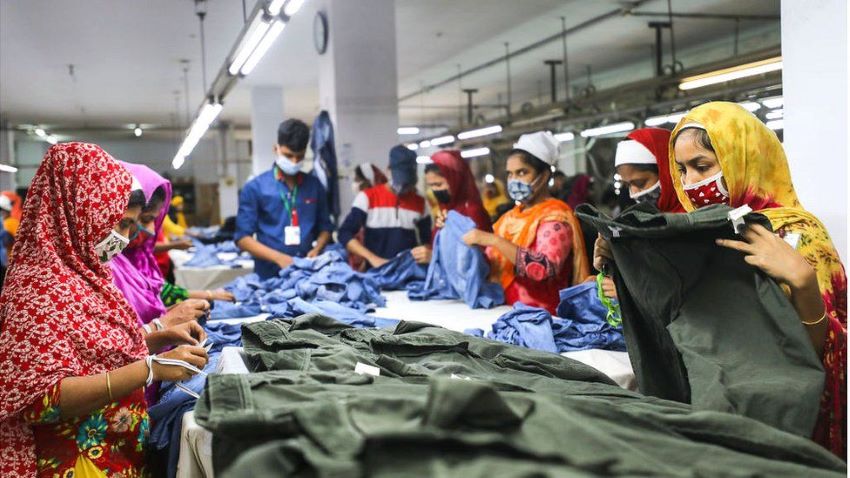
Bangladesh is luring buyers in the US and the European Union who have cut back on purchases from China. Relatively low costs, reliability and easy labor availability are among the reasons for US-based buyers increasing their orders from Bangladesh.China’s tensions with Western countries have had a major role in increasing orders from other countries including Bangladesh.
In other words Bangladesh is getting China’s customers. In the near future, 55 per cent of US executives expect to import more clothing from Bangladesh over the next two years than from China, Vietnam and other countries.
In any case the United States is Bangladesh’s largest export destination. From January 2022 to October 2022, the United States’ imports of apparel from Bangladesh jumped by 49 percent compared to imports of garments from Bangladesh during the same period in 2021. By comparison, the US imports of apparel from China during January 2022 to October 2022 increased by 21 per cent over the same period in 2021. During all of 2021 US imports of apparel from Bangladesh and China grew by 37 per cent and 29 per cent compared to 2020.
Sustainable clothing is the norm for children
The children’s wear industry is becoming sustainable. Parents belonging to the eco-conscious age are readily exercising conscious consumption for their children. They are cognizant of the fact that sustainable clothing has a twofold benefit where it serves the larger cause of rendering a greener environment and at the same time vouches for comfortable organic clothing for children.
Gauging the massive opportunity lying ahead, brands globally are riding on the bandwagon to boost the organic children’s wear market, including in India. Inevitably it is spurring the demand for natural, organic textiles as parents are invariably placing a high value on fabric, texture, comfort, and ecological impact while donning their children with the best fashion possible. Consequently sustainable clothing permeating seamlessly into the children’s apparel segment is heralding a new trend that is very likely to shape the future of the children’s wear industry.
Parents are well aware of the health repercussions synthetic fabrics can have on the children. Children have very sensitive skin and in the quest to give the best to their children, natural fibers are gaining a lot of traction. Over time, people have realized the advantages of organic material manifesting non-toxic, hypo allogenic, light, and breathable traits. Consumers are moving away from nylon, rayon, polyester, etc.
Pakistan Accord takes shape
A legally binding agreement spans safety and improved working conditions in Pakistan’s factories.
It covers the textile and garment supply chains of brands sourcing in Pakistan. The accord will cover fabric and textile mills in Pakistan and also home textiles and accessories. The umbrella of health and safety includes excessive working hours which can impact workers’ health causing increased fatigue which in turn could cause a potential accident in the workplace. Other issues such as sexual harassment, gender-based violence and harassment are also covered by the Pakistan Accord.
However brands and retailers are tightening their budgets due to the state of the global economy and are less willing to invest funds to ensure their supply chains are safe.Many brands do not have direct relationships with fabric mills and so there is a need to analyse how that would work in terms of the leverage that the brands have as well as the application of protocols and procedures under the Accord.
The varying political landscape has made expanding the Accord a long and challenging process. In Pakistan the power lies within the provinces and not centrally with a national government, which means discussions are required with each provincial government, who hold the political power in their own respective province. So it is necessary to work with many different organisations.
The Pakistan Accord, also referred to as the Pakistan Accord on Health and Safety in the Textile and Garment Industry, is set to go into action in the spring of this year.
Next expects reduced profits
Next expects profits to fall in 2023-2024. This forecast reflects uncertainty over whether consumers would keep spending during a recession and as the group's costs rise.
Next is a British clothing retailer. Next trades from about 500 stores and online and is often considered a gauge of how British consumers are faring. It is the first major UK apparel retailer to report on Christmas trading.
The UK consumer outlook for 2023 is poor, given inflation is running at ten per cent and consumer confidence is close to record lows. Taxes and mortgage rates are increasing, government support on household energy bills is set to be scaled back and the risk of higher unemployment in a recession is growing.Retailers are also facing cost inflation in the goods they buy as well as higher labour and energy costs. Almost half of UK consumers are negative about the country’s economic perspective and as a result plan to cut clothing spend.
Consumers are changing retail stores in a general move to increase purchases from discounters. While spending on groceries increased in the last three months, spending across almost all other categories (bar pet food and supplies and gasoline) is expected to fall. Consumers plan to spend less on footwear and clothing.
To increase apparel exports, Morocco needs to spruce up raw material imports
Morocco’s textile export sector depends heavily on imported material. Reliance on imported goods for textile production exposes the sector to supply chain disruptions and high prices in the international market which prevents the sector from taking advantage of the free trade deals and their strict rules of origin standards.
So the country needs to invest in reinforcing the upstream capacities of textile in order to bolster local sourcing rate of the sector and hence strengthen its competitiveness. For all that, Morocco’s textile exports have outperformed pre-pandemic levels. For decades, Morocco has been in the top ten list of suppliers of the European market and takes the second position as the largest textile exporter in the Mediterranean region.The sector has some 1600 companies, employing 200,000 people, making it one of the largest job providing sectors in the country.
The Moroccan textile and apparel industry is engaged in a process of sustainable development which integrates environmental, economic and social aspects throughout the value chain. Morocco is becoming a growingly attractive destination for global textile companies. Several brands from the European Union, the UK and the US have been sealing deals with Moroccan companies in the textile industry. The world’s leading textile groups are migrating from traditional Asian manufacturers to closer markets offering favorable conditions, such as Morocco.
Malaysian exports to Europe set to rise
Malaysia’s apparel exports to Europe are likely to increase in 2022, after registering a downward trend in the previous years.
It exported apparel worth $180.083 million to Europe in the first nine months of 2022 and the figure is expected to cross $225 million for the entire 2022. Malaysia had shipped apparel worth $193.685 million in 2021 to the continent. Exports to Europe witnessed a downward trend since 2017 when they were noted at $278.209 million. The exports peaked at $22.823 million in May 2022 and bottomed out at $15.886 million in September 2022.
In terms of value, the trousers and shorts category was the largest within apparel with 13 per cent of the total apparel exports. Jerseys, T-shirts, innerwear, coats, shirts, sportswear, ensembles, dresses, and nightwear were among the top ten apparel products exported from Malaysia to Europe. Accessories exports to Europe in 2021 were 17 per cent of the total exports of Malaysia.
The country’s textile and apparel industry is targeting the higher end of the global value chain with diversified production of higher value-added products. The industry has also implemented the latest automation and technology in its manufacturing and distribution, while actively seeking business collaboration with foreign companies and undertaking new R&D activities to further strengthen its competitiveness in the global market.
India develops technical textile infrastructure
India will promote academic institutes and start-ups in technical textiles. The institutes will be both public and private. The guidelines for promoting start-ups in technical textiles are under formulation and are expected to release soon.
The aim basically is moving toward increasing India’s market share in the technical textile industry. The areas covered under funding include laboratory equipment and training of lab personnel, specialised training. Laboratory infrastructure funding support will depend on the eligible department, courses and criterion.
A grant for internship support in technical textiles has also been announced for students pursuing B Tech or undergraduates from various departments/specialisations. There will be a maximum of 50 interns per academic year, grant for whom will be up to Rs 20,000 per student per month (for a period of two months).
The ecosystem in technical textiles will be meant not only for the textile field but also for other disciplines of engineering like civil, mechanical, electronics, agriculture institutes, medical colleges and fashion institutes. Encouragement will be given for developing technical textiles machinery, tools, equipment and instruments.
Driven by a set of highly educated and skilled professionals, India is expected to take a huge leap in cutting-edge research, production and innovative applications related to technical textiles.
Cambodia hopeful of enhanced exports to the US
For Cambodian exporters, the US apparel market remains a major destination. Garment exports to the US from Cambodia have been rising consistently and rapidly.
Jerseys, shirts and trousers and shorts together accounted for more than half of the export value to the US in first nine months of 2022. Of this, shipment of shirts and trousers was 31 percent, and shipment of jerseys was 21 percent. For American fashion companies and importers Asian suppliers, such as Vietnam, Bangladesh, and Cambodia, as well as members of the African Growth and Opportunity Act, offer the most competitive prices.
At present, Asia accounts for more than 70 percent of US apparel imports. For US fashion companies, eight out of the top ten most-utilised sourcing destinations are Asia-based, led by China, Vietnam, Bangladesh, India and Cambodia.
However reducing the China exposure is one crucial driver of US fashion companies’ sourcing diversification strategy and around 33 percent of companies sourced less than ten percent of their apparel products from China in 2022. With the new inclination of US garment importers, the Cambodian garment industry may land more and more varied orders. Garment exports are the largest foreign exchange earner for Cambodia, accounting for almost 60 percent of the country’s total export value,