


FW
Thailand apparel imports from Cambodia go up
Thailand’s apparel imports from Cambodia are likely to rebound during the current year, although they may still not touch pre-Covid levels.
The trade was at $39.729 million in January 2022 to September 2022. The shipment had witnessed a steep fall in 2020 and 2021. Imports during the first three quarters of this year indicate that the trade is rebounding well.Thailand imported apparel worth $39.729 million in the first three quarters of this year, already nearing the total imports of $41.010 million during 2021.
Imports this year from Cambodia are likely to breach last year’s figure. Imports peaked at $95.806 million in 2019, increasing from $89.091 million in 2018 and $67.170 million in 2017. But it slid to $73.986 million in 2020, before falling drastically to $41.010 in 2021.
Traditionally, Thailand is an apparel importer from Cambodia and exports apparel though in smaller volume to the latter. Thailand’s apparel exports to Cambodia stood at $7.099 million in 2021, $6.394 million in 2020, $10.680 million in 2019 and $9.957 million in 2018. It exported apparel worth $8.482 million in the first three quarters of this year. Cambodia’s apparel exports in the first ten months of 2022 rose by 18 percent.
Playboy releases denim line
Playboy has launched denim for men and women. This is Playboy’s first owned and operated denim line.
The collection spans men’s straight, skinny and dad fits to women’s loose and flare fits. Each jean features Playboy’s iconic bunny as a crystal appliqué, cutout, embroidery or laser print as well as branded hardware and back patches.The line offers stretch and rigid fabrications with washes leaning into ’90s and Y2K trends. Washes include light and medium blue, destroyed gray, pink stonewash, vintage black, deep indigo and black waxed. Other styles have an allover bandana print and a camouflage print. All jeans are made in Rurkey. The line has been developed as the merging of two American icons: Playboy as an iconic American brand and denim as an iconic American sportswear category.
Offering everything from rabbit head cookie-cutters to beach towels, phone cases and condoms, Playboy is among the top 20 most licensed brands in the world and its merchandise is sold in more than 180 countries. Playboy denim marks the second owned and operated launch by the brand’s consumer products division following the release of lingerie. The company looks forward to continued expansion of its owned and operated business and will leverage these new product lines across the Playboy ecosystem, including through its robust creator network.
PFY prices rise in China
Polyester filament yarn prices have started rising in China. Leading yarn producers have kept raising prices. On the one hand, polyester filament companies wanted to cover earlier heavy losses when many companies cut production.
On the other hand, stimulated by the bullish macro environment, the whole chemical fiber industry held slightly better expectations toward future movement.In addition, downstream players saw alleviated pessimism when the pandemic control and prevention policies have been eased and polyester filament yarn companies continued raising offers tentatively. Some speculative demand was also boosted. As a result, sales of polyester filament yarn remained good in recent days. The inventory of polyester filament yarn was falling, which alleviated some inventory burden.
Sales of some warp knitted and circular knitted fabrics slightly increased with the colder weather, which may retard the holiday plans of some downstream plants. Meanwhile, downstream buyers show apparently higher intention to replenish with recovering confidence. If the price of polyester filament yarn declines to their price idea, some downstream plants may restock a lot at the end of year.Polyester filament yarn companies may be slower in cutting or suspending production when market fundamentals are improving periodically.
Lululemon Q3 revenue up 28 per cent
Lululemon revenues for the third quarter increased by 28 percent. Net revenues in North America were up 26 percent for the quarter, year over year and 41 percent internationally. Revenues in mainland China grew nearly 70 percent during the quarter.
Lululemon is a Canadian athletic apparel, accessories and footwear maker. Total comparable sales rose 22 percent while comparable store sales were up 14 percent during the quarter. Direct-to-consumer net revenues — which represent 41 percent of total company revenues — grew 31 percent. Both the men’s and the women’s business grew during the quarter, up 28 percent and 23 percent, respectively, while accessories was up 52 percent, year over year. In-store traffic grew 25 percent, year over year, while traffic to the e-commerce business rose 50 percent.Third quarter ending inventory grew 85 percent. But the company made the decision to stock up on product last year in order to capture growing guest demand.Inventory levels were too lean last year but now Lululemon is well positioned to be in stock throughout the holidays.The company delivered a quarter of strong sales and earning growth, despite a dynamic operating environment, and looks forward to a strong finish to the fiscal year.
Japanese companies shift out of China
Japanese apparel manufacturers are shifting production from China to other southeast countries to compensate for the rising cost of raw materials.
They are taking advantage of the reduction of customs duties on merchandise imports because of the Regional Comprehensive Economic Partnership (RCEP).
Matsuoka Corporation, a contract manufacturer for Uniqlo, plans on decreasing production in China from 50 per cent to 29 per cent and plans to increase production in Bangladesh to 34 per cent from 28 per cent and in Vietnam to 28 per cent from 16 per cent by 2025.
China as a source for Japanese apparel has declined from two trillion yen in 2011 to 1.5 trillion yen in 2021, whereas the sourcing of Japan’s apparel in Vietnam has increased from 0.25 trillion yen in 2011 to 0.5 trillion yen in 2021.Due to the increase in labour costs because of the rapid economic rise in the Chinese economy, the onset of the zero-Covid policy, which mandates an initial suppression phase and so on, companies are now looking to shift base to other countries.
The average monthly salary in Vietnam and in Bangladesh is $ 270 and $120 whereas the average monthly salary of a factory worker in China is about $ 670.
ISPO offers product innovations
ISPO Munich was held in Germany, November 28 to 30, 2022. The sports trade fair offered a host of product innovations, a prominent conference program and many well-known athletes as guests. Some 1,700 international exhibitors and around 40,000 visitors from 117 countries attended.
Sustainability and innovation were the top topics. There was a panel on the future of winter sports in the face of climate change and energy shortage. The focus was on sustainable business practices. ISPO Munich offered extensive insights into the entire ecosystem of the sports industry. Just under 90 per cent of the exhibitors came from abroad, and a total of more than 50 countries was represented. The five countries with the most exhibitors were Germany, Italy, France, China and Taiwan. Around 20 per cent of them were at ISPO Munich for the first time. The 40,000 trade visitors came from a total of 117 countries, and 73 per cent of them were international guests. The top five participating countries were Germany, Italy, France, Great Britain and Austria. The focus was on topics such as sports fashion, tourism, digitalization, health and fitness, nutrition or esports.
The newly created Future Lab, with innovation, sustainability and retail transformation as key topics, was a major attraction at ISPO Munich.
Lenzing to award fiber research
Lenzing will award students for outstanding research in the field of fibers and textiles. The aim of the Young Scientist Award is to promote the students’ work and create a platform for networking with the textile and fiber industry. Bachelor’s and master’s degree students will have the opportunity to submit their scientific work in the categories of fashion and circularity, textile recycling and the innovative use of biobased fibers to a jury of well-known industry experts.
Lenzing believes that driving research and development forward and supporting young scientists in realizing their ideas is necessary since innovation and technological progress are vital to the company’s successin tackling the pressing environmental challenges the world faces.
Lenzing is a world-leading provider of specialty fibers for the textile and nonwoven industries and stands for ecologically responsible production of specialty fibers made from the renewable raw material wood. As an innovation leader, Lenzing is a partner of global textile and nonwoven manufacturers and drives many new technological developments. Lenzing’s high-quality fibers form the basis for a variety of textile applications ranging from elegant clothing to versatile denims and high-performance sports clothing. Due to their consistent high quality, their biodegradability and compostability Lenzing fibers are also highly suitable for hygiene products and agricultural applications.
Future Fabrics Expo in June
Future Fabrics Expo will be held in the UK, June 26 to 28, 2023. There will be more than 10,000 materials and solutions on display.
Best practice exhibitors, active exhibitors, mills and suppliers in a multitude of fiber categories will show effective solutions throughout the supply chain. An Innovation Hub will feature emerging, cutting-edge materials andtechnologies representing the Material Revolution. A Solutions Area will featurecontent partners of Future Fabrics Expo presenting their solutions to address the mostpressing key environmental issues around climate,biodiversity, soil and oceans. Knowledge sharing and educational content will be displayed throughout the venue.
The show features innovative and traditional commercially viable fibers, fabrics and products that embody a range of sustainable principles and new technologies, sourced from international suppliers and mills who demonstrate a commitment to lowering environmental impact across the textile supply chain.
Alongside sustainable innovative fabrics with a lower environmental footprint, low impact leathers and leather alternatives are showcased. They embody a range of sustainable principles and new technologies. It includes more sustainable alternatives to the widely available conventional fabrics that currently dominate the market; helping fashion companies to begin diversifying their fabrics and materials base and lowering their environmental impact.
Future Fabrics Expo focuses on the fashion industry and how its environmental impact can be lowered through innovation in the textile industry, and novel ideas to transform the fashion system and design practice.
As textile chemical industry revamps and grows, Asia-Pacific will see higher growth: Studies
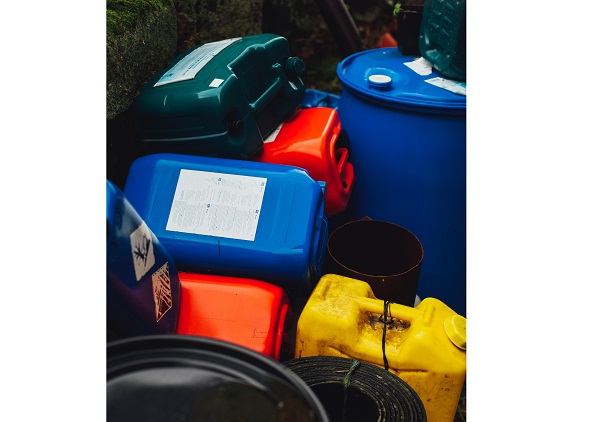
There's a lot more going on than what meets the eye when we wear and re-wear the clothes we buy over the years. Its textile chemicals at play which are an intrinsic part of the garment production industry providing special treatments to improve the look and feel of the fabrics, reduce wear and tear and add colour to fabrics. With more and more brands making investments in the textile industry and advancements in production technologies with growing demand for eco-friendly and sustainable fabrics are some of the growth drivers. A recent report on current trends in Europe markets by Transparency Market Research Company says, the global textile chemicals market was valued at $26.5 bn in 2021 and is estimated to grow at a CAGR of 3.9 per cent from 2022 to 2031 reaching $38.9 billion by the end of 2031.
On similar line recent analysis by Emergen Research shows, global market for textile chemicals valued at $21.23 billion in 2020 is projected to grow at 4.3 per cent during the forecast period.
Focus on speciality chemicals in textile segment
Government initiatives around the world to promote investments in the garment industry and rising disposable income and changing aspirational lifestyle trends are fuelling demand for various kinds of apparel and other textiles, which in turn is increasing the demand for textile chemicals. Although technological advancements in the production of dye intermediates and textile dyes are fuelling growth, the new focus on environment-friendly chemicals for dyeing and processing of textiles and stringent environmental regulations and health safety issues associated with certain chemicals are affecting this segment.
Emergen Research report reveals, with global production of textiles expected to double by 2050, the innovation in speciality chemicals used in the dyeing and finishing of fabrics will be key drivers of growth and companies have started investing heavily in research and development to develop new and improve existing products. The use of enzymes, bio-polishers and biobased surfactants is now becoming more popular due to their environmentally friendly nature and cost-effectiveness. In 2020, the colourants & auxiliaries segment accounted for the largest revenue share in the global textile chemicals market due to rising demand for vibrant shades and textured fabrics with advanced properties in the textile industry. Increased production capacities by garment manufacturers after the Covid years are now helping the growth of textile chemicals.
The Dow Chemical Company, Huntsman Corporation, Sumitomo Chemicals Company, Lubrizol Corporation, Tata Chemicals, Kemira Oyj, and Evonik Industries are a few notable names in the textile chemical market who provide backup to the garment manufacturing industry. Digital printing is being focussed on in the next five years as digital methods are cost-efficient and require less water, fuel, and chemical usage as compared to traditional printing methods.
Home furnishings a growth driver
Strong growth in awareness about health, hygiene, and safety is a key factor that is likely to propel the demand for apparel shortly. China and India has been a prominent market for apparel production and usage and high economic growth is anticipated to be a major driver of the apparel market in both these countries during the forecast period. Growth of end-use industries is expected to lead to a trickle-down effect in the local manufacturing value chain, which will further benefit the national manufacturers of both countries.
New demand for changing home furnishings more often as a result of urbanization and more parting-in than going out after pandemic years has increased demand. Textile chemicals are an intrinsic part of the manufacture of furniture upholstery for durability and longevity. North America and Europe are the prominent markets for home furnishing. Leading players such as IKEA and H&M Home are adopting expansion strategies to tap revenue opportunities in the home textile industry in Asia Pacific. Textile chemicals are revamping and changing more than ever before and the future looks promising.
Asia Pacific frontrunner
The ‘Textile Chemicals Market Outlook 2031’ by Transparency Market Research Company, reveals, in terms of volume, Asia Pacific held 65.3 per cent share of the global textile chemicals market in 2021. The textile chemicals market in the region is anticipated to grow at a CAGR of 4.2 per cent and 3.8 per cent in terms of value and volume, respectively, during the forecast period. Abundant availability of raw materials, vast natural resources, and low-cost manufacturing are some of the key factors boosting the textile chemicals market in Asia Pacific. In terms of volume, Europe and North America were prominent regions of the global textile chemicals market, with 18.4 per cent and 13.3 per cent share, respectively, in 2021.
India’s textile and apparel sector to reach $350 billion by 2030: Wazir Advisors
Wazir Advisors latest report gives a detailed an insight into the way forward for the Indian textile and apparel (T&A) sector. Indeed, the growth figures show a very positive outlook.
Positive outlook ahead for both textiles and apparels
In 2021, the Indian T&A sector were valued at $153 billion, with the domestic market being the lion’s share at $110 billion and exports at $43 billion. The report goes on to say, t a compounded annual growth rate (CAGR) of 10 per cent, the total value is expected to reach $350 billion by 2030, with the domestic market taking in $250 billion and exports $100 billion. Wazir Advisors, the Indian research and analysis agency dedicated to the textile and apparel sector latest report “The US$100Bn Investment Opportunity” was released yesterday.
It goes on to states, apparel the largest product of the sector is predicted to increase CAGR of 9.6 per cent, whereas technical textiles are predicted to have a CAGR of 10.5 per cent. In domestic consumption, home textiles are predicted to grow at a CAGR of 8.6 per cent and by 2030, to reach a value of $16 billion. As the growth of global trade is expected to pick up, India can move from its current 5 per cent market share to 8 per cent by the end of the decade. Most growth will be in apparel, which will grow by 12.1 per cent and touch $45 billion by 2030. However, whilst textile’s growth rate will be 8.2 per cent, the value will be higher than apparel, at $55 billion.
2022 sees a flurry of bilateral agreements
This year has been an exceptional one in terms of the Indian government finalizing and sealing deals with two countries that will greatly benefit exports including sector. The India-UAE CEPA was signed in February and the India-Australia ECTA was signed in April. India already has had the India-South Korea IKCEPA since 2009 and the India-Japan JICEPA since 2011. In all four cases, the agreements offer no import fees.
While new FTAs with the UAE and Australia are significant as these are two large markets for the Indian T&A sector, the potential of the South Korean and Japanese FTAs were not fully realised and the government has been reworking the impetus to fully leverage these two FTAs since 2016 – the major development here has been product realignment based on South Koreas and Japan’s market requirements.
The upcoming FTAs with the US, the UK and the EU will further strengthen India’s ambition as it can leverage very strong markets for products it has the expertise in manufacturing. Once fully utilized, India can easily add another $15 to $20 billion to its earning through T&A exports. As the world wants to move away from complete dependency of China in terms of textiles, the concept of China + 1 is growing, providing India the natural advantage of being the + 1. Currently, China is in the enviable position of having 25 per cent of the global market share and if India plays its cards right, it can aim to capture 15% of market share under the emerging concept of China + 1.
PLI support
The Ministry of Textiles is a key part of the recently launched Production Linked Incentive (PLI) scheme. This is expected to drive investments in the textile value chain, particularly in garmenting and synthetic textiles. If implemented well, India can expand its exports product basket in the T&A sector and be thoroughly cost competitive. Additionally, the already present incentives such as Duty Drawback and ROSCTL can further aid in the country not only being cost competitive but also tap more global markets for the opportunity of exporting textiles and garments.











