FW
Abercrombie & Fitch's quarterly profit drops by 41.5%, despite increase in sales and improved performance in Hollister
Abercrombie & Fitch Co experienced a 41.5 per cent decline in quarterly profit due to rising labor costs and inflationary pressures, despite a 3 per cent increase in sales.
The company's net income attributable to Abercrombie dropped to $38.3 million, or 75 cents per share, in Q4 from $65.5 million, or $1.12 per share, a year ago. Net sales for the fourth quarter reached $1.2 billion, an increase of 3 per cent on a reported basis and 5 per cent on a constant currency basis compared to last year. For the full year, net sales remained steady at $3.7 billion compared to last year, and increased by 2 per cent on a constant currency basis.
Abercrombie & Fitch credited the company's continued momentum in the Abercrombie & Fitch brand and improved performance in Hollister for its Q4 results. Despite significant inflation and economic disruption, the company's agile operating model enabled it to redirect expenses and inventory investments, leading to sequential sales growth in the last two quarters.
Abercrombie & Fitch also achieved 44 per cent digital penetration, growth in average unit retail (AUR), net store count growth, and a 4 per cent reduction in inventory to 2021.
Looking ahead, Abercrombie & Fitch is cautiously optimistic about consumer demand and believes its brands are well-positioned for growth. The company is pleased with its inventory levels and each brand is capable of chasing, although it does not anticipate any net product cost benefits in 2023.
As a result, Abercrombie & Fitch will continue to balance investing for the long-term with improving profitability by tightly managing expenses, inventory, and cash flow.
Europe's used textile exports tripled in two decades, says report
A new report from the European Environment Agency has found that Europe’s export volume of used textiles, including clothing and footwear, has tripled in the last two decades.
In 2000, the European Union exported slightly over 550,000 tons, which increased to 1.7 million tons in 2019, amounting to 8.4 pounds of waste per person each year. While much of this is exported to Asia and Africa, the report highlights that consumers’ good intentions of donating their used clothing for reuse are often not realized. “Common public perceptions that used clothing donations are always of use in those regions do not reflect the reality,” the report said.
The report also found that bio-based fibers such as rayon and viscose, often promoted as eco-friendly, have significant environmental impacts. While these fibers do not contain oil-based and plastic textiles such as polyester, they contribute to other environmental pressures “including water and land use related to agricultural activities, deforestation and fiber processing,” the report said.
The report noted that Europe faces a challenge in how to handle its own used textiles as the export channels to the global south close. The EU will be required to collect and sort textiles separately from other waste by 2025, and it is also rolling out new rules that will limit the export of used textiles to developing countries, with a ban on all waste destined for disposal expected to be finalized later this year. However, the report stated that Europe doesn't have the capability or capacity to recycle most of its used garments and footwear.
In 2019, Kenya, Uganda, Tanzania, Rwanda and Burundi planned to phase out the import of secondhand textiles from industrialized nations, but only Rwanda has implemented the plan following economic threats from the U.S.
Bangladeshi garment factory achieves highest score worldwide for Leed-certified green factories
The global leader in Leed-certified green factories is now a Bangladeshi readymade garment factory with a score of 104, which is the highest score ever achieved in the industry category worldwide.
The Green Textile Limited's (GTL) unit-4 factory in Mymensingh was awarded a platinum category Leed certificate by the US Green Building Council (USGBC) on February 21, 2023.
The Bangladesh Garment Manufacturers and Exporters Association (BGMEA) reported that the local RMG sector has established its position in green manufacturing units, with 65 in the platinum category, 110 in gold, 10 in silver, and another four Leed-certified factory buildings.
Bangladesh dominates the top 10 and 100 Leed-certified factory units globally, with nine and 52, respectively. Presently, 189 factories in the country's garment industry hold Leed certification, and 550 more are either registered or in the pipeline for USGBC's Leed certification. Six factory units have achieved Leed certification in 2023, and in 2022, 30 factory units received Leed certification, the highest in a year.
USGBC credits factory units based on several criteria, including transformation performance, energy, water, and waste management. The best performers are rated with platinum, followed by gold and silver. These criteria help green factories reduce operational costs over time, even though they may initially cost more to set up. Green factories also provide a safe working environment for employees.
Industry insiders opine that Bangladesh's garment industry is poised to take the lead globally by addressing mounting issues of sustainability, climate change, groundwater depletion, and efficiency. The growing number of green apparel factories will give Bangladesh a vantage ground to cope with EU green deals and due diligence directives.
Bangladesh had the highest number of green factories, but the factory with the highest score was not in Bangladesh until now. GTL in Bangladesh is now the highest scoring green factory with a score of 104, overtaking a factory in Indonesia.
Australian wool industry forecasts positive outlook for wool in 2023
Australian Wool Innovation CEO John Roberts has outlined positive signs for wool sales in 2023.
According to Roberts, AWI's network of offices has reported marketing success in Japan and Italy, renewed demand from India, and a COVID-19 recovery in China.
Chinese textile mills have been operating at full capacity since early January, and more than half of surveyed respondents in China believe their household income will increase over the next five years. In Italy, AWI's partnership with Prada Luna Rossa for the next America's Cup has led to more than fifteen other brands approaching them to use wool in sporting and outdoor wear.
In Japan, wool's eco-credentials, particularly its biodegradability, have resonated with consumers, with the most recent winter campaign yielding a significant uplift in sales of the partner's wool category. Renewed buying interest in Australian wool has been observed out of India, and the recent launch of the Circle Sportswear supernatural runner with 65 percent Australian Merino wool and a completely biodegradable sole has prompted other brands to explore using The Woolmark Company logo on their items.
The "Wear Wool, Not Fossil Fuel" campaign continues to resonate with consumers, with 3-D billboards in Times Square and Piccadilly Circus showcasing the difference between wool and synthetics.
China's polyester staple fiber exports soar driven by apparel market demand
China's polyester staple fiber exports continue to rise, driven by growth in demand for the synthetic fiber in the apparel market.
China is a major global producer and exporter of polyester staple fiber, with Vietnam as its largest export destination. The country's well-developed textile industry and supply chain give it a significant advantage in the global market, which is expected to continue growing over the next decade.
China exported 929,100 tons of polyester staple fiber in 2021, a 16.77 per cent year-on-year increase, with an export value of US$951 million, a 37.59 per cent year-on-year increase. From January to November 2022, China exported 908,500 tons of polyester staple fiber, an 8.40 per cent year-on-year increase, with an export value of US$1,017 million, a 19.85 per cent year-on-year increase.
China exported polyester staple fiber to over 130 countries and regions in 2021. Vietnam, Pakistan, the United States, Indonesia, Bangladesh, Brazil, the Russian Federation, India, Israel, and Peru were the top ten export destinations of polyester staple fiber from China in terms of export volume. Vietnam was the most significant export destination, accounting for 18.21 per cent of China's total export volume of polyester staple fiber and 19.01 per cent of its total export value.
In recent years, the Chinese textile and apparel industry has been shifting to Vietnam, Indonesia, and other Southeast Asian countries. However, since the textile industry chain in these countries is not yet fully developed, they still rely on mainland China for textile raw materials, including polyester staple fiber.
The global market for polyester staple fiber is expected to continue growing between 2023-2032, which will likely promote the growth of China's polyester staple fiber export volume.
War and Xianjiang affect global raw cotton prices

In February 2022 Russia invaded Ukraine and a year later, economic upheavals across the globe have made everything worse in a post-pandemic world. Even after 12 months, there is no solution in sight for Ukraine and Russia as both try out newer forms of battle strategies and the world watches in despair.
Effects of a year-long war
The first impact of this war was sky rocketing oil prices, which the world has learnt to deal. Oil prices stands at almost $104 a barrel today and this has cascaded into price hike of commodities, metals and products, making consumer budgets stressed and stretched. The average Western consumer, one of the most affected by inflation, is reorganizing their lifestyle to combat with inflation ridden market realities. The long-drawn out Western sanctions against Russia has boomeranged and instead of affecting Russia, has affected the sanctioning countries more as they are now fighting with each other over the severity and degree of sanctions. However, reports say in December 2022 while Europe and the UK were hit by high energy prices, pump-level price of petrol actually decreased a few cents in the US.
Impact on cotton prices
The change in buying behavior during inflation and recession affects non-necessary sectors such as apparels and accessories which in turn has a direct impact on raw materials such as cotton and textiles in general. The readymade garment sector’s staple raw material, cotton prices are going through a roller coaster ride. As supply tightens, cotton prices rise. A large cotton-producing country, India witnessed a jump in prices from Rs 78,000 per candy of 365 kg to Rs 83,000 per candy within the last 20 days.
Fitch Solutions published the 2023 raw cotton forecast in November 2022 stating raw cotton’s price could trade sideways for the remainder of 2022, at around $0.85 to 0.90 per pound. Prices came under downside pressure throughout the third quarter of 2022, easing 38.2 per cent since then due to a strengthening US dollar and a weakening global economic outlook.
As a senior Fitch official pointed out recently, “Looking beyond 2022, we expect prices to find support from a weakening US dollar and increasing import demand, largely caused by US trade restrictions on Mainland China. However, they do not expect a rally due to these expectations of a continued deterioration of the global economic outlook, which we expect to constrain demand. ” Fitch Solutions attributed the continuance of the Ukraine invasion as the most important cause for the current global outlook.
The forecast concludes by December 2023, cotton prices will be around $0.68 per pound, registering a sharp drop from a year ago. The forecast therefore, is a bearish one. The Fitch Solutions report pointed out global cotton output is expected to reach 118.1 million bales in 2023, up from 117.6 million bales in 2022, a year-on-year increase of 0.43 per cent. Of the primary producers, mainland China, India and Brazilian productions will see the most increase.
In China, the anticipated cotton output will reach 27.4 million bales of 480 pounds each in 2023, a year-on-year increase of 2.1 per cent. However, while posting year-on-year growth of 2.1 per cent, output is still expected to remain marginally lower than the average output between 2018 and 2022 of 27.8 million bales. As the US remains determined to continue its ban on Xianjiang cotton, the ongoing trade restrictions on goods produced in the Chinese province of Xinjiang have effectively removed much of China’s output from global markets, cutting global supply and providing support for increase in prices.
Fashion retailers expect modest holiday-quarter results
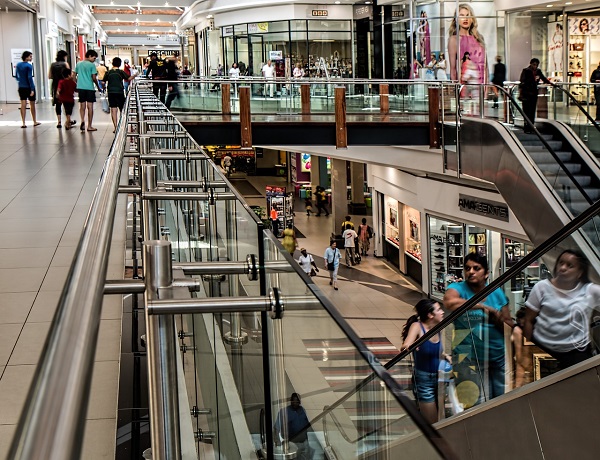
With post-pandemic-induced shopping spree, global industry-wide Christmas sales and India’s wedding and festive season all over, apparel retailers are now doing reality checks. This is because the first financial quarter of 2023 has opened bleakly. What’s more, recession fears are looming in the horizon and a slowdown in sales growth seems likely after the sharp increase post-Covid last year.
Brands cut excess inventories and hiring
Brands are now focussing their energy on the clues that might keep their profit figures stable in 2023 as they await the results of last quarter with most global retailer’s fiscal year having ended in January.
Big retaliers such as Walmart, Home Depot, Target, Best Buy, Macy’s, Home Depot among others will soon be kicking off their retail earnings season by posting their holiday-quarter results of modest sales figures. Healthier profit margins could happen in 2023 for many, in spite of the recession, with fall in prices of shipping and freight and lesser stocks of excess merchandise to mark down. But all global companies will now need to be more cautious about spending with smaller inventory orders, and cutting down n unnecessary hiring, which could stabilize profit margins later in the year.
According to US-based National Retail Federation (NRF)-which has represented retail for over a century , global industry-wide Christmas sales across all segments has fallen short of projections this will further adversely affect profits in the first quarter of 2023. Although in November and December, sales increased 5.3 per cent year-over-year to $9,363 billion, it was still be below major trade group's expected growth forecast of between 6 and 8 per cent.
The NRF had expected expenditure between $9,426 billion and $9,604 billion at the beginning of November, which did not become a reality as people in mid-segment income levels still remained cautious about spending. Many retailers have already forecasted lower-than-expected Christmas sales. While Macy's cautioned Christmas quarter sales would fall short of projections; Nordstrom reported decreased sales and increased markdowns which impacted its financial performance in November and December 2022; with excess inventories, Lululemon too is looking at lower than anticipated earnings.
Having to buy for gifting purposes over the festive season has taken a toll on customers. They came under pressure with credit card balances rising rather than cash payments in premium outlets such as Macy’s and Bloomingdale’s. In fact, some retailers had to resort to layoffs to survive these include Neiman Marcus, Saks.com e-commerce retailer, Stich Fix, Wayfair, Bed Bath and Beyond and Amazon among others who had to cut their work-force by 20 per cent or more.
However, the earnings season sometimes offers happy surprises with more-than-expected earnings as it depends on consumer bases in different geographical regions, the brand power and different festivals and wedding seasons of different global communities. The world focus may be on top-line brands and countries but many mid-segment or premium market participants focus on where profits actually lie and how to get there. Retailers’ strategies have changed over the last year as they put higher stakes and made riskier bets on new improved sales figures. However, what upset most companies’ margins most often was as unsold merchandise landed up for clearance with costs creeping up and unstable sales.
As David Silverman, retail analyst at Fitch Ratings said recently, the world is focused on top-line momentum. So many market participants are focused on what revenue is. But it’s the operating profit that could bounce back nicely from a difficult 2022. Brands remain hopeful that with a more focussed product portfolio and a wider sales and distribution channels, the next quarter could well be a good one despite odds.
NYFW 2023: Showcases diverse range of denim styles in a departure from Y2K-inspired styles.
The recent New York Fashion Week showcased a departure from the Y2K-inspired styles of previous seasons, with designers opting for sentimental and nostalgic designs. The strong presence of denim suiting, dark washes, and cargo pockets marked the runway this season.
Agbobly showcased dark-wash cargo jeans and denim sets decorated with multicolored topstitching and Swarovski beads, inspired by earrings worn by founder Jacques Agbobly's aunts for Sunday service. Tanner Fletcher's genderless collection featured denim vests and jeans embellished with '90s-era studs, gems, and buttons, and acid-wash jeans adorned with denim bows.
Utility trends such as cargo jeans and shackets maintained their strong hold on the runway this season, with pocket designs being a standout feature. Raw denim, which made G-Star Raw famous, also made a comeback, with designers showcasing edgy raw denim looks in various styles.
Denim suiting was another popular trend, with designers opting for unique wash downs and exaggerated proportions to make their designs stand out. Sergio Hudson's retro bombshell look featuring a belted cornflower blue blazer, trousers, and matching box handbag was a standout.
While some brands chose to shy away from the grunge trend, others embraced it, with shredded denim and patchwork being a prominent feature in some collections. LaPointe's gray duster and shredded wide-leg jeans channeled Kurt Cobain's signature style, while Coach and Who Decides War added their own unique twists to the trend.
Performance Days to focus on journey to CO2 neutrality
The Performance Days fair is set to take place in spring 2023, with a focus on the topic "On the Journey to CO2 Neutrality."
The event organizers are looking for fabrics and fibers that provide transparency in terms of carbon footprint and recycling. This will aid in making ecologically sound decisions during the material selection process.
The fair is now in its final phase, which means that only fabric innovations that provide concrete data on CO2 reduction will be considered. The aim is to develop an index that allows the CO2 footprint to be comparable.
The journey towards CO2 neutrality is still long, and the Performance Days team aims to generate new approaches and proposed solutions during phase 3. Despite challenges in obtaining corresponding data from manufacturers and presenting it in a comparable format, the team has already taken a first step, with 30% of all submissions to the Performance Forum sent in with CO2 values.
When it comes to fibers and materials, biodegradability, recycling, and CO2-neutral production are essential. However, the event organizers still face significant challenges in terms of documentation and evaluation of the data. Manufacturers must state the weight of the material, including its composition, in addition to its CO2 value.
The Higg Index serves as an instrument for measuring the sustainability of companies, brands, and products in the textile industry. This index documents and evaluates environmental aspects and social issues along the entire value chain, and can be used to determine a company's carbon footprint. However, concrete LCA data often lacks when it comes to yarns, fabrics, and fibers.
Korean designers ready to showcase latest collections at Seoul Fashion Week 2023
Korean fashion designers are preparing for Seoul Fashion Week, which will take place from March 15-19. The event will feature outfits selected by designers to represent their labels and the country in front of industry dealers and fashion enthusiasts from over 20 countries.
The Seoul Metropolitan Government is adding extra luster to the event, with changes including a circular stage, which is expected to provide a more lively experience for the audience, and a draw to determine the order in which designers will present their apparel.
To promote local designers and accelerate their sales overseas, the city government has signed a deal with Paris Fashion Week to launch a pavilion dedicated to Seoul Fashion Week in Tranoi, an official trade exhibition for the Parisian fashion show. Six of Korea's local women's design brands will participate in the special pavilion. The initiative by the Seoul Metropolitan Government will extend to Tokyo and New York this year.
Aside from designers and buyers, Seoul Fashion Week also invites members of the public interested in fashion. Visitors can check out various experience booths on "K-Fashion Street" in front of DDP and join a live-streaming show hosted by fashion influencers.
The event aims to provide small-but-competent fashion brands with new business opportunities outside the country and to encourage more aspiring fashion designers to enter the industry.