FW
Source Fashion and Neuthread forge strategic alliance to advance circularity
UK’s premier global sourcing exhibition, Source Fashion has announced a high-profile partnership with Neuthread, an innovative charity-led fashion initiative, to elevate circularity and social inclusion within the apparel sector. This collaboration seeks to bridge the gap between industrial-scale sourcing and community-driven, waste-reduction manufacturing. By embedding Neuthread’s expertise—which focuses on repurposing donated textiles—into the wider Source Fashion ecosystem, the partnership aims to provide brands and retailers with actionable models for integrating circular production into their standard supply chains. This initiative serves as a direct response to the industry’s increasing pressure to move beyond linear "take-make-waste" models, offering a tangible framework for brands to demonstrate environmental stewardship while supporting equitable employment opportunities.
Scaling sustainable solutions for the 2026 landscape
As the global circular fashion market is projected to reach approximately US$ 8.33 billion in 2026, the partnership highlights the industry’s shift toward radical transparency and waste mitigation. Manufacturers visiting upcoming Source Fashion events will gain access to collaborative case studies and technical insights, enabling them to evaluate the viability of incorporating reclaimed fibers and mixed-material upcycling into large-scale production. "Meaningful progress requires moving beyond sustainability circles to create a collective commitment to circular living," noted a representative from the Source Fashion advisory board. By uniting Neuthread’s specialized model—which leverages AI-powered tracking to manage complex waste streams—with Source Fashion’s global network of manufacturers, the collaboration provides a blueprint for brands to scale sustainable collections without compromising on quality or traceability.
Neuthread is a charity-led fashion brand and manufacturing project that transforms donated textiles into high-quality apparel. Operating at the intersection of circular economy innovation and social impact, it provides inclusive employment for autistic individuals while developing eco-manufacturing frameworks that pioneer AI-supported carbon tracking for complex, reclaimed material supply chains.
Bangladesh apparel sector charts post-LDC roadmap at Denim Expo
Held in Dhaka this June, the 20th edition of the Bangladesh Denim Expo served as a crucial forum for the nation’s apparel industry to address its post-Least Developed Country (LDC) graduation strategy. With the nation set to graduate from LDC status in November 2026, the sector is entering a transitional phase that necessitates a fundamental shift in its economic model. Industry leaders and policymakers utilized the ‘Frontline to Future’ theme to signal that the era of relying solely on low-cost labor and trade preferences is nearing its end. Mahmud Hasan Khan Babu, President, BGMEA, emphasized, while Bangladesh currently leads the EU and US markets in denim exports, the loss of existing tariff advantages - which have long anchored the industry’s competitive edge - demands urgent institutional reforms to maintain market share.
Deepening economic ties with global partners
Diplomatic engagements at the expo highlighted an intensified push for long-term economic partnerships, specifically with the European Union. Michael Miller, Ambassador, EU, confirmed, Brussels is actively evaluating Bangladesh’s request for a potential free trade agreement (FTA), building upon the recently initialed Partnership and Cooperation Agreement. As part of this diplomatic outreach, the European Commission has invited Bangladesh’s leadership to the upcoming Global Gateway Summit, underscoring the EU’s interest in integrating Bangladesh into more sophisticated, high-value supply chains. For local manufacturers, this represents an opportunity to diversify beyond basic apparel, though stakeholders warned that success hinges on meeting stringent international labor and sustainability standards to secure a level playing field in the competitive global market.
The Bangladesh apparel industry
Bangladesh is a global leader in ready-made garment (RMG) manufacturing, particularly in denim. The sector is a primary economic driver, heavily reliant on exports to the EU and the U.S. Current efforts are focused on post-LDC trade diversification, enhancing energy efficiency, and upskilling the workforce for high-value production.
India eliminates cotton import duties to stabilize textile supply chain
The Indian government has implemented a comprehensive duty-free window for raw cotton imports, effective from June 1, 2026, through October 31, 2026. This policy maneuver effectively removes the 11 per cent cumulative import tax burden - comprising Basic Customs Duty and the Agriculture Infrastructure and Development Cess - that previously constrained domestic manufacturers. By facilitating access to global raw material supplies during the critical cotton off-season, the measure is designed to alleviate the margin pressure currently faced by the spinning and garment sectors. Industry analysts emphasize that this elimination of artificial cost barriers is essential for maintaining India’s export parity against regional competitors like Bangladesh and Vietnam, who have historically benefited from duty-free raw material access.
Bolstering export resilience and MSME performance
This shift in fiscal policy is particularly significant for small and medium-sized enterprises (MSMEs), which have struggled with domestic price volatility and supply deficits throughout the current fiscal year. With domestic cotton consumption projected to reach 340 lakh bales against a domestic output of roughly 290 lakh bales, the duty waiver provides a vital mechanism for balancing the domestic supply gap. Trade bodies, including the Apparel Export Promotion Council (AEPC), anticipate that lower input costs will translate into more aggressive pricing for global orders, ultimately supporting the nation’s objective of reaching US$ 100 billion in textile and apparel exports by 2030. The move signals a proactive effort by the Ministry of Finance to stabilize the textile ecosystem while ensuring that domestic farming interests remain protected during the transition to the next harvest cycle.
The Indian textile & apparel sector
India maintains one of the world's largest vertically integrated textile industries, spanning from fiber cultivation to high-end garment production. The sector is a major employment driver, focusing on cotton, man-made fibers, and technical textiles. Growth initiatives center on scaling manufacturing capacity, leveraging new Free Trade Agreements, and enhancing industrial sustainability.
EFI Reggiani unveils digital printing suite to accelerate on-demand textile manufacturing
At the ITM Istanbul 2026 exhibition, EFI Reggiani has introduced a high-performance suite of digital printing solutions aimed at modernizing the textile value chain. Addressing the industry's shift toward high-speed, on-demand production, the company is showcasing its new Hyper series, which integrates a ‘High Quality Booster’ to achieve superior print resolution without sacrificing output volume. This technology addresses persistent manufacturer pain points, specifically the need to reconcile rapid turnaround times with the stringent aesthetic demands of global fashion brands. By moving away from resource-heavy traditional processes, these digital platforms enable factories to reduce lead times significantly while minimizing their environmental footprint through optimized ink consumption and automated diagnostic workflows.
Digitizing for sustainability and scale
The integration of data-driven analytics remains a core pillar of this year's showcase. With the introduction of the EFI Reggiani Query software, manufacturers can now access real-time production logs and performance reporting, allowing for granular adjustments to industrial workflows. This focus on ‘smart factory’ capabilities is critical as firms contend with rising utility costs and the demand for sustainable pigment-based printing solutions, such as the ecoTERRA Titan. ‘In a market environment defined by volatility, our goal is to empower producers with the agility to scale production dynamically while adhering to evolving environmental standards,’ noted a company spokesperson. The firm’s comprehensive strategy emphasizes that true industrial resilience is rooted in the transition from analog bottlenecks to integrated, data-optimized digital ecosystems.
A global leader in digital textile printing technologies
EFI Reggiani is a global market leader in integrated digital textile printing and finishing technologies. Providing solutions ranging from yarn treatment to high-speed digital fabric printing, the company serves the fashion, sportswear, and home textile industries. It maintains a strong commitment to sustainable, high-productivity manufacturing and innovation.
Uzbekistan accelerates regional export strategy via Dubai textile hub
Uzbekistan is intensifying its push into the Middle Eastern apparel market, formalized through a high-level cooperation agreement with the Dubai Textile Merchants Association (TEXMAS). This partnership is designed to transform the UAE into a primary distribution gateway for Uzbek textile manufacturers, granting domestic producers access to critical infrastructure within Dubai Textile City. By securing dedicated commercial and warehouse facilities, Tashkent aims to bypass traditional logistical bottlenecks and establish a consistent, professional presence for its cotton-to-garment value chain. The collaboration focuses on facilitating direct B2B engagement and exploring private-label manufacturing opportunities, effectively allowing Uzbek factories to integrate directly into the supply chains of established UAE-based international brands.
Value chain upgrading and export ambitions
The initiative aligns with Uzbekistan's ambitious 2026 export target of $3.3 billion to $4.0 billion. With textile exports reaching nearly $740 million in Q1, FY26 - a 17.6 per cent increase Y-o-Y- the government is aggressively promoting the ‘Made in Uzbekistan’ brand. Recent industrial reforms have enabled local clusters to move beyond raw commodity trade, focusing increasingly on finished apparel and high-value textiles. According to industry analysts, this shift is critical for offsetting rising energy costs and mitigating fluctuations in global yarn prices. By leveraging Dubai’s status as a regional trading nexus, Uzbek manufacturers expect to elevate their market competitiveness, ensuring sustained growth through diversified trade corridors and deepened international manufacturing partnerships.
Focus on value-added exports and FDI
Uzbekistan possesses a robust, vertically integrated textile sector, managing the entire process from cotton cultivation to finished apparel production. Its primary product categories include yarn, fabric, and ready-to-wear garments. The industry is currently prioritizing value-added exports and foreign investment, targeting synthetic and blended textile growth. Following comprehensive sector reforms - including the elimination of systemic forced labor - the country has seen improved access to Western markets and increased production efficiency. The government remains focused on strengthening international trade partnerships to sustain its long-term industrial output and economic stability.
NCTO urges federal crackdown on rampant textile customs fraud
The National Council of Textile Organizations (NCTO) has formally endorsed a bipartisan appeal from the House Textile Caucus, demanding. the Department of Homeland Security (DHS) implement a rigorous, comprehensive enforcement plan to combat systemic customs fraud. This push comes as domestic manufacturers contend with an era of unprecedented market disruption, where illegal transshipment, tariff evasion, and the exploitation of trade loopholes are eroding the economic viability of the American textile industrial base.
Closing regulatory loopholes to restore parity
Industry leaders have long identified the abuse of duty-free and inspection-free ‘de minimis’ shipments as a primary conduit for illicit goods entering the US market. As Klim Glas, President and CEO, NCTO noted, these predatory trade practices not only deprive the US Treasury of billions in potential revenue but also place legitimate domestic producers at a severe competitive disadvantage. The proposed enforcement framework seeks to mandate increased audits, systematic lab testing for origin verification, and the imposition of significant civil and criminal penalties for repeat offenders. According to industry data, the sector has already experienced significant contraction, with dozens of facilities shuttering their doors due to mounting pressures from foreign competitors.
Safeguarding the domestic industrial base
The gravity of the situation is reflected in the current industrial landscape, where domestic textile and apparel shipments reached approximately $60.9 billion in 2025. With nearly 453,000 workers employed across the supply chain, the industry is framing stronger customs enforcement as a matter of national economic security. By calling for the revocation of trade privileges for bad actors and advocating for greater transparency in Customs and Border Protection (CBP) activities, the NCTO aims to level the playing field. This strategy is designed to insulate the domestic sector from the volatility of global supply chains and ensure that trade policies are backed by consistent, effective oversight that protects American manufacturing investments.
The National Council of Textile Organizations (NCTO) is the premier trade association representing the US textile sector, spanning the spectrum from fiber production to finished sewn goods. Based in Washington, DC, it advocates for trade policies that boost domestic manufacturing and protect national industrial capacity. Through strategic partnerships with Congress and federal agencies, NCTO drives policy initiatives to enhance supply chain resilience, support defense procurement through the Berry Amendment, and combat unfair global trade practices.
ThredUp shifts strategy with peer-to-peer marketplace debut
In a significant move to consolidate its market position, ThredUp has launched ‘Direct Listing,’ an open-beta peer-to-peer (P2P) selling experience integrated directly into its existing platform.
This initiative marks a departure from its traditional managed-marketplace model, where the company historically processed all inventory. By allowing sellers to list individual high-value items directly, ThredUp is effectively bridging the gap between convenience and seller control, creating a comprehensive ecosystem for secondhand apparel.
AI-driven efficiency at the core
The new functionality leverages proprietary artificial intelligence to lower barriers for individual sellers. Built-in tools now automate studio-quality background removal, populate product descriptions, and generate smart pricing recommendations within minutes. By removing the manual labor typically required for individual listings, ThredUp aims to attract a more diverse seller base. Early testing data validates this demand, showing an average selling price of $60—over double that of the company's traditional managed listings- with nearly 18 per cent of items fetching prices above $100. By eliminating seller fees, ThredUp is positioning itself as a formidable competitor to established P2P marketplaces like eBay and Poshmark.
Capturing the full closet economy
This transition comes as the global secondhand market enters a phase of intense competition, with projected values reaching $393 billion by 2030. For ThredUp, Direct Listing is a strategic lever to increase wallet share. According to James Reinhart, CEO the goal is to become a ‘one-stop shop’ for resale needs, whether a user chooses to send in a bulk "Clean Out" bag or personally curate a listing for a premium garment. While the platform continues to invest heavily in automated distribution centers, this hybrid model offers a scalable path to drive higher margins and improve buyer inventory variety without incurring the overhead associated with processing every individual item.
Specialist in mass-market and premium secondhand fashion
ThredUp is one of the largest online resale platforms for apparel, shoes, and accessories. Based in Oakland, California, it specializes in mass-market and premium secondhand fashion. The company is currently scaling its hybrid marketplace model and Resale-as-a-Service (RaaS) solutions. After a period of investment-heavy growth, ThredUp is prioritizing operational efficiency and profitability, having processed over 200 million items since its inception in 2011.
Spykar accelerates offline expansion: plans 100 new stores across India
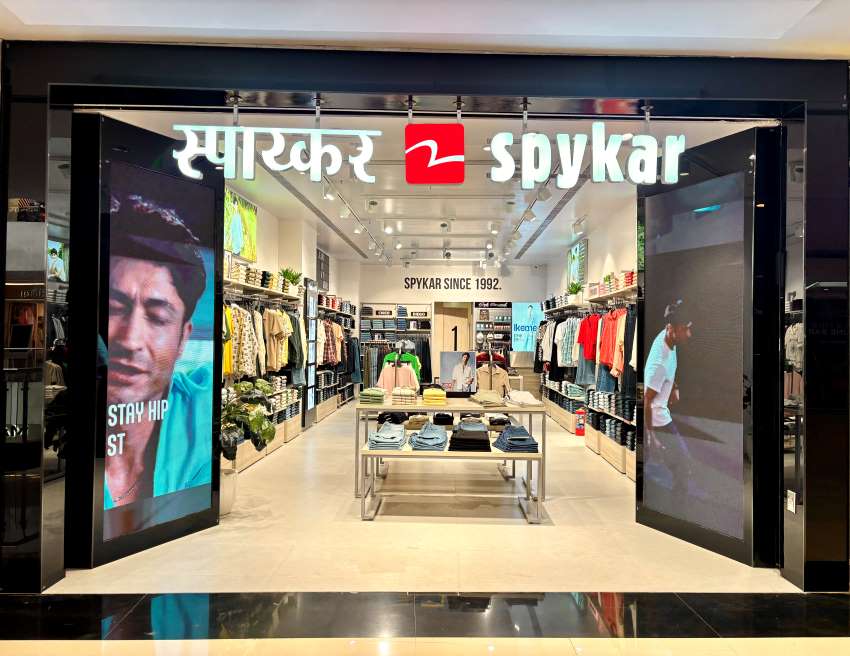
A titan of the Indian denim-first fashion scene, Spykar has officially unveiled an aggressive retail growth strategy. As consumer demand for experiential shopping reaches new heights, the brand is doubling down on its physical presence, announcing plans to launch 100 new stores across India over the next two years.
This strategic push aims to boost the brand’s footprint in high-traffic retail corridors, ultimately bringing the total store count to over 380 locations. The expansion arrives on the heels of several high-profile openings, including new storefronts in Ghaziabad, Vizag, Simdega, and Darbhanga.
Capturing the Tier II and Tier III growth
The driving force behind this expansion is a profound shift in India’s retail landscape. While digital commerce continues to evolve, Spykar has identified an undeniable appetite for brick-and-mortar experiences in emerging urban clusters. Tier II and Tier III cities, in particular, have transformed into critical growth engines for the fashion sector.
With rising disposable incomes and a heightened awareness of global fashion trends, consumers in these regions are increasingly seeking the tactile, premium experience that only a flagship store can provide. Spykar’s move into premium malls and high-street locations - such as its recent success in Hyderabad’s Lakeshore Mall, Vizag’s Inorbit Mall, and Ghaziabad’s Ansa Mall—signals a clear intent to meet this demand head-on.
The ‘Experience-First’ retail philosophy
Addressing the motivation behind the brand’s physical resurgence, Sanjay Vakharia, Co-Founder and CEO, Spykar Lifestyle, notes, in 2026, the brand witnessed a significant rise in offline expansion across various retail sub-sectors, states Vakharia. Despite the pervasive access to digital shopping mediums, the visceral look and feel of products, coupled with the authentic experience of in-store shopping, remains highly desirable. Our growth plans reflect Spykar’s continued commitment to bringing a more immersive and elevated shopping experience to consumers across India.
A modern aesthetic for a new generation
The new retail outlets serve as a canvas for Spykar’s evolving design language. Abandoning the traditional ‘racks and stacks’ approach, the brand has adopted a modern, sophisticated aesthetic. The stores are meticulously designed to move beyond simple transactions, aiming instead to deliver a complete, lifestyle-driven journey.
The layout and visual merchandising are strategically curated to guide shoppers through Spykar’s signature denim collections and its broader range of fashion-forward apparel. By creating a premium environment that emphasizes comfort, individuality, and effortless style, the brand is positioning itself as the premier choice for India’s dynamic, style-conscious youth.
As Spykar continues its rapid scale-up, it remains rooted in its core philosophy: merging high-quality craftsmanship with the ever-changing pulse of modern fashion. With 100 new stores on the horizon, the brand is set to solidify its status as a cornerstone of the Indian fashion retail experience.
The Inventory Illusion: Rethinking the Zara benchmark in a volatile retail era

For over a decade, the global fashion industry has treated the Zara playbook as the gold standard of inventory efficiency. The narrative has been simple: faster inventory cycles translate into sharper margins and stronger cash flows. With parent company Inditex often cited as turning inventory over more than 10 times annually, the benchmark became shorthand for operational excellence.
Yet, as the industry moves deeper into 2026, that equation is being challenged. A combination of geopolitical instability, supply chain fragmentation and the rising cost of stockouts are forcing retailers to reassess whether speed alone is a reliable proxy for performance. Increasingly, analysts argue that inventory turnover, in isolation, obscures more than it reveals.
A distorted metric
The challenge begins with the data itself. Inditex does not disclose turnover metrics at a brand level, meaning that the widely referenced Zara turnover is, in reality, a blended figure across a diverse portfolio that includes Bershka, Stradivarius and Massimo Dutti. Each operates on distinct merchandising cycles and price architectures, making direct comparisons with mono-brand competitors inherently flawed.
This opacity becomes even more pronounced when strategic decisions are factored in. In early 2025, Inditex increased its inventory value to €3.32 billion, a deliberate move to build safety stock amid ongoing logistics disruptions. Such a shift, while temporarily lowering turnover ratios, actually signals operational prudence rather than inefficiency. The implication is clear: turnover is as much a reflection of strategy as it is of execution.
Efficiency in context
A closer look at comparative metrics across major global retailers, highlight the difference between speed, inventory holding and profits.
Table: Comparative inventory efficiency (FY2024–FY2025)
|
Retail group |
Reported inventory turnover (annual) |
Days sales in inventory (DSI) |
Gross margin (%) |
|
Inditex (Zara Group) |
10.4x |
35 Days |
57.80 |
|
H&M Group |
2.8x |
130 Days |
51.20 |
|
Gap Inc. |
4.3x |
85 Days |
38.90 |
|
Lululemon |
3.6x |
101 Days |
58.30 |
The table underscores a shift in interpretation. While Inditex leads on turnover, its real advantage lies in margin strength, not merely speed. Meanwhile, H&M Group operates with higher days of inventory, a reflection of its globally dispersed sourcing model. Gap Inc. sits in the middle, balancing moderate turnover with controlled inventory exposure, while Lululemon demonstrates that premium positioning can sustain high margins even at lower velocity. What emerges is: inventory turnover cannot be divorced from business model, sourcing geography and pricing power.
Difference is supply chain
The difference in performance is rooted in supply chain design. Inditex’s near-shoring strategy, with production concentrated in Spain, Portugal and Morocco, enables lead times as short as three weeks. This proximity allows the company to operate with lower inventory buffers and respond rapidly to demand signals.
In contrast, companies like H&M and Gap rely heavily on extended sourcing networks across Asia. While this model offers cost efficiencies, it also necessitates higher inventory holdings to compensate for longer transit times and increased exposure to geopolitical disruptions. In this context, a higher Days Sales in Inventory is not necessarily a weakness, but a structural requirement. Thus, inventory metrics become less about operational superiority and more about strategic alignment with sourcing realities.
When speed becomes a liability
The industry’s longstanding obsession with hyper-velocity is now facing diminishing returns. High turnover models depend on near-perfect logistics execution. Even minor disruptions whether maritime delays or port congestion can cascade into stockouts, directly impacting sales. As a result, a growing number of analysts now view an annual turnover range of 4x to 6x as a more sustainable equilibrium for diversified apparel players. This range allows retailers to maintain sufficient buffers without locking excessive capital into unsold stock.
The conversation is also shifting toward decision intelligence, where advanced analytics and AI-driven systems determine optimal inventory placement across channels. The focus is no longer just on how fast inventory moves, but on how intelligently it is deployed.
The portfolio approach to inventory
Few companies showcase this shift better than Gap Inc. Rather than chasing higher turnover, the retailer has focused on rationalising its inventory mix across brands such as Old Navy and Banana Republic. In 2024, the company reduced total inventory by 15 per cent year-on-year, not by increasing sales cycles, but by eliminating low-performing SKUs and concentrating on core, replenishable products. This approach highlights an evolution in inventory management. Efficiency is increasingly defined by precision what not to stock rather than sheer velocity.
Margins as the ultimate metric
If inventory turnover once served as the industry’s headline metric, gross margin has now taken its place as the definitive indicator of retail health. Inditex’s ability to maintain a margin of 57.8 per cent stems not just from rapid stock movement, but from its capacity to sell at full price, minimising markdown exposure.
This focus on full-price sell-through is reshaping strategies across the sector. Retailers are investing in omni-channel inventory systems, digital twins and real-time tracking to reduce the significant carrying costs associated with unsold goods, which can account for up to a quarter of inventory value. In this emerging framework, turnover is relegated to a supporting role, a vital operational metric, but one that must be interpreted alongside margin performance and supply chain resilience.
Redefining the benchmark
The enduring influence of the Zara model is undeniable, but its interpretation is evolving. What was once seen as a universal benchmark is now understood as a product of specific structural advantages, vertical integration, geographic proximity and brand positioning. As the fashion industry faces a more volatile and fragmented global scenario, the focus is shifting from speed to stability, from turnover to total system efficiency. Inventory, once viewed primarily as a cost centre, is increasingly being recognised as a strategic asset. In 2026, the real benchmark is no longer how fast a retailer can move its stock, but how effectively it can balance velocity with resilience, precision and margin integrity.
Retail Without Retail: How Walmart’s depot network is turning space into logistics power

Walmart is fundamentally rewriting the commercial real estate and retail logistics playbook with the rise of its ‘Walmart Depots’ a hybrid middle-mile infrastructure layer designed to bridge the widening gap between large-scale regional distribution centers and hyper-local storefront delivery demand. As the company surpasses a $1 trillion market capitalization in 2026, this evolution signals a decisive shift: Walmart is no longer just a retailer, but a logistics-as-a-service operator embedded deep into the physical economy.
Unlike traditional retail outlets or even conventional warehouses, Walmart Depots are high-density, tech-enabled micro-fulfillment nodes. They are engineered to reduce the distance between digital demand signals and physical product movement. By converting underutilized retail real estate into high-velocity distribution points, Walmart is targeting the most expensive and operationally complex segment of retail the last mile.
Vacancy arbitrage in pharmacy real estate
One major catalyst for this strategy is the decline in the US pharmacy retail sector. With major chains such as CVS and Walgreens rationalizing store portfolios and Rite Aid undergoing restructuring, thousands of 10,000 to 15,000-sq ft properties have entered the market across high-traffic urban and suburban corridors.
These formerly prime retail boxes, once viewed as distressed assets, are now being repositioned as micro-fulfillment infrastructure. Walmart’s strategy is to selectively absorb these locations and convert them into Depots stocked with high-velocity SKUs, particularly in apparel, home essentials, and fast-moving consumer goods where speed-to-market directly determines margin performance.
This real estate repurposing enables shortening of delivery timelines. A significant share of Walmart’s urban customer base can now be served in under three hours, contributing to a broader operational milestone: by fiscal year 2026, nearly 95 per cent of US households are within a three-hour delivery radius. What was once a scale problem has been reframed as a proximity solution.
Table: Walmart supply chain acceleration metrics
|
Metric |
Performance FY 2025 |
Projection FY 2026 |
|
Global E-commerce Sales |
$122.6 bn |
Plus $150 bn |
|
E-commerce Revenue Share |
18% |
Plus 20% |
|
3-Hour Delivery Reach |
80% of US Households |
95% of US Households |
|
Home Delivery Unit Cost |
-12% Y-o-Y |
-20% (Cumulative 2-yr) |
These gains reflect Walmart’s aggressive shift toward infrastructure-led retail economics, where logistics efficiency directly determines revenue scalability.
The economics of automation and density
At the core of the depot strategy lies a disciplined focus on unit economics and automation-driven throughput. Approximately 60 per cent of Walmart’s US stores are already replenished by automated distribution systems, while the company continues to accelerate capital expenditure toward robotics and supply chain modernization.
Walmart is currently retrofitting 23 of its 42 regional distribution hubs with advanced automation systems, revealing that the transformation is not incremental but systemic. Supply chain investments are expected to peak over the next two years, reflecting a short-term capital intensification phase aimed at long-term cost compression. This allows Walmart to reassign functional roles across its network. Supercenters are increasingly shifting toward experiential and high-margin retail, while depots absorb the operational burden of high-frequency replenishment. The result is a bifurcated retail system: visible consumption in stores and invisible velocity in logistics.
As Walmart’s EVP and CFO John David Rainey says, technology-driven productivity is central to expanding the company’s omnichannel model at lower marginal cost. The depot layer is effectively the mechanism through which this cost advantage is realized.
Apparel as a high-velocity test case
Nowhere is this transformation more visible than in Walmart’s apparel and private-label strategy. The integration of RFID (Radio-Frequency Identification) across the supply chain has enabled near real-time inventory visibility, dramatically improving forecasting precision and stock allocation.
Previously, apparel cycles were constrained by slow replenishment systems and broad, regional inventory assumptions. Today, Walmart can dynamically reposition inventory based on localized demand signals, often within hours. When fashion trends emerge in specific metropolitan clusters, inventory is rapidly reallocated from regional hubs to nearby Depots, enabling same-cycle responsiveness. This has resulted in a 15 per cent% reduction in apparel markdowns, driven primarily by improved inventory positioning and reduced overstocking. In effect, Walmart is replacing seasonal forecasting with continuous demand sensing.
From cost centers to revenue engines
The depot network is also evolving into a platform for external monetization. Through Walmart GoLocal, the company’s white-label delivery service, these micro-fulfillment hubs are increasingly used to serve third-party retailers. This transforms internal logistics infrastructure into an external service layer, generating incremental revenue from capacity that would otherwise remain underutilized. This marks a shift in retail economics: logistics assets are no longer purely cost centers but hybrid revenue-generating infrastructure platforms.
In fact, the broader retail sector is now facing a divergence. Companies must either integrate into Walmart’s emerging logistics ecosystem or risk being structurally disadvantaged by its scale and speed advantages.
The competitive frontier is no longer defined by store count or brand strength alone, but by proximity-to-demand and velocity-to-fulfillment. Walmart’s strategy effectively compresses geography, turning physical distance into an engineered variable rather than a constraint. With automation now handling roughly half of its e-commerce fulfillment volume, Walmart is positioning itself as a direct challenger to digital-native platforms by matching algorithmic efficiency with physical infrastructure depth.
Omnichannel at industrial scale
Walmart’s transformation reflects a broader evolution from discount retail pioneer to omnichannel infrastructure leader. Serving approximately 280 million customers weekly across 10,900 global locations, the company now operates in the middle of retail, logistics, and technology.
The depot model is the connective tissue in this system, enabling Walmart to unify online and offline commerce into a single operational framework. By maximizing volume per sq ft, regardless of whether demand originates in-store or digitally the company is effectively redefining what retail real estate is meant to do. In this new paradigm, competitive advantage is no longer about owning the most stores, but about owning the shortest and smartest path to the customer.