


FW
D2C Innerwear launches Almo Wear in India
D2C Innerwear has launched Almo Wear in India as an attempt to change this perception by building an innerwear experience. Bringing Italian style and minimalism to the Indian market, the collection includes together timeless designs and innovative fabric. It offers two different fiber based n ranges; GOTS certified Organic Cotton range and Tencel Modal Micro range.
The Global Organic Textile Standards (GOTS) approved organic cotton range is a sustainable twist on the conventional cotton innerwear. Softer than conventional cotton, it allows for 88 per cent lower water consumption along with a considerable energy-positive impact on the environment.
The second range has been crafted with Austrian Tencel Modal Micro fibers sourced from European beechwood forests. Sourced from nature, with an ultra-soft texture, these fibers unveil an unforeseen standard of conscious comfort. Adding to this, the revolutionary Siro Spinning method gives the fibers an additional fineness and makes them lighter. The result is a lush, ultra-soft (3 times softer than cotton), stretchable fabric with higher moisture-wicking capabilities allowing comfort & freshness like never before.
Almo Wear uses Swiss Textile Innovator, HEIQ’s revolutionary technology to incorporate enhanced odour control and an anti-microbial finish in its fabrics. This makes the products perfect for the tropical climate in India.
Li & Fung to invest $100 million in JD.com
Li & Fung has announced a strategic investment of $100 million in JD.com, with newly issued capital (at HK$1.25 per share) to further develop its digital supply chain. The Fung Family will continue to retain control of the company with 60 per cent of the voting shares.
Li & Fung has been on a journey to create the Supply Chain of the Future and the strategic cooperation with JD will accelerate this development with a proven digital partner, the company reports. Li & Fung will also grow its business in China by partnering with JD on private label initiatives for the China domestic market by leveraging its global network and digital supply chain. With the strong partnership between the Fung Family and Singapore-headquartered GLP Pte Ltd., and now the addition of JD, Li & Fung will be able to leverage its scale and digital capabilities to continue its journey of creating the end-to-end digital supply chain.
As China’s leading technology driven e-commerce company, JD is transforming to become the leading supply chain-based technology and service provider, which fits well with Li & Fung’s goal of creating the Supply Chain of the Future. JD has been developing proprietary supply chain technologies for many years and has created digital retail and supply chain platforms that are fully integrated to support its omni channel strategies.
Surf Expo cancels September event
Surf and action-sports trade show Surf Expo will cancel its upcoming event, which was scheduled to run from September 10–12 in Orlando, Fla., due to the COVID-19 pandemic.
In place of the in-person show, Surf Expo will introduce the virtual show Surf Expo Connect, which is scheduled to launch officially September 16–18. Attendees can register for this new offering at surfexpo.com. About 5,000 people had already registered to attend the on-site September show, and he thought that a significant number of them would attend the virtual show. Surf Expo Connect also might pick up attendees from people who weren’t intending to make a trip to Orlando but wanted to order for their stores.
Surf Expo Connect will offer virtual booths where exhibitors can show product, post catalogs, and hold talks through virtual chat, Turner said. It also will offer trade-show programming such as panel discussions and educational seminars.
Ulrich Grimm quits Calvin Klein after 22 years of service
Ulrich Grimm, Global Head –Non -apparel Design, Calvin Klein Inc, is quitting from his position with effective August 2. He has been engaged with the brand for almost 22 years and previously served as executive vice president, design, shoes and accessories.
During his time at the brand, Grimm built a strong global alignment across its accessories, including some of the licensed categories such as eyewear and watches and jewelry. He oversaw design for accessories, footwear and home.
In April 2019, Grimm was promoted to his most recent position. Last year, the brand exited the 205W39NYC high-end collection business and Calvin Klein by Appointment, following Simons’ departure, and that signaled an end to Klein’s high-end luxury business.
Grimm, began his career as a studio designer for Anne Klein and Anne Klein II accessory collections in 1994, and a year later was promoted to senior design director. In 1996, he became design director for the licensee behind the CK Calvin Klein shoe division, responsible for the overall concept and successful launch of the CK Calvin Klein line, and worked closely with the in-house apparel design teams at CKI. In 1997, he was hired by Reed Krakoff at Coach as design director, responsible for updating and modernizing the women’s handbag and shoe collections to target a more fashion-conscious consumer.
In 1998, Grimm joined the in-house design team at CKI as the designer director for women’s and men’s CK Calvin Klein shoes and men’s collection shoes. A year later, he was given additional responsibilities for accessories and women’s collection shoes, and since that point, has been directing all aspects of shoe and accessory design for a wide range of in-house and licensed categories.
Nike to cut 500 jobs at Portland headquarters
Nike Inc plans to at least 500 jobs in its Beaverton, Ore., headquarters. The layoffs, which were first reported by the Portland Business Journal, will start to go into effect October 1.
The scaling back will also include the permanent closure of Nike’s child-care centers, which will impact 192 staffers. The company is shifting its child-care strategy and is launching a new child-care benefit beyond its world headquarters and across the US The child-care benefit will expand from hundreds to thousands of employees, including for the first time, staffers in retail, distribution centers and air manufacturing innovation.
Nike lost $790 million in its most recent quarter. The company, like other major retailers, was forced to close stores due to the pandemic shutdown. To try to build sales, the brand is playing up the digital side of its business and is gathering more consumer data to develop more specialized products. The juggernaut has also been realigned to focus on three categories — men’s, women’s and kids.
Primark pledges to pay for finished orders
Primark is pledging to pay suppliers in full for all outstanding finished garment orders and to utilise or pay for any finished fabric liabilities, Drapers has revealed. The company has placed £1.2billion of orders for coming seasons. It confirmed that its standard 30-day payment terms remain in place.
It follows previously announced commitments to pay in full for orders that were in production, finished and planned for handover by 17 April, after all the retailer’s stores were closed in mid-March.
In April, Primark established a wages fund to ensure workers were paid for product in production. To date over £23 million has been paid out, according to the retailer. It committed to taking an additional £370 million of orders finished and/or in production. This brought its total stock owned or committed, while stores were closed, to around £2billion.
Walmart merges online, store businesses
Walmart has made a series of organizational changes and announcements in recent months. In late February, the company merged its buyer teams on the store and online side to decrease conflicts over the pricing of products online and in-store. It struck deals with secondhand apparel and accessories site ThredUp in May and with Shopify in June to expand the assortment of goods and add new brands to its website.
Walmart is also expected to launch a subscription-based service called Walmart+ to better compete with Amazon Prime. The retailer’s e-commerce sales in the U.S. shot up by 74 per cent in the first quarter, which ended April 30.
In recent months, the big-box retailer has hired more than 400,000 employees for stores and fulfillment centers to help stock shelves and keep up with demand. With the larger workforce, labor costs have risen. Walmart announced three rounds of special bonuses that have totaled $1.1 billion.
Rise of new Chinese domestic luxury shopper
 As the pandemic has incapacitated Chinese high-end shoppers, luxury players like Balenciaga and Montblanc are rethinking their strategies to reach these consumers in Mainland China. Earlier, around two-thirds of Chinese consumers shopped for luxury goods overseas, says consultancy Bain & Co. This shopping usually occurred during their vacations or through resellers called “daigou.’
Pandemic makes luxury shift urgent
Aware of the potential of these consumers, luxury houses has been rolling out expansion plans in China before the virus broke out. The pandemic has accelerated their plans and made this shift more urgent. The perceived anti-Chinese racism in Western countries exacerbated by the Coronavirus, and Chinese government’s desire to bring spending home is fuelling Chinese buyers’ desire to shop domestically. Bain & Co estimates by 2025, over half of Chinese purchases for luxury goods may happen domestically.
To deal with this, brands should increase their imports into China and offer a wider and well-priced range, says Amrita Banta, Managing Director, Agility Research. They can also expand their reach to more cities, she adds.
Luxury brands turn to e-commerce platforms
China’s luxury fashion market is set to grow by around 10 per cent this year, against a 45 per-cent plunge expected in the global industry, estimates Boston Consulting Group. However, the loss of Chinese travel spending has been a big blow to earnings of luxury companies like LVMH, Moncler SpA in recent months. Increase in domestic shoppers is pushing these companies to reconsider their store and distribution networks, says Jean-Marc Duplaix, CFO, Kering SA. Luxury brands like Prada, Miu Miu, Balenciaga, Piaget and Montblanc have opened virtual storefronts on Alibaba Group Holding’s Tmall luxury platform this year, some setting aside long-standing objections to working with third-party online channels. Brands like Louis Vuitton, Givenchy and Chloe have also started using social media platforms to live-stream their products in China.
Rethinking strategies
Earlier, luxury brands in China kept local manufacturing to a minimum. Now, they will have to rethink how to avoid delayed stock and lost sales, says Banta. The growing preference among Chinese shoppers for second-hand luxury platforms to procure certain goods is fuelling more investments in such startups. For instance, sales of JD’s used-goods platform Paipai in second-hand luxury category jumped by 138 percent during the 18 days of its annual summer sale period in June compared to a year ago.
Facing its worst economic contraction since 1992, China aims to keep spending within its borders. The country recently increased tax-free shopping quota for travelers to its southern Hainan province to 100,000 yuan annually per person from the previous 30,000 yuan. Sales on the first day of the new policy at four malls amounted to nearly 60 million yuan, reported state media. The pandemic has made Chinese consumers realize the benefits of domestic shopping and the trend is likely to continue in future too.
Rebuilding trust between brands and retailers essential for future business
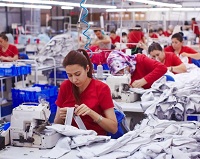 COVID-19 is drastically altering relations between brands and retailers. With fear of bankruptcies and subsequent non-payment looming over them, factories are choosing their retail partners with due diligence and emphasizing on a strategic partnership.
As Peter Maerevoet, Global Chief Financial Officer and Senior Executive Officer, Tradewind says, since buyers cannot ditch their suppliers currently, suppliers are in a more powerful position to decide on partners. Earlier, this power balance was hugely imbalanced as there was huge disparity between supplier’s capacity and demand. Though some bigger manufacturers could decide on their partners, most had to compete by offering better prices than their rivals. COVID-19 has narrowed this choice by wiping away many suppliers.
Henceforth, surviving factories will be careful in selecting their customers; opines Guido Schlossmann, President and CEO, Synergies Worldwide. They will not only hesitate to bring onboard new customers but also continue doing business with only trustworthy partners. The pandemic has also exposed the financial instability of retailers with many of them succumbing to bankruptcy. Some of the biggest retail giants have bucked under pressure, says Ritesh Nair, Co-Founder and Director, Lipi Sourcing.
Emphasis on financial stability of retailers
Indeed, in future too, factories will continue to rely on brands. However, they will now work with only financially stable companies that would be able pay for their orders. They will work with retailers having an online business and selling essentials such as food, says Schlossmann. The most appealing brand partners would be ones with a strategic business model. HSBC’s B2B platform Serai is launching a solution that gives brands a simple color-coded rating based on their payment habits. Brands are also seeking out cash in advance, payment upon delivery or payment after inspection, while customers are increasingly pursuing open account terms.
Factories are also leveraging factors or trade credit insurance. Lately, there has been an uptick in requests for trade finance due to the uncertainty surrounding payment terms. This gives the industry an opportunity to shift to phase financing. This type of financing make amounts accessible to factories at specific stages in production, guaranteeing that they get paid in a timely manner.
Revisiting contract terms
Suppliers are also scrutinizing the terms of their contracts and requesting additional protections. There has seen an increase in the use of retention of title clause, which enables the factory to hold onto goods until payment, even in case of a retailer’s bankruptcy. Besides, factories are trying to circumvent restrictions on branded merchandise and seeking permission to sell their goods to third parties.
COVID-19 has broken down the trust between suppliers and customers. This can be rebuilt by retailers taking ownership of orders or paying for goods. Retailers also need to be transparent about their financial forecast while outlining future orders, says Maerevoet. On their part, factories should offer flexible payment terms and ensure faster production to ease some of the retailers’ woes. This can help create new relations between factories and retailers, adds Nair.
Activewear sales surge in the US
According to NPD Group, the adult activewear market in the US generated $50.3 billion revenue in 2019, with men’s category accounting for 51 per cent of the market share and women’s category sharing 49 per cent of the revenues.
When the COVID-19 hit the world in early 2020, and specifically the USA in mid-March, gyms and fitness centers had to close their doors temporarily creating a noticeable dent in athleisure/activewear industry in March. Not to be put down, fitness freaks opted for home workout routines amidst stay-at-home instructions realising that the pandemic is not going anywhere soon.
As a result, according to Lifestyle Monitor, certain athleisure categories, especially in bottoms, have sold really well from mid-April till May ’20 – which are sweatpants and leggings. Sweatpants sell out of overall assortments in the USA apparel stores has gone from 6 per cent in May ’19 to 11 per cent in May ’20. In menswear, it’s 14 per cent of overall sales in the first 5 months of this year as compared to 11 per cent of the same period in 2019.
This surge in activewear in the USA is even more significant considering that all other product categories have seen massive downslide. Lifestyle Monitor’s survey shows that half of all US consumers (47 per cent) are buying less apparel for themselves in 2020 compared to 2019.











