


FW
Kraig Biocraft reopens Vietnam unit
Kraig Biocraft Laboratories has resumed production of finished goods utilizing its specialized recombinant spider silk in Vietnam. Safety protocols and restrictions put in place at the onset of the COVID-19 in Vietnam had led to closures and slowdowns of many businesses throughout the country. These restrictions delayed operational growth, and led to slowdowns at yarn spinners and weavers, which limited Kraig’s ability to convert its raw silk into finished fabrics and garments.
As these restrictions are lifting, Kraig Labs is ready to scale-up silkworm production with scheduled delivery and installation of new quality control lab equipment. With the re-opening of textile mills and yarn spinners, Kraig Labs is now resuming work to produce the custom yarns and spider silk fabrics for the launch of SpydaSilk apparel, a joint development partnership with Kings Golden Harvest.
Kraig Biocraft is a biotechnology company focused on development and commercialization of spider silk. In coming weeks, the company expects to receive and install several pieces of lab equipment delayed due to lockdowns. Most critically, with re-opening, Kraig can once again work with textile mills to weave its silk into finished fabrics for the first garments for SpydaSilk and to supply materials to the numerous other brands eager to incorporate spider silk into their products.
Shenzhen Fashion Week becomes more snazzier this season
China’s newly biannual Shenzhen Fashion Week upped its game this season. More than 300 fashion brands and designers showcased in over 105 runways in various districts around the metropolis —an increase of nearly 30 per cent compared to April’s edition. The event is a perfect addition as it brings brands live to followers and consumers. It is also a chance for them to exclusively discover the products from the collection before its actual launch online and therefore, adds a sense of exclusive access into the brand’s universe.
As a part of its offline expansion, the fashion week introduced Revelation, a new hub for hotly tipped, global talent. The co-exhibition brought together an innovative selection and mix of seasons ranging from archival to spring 2022. While the likes of cult favorite Robert Wun used archive pieces to showcase his DNA, Turkish accessories brand Manu Atelier used the space to build brand awareness and connect with the local audience through spring 2022.
Shenzhen is one of the top four first-tier cities of China and is also China’s so-called youngest city. The population aged 60 or above accounts for only 5.36 per cent, making the event an ideal attraction for Gen Z and millennial fashion lovers.
Lenzing introduces matte denim
Lenzing Group has introduced denim with sustainable lyocell fibers. This type of fiber is specially designed to reduce the shimmering effect on denim products, thereby enhancing its functionality that use a natural dyeing system for blue or dark colors. The aim is to meet the needs of consumers who want to have a denim fabric option made from matte.
By applying an innovative production process to make Trencel Lyocell fiber with a matte type, Lenzing is setting a new standard for indigo coloring applications. Lenzing is at the forefront of advocating for complete sustainability by creating products made with naturally derived raw materials and biodegradable cellulose fibers. Tencel Lyocell with matte is a product that combines functionality and aesthetics. This product increases the versatility of denim design while reducing the ecological footprint of fabric and garment production.
It’s because the product is made with a closed-loop production process that is efficient in terms of resource use, and also provides a smooth feeling on the skin and gives a dense color appearance. Denim products are always in everyone's wardrobe even though fashion trends continue to change from year to year. In this case, the manufacture of this matte material also aims at introducing sustainable jeans or denim products.
Visitors throng Shenzhen shows
The Shenzhen fashion events in China featured 1,500 select exhibitors, 25 fashion shows and 300 independent designer brands.
Fashion Source, Original Design Fashion Week, and Première Visionwere warmly welcomed by professional visitors from all over China. The three-day events gathered over 38,651 visitors, covering various groups of core buyers comprising brands, agents, distributors, fashion buyers, e-commerce operators, and shopping centers from China.
At Original Design Fashion Week,many original Chinese designer brands displayed their latest fashion runway shows.Première Vision covered an exhibition area of 5,500 square meters and exhibitors from France, Italy, Spain, Turkey, Korea and China presented their latest collections of fabric, design, leather and manufacturing. Première Vision Shenzhen highlighted once again its key role as an international communication link.As an international leading force of the fashion supply chain, Fashion Source is said to drive the development of China's fashion industry and enhances soft power and creativity of fashion in Shenzhen. The three-day event gathered leading players from the fashion industry and encouraged them to exchange ideas.
One of the key roles of Fashion Source is to help exhibitors develop more businesses. Four exclusive orderings were attended by over 180 high quality suppliers with more than 400 items of new collections and 200 specially invited buyers.
Bangladesh shifts from quantity to quality
Orders from brands and retailers are coming to Bangladesh following the reopening of European economies and the US and it would help Bangladesh's apparel industry recover from the pandemic fallout.
In the meanwhile apparel exporters in Bangladesh are shifting their focus more toward value-added, high-end apparel items like technical apparel as their demand is high in the global market. So they are pursuing a higher growth vision, diversifying textile material from cotton to non-cotton to make their business sustainable amid the fierce competition in the global market. In other words there is a shift from quantity to quality, from volume to value.
The country has invited foreign investment in Bangladesh’s non-cotton textile industry such as the production of manmade fiber-based apparel which will create a demand for artificial fibers and other raw materials in the local market.
Reputed brands and consumers are leaning toward manmade and recycled fiber to achieve sustainability. Buyers are choosing the fabric as a substitute to cotton fiber for sustainability and environmental issues. In keeping with sustainability many well-known brands may stop buying apparels produced from non-recyclable material. Imports of polyester staple fiber by spinners in Bangladesh went up 3.4 per cent in 2020 even amid the pandemic from the previous year.
KG Denim Q2 income rises
For the second quarter KG Denim’s total income was Rs 158.95 crores against Rs 95.31 crores in the corresponding quarter of the previous year and Rs 125.80 crores in the previous quarter.
Net profit / loss was Rs 0.67 crores against Rs 3.91 crores in the corresponding quarter of the previous year and Rs 2.12 crores in the previous quarter. Earnings Per Share (EPS) was Rs 0.26 against Rs 1.52 in the corresponding quarter of the previous year and Rs 0.83 in the previous quarter.
For the six month period, the company’s total income was Rs 284.75 crores against Rs 147.81 crores in the previous year. Net profit /loss was at Rs 1. 45 crores compared to Rs 7.83 crores in the previous year. Earnings Per Share stood at Rs 0.57 against Rs 3.05 in the previous year.
KG Denim is a denim and apparel fabric manufacturer. The company’s product divisions include denim, apparel fabric and home textiles. Its denim products include authentic ring denims, selvedge denim, organic/bio denims, tencel denim, printed denim and coated denim. The apparel fabric products include stretch twills, jean twills, and stretch, with or without lycra. The company currently manufactures 24 million meters of denim fabrics, 12 million meters of cotton fabrics, two million equivalent sheet sets of made–ups and three million jeans and trousers.
Candiani offers On Demand customized jeans
Italian powerhouse Candiani is offering a unique shopping experience while keeping attention on sustainability, craftsmanship, on-demand customization, proximity and Made in Italy.
The project consists of a complete microfactory that produces on-demand made-to-measure jeans. Customers can choose the denim they like best among a selection of eco-friendly Candiani Denim fabrics (including the 100 per cent degradable and compostable stretch fabric Coreva Denim), sustainable trims, sewing threads and labels, and finished with environmentally friendly treating machines and chemicals.
The project involves several Italian small and medium enterprises, all expert insiders in their sector focused on reducing their impact. Every consumer can choose among four fits for men and four for women. They can choose among rigid or stretch denim. The client can choose sewing threads, button, rivets, labels and also an inner label informing about color, composition of the fabric and similar aspects. The finished jeans is delivered in one week from the order. A selection of selvedge denims is also offered. Lighter weight fabrics may be offered for spring. The wastewater is totally clean because of the fabrics and technology used. The percentage ofwater recycled is almost near to 50 per cent. Three pieces of jeans are produced in a day and the ambition to reach about four or five jeans a day in the future.
Chinese yarn supply fluctuates
Over the past one month, direct spun PSF and polyester yarn experienced intense fluctuations in China.
The fluctuation of direct-spun PSF is mainly attributed to costs. Prices of direct-spun PSF plants are hit heavily by the participation of spot-futures traders in trades in addition to excessive supply against demand and occupation of re-PSF. Direct-spun PSF plants have to adjust down prices along with costs.Polyester yarn is more resistant to the decline. Most polyester yarn mills hold pre-sale orders which could last to early November. However, the demand is bearish now.There is no large difference for the spinners to offer 13,500yuan/mt or 13,800yuan/mt, so they do not lower prices so actively. Then the product inventory of polyester yarn increases quickly.
Some believed direct-spun PSF would rebound later amid tight supply and high price of crude oil. Nevertheless, PTA plants now run at over 80 per cent and the processing spread is high within 700 to 800yuan/mt, so it has downward room. Direct-spun PSF will be hard to change the current weakness and polyester yarn will continue to retreat. Later, downstream weavers will focus on consuming stocks and polyester yarn will step into weakening territory, both price and trading volume.
Vardhman adds to spindle capacity
Vardhman Textiles will add to its capacity with 1.65 lakh equivalent spindles in two or three years.
The investment required is Rs1400 crores. The funding will be raised through internal accruals and debt. The capacity addition is aimed at bringing better business synergies, competitive advantage and meeting increased demand. The existing capacity is 12 lakh equivalent spindles, which are running at a capacity utilization of 95 per cent.
Vardhman is a textile and apparel major. Vardhman is into manufacturing of high-end premium quality shirts for large retail brands Van Heusen, Benetton, Sisley, Color Plus, among many others. Vardhman, which began operations in 1965, is engaged in the business of manufacturing yarn, fabric, acrylic fiber, garments, sewing threads and alloy steel. The group has over the years developed as a business conglomerate with a presence in India and in 75 countries across the globe. It is one of India’s largest textile manufacturers with a substantial market share. The company is a one-stop shop for all kinds of spun yarn offering a variety of contemporary blends and shades. Yarn constitutes the largest business at Vardhman. The company also manufactures organic cotton, melange, core spun yarns, ultra yarns, gassed mercerised, superfine yarns, slub and cellulose yarns and fancy yarns for hand knitting.
Blending online retail with brick and mortar stores is the future of fashion retail
By the end of current fiscal, e-commerce sales are expected to surge to 15.3 per cent of the total retail sales. As per an eMarketer report, it will further rise to 23.5 per cent of total sales by 2025.
Omnichannel for a seamless experience
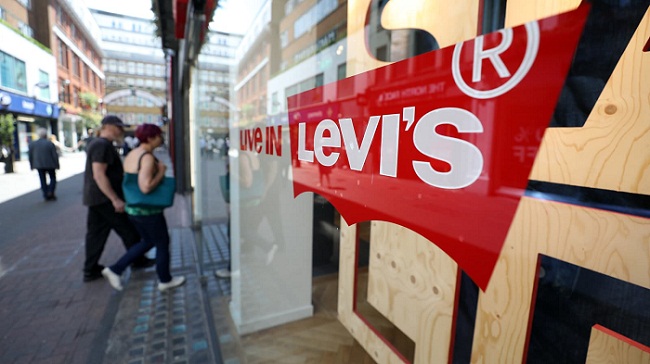
Building an omnichannel experience has been critical for retailers during this period, says Harmit Singh, CFO, Levi Strauss & Co. The company operates approximately 3,000 stores and shop-in-shops besides selling products online and in other department stores and retailers. It now aims to scale up investments in digital experience besides prioritizing an in-store shopping experience for customers, reports CNBC.
In fiscal 2020, around 25 per cent of Levi’s sales were generated though online shopping, whether directly through own platform or through the digital presence of wholesalers. To push direct-to-consumer stores, the company also introduced a new experiential store in Palo Alto, California during the year. The store has several digitally-focused features including integration with the company’s app, curbside pick-ups and contactless returns, and an inventory assortment that is driven by local customer data.
Restructuring distribution network
Levi’s, which opened 100 new stores last year, plans to open more than 100 this year. It has also scaled up investments to drive more digital experience, adds Singh. Another reformation Levi’s aims to achieve this year is in its distribution infrastructure that has grown in importance amid supply chain challenges. Last year, it recreated the omnichannel approach for West Coast distribution and introduced the ship-from-store strategy. This not only improved inventory efficiency but also reduced service costs.
Similarly, pushing to make it online and in-store experience more seamless, Estee Lauder added several new features like virtual try-on and making its beauty advisors available online, notes Tracey Travis, CFO. Estee Lauder witnessed a three-to-five-year acceleration in its online business across all forms in the last 12 months. Meanwhile, the brand is looking at ways to recover brick and mortar stores, adds Travis. Last year, 21 per cent of its global sales were generated from department stores while sales in travel retail environments, such as duty-free shops in airports, made up 28 per cent of total sales.
Online shift to determine future retail mix
Future balance between e-commerce and traditional brick-and-mortar sales will depend on the number of retail companies shift their operations online. Earlier this year, Saks Fifth Avenue owner, split its website into a separate business apart from its 40 stores. The new digital company is expected to be valued at $2 billion. Macy’s online business is also expected to be worth about $14 billion. Its 2021 sales are forecasted between $8.35 billion and $8.45 billion.











