FW
Portugal’s textile and clothing exports surge 16.5 per cent in 2021
Portugal’s textile and clothing exports increased by 16.5 per cent over 2020 to €.419 billion in 2021, and 3.9 per cent above the pre-pandemic year of 2019. According to the Textile and Clothing Association of Portugal (ATP), exports of knitted garments increased 9 per cent to €2.336 billion while home textiles exports surged by 17 per cent to €763 million.
In contrast, exports of woven garments declined 19 per cent to €796 million. In terms of export destinations, exports to France registered the largest increase in absolute terms. Exports to the country surged by 18 per cent to €119 million. The French market now accounts for 15 per cent of total textiles and clothing exports.
Amongst non-EU destinations, exports to the US grew the most, an increase of €107 million. On the other hand, exports to Spain declined 14 per cent to -€220 million. The value of the Spanish apparel market dropped to 25 per cent in 2021 from 31 per cent in 2019. According to the ATP, in 2021 the sector’s trade balance had was positive at €1.168 billion, a coverage rate of 127 per cent.
Pure London to make a comeback in July 2022
After a two-year hiatus, UK’s largest fashion trade show Pure London plans to make a comeback in 2022. The fair plans to hold its SS23 edition at Olympia London from July 17 to 19, 2022. The show will feature a host of new and returning brands, including: One Hundred Stars, Brodie Cashmere, Onjenu, Lily & Me, My Doris, Meraki Beach, Blank, Jayley, Alpe, Sonatachic, Joko Edu.
The trade show will hold a standalone show for the first time since the beginning of the pandemic. It was forced to cancel physical shows due and launch a digital platform amid lockdowns and travel restrictions. The show will be held alongside contemporary womenswear trade show Scoop as a hybrid event.
Julie Driscoll, Divisional Managing Director-Fashion, Hyve Group, organiser of Scoop and Pure London says, the show will continue to provide a global platform for womenswear, footwear, jewellery and accessory brands and designers, and as it comes back home to Olympia we want to ensure we are creating a show for the industry.
For the upcoming show, the iconic Olympia London will be split 9nto various sections: womenswear; footwear and accessories; Pure Origin, the section for garment, fabric and supply chain sourcing; Pure Lab, an area for emerging designers; and Pure Jewel, a new section for jewellery brands.
Sri Lanka’s loss of GSP+ status to EU to damage apparel market
Sri Lanka’s loss of GSP+ to the EU could prove to be highly damaging as it is the single largest market for the country’s garment exports, says Felix Fernando, CEO, Alpha Apparels. In 2021, the EU accounted for $2.2 billion or nearly half of the sector’s total export earnings. The industry employs 350,000 workers in Sri Lanka, with female representation in the industry being more than double the national average The loss of GSP+ facility would stall the vast improvements made in female economic empowerment and overall human capital, adds Fernando.
Unavailability of GSP+ is also likely to affect SMEs and family-owned businesses in the country, opines Fernando. The pandemic has led to global re-orientation of supply chains which Sri Lanka’s apparel sector is well-positioned to capitalize on. However, this requires easy access to exports markets, through trade arrangements such as GSP+. Export earnings, which generate foreign exchange, are also vital for Sri Lanka’s economic stability as well as to meet the country’s foreign debt obligations, adds Fernando.
According to the World Bank’s estimates, Sri Lanka’s poverty rate rose from 9.2 per cent in 2019 to 11.7 per cent in 2020 The country’s poor were disproportionately negatively affected. Adding to the woes cost of living has soared in recent times. Inflation was at a 12-year high in December 2021, with food prices surging to levels that have led to fears regarding increase in malnutrition and hunger.
With grand weddings back post-Covid, business is brisk for ethnic wear brands
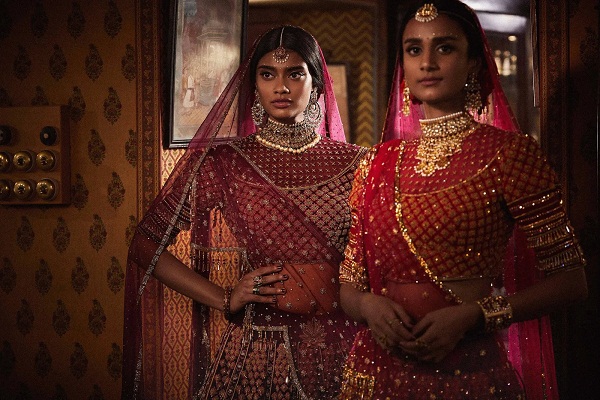
Indian weddings are back with a bang and the festive season has sky-rocketed the sales of the Indian ethnic wear segment to an all-new high. Premium players such as Vedant Fashions Limited (VFL), Nalli’s, Jahanpanah, Ritu Kumar, Manoviraj Khosla, Biba, Fab India and Neeru's among others are again selling like never before after the dismal Covid years.
Women’s ethnic wear brands are showcasing and selling a versatile collection of saris, kurtas, shararas, salwar kameez sets, lehenga sets, palazzos, anarkali kurtas and various styles of churidars. For men too ethnic wear kurtas, Nehru jackets, dhoti kurtas, sherwanis and Indo-western men's clothes are doing good business. Kids too are now a big part of this ethnic wear segment of all brands with the most versatile product portfolio of all.
India’s wedding industry on new high after Covid years
Meanwhile, the wedding industry is expected to see growth of 200 per cent this year after two years of Covid put a halt on all big social gatherings. The ethnic wear market is driven by almost 9.5 million to 10 million weddings each year. As the new concept of multi-day and multi-event wedding celebrations is catching among all communities, there is need to wear appropriate occasion-specific clothes. There is a radical shift from the tailor shop to the ready-to-wear boutique stores, an addition of Indo-western wear and an increased product portfolio of men’s clothes.
Along with this is an increased penetration in Tier II, III cities of India where aspirational clothing and more disposable incomes are on the rise thanks to improved logistical connectivity, digital access and platforms like Instamojo. Also, since these shoppers are not as brand conscious as peoples in metros, affordable prices along with trendy quality products are the USP.
A CRISIL (Credit Rating Information Services of India) study shows, the branded ethnic wear segment is expected to grow at a CAGR of 18 to 20 per cent between FY20 and FY25 and will account for 28 to 32 per cent of Indian wedding and celebration wear market. The versatility of products in ready-made branded ethnic wear is no comparison to tailored clothes at local or premium tailors. Even in branded stores, the garments can be sized to exact specifications along with a premium shopping experience. If we fail to adapt, we fail to move forward and the modern ethnic wear segment has shown us just that.
Manyavar remains VFL’s bestseller brand
As a first mover in wedding and festive wear segment Vedant Fashions Ltd (VFL) has seen its business grow. With celebrity brand endorsements and a uniform pan-India presence by strong retailing supported by an omnichannel network, VFL has metamorphosed from a simple start-up to brand leader in less than two decades. Founded by Kolkata-based first-generation entrepreneur Ravi Modi, this branded Indian wedding and celebration wear market segment player has come into its own with the flagship Manyavar brand having emerged as a category leader and a brand of first recall, thanks to celebrity endorsements by Anushka Sharma, Virat Kohli and Amitabh Bacchan among others.
With first-mover advantage, efficient marketing, promotional strategies fewer sales or discounts, Manyavar has allowed VFL to achieve a higher gross margin of 75 per cent on net end-customer sales as compared to other rival ethnic brands that usually make 45-60 per cent. VFL’s business strategy is to have a pan-India presence with a strong retailing proposition supported by its omnichannel network and the strength of its brands. As an aspirational occasion-specific brand, Manyavar is VFL’s flagship brand but now the company is also focussed on upselling its other brands such as Twamev, Manthan Manyavar, Mohey and Mebaz while catering to the mid-market segment also.
Study points at boosting T&C growth to ensure smooth graduation for LDCs

The pandemic has impacted almost all industrial sectors, however, it has particularly affected the textile and clothing sector in Asian countries graduating from least developed country (LDC). To overcome its effects, LDCs need to adopt certain measures that would help bolster the industry’s future prospects, says a recently published joint ITC-WTO-UN report.
Tariffs and restrictive rules may impact LDCs’ exports
Focusing on Bangladesh, Lao People's Democratic Republic, and Nepal, the report highlights the support measures offered by international development and trade partners to boost the sector’s growth in LDCs. These countries need to adjust to the new measures to ensure their smooth graduation from the category, adds the report. In all, Asian LDC’s export around 8 per cent of the world’s total textile and clothing products. The sector is the primary source of income for these countries, especially for women. Graduation from the LDC category offers them an opportunity to upgrade their position in the global textile and clothing value chain.
Most textile and clothing manufacturers in these countries expect the graduation to impact exports, notes the study. They believe higher tariffs and more restrictive Rules of Origin may affect their performance. To offset these effects, many of these countries are focusing on addressing the impact of the pandemic. LDC graduation may also affect sourcing patterns of major clothing brands and retailers looking to expand over the next three to five years, says the report.
Boosting industry competitiveness in LDCs
For this report, ITC surveyed 20 and 40 textile and clothing manufacturers in each LDC. Produced by the World Trade Organization (WTO), the UN Department of Economic and Social Affairs (DESA), the International Trade Centre (ITC) and the UN Conference on Trade and Development (UNCTAD), the study brings together different areas of expertise on LDC graduation and T&C sector. It also studies the effects of the graduation on around 30 leading international fashion companies between May and August 2021.
Results indicate, most buyers are consolidating their sourcing portfolio and seeking to source from larger, multinational apparel manufacturers. This threatens the prospects for many apparel-producing small businesses in LDCs, says Pamela Coke-Hamilton, Executive Director, International Trade Centre. Alongwith trade partners, ITC hopes to overcome this challenge by boosting the industry’s competitiveness in these LDCs.
India’s textile ministry to include garments and made-ups in early harvest program
The Textile Ministry plans to include garments and made-ups in the early harvest program being worked out between India and the UK as a precursor to a full-fledged Free Trade Agreement (FTA). The FTA will enable Indian exporters to face competition in the UK from countries such as Bangladesh, Vietnam and Pakistan, who have duty-free access for a number of items under various schemes. Garment exporters from countries such as Bangladesh, Vietnam and Pakistan have a tariff advantage of about 10-11 per cent because of the special schemes they qualify for.
In 2019, India exported apparels worth $1.4 billion to the UK while Bangladesh exported apparels worth $3.6 billion, as per figures collated by the Apparel Export Promotion Council. The industry, too believes, removal of tariff disadvantage would give a big boost to the exports. Last month, Piyush Goyal, Indian Commerce & Industry Minister and his British counterpart Anne-Marie Trevelyan, launched negotiations for an ambitious FTA targetting an interim agreement by mid-April and the comprehensive deal including a number of areas including goods, services, investments, government procurement, intellectual property, e-commerce, gender and sustainability by the year-end.
Both countries aim to double bilateral trade in goods and services to $100 billion by 2030.
Premiere Vision Paris hosts five Brazilian brands
The latest edition of Première Vision Paris hosted five Brazilian brands with the support of Texbrasil (Internationalization Program for the Brazilian Textile and Fashion Industry) — the result of a partnership between Abit (Brazilian Textile and Apparel Industry Association) and Apexbrasil (Brazilian Trade and Investment Promotion Agency). The trade show started from February 8, 2022, Première Vision Paris
The brands present at the trade show included Officina, Stampa Studio, Natural Cotton Color, Savyon and Ecosimple. These brands exposed their novelties at the expo center Paris Nord Villepinte, in one of the main events of the sector in Europe. Known for anticipating the trends of coming seasons, Première Vision serves as an important hub for textile brands and suppliers. Each season, the tradeshow’s fashion team builds the key directions and trends (colors, materials etc.) with international experts, before sharing them with the entire creative chain in informative seminars, forums, and, of course, during the event.
NILIT announces organizational changes
Global leader of high-quality Nylon 6.6 for apparel and owner of the SENSIL® sustainable consumer brand, NILIT has announced organizational changes that reinforce the company’s commitment to leading the textile and apparel industry to a more sustainable position in global marketplace. Sagee Aran will lead product development and commercialization initiatives while Michelle Lea will direct worldwide marketing program.
As Chief Innovation and Sustainability Officer, Aran will continue to expand the SENSIL® portfolio with environmentally responsible, value-added performance and fashion products and drive implementation through partnerships with mills, brands, and retailers. In her new role as Vice President of Global Marketing, Michelle Lea will connect the SENSIL® portfolio to conscious consumers through the brands and retailers they support. Lea has brand marketing expertise developed at leading performance fabric and apparel brands at W. L. Gore and Reebok. She will continue the work to market SENSIL® premium Nylon products that inspire designers of sustainable fabrics and apparel.
NILIT recently launched multiple premium Nylon products in the SENSIL® portfolio. SENSIL® BioCare is specially engineered to decompose quickly in the anaerobic conditions in water and landfills, positively affecting the persistence of textile waste, especially in oceans. Sensil® WaterCare eliminates 100% of the water, chemicals, energy, and pollution risk associated with traditional textile dyeing wet processing.
Parachute launches first organic cotton made bedding and bath range
Direct-to-consumer bedding and furnishings company Parachute has launched its first bedding and bath range made of organic cotton. The collection comprises 22 Global Organic Textile Standard (GOTS) certified pieces. The Organic Cotton Collection features sheeting, duvet covers, quilts, throws, bath towels, a robe, and loungewear made using sustainably grown organic cotton. The initial line features seven new nature-inspired colors: reed, willow, bisque, sand, flax, pebble, and white.
The collection ensures that the entire supply chain, from cotton ginning to finished product, meets stringent ecological and social criteria set by GOTS and chemicals and dyes are not used. Arial Kaye, CEO, Parachute, says, the company has worked closely with GOTS since then to ensure certification by the organization for its products.
FTAs can help Sri Lanka’s apparel sector boost market access
Sri Lanka’s well-established apparel sector can flourish if it improves access to markets by signing well-negotiated preferential trade agreements. It is important for manufacturers to become relevant to customers, said Sharad Amalean, Deputy Chairman, Joint Apparel Association Forum Sri Lanka (JAAFSL) at an online forum hosted by CMA on the future challenges faced by Sri Lanka to drive exports.
Sri Lanka too should look at firming up the proposed FTAs, especially with China, said Amalean. It is imperative to acknowledge the benefits Sri Lanka reaped from the GSP Plus which allowed the local export sector to have improved access to the EU market, he added. Sri Lanka has inked FTAs with India, Pakistan, and Singapore, and is currently negotiating an FTA with the People’s Republic of China.
The FTAs with India and Pakistan cover only trade in goods, whereas the FTA with Singapore covers investment, goods, services, trade facilitation, government procurement, telecommunications, e-commerce, and dispute settlement. Sri Lanka is a member of the South Asian Free Trade Area (SAFTA) and the Asia-Pacific Trade Agreement (APTA).