FW
Demand for sustainable kids clothing grows in India riding on celebrity lifestyles

As the fastest-growing segment in India, children’s clothing is mimicking the eco-consciousness that has started establishing itself within adult clothing. Targeting new-born to 14 year olds, this clothing segment is mirroring the preference of parents who are not only supporting the green planet movement but also hoping to inculcate their values in their children.
Growing demand for organic, sustainable clothing
Today, many children’s clothing brands in India are branching out into sustainable and gender-neutral fashion in India. For a start, the buzz in children’s wear is organic clothing - the movement for babies is slowly and surely gaining traction in the fashion industry for toddlers, children and teenagers as well. Designers are attempting to give as many organic fashion choices for children’s apparel as feasible.
Organic children’s clothing that is both comfortable and fashionable does not interfere with a child’s health or activities in any manner. Children’s clothing lines and labels are popping up all over the country as these are all-natural, eco-friendly clothing brands that will not harm tender skins and create a feel good factor for responsible parents. For example, Bollywood star Alia Bhatt cashed in on the emerging trend to launch her sustainable brand Ed-a-Mama that met success with its eco-conscious and affordable children’s fashion. Sustainable garments are made from organic fibers – free of pesticides and synthetic fertilizers, and causing zero harm to mother earth – that are hard to source. This is why sustainable clothes tend to be more expensive as the cost is passed on to the consumers. Ed-a-Mama sources all its sustainable fibers from India and can therefore, price itself like a fast fashion brand.
Big brands foray
The sustainable fashion industry is currently valued at around $24 billion in India. And experts say, this is just a fraction of the industry’s full potential. As more Indians embrace sustainable fashion, the industry will only get bigger and better, including children’s fashion.
Major market players for banded kids’ apparel including companies such as Ruff Kids, Ruff Baby, Gini & Jony, ZAPP, Li'lTomatoes, and Weekender Kids, are expected to reach revenue of Rs 10 bllion by the end of 2022 and all of them have diversified into sustainable, durable and trendy lines.
Instagram and celebrities have fuelled growth as the social media savvy Indian parents have been a boon to brands trying to establish their sustainable, gender neutral and cruelty-free children’s clothing. Influencers and celebrity parents are at the forefront of this movement, inspiring responsible consumption and influencing fashion trends that are at par with international trends.
As Indians remain start struck, celebrity Bollywood parents are propelling kids fashion these days. Power couple Saif Ali and Kareena Kapoor started the craze with their sons as paparazzi detailed every move of their two boys. The styles and brands they sport become overnight “must-have” for a huge population of Indian parents. When Bollywood parents advocate sustainable clothing, it is natural that the demand for natural, organic textiles are high on value. The gamut of such fashion requirements run from fabric, texture, comfort to ecological impact.
As children become more fashionable and follow social media led trends, brands are trying their best to cater to niche tastes with capsule collections, just to ensure they can get them all under their brand fold. During most of the year, the preferred fabric for children’s clothing seems to be cotton and linen as man-made fibers that can convince parents of their authenticity are yet to make a meaningful appearance. In winter, natural wools and cashmeres are slowly inching out synthetic-fiber padded winter wear.
Global denim markets continues to stride ahead post-pandemic as demand grows
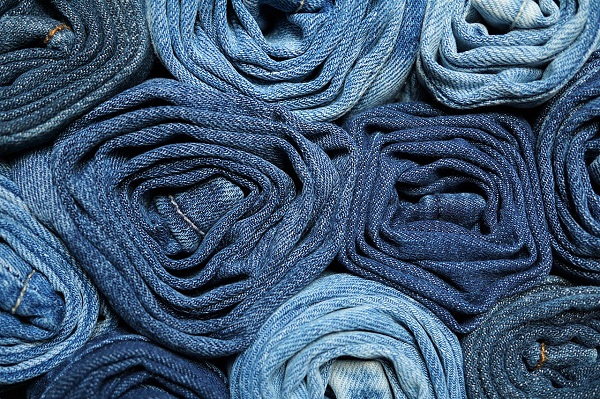
After two difficult Covid years of dressing down days, the fashion resilience of denim is being felt once agin. Every year, over two billion jeans are sold globally and apparel manufacturers are now focussed on cashing onto this lucrative segment in post-pandemic days.
It is expected by 2023, the size of the market for denim jeans fabrics will reach a stupendous 4,541 million meters as demand sores globally. In the five years between 2018-23 the market is expanding at 4.89 per cent annually from 3,576 million meters in 2018. Denim is an apparel segment that shows its true potential when it comes to export diversification with other apparel.
Analysts say, Christmas and New Year holiday season has seen a major revival of fashion resilience in the US markets, which will improve the entire global denim market. Global jeans market is expected to have a CAGR of 6.7 per cent during the forecast period from 2020 to 2025.
Focus on new business strategies and markets
Rome was not built in a day and thus the bigger denim manufacturers will need to adapt new business strategies, such as geographical and capacity expansion, M&A, and R&D, to boost sales. They need to strategically focus on establishing new market opportunities by entering newer and niche markets in the garment industry that are still in their developmental phase.
As per an Apparel Resources report, Indian domestic market for denim has been maintaining an average CAGR of 8-9 per cent for few years and is expected to reach the $12.27 billion by 2028. Unlike Europe, the US and other western countries where consumption per person average jeans is very high, in India it is far lesser with consumption of around 0.5 jeans per person as traditional dressing is more popular in most geographical segments.
To even reach the potential of one pair of jeans per person will require another 700 million pairs of jeans to be sold annually and this showcases the massive growth opportunities in the country. No wonder, global brands are rapidly increasing their presence in metros and small cities.
US leads the way
The US is currently the largest market, with India likely to experience the most growth, followed by China and Latin America. It is expected the US market will be around 4,313.56 million meters in 2022 and 4,541.05 million meters in 2023 as between 2018 and 2023, the average annual growth is expected to be 4.89 per cent. India is striding ahead as despite being smaller than China, Latin America and the US its market is expected to grow at a fast rate arriving at 419.26 million meters in 2023 from 228.39 million meters in 2016.
In the global denim market China, Bangladesh, Pakistan and India are key denim-producing countries. In denim export segment in 2021-22, Bangladesh with over 40 mills producing 80 million yards of denim fabrics remains at the top position in the US markets. This was followed by Mexico and Pakistan as the third largest supplier. Vietnam was in fourth position after it shipped denim items worth $348.64 million, up 25.12 per cent year-on-year.
Denim today has come a long way in the fashion segment as they appeal to everyone with different varieties of stretch to bio-polished, innovative colours from vegetable-based, indigo to sulphur dyed, fibre blends with the most recent being softer, lighter, comfortable silk denim for all seasons and a variety of textures, drapes and styles focussed on the athleisure and wellness current trend. Denim is not just a fashion apparel, it’s an everyday symbol of style and a daily essential and a must-have for almost everyone.
Turkey sees US as a promising market
Turkey’s ready-to-wear exports to the USA were up by one per cent in 2022.The target is to increase this to two percent.
But the European Union is by far the biggest market for Turkey’s ready-to-wear exports. America ranks second. However since recession threatens the EU market, Turkish manufacturers and exporters want to have a stronger presence in the US market.
US brands depended on the Far East for apparel products before the pandemic. But now, in the face of costs and increasing risks, hey are looking for new sources and Turkey has positioned itself as a strong alternative to Far Eastern manufacturers since the Turkish fashion industry, which has been producing for important brands in Europe and the US for years, has flexible production capability and has a strong design infrastructure.
From January 2022 to December 2022, Turkey increased exports of ready-made clothing by 4.8 per cent compared to the same period the previous year. Turkey’s apparel exports grew by around five per cent from January 2022 to November 2022. Export revenues earned by Turkey in the first eleven months of 2022 are the highest ever and the growth has been driven by soaring demand from Europe amid supply chain bottlenecks and soaring shipping costs.
World may see recession this year, says World Economic Forum
A global recession is likely in 2023.So says the World Economic Forum. The prospects for growth in 2023 are bleak, especially in Europe and the US.
The global economy is in a precarious position. The current high inflation, low growth, high debt and high fragmentation environment reduces incentives for the investments needed to get back to growth and raise living standards for the world's most vulnerable. Globally businesses are expected to cut costs significantly in response to economic headwinds. Geopolitical tensions may continue to shape the global economy. Further monetary tightening is expected in the United States and Europe.
This wider economic shift will likely reverberate through trade, investment, labour and technology flows, creating myriad challenges and opportunities for business. Leaders, says the World Economic Forum, must look beyond today’s crises to invest in food and energy innovation, education and skills development, and in job-creating, high-potential markets of tomorrow.
One positive signal is that supply chain disruptions are not expected to cause a significant drag on business activity in 2023. At the same time, some economies in the South Asia region, including Bangladesh and India, may benefit from global trends such as a diversification of manufacturing supply chains away from China.
House of Blueberry raises funds for digital fashion
House of Blueberry has raised seed funding for its digital fashion business in the metaverse and interactive entertainment. The money will be used to expand partnerships with new games and online worlds to reach a broader audience.
This is a fashion company in the metaverse and has been dressing avatars now for ten years. It believes that the communities within the games are actually the ones that are creating what the culture is and what the fashion should be. And so one of the core tenets for House of Blueberry is to build a community that can help inform what people want to be wearing. Its ultimate vision is to become the largest digital fashion house in the world.
Founded in 2012 House of Blueberry has sold over 20 million digital assets across platforms such as Roblox, The Sims, and Second Life under its own brand. On a mission to unlock the next level of self-expression for players, creators and digital denizens, House of Blueberry has created a respected brand in an emerging space with enormous opportunity.
This latest round of funding will accelerate growth to new communities by expanding from a primarily female design aesthetic into male and androgynous design, as well as accessories, makeup and environmental assets. House of Blueberry will also extend onto new games and online platforms where user-generated content and self-expression matter.
Bangladesh focuses on new markets
In the last fiscal, Bangladesh’s earnings from non-traditional or new markets were 14 per cent of total readymade garment export earnings.
In the context of Bangladesh’s key export destinations, the United States, Canada, the United Kingdom and the European Union countries are generally known as traditional markets. Japan, Australia, Russia, India, China, South Korea, UAE, Malaysia, Brazil, Mexico and many other countries are major destinations from the non-traditional side. Bangladesh’s apparel exports to non-traditional markets grew by 32 per cent year on year in the first half of this fiscal year compared to the same period of the last fiscal year.
The impact of the ongoing economic turmoil and geopolitical crisis is higher in traditional destinations like the US and the EU but comparatively lower in the non-traditional markets. Bangladesh has an opportunity to grab a big slice of the pie of the non-traditional market. Hence, apparel manufacturers of the country are preparing a roadmap to capture ten per cent of the global market by 2025, riding on exploring new markets or non-traditional markets. They are focusing on new markets as exports to Europe and the US may slow down due to the looming recession and inflation. For instance, Japan has long been one of the major destinations for Bangladesh.
Deloitte Retail Outlook 2023 indicates possibility of profitability
Conducted between October 21 and 31 2022 with 50 retail executives working in the US, the Deloitte study indicates retailers can expect positive growth and profitability even during inflationary period. The study has been particularly insightful on how retailers can confidently build on their resiliency and make a good year of 2023.
Inflationary pressures on retail
So far the biggest confidence-downer has been a constant parade of changes and almost all retail executives expect inflation to pressure their profit margins. They’re also predicting hard times for consumers, with nearly all anticipating diminished consumption in 2023, resulting from rising financial concerns. Sixty per cent of the respondents feel that due to the ongoing inflation, operational costs have to be raised. Almost 80 per cent respondents stated they predict a sizeable drop in consumption as the US and many parts of the world enter or deep in recession.
However, 2020 to 2022 has been a learning curve for retailers as they realised a shift from archaic retailing models had to change and the price would in many cases trump loyalty. Moreover, it has now been well established that consumers opt for the best price and the most seamless shopping experience. Three economic trends as indicated by these 50 top American retail executives is a good picture of the year ahead.
To begin with, as the economy continues to slow down, retail growth will be restrained. The GDP forecast for the US in 2023 is expected at 0.9 per cent growth, a sharp drop from 2 per cent in 2022. Deloitte has predicted a 35 per cent chance of the US slipping in to recession this year which would lead to a contracting economy and higher unemployment. Secondly, inflation has lowered consumers' purchasing power. Whilst nominal average weekly earnings have increased by 8.3 per cent since December 2020, real earnings have fallen 5 per cent and this is bound to affect consumer demand and therefore, retail sales volume.
Thirdly, consumer spending on services has been picking up steadily as consumers return to bars and restaurants, take vacations, and enjoy sporting events as they did before the pandemic. To some extent, consumers are dipping into their savings to make up for what they missed during 2020-2021. The personal saving rate is now at 3.1 per cent, much lower than pre-pandemic levels. A shift in spending to services will therefore weigh on retail sales at stores selling consumer goods. To meet these challenges, some key strategies are being considered by retailers who are future-thinking things through.
A smooth supply chain up to the end
Almost 70 per cent respondents expressed confidence in providing a seamless customer experience across channels. To achieve this, retailers should consider creating more profitable last-mile delivery solutions by investing in automated micro-fulfillment centers (MFCs). MFCs can increase storage capacity and throughput rate (filling orders for multiple store) and create efficiencies by freeing up employees who otherwise would be picking orders. MFCs are particularly attractive given they can expand the range of same-day and next-day services retailers can potentially reach.
The omnipotent omnichannel
Reverse logistics will translate to an opportunity to save a sale. Retailers should take advantage of in-store reverse logistics capabilities. In-person returns satisfy customers' desire for immediate credit while reducing expenses for mailed return delivery. And with the growing popularity of return bars that are stores that pack and ship returns for partnering retailer, there is an opportunity to drive additional store traffic and expand the footprint of their client base, an ideal situation during inflationary times. Recent data suggests retailers participating in return bars save over 20 per cent in processing costs.
Digital capabilities
The cost of acquiring a new customer can be up to six to seven times more than retaining old customers and social commerce can help reinforce existing customer loyalty. Retailers should invest in technologies to provide a seamless purchasing experience within social channels and shoppable media to nudge users toward purchases and create loyalty. Enabling shoppable tags with product information, embedding the brand website into the social media app, and enabling in-app transactions can help reduce friction on the shopping journey.
Cotton Association of India announces further drop in 2022-23 production

The CAI has announced it further expects a decrease in total seasonal production which stands at 330.50 lakh bales, a decrease of 9.25 lakh bales as was projected earlier. The decrease of 9.25 lakh bales was due to readjustment of production in India’s cotton-producing states. Gujarat was the only cotton producing state that projected a 0.5 per cent growth and has the distinction of growing output by 17 lakh bales.
As per Ajay Dalal, member of the CAI crop committee Gujarat cotton sowing increased to 25 lakh hectares this season from 22 lakh hectares in previous year and yield has also improved. Dalal also stated Gujarat’s cotton crop is expected to increase by at least 17 lakh bales to 93.50 lakh bales. Maharashtra, Andhra Pradesh and Karnataka experienced the highest decrease of 2 per cent whereas the decrease in Haryana was 1.5 per cent. Telegana experienced a decrease of 1 per cent whilst Lower Rajasthan had the least decrease of 0.5 per cent. The 330.5 lakh bales were calculated based on per unit being 170 kgs each.
Supply statistics reinforce decrease imports
The cotton supply estimated by the CAI till end of cotton season 2022-23 i.e. upto September 30, 2023 is 374.39 lakh bales of 170 kg each. The total cotton supply consists of opening stock of 31.89 lakh bales of 170 kg each at the beginning of the cotton season on October 1, 2022, crop for the season estimated at 330.50 lakh bales of 170 kg and the imports for the season estimated by the CAI at the same level i.e. at 12 lakh bales of 170 kg each.
CAI’s import estimates for the corresponding year 2021-22 was 14 lakh bales of 170 kg each. The decrease in import has been attributed to the 11 per cent duty requirement and cotton-growers and mill owners are hoping that the next Budget will see a decrease in the import tariff. The total cotton supply for the months of October 2022 to December 2022 is estimated at 116.27 lakh bales of 170 kg each which consists of the arrivals of 80.13 lakh bales of 170 kg each, imports of 4.25 lakh bales of 170 kg each and the opening stock estimated by the CAI at 31.89 lakh bales of 170 kg each at the beginning of the season.
Domestic consumption and exports
The report stated cotton consumption estimate was at 300 lakh bales of 170 kg each, whilst the previous year’s consumption estimate was 318 lakh bales of 170 kg each. This season’s domestic consumption has been the same as the previous season, pegged at 65 lakh bales of 170 kg each for the months of October 2022 to December 2022. In terms of exports, the CAI estimate up to 31st December 2022 is the 2 lakh bales of 170 kg each. Stock at the end of December 2022 is estimated at 49.27 lakh bales of 170 kg each including 35 lakh bales of 170 kg each with textile mills and the remaining 14.27 lakh bales of 170 kg each with the CCI, Maharashtra Federation and other MNCs, traders, ginners, MCX, etc. This includes cotton sold but not delivered.
Vietnam GFT exports grow double digit despite fall in Q4
Despite facing the impact of a global economic recession coupled with high inflation, leading to a sharp decline in the consumption demand and export orders, Vietnam’s garment, textile and footwear (GFT) sector was able to achieve double-digit growth in 2022.
The garment and textile sector achieved robust growth in the fourth quarter of 2021 as well as during the initial eight months of 2022.However, export orders recorded a significant drop in the fourth quarter of 2022, thereby leading to several businesses being forced to lay off their workers.
High inflation in the majority of major Vietnamese markets such as the United States and the EU will have an impact on the furniture, garment and textile, footwear, electronics, and plastics sectors, moving forward.
With a decline in the number of orders, the export market for the textile, garment and footwear industry is therefore forecast to remain quiet until the end of the first quarter of the year. As the major export industries of the national economy, the textile and footwear industry has decided to retain skilled workers, promote investment in the production of raw materials and auxiliary materials, focus on producing artificial fabrics, as well as encourage the production of domestic yarns.
Planet Textiles to return at Itma
Planet Textiles, the international sustainability conference, will return this summer at the world’s largest textile industry trade fair, Itma.
Following on from the previous Planet Textiles held pre-pandemic at Itma 2019 in Spain, this time the event will be organised by the Sustainable Apparel Coalition (SAC) and will run for two full days, June 12 to 13, 2023, in Italy.
Planet Textiles will welcome industry leaders to discuss the sector’s most pressing environmental challenges and how best stakeholders can work together to drive practical, collective change in the textile industry.
The two-day event will also provide a perfect opportunity for attendees to network with peers, learn about the latest trends and explore the full textile ecosystem. This will also include the latest Higg Index updates, the role of manufacturers in driving change, getting data right and the need for further action on science-based targets.
Planet Textiles is renowned within the industry as a key sustainability event and so will explore sustainability innovation across the value chain and the vital role played by manufacturers. Planet Textiles promises to dive deeper into the key, practical environmental issues facing the industry. Itma will spotlight new solutions on sustainability and circularity, innovative technologies, and the rise of digitisation in the global textile and fashion sectors.