FW
Pure London launches sustainability toolkit for retailers
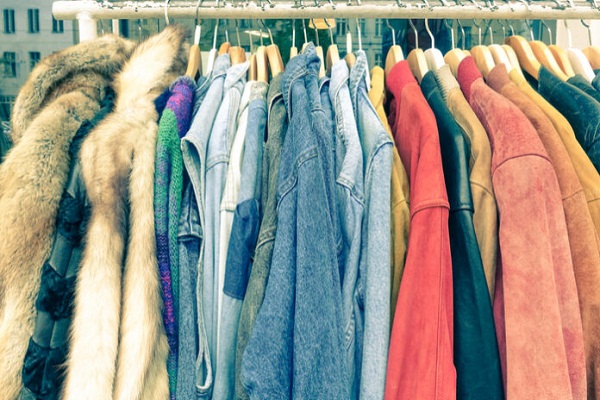
Pure London has come up with a toolkit for independent fashion retailers in the UK. With nearly 14,000 independent fashion retailers in the UK, the toolkit is an invaluable resource that provides step-by-step guide with tangible and practical information on everything from reducing carbon footprint and energy consumption to sustainable packaging, to help them embrace sustainability in their business.
It has been designed to explore key areas all fashion retailers need to address to move towards a more sustainable way of working. Five comprehensive but easy to digest chapters cover mapping their impact and creating a strategy, operating stores in a eco-conscious way, sourcing mindfully, embracing circularity, and how to communicate with customers.
Focus on retail’s sustainability needs
The toolkit also presents two insightful and informative independent retailer case studies. It explains what circular fashion is and what the term means; why degrowth is better than green growth; explains circular business models and includes examples that can easily be implemented as a test for small businesses. The toolkit explains the climate crisis, what is happening in the world because of it, how it is affecting business and the huge part that fashion has to play in the crisis.
A video looks at how to approach sustainability properly with customers, avoid greenwashing and manage consumer expectations. From the language used to the level of communication with specific consumers, many tricky parts on sustainability is explained and ways of how to overcome them. Pure London fully understands the importance of reducing the environmental impact within the fashion industry and is determined to use its global platform to spread knowledge on this critical topic and provide unrivalled advice. The toolkit is a must for any fashion business, it is entirely free, saving businesses costly consultancy fees. Pure London feels every agent in the fashion industry should work towards reducing their environmental footprint and reduce inequalities along the value chain to give everyone a fair chance at combatting the challenges ahead. Independent stores may not have the big teams or budget that chain stores do, but Pure London believes they have many other qualities that put them in a unique position to influence the industry towards sustainable change.
About Pure London
Pure London, the global fashion buying platform for women’s wear, accessories, jewellery and footwear, will take place in the UK, February 12 to 14, 2023. Bringing together the brightest industry minds twice a year, the latest trends and forecasting expertise, exclusive business insight, and important international connections, Pure London provides an inspirational platform to buy globally in the fashion capital.
Bangladesh RMG exports to Russia drops as shipments, payments get affected
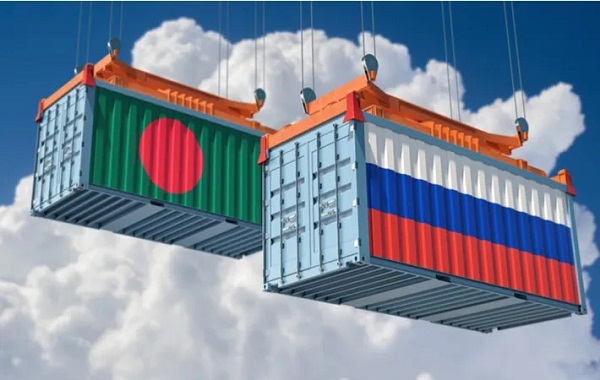
Shipment of garments from Bangladesh to Russia dropped 47 per cent year on year in the July to December 2022 period of the current fiscal year. Before the war, Russian buyers used to place work orders in big volumes. Ever since the war with Ukraine, Russian buyers have delayed payments. Before the war, nearly 600 garment exporters in Bangladesh used to send apparel items to the Russian markets as they were paid better prices.
Russia was an emerging market for Bangladesh as exports had been growing rapidly because of high demand for clothing items at competitive prices. Export receipts from garment shipments to Russia registered a 35 per cent year on year growth from July to February period of the last fiscal year.
In fact, growth in export receipt was showing a positive trend despite the fallout of the war because payments of previous work orders were being made. In the early days of the war, garment exports faced no major disruption since shipments were being made via alternative routes such as China and Hong Kong and suppliers were receiving payments from China in Chinese currency. Indeed shipments of garments continued through alternative routes for a few months against work orders placed prior to the conflict.
Collapse due to ban by SWIFT
The real detrimental effects of the war started to materialize from the middle of the last year. Now, garment exporters are facing trouble in shipments to Russian markets. Almost all major retailers and brands have left the Russian market and Western countries have put a ban on the use of SWIFT (Society for Worldwide Interbank Financial Telecommunication) by Russian banks. This has made engaging in transactions with Russia difficult. There is uncertainty over receiving payments and sending goods through alternative routes as the traditional ones have turned dysfunctional because of the war.
Some exporters are still sending goods to Russia through alternative routes and receiving payments from Turkey and in Chinese currency but the number and amount is still little.
Need to find alternatives
Exporters feel Bangladesh and Russia should arrange a special mechanism such as a barter system, creating alternative routes for shipping goods and introducing alternative currencies for payments instead of the dollar, such as the Chinese yen.
US supports cashmere company in Kyrgyz Republic
With American help, a company in Kyrgyzstan has opened a new facility. Up to 80 tons of high quality cashmere fiber will be produced annually by Kyrgyz Cashmere.
The new facility will process Kyrgyz yak, camel, and cashmere fiber. Kyrgyz Cashmere collects cashmere fiber from farmers in remote areas of Kyrgyzstan.
As a result of this partnership with the US, Kyrgyz Cashmere will increase the incomes of hundreds of families as it expands wool collection to the Batken, Jalal-Abad, Naryn, Osh, and Issyk-Kul regions.
The company’s production will create economic opportunities for more families and in the long term the facility plans to expand further to source fiber from the broader Central Asian region. The company maintains high-quality processing to increase the competitiveness of Kyrgyz cashmere and yak fiber on the international market.
In addition, Kyrgyz Cashmere plans to train shepherds and introduce innovative best practices to increase the Kyrgyz Republic’s exports to high-end clothing manufacturers in Europe.
Kyrgyz Cashmere is one of the many businesses that the United States supports across the Kyrgyz Republic. In the last four years, this has helped over 120 Kyrgyz businesses to grow, increase their sales, access new markets, and create over 18,000 new permanent and seasonal jobs.
Textile fair on in Colombia
Colombiatex is being held in Colombia, January 24 to 26, 2023. This is a Latin American fair focused on the textile segment.
Colombiatex is considered the main business center in Latin America focused on the textile, machinery and chemical products segment. The event has national and international visitors. It has been held annually since 1988 and is attended by visitors, wholesalers, distributors, retailers, representatives of textile and clothing.
It is meant for textile producers and distributors for garments, footwear and fine leather as well as companies who base their activities on technical and industrial applications, equipment, machinery and supplies for the fashion, home and footwear and fine leather industry.
Colombiatex not only establishes the business agenda for the American continent but also brings together supply and demand from every segment of the industry and every fashion category. It is the scenario where national and international brands can begin their journey of distribution throughout Latin America
. Close to 41 per cent of the investments are directed towards textile purchases, 23 per cent for machinery and equipment, ten per cent for trims and fittings, seven per cent for chemical products, seven per cent for threads and yarns and 12 per cent register for other categories.
Indian states TN, UP take lead to boost trade with Australia
The Economic Cooperation and Trade Agreement (ECTA) is expected to increase bilateral trade between India and Australia in the next five years.
This is the first free trade agreement between India and a developed country in a decade. It was signed in April 2022 and came into force from December 29, 2022.
Among Indian states Tamil Nadu and Uttar Pradesh have already taken the lead in terms of their engagements to take advantage of this free trade agreement. The free trade agreement has set the framework and a conducive environment for businesses to operate in.
Australia is the seventeenth largest trading partner to India and India is Australia’s ninth largest trading partner.India’s exports to Australia grew 135 per cent between 2019 and 2021 and primarily comprise finished products such as textiles and apparels, engineering products, leather, footwear, gems and jewellery, and sportswear.
India’s imports from Australia consist largely of raw materials, minerals, and intermediate goods. Following the implementation of the ECTA, a significant growth is expected in finished products from India’s labour-intensive sectors such as textiles and apparel, gems and jewellery, leather and footwear, furniture, and engineering goods. These items had a four per cent to five per cent tariff in Australia pre-ECTA.
Bangla exporters protest new gas price
The gas price hike in Bangladesh should be withdrawn. So says the Bangladesh Garment Accessories and Packaging Manufacturers and Exporters Association (BGAPMEA).
BGAPMEA is a platform of around 2,000 small and medium accessories makers. It maintains the hike in gas price would squeeze the competitiveness of the industry, which is already faced with multiple challenges, while adding such an unusual hike would make the current situation even more complex for accessory makers.
BGAPMEA further says that the decision should be reviewed and the previous rate should be reinstated. Bangladesh’s export-oriented apparel sector has been hit by a power crisis.Production in many readymade garment factories has dropped by at least 40 per cent after the gas and electricity supply situation deteriorated sharply in recent weeks. Exporters are facing trouble producing the existing orders due to the shortage of electricity. They fear that if Bangladesh cannot produce and deliver the current orders on time, the confidence of international buyers will also decline amid a falling demand for textile products in the global market.
Bangladesh’s garment exports fell seven per cent in September 2022 for the first time in 13 months. In the midst of the slide in foreign currency reserves, both export earnings and remittance inflows decreased significantly in September 2022.
Bangladesh wants cotton privilege from the US
Bangladesh wants the United States to grant duty-free facilities for US cotton coming into Bangladesh.
The US is a major cotton producer. Now the country wants the US to grant duty-free trade facilities for the import of cotton for use in Bangladesh’s readymade garment factories.
Bangladesh is the second largest exporter of readymade garments in the world. Bangladesh needs nine million bales of cotton to export garments to the world market. Out of this, only 1,50,000 belts of cotton are produced in the country and the production is about 1.6 per cent of the total demand.
So Bangladesh has to import the remaining huge amounts of cotton though the country is making efforts to increase cotton production. For now if Bangladesh wants to export readymade garments worth $100 billion in the next two years, a huge amount of cotton will be required.
In marketing year 2021-22 Bangladesh's domestic raw cotton consumption was estimated at 8.8 million bales. The textile industry is composed of yarn, fabric, and dyeing-printing-finishing mills and they have about 15 million bales of cotton consumption capacity. Raw cotton is the second most imported product in Bangladesh. The country imports raw cotton primarily from India, the United States, Benin, Brazil and Spain.
ColorJet repeats platinum partnership with ITMA 2023
ColorJet retains platinum partner status with ITMA and will demonstrate a range of textile printing solutions.
ColorJet, founded in 1995, is a manufacturer of digital textile printers from India. It is one of the top global exporters of wide format printers and provides world class and complete fabric printing solutions.ColorJet’s digital textile machines are revolutionizing the world of textile printing with their robust performance, lower downtime, high value addition and quick ROI. ColorJet markets its products in around 30 countries worldwide and has installed over 5,000 of its printing solutions and products across 450 cities around the world.
ColorJet is known for clean, efficient, profitable manufacturing has a technologically advanced and innovative product line and offers solutions to those looking for more environment-friendly textile printing processes. The company has a 70 percent share of textile printing products sold in India, has machines catering to the apparel industry and the home textile industry.
Itma will be held in Italy, June 8 to 14, 2023. It is the world’s largest textile and garment technology exhibition and showcases technologies and products for the entire textile making value chain. Itma 2023 is set to make a strong presentation with over 1,570 exhibitors from 42 countries.
Germany to host cellulose fiber event
Cellulose Fiber Conference will be held in Germany, March 8 to 9, 2023.
The recycling of cellulose has some hurdles. How can technology overcome these obstacles? How can markets achieve a circularity of the material? How can the cellulose fiber industry contribute to the sustainability and circularity of the textile sector?
Globally, around 300 billion period products are discarded every year, resulting in millions of tons of non-biodegradable waste. Since most conventional sanitary pads contain up to 90 per cent plastics, they do not biodegrade for around 600 years.
These and other questions represent the lead topics of the conference. With a compound annual growth rate between five per cent and ten per cent, cellulose fibers have been a success story within the textile market over the past decade. Similar growth rates are expected in the following years. This makes cellulosic fibers the fastest growing fiber group in the textile industry and therefore the largest investment sector in the global circular bio-economy.
Cellulose fibers show a steadily expanding range of applications. At the same time, markets are driven by technological developments and political framework conditions, especially bans and restrictions on plastics and increasing sustainability requirements for textiles.
The European Commission has made the thorough transition towards sustainability and circularity for different industries and especially the textile sector a main focus.
Zegna launches knit cashmere
Zegna has launched a line of sustainable cashmere knitted fabrics.
The line is free of frills and decors and is characterised by essential silhouettes, wide trousers, cropped and boxy or slim tops made with exclusive fabrics.
Volumes are new and translated into cropped bomber jackets, elongated coats, anoraks, blousons, polo shirts, cardigans and blazers without lapels, collars and visible buttons.The collection also features granite-effect materials crafted from #UseTheExisting sources by reusing alpaca, cotton-blend corduroy and tactile wool twill.The hues of the collection have also a natural origin. All the colors are of natural origins. They are the colors of earth, like the yellows, or the red of berries. Zegna molds the fiber. Yarns are not bought for what evidently the market offers.
Zegna proceeds by looking for fiber blends even within the same fineness, though of different lengths, that are then molded and mixed to create unique yarns that then become knitted fabrics. Then they are treated the way Zegna once treated woven fabrics. The final result is achieved by using a series of different highly artisanal treatments that transform these knitted fabrics into polar fleeces, needle-punch finished fabrics with leather, padded fabrics, double-faced jacquard Meltons, coated and uncoated bouclè, frisé and 3D jacquards and felts.