FW
Bangladesh denim exports to EU fall
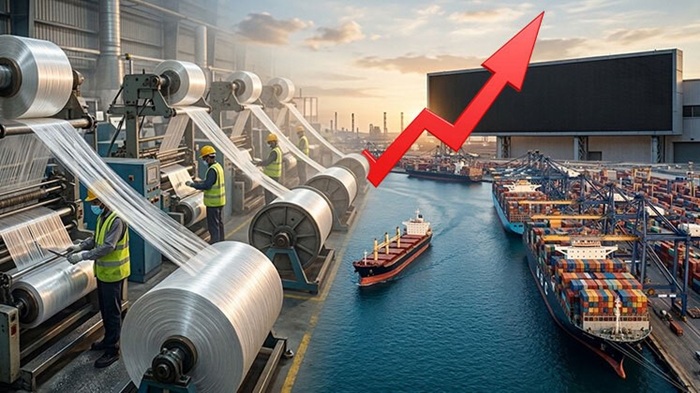
Bangladesh’s exports of denim fabrics and garment items to Europe have declined by nearly 40 per cent.
The main reason is inflation. International retailers and brands are already putting orders on hold as they have unsold inventory amid a slowdown in sales caused by higher inflation, which reached a record high of 8.9 per cent in July, led by costlier energy.
European buyers have cut a lot of orders for denim items because of a long dry spell in the eurozone. Usually, the temperature starts falling from June in Europe. But this year it is still running above 30 degree Celsius in some parts of the continent, hurting the exports of denim products to European markets.
One in every three Europeans wears a pair of denim pants made in Bangladesh.Italy, Spain, Portugal, France, Germany, the Netherlands, Belgium, Luxembourg, and the United Kingdom are under increasingly hazardous conditions. During summer, people prefer woven bottoms to denim. The demand for denim goes up during winter.
Denim production in Bangladesh has fallen by nearly 40 per cent because of a drop in demand from European customers.Retailers are also postponing orders as they are cutting expenditures owing to the higher cost of production caused by the Russia-Ukraine war.
Big global sportswear brands struggle in China as cheaper local ones flourish
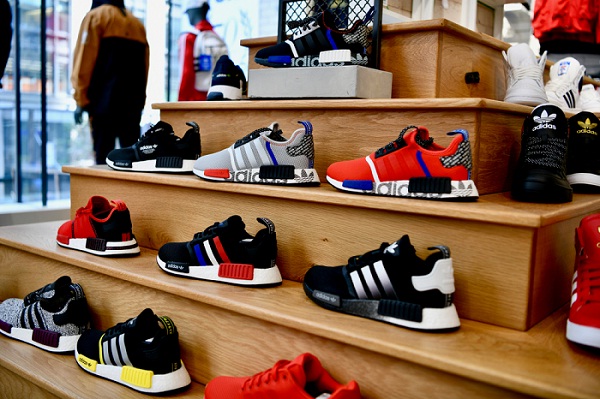
Adidas, the mega German manufacturer of athletic shoes, apparels and sporting goods is currently floundering in post-pandemic murky waters of China. In the second quarter of 2022, Adidas observed a revenue drop of 35 per cent in China market while dragging operating profits down 28 per cent and net sales dropped from $2.4 billion to $1.7 billion, marking a fifth consecutive quarter of losses in the huge Chinese market.
Big brands incur losses, domestic ones grow
In the first quarter, Nike reported a 55 per cent reduction in earnings before interest and taxes (EBIT) in China that converted from $691 million to $311 million. Both Nike and Adidas have posted major revenue losses in China due to pandemic-related measures and have cut their growth outlook for the rest of 2022. But there is more to it than meets the eye, as Adidas CEO Kasper Rørsted explains, they don’t understand consumers well enough, so they left room for Chinese competitors who are better off.
Interestingly, big Chinese domestic competitors like Anta and Li Ning did not record similar losses, so there is much more to it. Li-Ning for example, recorded 12.4 billion yuan ($1.8 billion) in revenue for the first half of 2022, a year-on-year increase of 21.7 per cent. Similarl, Anta reported double-digit sales growth in the first quarter of 2022, Xtep reported a year-on-year increase in revenue of over 35 per cent in the second quarter.
To add to its woes, both Nike (which recorded its third consecutive quarter of revenue dip in the country) and Adidas were hit by consumer backlash from China over claims of abuses in the cotton-growing Xinjiang region. China has been targeting Western clothes retailers over the last two years with international reports highlighting how mostly Muslim Uighur minority groups in China are being used as forced labor. This has caused international backlash with claims of abuses in the cotton-growing Xinjiang region.
Global brands focus on maintaining lead
However, it's difficult for local brands to beat a mega-giant retailer in brand visibility and expansion plans. Since opening its headquarters in Shanghai in 1997, Adidas has expanded to 12,000 outlets with Adidas Originals opening a flagship store in Taikoo Li Chengdu in January 2022. Its strong focus is now on reaching the Gen Z trendsetters by launching new products exclusively for China to hosting cutting-edge digital events.
In May this year, Adidas Originals teamed up with Tencent Music Entertainment to host a virtual avatar rap show that featured Jay Park and MC Jin with seven million viewers. Adidas has sought out a range of homegrown partners, from streetwear clothing companies such as Melting Sadness to ceramic design like Yeenjoy Studio. Both Adidas and Nike have to go all out to localize more by working with domestic brands, athletes, and designers. And above all keep up their main USP of stringent quality as that is what sets them apart from local brands around the world.
While economic downturn rages and rise in nationalism in China increases, the appeal of the Western sportswear brands is rapidly diminishing as the national tide of cheaper brands sweeps the country. The days of going laughing to the bank with easy money may be over but the show will go on for Adidas and Nike for some more time.
Party time for private labels in fashion retail markets

he Indian fashion market has seen many changes after the pandemic, and one of the most prominent has been the sharp rise of private labels in both online and offline retail. These two advantages of high availability and cheaper pricing than national brands, have made private-label products considerably more appealing to consumers lately. There are many Indian private brands which are also known as private label and store brands, are made and sold for a specific big retailer and compete equally with national and international brand-name goods in shops, malls, and online apparel retail websites.
Reliance Retail, India’s largest retail company, with Rs 1,49,925 crore of revenues in FY21, has launched ver four dozen private-label brands across all cosumerwerables and grocery segments. Among them in the apparel segment are many private labels like Netplay (formal office wear), Performax (specialized activewear), Fusion (fusion-wear for women), Avaasa (ethnic wear for women), and Rio (fashion wear for working women). Reliance Retail’s annual report in FY21 says that the company has earned over 75 percent of its revenue from its fashion and apparel chain, Reliance Trends, from its in-house brands and for (Reliance) Trends Footwear. The contribution of private labels to its revenue is around 60 percent.
Private labels comprise almost 50% of the top brands currently sold on Ajio, a fashion and lifestyle brand of Reliance Retail's digital commerce initiative.Having outsold national and international brands such as Levi’s, Superdry, and US Polo Assn. on the platform, the company’s top private brands like Teamspirit, Mix N Match, and Avaasaare by far among its top-selling brands during festive season sales.
It’s the same story for Myntra, India's largest e-commerce store for fashion and lifestyle products, with its huge range of private labels across a lower price spectrum that contribute up to 35% of its revenue. Many of its owned labels, such as HRX and All About You, are developed with and backed by celebrities such as Hrithik Roshan and Deepika Padukone, respectively.
Even before the Covid 19 pandemic, offline retailers like the Future Group, Reliance Retail, K Raheja Corp-owned Shoppers Stop, and the Aditya Birla Group have been encouraging private labels with products contract-manufactured and sold by retailers. And now the big giants of e-commerce like Amazon and Flipkart are investing in their private-label portfolios as the margins here are better due to supply chain efficiencies and better control over operations.
Umashan Naidoo, head, of customer and beauty, Trent (which operates Westside), feels that every retailer must establish organic traction by building a community and brand loyalty. In the huge chain of Trent’s departmental stores across India, their brands in apparel, footwear, and other accessories contribute over 99% of sales. Naidoo adds, "We now have the luxury of being present online. When a brand owns and takes charge of its products end-to-end, it’s in control of its destiny. "
RutuMody-Kamdar, founder of Jigsaw Brand Consultants, says, "Private labels can be sold by retailers at a lower overhead cost and with more flexible branding strategies as there’s considerable leeway in designing promotions and advertising or even the packaging of the label." Industry analysts say that the average consumer is not usually aware if a brand is owned by a platform, a big fashion label, or a private label. So it’s time to play smart with store brands going from being used purely for their economic merit to helping market the overall online store image to ensure repeat purchases and keep the buzz alive. It’s time to party the private labels this Diwali season.
Woolmark launches campaign against synthetics
Woolmark has launched an anti-synthetic fiber campaign to raise awareness of the use of fossil fuels in textiles and promote wool as a natural, renewable alternative.
The campaign centers on a 60-second film showing three people struggling to swim through a pool filled with oil with a caption that reads “Every 25 seconds an Olympic-sized pool of oil is used to make synthetic clothing.” The models then peel off the oil to reveal wool outfits while walking through rolling green landscapes and a caption that reads “wool is 100 per cent natural, 100 per cent biodegradable and 100 per cent renewable”.The film is accompanied by additional digital outdoor advertising displays and a microsite.
Woolmark is a professional body that promotes and protects the interests of Australian merino wool including a certification scheme to ensure suppliers meet certain standards.
Most people don’t know that synthetic fabrics are derived from fossil fuels. Synthetics account for 1.35 per cent of global oil consumption and are expected to increase from 60 per cent of all fiber use to 73 per cent by 2030. Synthetic fabrics, such as polyester, acrylic, rayon and spandex, are responsible for 35 per cent of microplastics in our oceans.
RCEP boosts Chinese exports
The Regional Comprehensive Economic Partnership (RCEP) pact has facilitated the sound growth momentum of China’s exports to other member countries of the agreement.
RCEP came into effect in January2022. During the first six months, exports and imports between China and other RCEP countries accounted for about 32 percent of China’s total trade.China’s exports to other RCEP member countries grew 14 percent year-on-year, which was 2.3 percentage points higher than the average annual growth rate of China’s exports to other RCEP member countries in the past 20 years.
Chinese exports to other major RCEP member countries have increased significantly during the first half, except for Vietnam and Japan. Other RCEP countries’ contributions to China’s exports have also increased during the period, and the share of non-RCEP member countries in China’s outbound shipments dropped by 1.11 percentage points from a year earlier. In addition, shares of most RCEP countries in China’s exports have all risen, except for Japan, Vietnam and New Zealand.
The RCEP has facilitated China’s exports to Japan and South Korea. The implementation of the trade pact has for the first time established direct free trade relations between China and Japan, and Japan will eventually remove 88 percent of tariffs on Chinese imports.
Pakistan to import cotton
Pakistan will import cotton after an estimated 1.4 million acres of the area where the crop is cultivated have destruction due to floods.
Date and sugarcane crops have also seen massive destruction while issues are being faced in transporting tomatoes and onions to major cities of Pakistan, which is in turn driving their prices upward. As a result Pakistan has suspended duty and taxes on import of onions and tomatoes. Already import of onion from Afghanistan resulted in reduction of its price in many parts of the country.
The US and Pakistan are working to help resolve issues relating to production of cotton and its trade between the two countries. The US is Pakistan’s largest trade and investment partner. There will be a technology transfer of high-yielding cotton seeds to Pakistan. The US will introduce improved, genetically modified, and certified seeds in Pakistan and share information on weather forecast. Pakistan will be updated on the best global practices in cotton and textiles being adopted by various countries. Mutual cooperation between American cotton growers and Pakistan’s textile industry is seen as offering a win-win situation for both countries where raw cotton imported from the US is converted into manufactured textile products and exported back to the US after enormous value addition.
India plans seven textile parks
Seven mega textile parks will be set up under the Mega Integrated Textile Region and Apparel (MITRA) scheme.
The states where these parks will be set up have almost been finalized but they have been asked to provide a long-term projection for power tariffs that would be charged at these parks. The centre is trying to get a few things from the states by way of concessions and is trying to get states to agree to a better power regime. In some states, the cost of power is quite high, which the centre would like to see reduced. The states have been asked to submit a long-term roadmap— say, 15 years—of the power tariff that would be charged at these textile parks and they have been requested to refrain from raising power charges for 15 years.
The Mega Integrated Textile Region and Apparel scheme was announced in budget 2021 to make the textile industry globally competitive. It was given a budget of Rs 4,445 crores (0.55 bn) for seven years.
India’s textile and apparel exporters complain that a largely fragmented supply chain and higher logistics costs push up the cost of production—one reason export orders have steadily moved to countries such as Bangladesh and Vietnam. These mega parks are aimed at helping return textile orders as a result of a planned integrated textiles value chain—including spinning, weaving and processing —at a single location.
Textech Bangladesh held expo after two years
Textech Bangladesh International Expo 2022 was held from August 31 to September 3, 2022.
The expo focuses on international textile apparel technology and the machinery industry of Bangladesh.A total of 300 companies from 12 countries, including many from China, showcased their products.Spinning, weaving, knitting machines and yarn processing equipment, chemicals and dyes, embroidery and sewing materials among other products were on display during the event, where sector insiders got tips straight from professionals to discover ways to improve efficiency in their factories.
This edition of the show was held after two years of pandemic-induced doldrums.This annual exhibition plays the role of a bridge. It offers many things in one place, right from fabric to accessories.Conference and Exhibition Management Services, an event management company, organized the exhibition through its Bangladesh wing. Some 14,000 visitors attended the exhibition.
International suppliers of yarn, fabric, dye chemicals and machinery are eying to grab the growing apparel sector of Bangladesh by increasing their supplies.
India ITME to present awards in December
The India ITME (International Textile Machinery Expo) awards will be presented on December 8, 2022, a part of the event to be held between Dec 8-13.
The awards recognise the significant contributions that have influenced positive change in the textile engineering sector of India. The winners will be felicitated with cash awards, trophies, and certificates depending on the award category.The awards aim at recognising talent and felicitating winners in the categories of ginning, spinning, weaving and weaving preparatory, processing and finishing, garmenting, printing, accessories for textiles and technical textiles. They also cover technology for pollution control, textile engineering and research excellence.
The ITME society has brought on board reputed leaders from different sectors of the textile industry to be part of the jury for awards selection. Members of the jury panel include Sanjay Jayavarthanavelu, chairman and managing director at Lakshmi Machine Works and a former chairman of India ITME Society; Uday Gill, group chief strategy officer for fibers, Indorama Ventures, a top textile fiber expert having a knack for identifying hidden gems from across the globe and successfully leading acquisitions; Updeep Singh, president and CEO for Sutlej Textiles and Industries, a genius in textiles and a resourceful personality in textile technology; Manohar Samuel, advisor R&D for Reliance Industries, an expert in core dynamics of fibers and a passionate researcher, brand developer, and value chain builder.
Hong Kong to host Centrestage
Centrestage will be held in Hong Kong, September 9 to 11, 2022. This is one of Asia’s most anticipated annual fashion events. More than 240 fashion brands and designer labels from 15 countries and regions will take part in the three-day fashion presentation, promoting a wide variety of ready-to-wear apparel and accessories.The show will see the global launch of the latest collections from designer brands Derek Chan, Demo and Children of the discordance.
This year’s Centrestage revolves around the theme of inclusion and diversity, inviting visitors to express themselves boldly through fashion and at the same time celebrate the differences among bodies, cultures and ideologies. The show will host more than 30 fashion events in these three days, including a series of brand shows and seminars. Centrestage will again be open to public and trade visitors for free throughout the entire show period, providing an ideal platform for visitors to share the joy of exploring fashion and shopping. A wide array of interactive experiences empowered by AR and VR technologies will be offered at the fairground to enrich visitors’ experience, including the brand new Centreverse, a custom-built metaverse where visitors can interact and participate in fashion events using personalised avatars.