FW
EU to be world leader in sustainable textiles: Euratex report
EU’s trade deficit increased in 2021 as textile and clothing exports increased 10.6 per cent while imports declined -7.5 per cent. As per the Spring report by Euratex, import prices of EU clothing and textile declined during the year due to a drop in import prices of Chinese face masks and protective medical clothing. Increased EU textile and clothing exports during the year could be attributed to a strong performance in Swiss, Chinese and US markets. On the other hand, sales in the United Kingdom declined 23 per cent, due to new Brexit rules, customs clearance delays and labor shortage. EU reduced its imports from China by 28 per cent to €13 billion during the year. It also reduced textile and clothing imports from the United Kingdom by 48 per cent to €-3 billion. Dirk Vantyghem, Director General, Euratex says, the EU aims to be world leader in sustainable textiles despite rising energy prices.
Embed international trade in growth strategy
To achieve this, the European Union needs to embed international trade in its Strategy for Sustainable and Circular Textiles. It needs to ensure all products introduced in the market are durable, free of hazardous substances, produced respecting social standards. It also needs to upscale market surveillance without disrupting the supply chains. Condemning Russian aggression in Ukraine, Vantyghem says, Ukraine offers valuable sourcing opportunities for European textile and apparel brands besides supporting its nearshoring trend.
A pillar of local economy
With around 154,000 companies employing 1.47 million workers, the textile and clothing industry is an essential pillar of local economy in the EU. The industry has completed several high added value projects in growing markets around the world. These projects were completed in collaboration with the Euratex, the voice of the textile and clothing industry in the region, which focuses on effective research, innovation and skills development, free and fair trade, and sustainable supply chains.
Neso Brands raises $100 million to create house of brands
Subsidiary of eyewear manufacturer Lenskart, Neso Brands has raised $100 million in a seed funding round, to create a house of brands catering to the global market.
Neso Brands will utilize e-commerce and technologies such as AR and AI for eyewear brands as a strategy to capture global market share. It will facilitate global rollout of brands by giving them an access to shared resources – particularly technology, supply chain, distribution, capital and best practices.
Founded in 2022, Neso Brands is an eyewear manufacturer and retailer that leverages analytics, tech, and its own supply chain and distribution, to create a large network of co-owned direct-to-consumer (D2C) brands.
Based out of Singapore, Neso Brands plans to sell its eyewear products to a global market by partnering up with the top entrepreneurs in the industry. It plans to invest in consumer eyewear brands around the world and grow these brands by leveraging synergies across the Lenskart group to accelerate international expansion.
India to set up Cotton Council to improve fibre productivity
India plans to set up a cotton council under the leadership of industry captain Suresh Kotak to holistically look at ways to improve the fibre’s productivity that has declined over the years. The council would have government officials from the departments of agriculture, commerce and textiles along with private sector representatives.
The decision was taken at a meeting between PiyushGoyal, Textile Minister and stakeholders including cotton farmers, spinners and traders wherein issues such as flexibility in the imports of cotton, export incentives and allocating more yarn for the domestic prices, were discussed.
The meeting also discussed about restricting export incentives and also imposing export duty on yarn to curtail yarn and cotton exports. Garment exporters sought for a short-term ban on export of cotton and cotton yarn.
As per another industry representative, a proposal to release 75 per cent cotton yarn in the domestic market was also taken up.
Burberry reports 23% rise in FY’22 revenues
British luxury brand Burberry reported a 23 per cent rise in revenue to £2.83 billion ($3.52 billion) in FY’22 and a 38 per cent rise in adjusted operating profit to £523 million, with comparable store sales in its final quarter growing 7 per cent after lockdowns in mainland China weighed on its performance in March.
The brand said its outlook for the year ahead depended on how quickly China, its biggest market, recovered from COVID-19 lockdowns, after meeting expectations for sales and operating profit for its 2022 financial year.
Burberry, known for its camel, red and black check and TB monogram, lost its chief executive Marco Gobbetti to Ferragamo in January. His replacement, Jonathan Akeroyd, joined in March, a couple of weeks before the end of its financial year.
Gobbetti sought to elevate Burberry's brand into the luxury space under a multi-year transformation plan for the 166-year-old group.
Akeroyd said he would set out his plans to build on Gobbetti's foundations and accelerate growth at the interim results in November.
Burberry said it maintained its medium-term guidance of high single-digit revenue growth and meaningful margin accretion at constant exchange rates.
Zegna looks to grow 2022 revenues and touch €2 billion
Italian brand Zegna plans to increase its revenue to €2 billion in the med-term from the €1.29 billion posted last year. The family-owned group plans to increase its adjusted operating profit margin to 15 per cent in mid-term from a level of around 10 per cent achieved in 2021. The group, which controls Italy's luxury menswear brand Zegna and the US label Thom Browne, also expects store productivity to drive revenue growth.
Based in North Italian region of Piedmont, the group plans to use only renewable sources of electricity in Europe and the US by 2024, for all operations by 2027. By 2030, it expects 96 per cent main raw materials to be fully traceable. Starting next year, Zegna will plant 10,000 trees in every city where it opens or relocates shops, in a plan to reconnect to its reforestation project, started off by its founder in the early 1900s.
32nd Garment Technology Expo to boost business in the sector
The 32nd edition of the Garment Technology Expo will boost domestic and international business in the fashion and textile sector by creating networking opportunities between designers and materials manufacturers. The event will be held from May 27 to 30 at the NSIC Exhibition Complex in Okhla, New Delhi.
The expo will showcase product categories including textiles, woven and printed labels, dyes and chemicals, woven tapes, hangers, plotter papers, raw materials, software solutions, and consulting services, etc. Sponsors for this edition of the event will include the Gujarat Garment Manufacturers Association, the Knitwear and Textile Club, and the Garments Machinery Manufacturers and Suppliers Association among others. The trade show also supports the Awdorg Foundation as its philanthropy partner this edition.
Pure London to focus on the ‘Empowering Change’ theme this year
UK’s leading trade fashion buying event Pure London will focus on the overarching theme ‘Empowering Change’ this year. The event will be held from July 17-19, 2022 at the Olympia London venue and feature two retail industry legends Ed Burstell and Alan O’Neill, as keynote speakers.
On Monday July 18, Ed Burstell, Retail Executive, Liberty Stores, will discuss the expansion, growth and bouncing back of fashion industry. His adept leadership of Liberty during his near decade at the department store saw double-digit year-on-year growth driven by renewed focus on young British designers like Mary Katrantzou and Peter Pilotto, as well as spearheading a host of collaborations with brands like Nike, Barbour, and Levi’s, to highlight Liberty’s renowned floral prints.
Alan O’Neill, Managing Director, Kara will share his experiences of supporting iconic brands to grow their physical store sales on July 17, 2022. The event will be divided into five zones: Womenswear, Footwear, Accessories and Pure Jewel with Design Lab across these destination areas showing the newest and most innovative collections, and Pure Origin. A host of brands will showcase their Spring/Summer 23 Collections including One Hundred Stars, Brodie Cashmere, Onjenu, Lily & Me, My Doris, Meraki Beach, Bl^nk, Jayley, Alpe, Sonatachic, Joko Edu, ArtLove, Vilagallo, Envy Jewellery, ShanShan, Tale The Label, Italian Closet, Asiana, etc.
Exploring China+ one strategy can help India emerge a reliable global MMF supplier
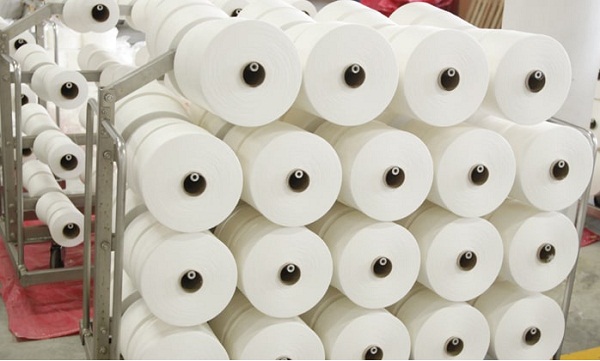
Currently, the third largest producer of synthetic and MMF fibres and polymers like polyester, PP, nylons and viscose etc, India aims to enhance its production capacity for technical textiles to $27 billion by 2026. As per a Textile Value Chain report, increased availability of MMF and synthetic fibers of all types helped create higher interest in non wovens and technical textiles during the COVID. In future, demand for these fibers is likely to increase 7 to 8 per cent per annum on an average compared to the current growth rate of 4 to 4.5 per cent.
The share of MMF textiles in global textile and clothing exports in developed countries has reached around 35 per cent, offering a perfect opportunity for future growth and development of these fibers. Currently, growing at a CAGR of 8 per cent, global technical textiles and nonwovens trade ranges between $260 billion to $275 billion, almost double the growth rate of normal textile and clothing sector of 4.5 per cent. India’s share in this fast growing and key textile sector is less than 1 per cent of global trade.
Target $27 million growth by 2026
Currently, growth in this sector is being led by China followed by Europe. India ranks third in the competitive availability of synthetic and MMF fibres and polymers like polyester, PP, nylon and viscose, etc. To upgrade its presence in the global technical textiles market, India needs to increase its market size to $27 billion by 2026.
India can achieve this by focusing on production of specialty industrial textiles like medical textiles and geotechnical textiles for use in high-growth and strategic sectors like medicines, aerospace, defense and civil infrastructure segments. Technical textiles are being used for creating high speed rail network, new ports, new airports and tunnels and roads in high altitude areas like Kashmir, Ladakh and North East and also a string of new highways, etc.
The four most impactful new policies that would help drive production and use of technical textiles in India include: Rs 160,000 million TTDS scheme for focusing on developing advanced technologies and new machines; Rs 10,000 million-National Technical Textiles Mission Scheme to venture into high tech projects in technical textiles; PLI or the production linked scheme to enhance production and use of both MMF fibers and technical textiles; and MITRA scheme for development and operations of large size or mega textile parks to attract large global investment into such world class ‘play n plug’ manufacturing zones across the country.
Develop specialty fibers and scale up wages
To enhance the size of India’s textile sector to over $100 billion by 2024, get 8 per cent market share in global textile and clothing/technical textiles trade, India needs emerge as a leading global supplier alongside China and offer all key raw materials and MMF fibres.
India also needs to develop specialty fibres like carbon fibres, Aramides, ceramic, glass and others. It needs to scale up wages in new markets and sign new FTAs with major export destinations like the EU and the US. Traditionally, India has been a dominant player in cotton-based textile sector. Now, to enhance its presence in MMF sector, it needs to increase its share in global textile and clothing trade to over 5 per cent and emerge as a reliable alternative supplier alongside China.
Bangladesh needs new initiatives to reduce RMG’s impact on environment
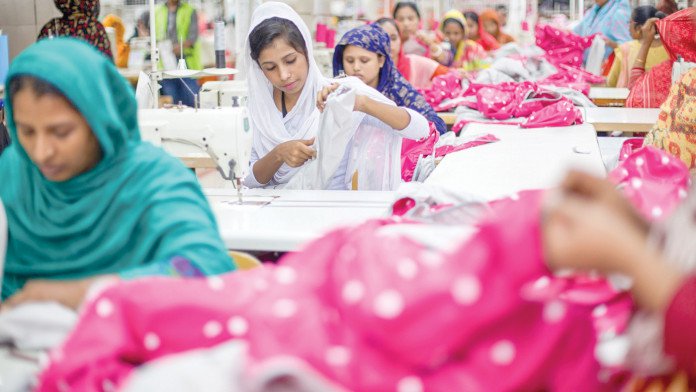
Improving production facilities and compliance standards will boost Bangladesh’s apparel exports to $100 billion in the next 10 years, observed international clothing retailers and brands at the recent Sustainable Apparel Forum 2022 in Dhaka. Bangladesh will continue to remain the most preferred apparel sourcing destination for brands, opined buyers at the forum. Ziaur Rahman, Head-Bangladesh, Pakistan and Ethiopia, H&M explained, the maturity achieved by industry leaders in the last 40 years will enable them to invest as per buyers’ requirements.
More investments in circular fashion and product diversification
Bangladesh currently has many green factories and also complies with workplace safety and other required standards, making it eligible to achieve $100 garment exports in the next 10 years, Rahman affirmed. Emphasizing on the importance of Bangladesh market he said, H&M sources garments from around 300 Bangladesh factories. This year, it plans to source around 11 per cent of Bangladesh’s total export value. However, to boost exports, Bangladesh needs to increase investments in innovation, circular fashion, product diversification and human development.
Agreeing with him, Shafiur Rahman, Regional Operations Manager, G-Star RAW said, his company plans to increase garment sourcing from Bangladesh by 30 per cent to $90 million in the next three years. Earlier sourcing about 75 per cent knitwear items, the company recently diversified to denim, woven and outerwear products, he added.
Italian garment machinery manufacturer and supplier Tonello has been supplying garment machinery in Bangladesh for last 28 years. Alice Tonello, Director- R&D, emphasized, the garment sector in Bangladesh will continue to grow. Her company has so far supplied 1,500 textile, garment and washing machines to Bangladeshi garment factories.
Yilmaz Demir, Regional Sales Manager – Asia, Bossa, also affirmed, Bangladesh is doing well as factories have improved production facilities. His company has been selling about one million yards of denim fabrics worth £5 million in Bangladesh for the last 16 years, he added. However, raw material prices have increased post pandemic. Also, the changes introduced in Generalized System of Preferences may create problems for Bangladesh in future.
Exporters concerned about low profit margins
Appreciating Bangladesh for becoming more compliant, Rashid Iqbal, Executive Director, Naveena Export a Pakistani-based denim fabrics manufacturer said, his company exports 5 lakh meter of denim fabrics worth $1.7 million to Bangladesh a month and it is an important market for them.
Amidst shifting work orders from China, Vietnam, Myanmar and Sri Lanka, a growing cause of concern is the low profit margins of garment exporters, opined Dolly Thay, Managing Director, Cloths ‘R’ Us, a buying house. Garment workers in Bangladesh are also affected by the way apparel sourcing takes place. Hence, the country needs new initiatives to reduce the industry’s impact on environment.
PTJ Spring/Summer 2023 scheduled from May 25-26, 2022
Organized by JFW (Japan Fashion Week Organization), The Premium Textile Japan (PTJ) Spring/Summer 2023 will be held at the Tokyo International Forum /Exhibition Hall E on May 25-26, subject to full compliance with safety rules and measures to prevent COVID-19 infection.
The event will focus on the ongoing JFW Sustainability Project and the JFW Textile Online Salon project. Mipox, a globally renowned top Japanese-affiliated polishing maker will showcase its dispersion technique for polymer/semiconductor materials, including resins, alongside coating techniques in the production process are utilised efficiently to develop reflective materials. The products to be displayed by the company include Ref Lite8000 series; a 20-colour set of reflective clothing kept always in stock and encompassing a wide-ranging spectrum. It will also showcase Ref Lite Softlite Plus - a reflector designed for the fashion industry, which eliminates stiffness, bends easily for piping and can be easily sewn.
Rainbow World from Noshiro City, Akita Prefecture, will also join PTJ for the first time with its own one-stop production facility, handling printing, washing, finishing and sewing for the handkerchiefs, stoles and other items on offer. It will showcase double-sided inkjet prints (integrated duplex) using reactive dye for cotton and silk. Another must-see poducts includes a uniquely developed natural plant-dyed fabric, using the regional resource of Akita cedar from Noshiro City, with dye extracted from its leaves as a raw material processed by hand screen printing in house.
Moelan Studio, a GOTS-certified specialist will exhibit a soft-touch twill that combines the ultra-breathable Lenzingecovero and sustainable true cotton material alongside a fluid and near-translucent typewriter fabric blending.
Located in the Niigata region, Asaki will present check fabrics using an unevenly dyed organic cotton, unique to the Niigata region and blending twisted yarns for a cool and fresh feel. Other highlights include crepe fabrics using blended yarns; cotton for warp and recycled polyester for weft, which retain their crease effect in a vertical direction, alongside newly developed fabrics using blended yarns; cotton for warp, cotton/linen for weft and washer-processed. All of which offering the same familiar cool and fresh feel; further interwoven with sashiko-like stitches for unique surface changes on the fabric.