FW
FLO Magazacilik to buy 100 Reebok stores in Russia
Turkish shoe retailer FLO Magazacilik plans to buy over 100 stores owned by fitness brand Reebok in Russia as Western companies rush to comply with sanctions over the Ukraine conflict, says Mehmet Ziylan, Chairman. Ziylan says, though FLO currently makes wholesale sales in Russia, it does not have own stores there. The new acquisition is likely to face resistance owing to Russian firms and countries not involved in Western sanctions snapping up prized assets in the country as Western companies rush to comply with sanctions over the Ukraine conflict.
About investing in Russia when many international brands have left the country, Ziylan says the company will follow Turkish government's policy on the issue. Last month Anheuser-Busch InBev announced plans to exit Russia by selling its interest in a joint venture with Turkish brewer Anadolu Efes that operates in Russia and Ukraine. and plans to take a $1.1 billion charge as a result.
Texhong Textile Group to increase yarn sales by 7.6%
Vietnam-based Texhong Textile Group plans to increase its yarn sales by 7.6 per cent this year to 880,000 tons. It plans to increase sales of woven garment fabrics by 31 per cent and those of knitted garment fabrics by 56 per cent. As per a Seeking Alpha report, last year, Texhong Textile Group’s revenues increased 35.5 per cent to 26.5 billion yuan ($3.9 billion). Gross margin also rose 8.3 percentage points year-on-year to 22.1 per cent. These two factors fueled profit over fourfold to 2.69 billion yuan for the year.
The company attributed gains to improved operating efficiencies, as well as higher prices for both its yarns that account for about three-quarters of sales, as well as its fabric business that accounts for the remainder. Calculations using figures from Trade Data Monitor show the price of cotton yarn rose by 26 per cent last year to $2,995 per metric ton from $2,370 in 2020.
British Wool confident of continued recovery in wool market through 2022
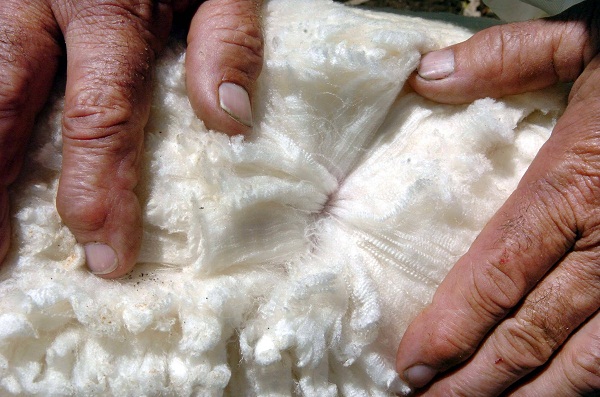
With a 36.4 per cent/kg increase in payment to members this year, British Wool British Wool is paying almost £8.4 million to members. “This represents a huge recovery from the challenges of 2020,” explains Andrew Hogley, CEO. Improved auction prices for wool over the last 12 months alongwith a reduction in operation costs helped British Wool increase members’ payments.
Wool recovery to continue through 2022
Hoglay affirms, his organization is confident of sustaining the strong demand witnessed over recent years. He believes, the recovery in the wool market will continue through 2022, and help further improve prices for the 2022 wool clip.
According to Hoglay, British Wool’s unique collective marketing system ensures a consistent product for buyers and manufacturers alongwith maximum prices at the auction. The system collects, grades and tests wool on behalf of its farmer members, thus helping the organization drive demand across the supply chain and from consumers, he explains.
The ultimate aim of British Wool is to boost members’ payments by adding value to the organization. The firm determines grade of returns to members by calculating the average auction price for the season, Hoglay notes. “For 2021 clip, returns will be around 40p per kg for many core grades, around 30p per kg for Blackface wool and around 15p per kg for Welsh and Swaledale,” adds Hoglay.
Ensuring higher returns for farmers
Returns for a few specialty wool types such as Herdwick and Bluefaced Leicester are likely to be significantly higher, Hoglay points out. For instance returns for Herdwick wool will be around 80p per kg and for Bluefaced Leicester, will be around £5.50 per kg. An additional £1.00 per kg is also being paid out on most types of organic certified wool.
On the whole, the returns offered by British Wool are competitive relative to the prices offered by competitors and in many cases significantly higher, observes Hoglay. However, the organization does not believe in making a profit from sale, he adds. It sells on the behalf of members and only deducts the cost of marketing and processing from sale price.
Schemes for maximizing wool value
The organization plans to continue with its free haulage scheme introduced in 2021. This scheme includes free onward carriage for members selling wool at the organization’s drop points. The organization also plans to continue with the lower threshold limit introduced for the volume premium payment. This scheme entails, clips of 2,000 kg or more will continue to receive an additional 4 per cent/kg with further incremental increases for those delivering larger volumes.
These schemes will help British Wool maximize the value of wool for members. The organization urges farmers to work together and market their wool through British Wool to get maximum returns for this year’s clip and beyond.
Canada’s apparel imports surge 13.63% in Q1’22
Canada’s apparel imports surged by 13.63 per cent in Q1 ’22 to $2.44 billion, as per official statistics.
As per an Apparel Resources report, imports from China surged by 9 per cent Y-o-Y to $735.23 million in Q1 ’22. The share of China reduced to 30 per cent in Canadian apparel import values during Q1 ’22 from 31.40 per cent in Q1 ’21.
Imports from Bangladesh surged by 35.28 per cent Y-o-Y to $366.61 million in the review period. Imports from Vietnam grew by 14.44 per cent to $293.16 million, whereas imports from Cambodia declined significantly by 14.60 per cent on Y-o-Y basis to $213.65 million.
Apparel imports from India surged by highest 46.38 per cent Y-o-Y to $94.69 million.
Bangladesh garment exporters worried about Sri Lanka crisis: Reports
Garment exporters in Bangladesh are worried over the current political crisis in Sri Lanka as the government has imposed a curfew as mobs went on a rampage to protest against it.
As per a report by the Apparel Resources, garment exporters are worried as the Colombo Port acts as key transhipment hub for ‘Made in Bangladesh’ apparels heading for Europe and USA.
Nazrul Islam, First Vice President, Bangladesh Garment Manufacturers and Exporters Association said, hehad spoken to the shipping executives and buyers’ forums on how to avoid the Lankan crisis that may affect shipments. However, reports suggest navigation of ships or process of monitoring and controlling the movement of vessels from one place to another remained suspended from Colombo Port, shipping executives in Bangladesh have, reportedly, underlined more than 10 feeder vessels were either stuck or on the way to Colombo carrying export items.
Milano 1984 SpA buys Gas Jeans and Grotto SpA
Led by Andrea Citterio, Managing Director, Milano 1984 SpA has purchased the brand Gas Jeans and the Grotto SpA
With the purchase of the Grotto SpA business complex, the instrumental properties, the Gas Jeans brand and its 140 employees enter the legal perimeter of Milano 1984 SpA, which becomes the definitive owner of these assets, effectively shielding the families from the risk of bankruptcy.
The relaunch of the historic brand, which will also include its launch in the American market, will be managed by Andrea Citterio alongside a series of already selected apex managers, as well as FortunatoBordin, an Italian-Canadian entrepreneur, accompanied in his expansion project by his son Andrew Bordin, who operates through an important corporate group overseas.
Bangladesh Denim Expo ends on a satisfactory note
Held from May 10-11, 2022 by the Bangladesh Apparel Exchange, the Bangladesh Denim Expo ended on a satisfactory note with buyers, makers, and sellers flocking to the exhibitor stalls to see innovative, fashionable, and sustainable denim items.
Held at the International Convention City Bashundhara (ICCB) in Dhaka, the Bangladesh Denim Expo had 79 exhibitors from across the world, and it drew the largest number of international attendees of any clothing event in Bangladesh. The participants showcased their latest fabrics, garments, threads, machinery, finishing equipment, and accessories at the expo.
The theme of this year’s show was ‘Beyond Business’, a topic that highlighted the next steps for industry leaders in achieving success while providing long-term solutions. The two-day mega exposition showed global brands and merchants, as well as Bangladeshi manufacturers, the latest denim trends. It featured eight exhibitor-led lecture sessions and two-panel discussions, all of which reflected the expo’s overall sustainability focus. The expo intended to foster debate and interaction among exhibitors and visitors through a series of product exhibits, seminar sessions, and panel discussions.
Apparel imports surge by 33.87% in Jan-Feb’2022
Increased sourcing from Bangladesh and China led to 33.87 per cent rise in India’s apparel imports in the first two-month period of 2022.
As per official data released by Ministry of Commerce and Industry, India imported garments worth $219.23 million during January-February ’22 period, as compared with $163.78 million in the same period of previous year.
Of the total, imports of knitted garments surged by 38.11 per cent to $106.98 million, whereas imports of woven garments surged by 29.91 per cent Y-o-Y to $112.28 million.
As analyzed further by Apparel Resources, the imports from its topmost preferred destination Bangladesh grew by 32.15 per cent Y-o-Yto $89.56 million in the January-February ’22 period.
India’s apparel import from China grew by 23 per cent during the period to $85.67 million.
Bangladesh can export RMG products worth $100 bn in 10 years, say global brands
According to global brands, Bangladesh has the potential to export readymade garment products worth $100 billion annually within next 10 years. Ziaur Rahman, Regional Head, H&M Group-Bangladesh, Pakistan and Ethiopia says, Bangladesh is one of the major RMG sourcing destinations for the group. The group outsources around 11-12 per cent of total demand from the country annually. Rahman believes, innovation will help Bangladesh achieve new milestones in the sector and reach $100 billion market size in next 10 years.
He urges industry leaders to devise new plans to make Bangladesh the biggest market for global brands in the next five to 10 years. Shafiur Rahman, Regional Operations Manager, G-Star RAW opines, innovation with research and development can help Bangladesh expand its garment industry. His company plans to procure up to denim worth $90 million from Bangladesh. As per Export Promotion Bureau (EPB) data, Bangladesh apparel exports rose 36 per cent to $35.36 billion during the first 10 months.
Knitwear exports increased 37.49 per cent to over $19.24 billion and woven exports surged by 34.23 per cent to nearly $16.12 billion during the first 10 months of the current fiscal year. In current fiscal year, Bangladesh aims to achieve its $50 billion RMG export target.
Global western wear market to grow 5.37% from 2021-31: Report
A new report ‘Western Wear Market’ by the Allied Market Research estimates, global western wear market valued at $74,497.50 million in 2020, is projected to grow 5.37 per cent to reach $136,881.41 million by 2031. The formal wear segment is expected to grow at a CAGR of 4.8 per cent in value during the forecast period. Asia-Pacific region is expected to register the highest CAGR of 6.6 per cent during period. Developing lifestyle and rise in disposable income of consumers are expected to drive the Asia-Pacific market.
Europe is expected to grow at 4.1 per cent CAGR. In 2020, Europe accounted for approximately one-third share of total western wear market, and is expected to maintain its position during the forecast period. In global western wear market, India is expected to grow at a CAGR of 8.0 per cent, in terms of value.