


FW
Government to approve textile parks under MITRA shortly: State Textile Minister
The Indian government will shortly approve textile parks under the PM Mega Integrated Textile Region and Apparel (MITRA) parks scheme, said DarshanaJardosh, Minister of State for Textiles during the inauguration session of GartexTexprocess trade fair in MumbaI.
Jardosh said that seven states have shown interest to set up 13 parks under the scheme in the country. Deliberation is going on with the states which will have 51 per cent stake in the proposed textile parks. The parks will be approved with the consideration of industry’s requirement for future growth. It will ensure better ecosystem for the industry at various hubs in the country.
The Production Linked incentive (PLI) scheme succeeded in attracting an investment of around Rs10,600 in textile sector. However, many products were left out under the scheme, added Jardosh. She urged the Indian textile industry to diversify its raw material consumption as it is more dependent on cotton, while around 75 per cent MM fibre is used globally.
Leading bellwethers to showcase collections at Autumn Fair
UK’s leading marketplace for wholesale Home, Gift, Fashion, and Sourcing, Autum Fair, which takes place on the 4-7th September at NEC Birmingham, is almost fully booked with a host of industry leading bellwethers set to showcase their latest collections.
Timed to get retailers ready for the Golden Quarter, retail’s busiest and most profitable time of year, show will present the market’s most innovative and inspirational brands including stylish and on-trend furniture, textiles and decorative interior accessories from Coach House, Hill Interiors, and the newly launched Mint Interiors by Kettle, within Home; hand-picked and curated Summerhouse stalwarts Pacific Lifestyle and Gallery Direct; best-sellers, contemporary designs, unique and personalised and licensed gifts, stationery and greetings, and beauty staples in Gift, from brands including Gift Republic, Kikkerland, Lesser &Pavey, Joe Davies, Richard Lang & Son, Candlelight, The Seed Card Company, East of India, Bomb Cosmetics, and Upper Cananda UK.
Loungewear trend is here to stay, says research by Naia from Eastman
Latest research conducted by Naia from Eastman proves loungewear trend is here to stay with 78 per cent of women in the US and Europe selecting comfort as their top priority when selecting loungewear. Other findings show 74 per cent of respondents dressed more casually at home and 66 per cent are also choosing to dress more casually outside of the home.
Consumers also want more comfortable fabrics and more versatile loungewear and will likely purchase more loungewear items in the future. The survey results showed 61 per cent of women invested in more casual clothing, with 44 per cent reducing the amount of formal clothing in their wardrobes. They also prefer more sustainable loungewear with new and different fibers and would like brands to offer more of those options.
The study also highlighted a satisfaction gap among consumers who wanted better loungewear comfort, fit, quality, drape and durability. With Naia, Eastman aims to collaborate with brands to fill this gap and help them enhance the consumer shopping journey.
Available as both a filament yarn and a staple fiber, Naia Renew cellulosic fiber is inherently soft, is quick drying and has reduced pilling properties. It blends well with other eco-friendly materials, such as modal and recycled polyesters, to produce sustainable fabrics for everyday garments – including tops, dresses, jumpsuits, twinsets, t-shirts, comfy pants and sweaters.
Naia Renew is produced from 60 per cent sustainably sourced wood pulp and 40 per cent hard-torecycle waste materials, which would otherwise be destined for landfills or incinerators, with a low carbon footprint in a closed-loop process where solvents are safely recycled back into the system for reuse.
ASEAN remains China’s largest trade partner in 2022
Latest customs statistics indicate, the Association of Southeast Asian Nations (ASEAN) remains China’s largest trade partner, accounting for 14.6 per cent of its total foreign trade in the first four months of 2022. It is followed by the European Union (EU) and the United States ranking second and third respectively
From January-April this year, the China-ASEAN trade totaled increased by 7.2 per cent Y-o-Y to 1.84 trillion yuan ($274.5 billion).
In Q1FY22, China’s trade with ASEAN increased by 8.4 per cent Y-o-Y to 1.35 trillion yuan and accounted for 14.4 per cent of China’s total foreign trade. In the first two months of this year, ASEAN lagged behind the EU by about 3 billion yuan, temporarily becoming China’s second-largest trading partner.
Analysts said that ASEAN's return as China’s largest trade partner shows that China-ASEAN economic and trade relations still enjoy significant vitality and strong resilience. The RCEP, effective from January 1 this year, will release more dividends to China-ASEAN trade in the future.
Nigeria’s NTMA seeks government intervention to salvage ailing textile sector
The Nigerian Textile Manufacturers Association (NTMA) has sought urgent government intervention to salvage the ailing textile sector. It revealed, the sector has already lost over 117,000 jobs in the past 26 years and could lose more if the government does not intervene.
Folorunsho Daniyan, President, NTMA says, the Nigeria textile industry once used to be the highest employer in the country. In the 80’s it employed 500,000 workers which reduced to 137,000 workers in 1996, 24,000 workers in 2008. Today, it employs less than 20,000 workers. Daniyan further states, earlier directed to West and Central Africa, Nigerian textile exports reached their lowest ebb in 2006. However, they recovered in 2007 and 2008. Today, the country’s textile have reached zero. He attributes this decline to the loss of preferential market access in the EU and US, inconsistent implementation of Export Expansion Grant policy, particularly a perennial backlog of EEG claims, and the inconsistencies in the implementation of ECOWAS Trade Liberalization Scheme.
Expanded product range encourages Japan’s Four Seasons to eye Asian markets
Having expanded its product range into golf wear, suits and tents, Japanese apparel maker Four Seasons now eyes Asian markets like China. The Japanese apparel maker is expanding its product range into golf wear, suits and tents. As per a Nikkei report, the company aims to increase sales to 300 million yen in the year ending September 2022 with its expanded product range. It generated sales worth 248 million yen in the year through September 2021 and an operating profit of 13 million yen.
Founded in 2009, Sapporo-based company Four Seasons offers competitively priced clothing for snowboarders having superior waterproofing and insulation properties. The company began selling its snowboarder range online in China about four years ago. That market accounted for 16 per cent of the company's sales in the last fiscal year. The company diversified into rainwear around 2014 as a way to make use of fabric scraps. The positive customer response has encouraged it to broaden its offerings into tents and golf wear. Its golf wear now accounts for around 30 per cent of Four Seasons' total sales.
FLO Magazacilik to buy 100 Reebok stores in Russia
Turkish shoe retailer FLO Magazacilik plans to buy over 100 stores owned by fitness brand Reebok in Russia as Western companies rush to comply with sanctions over the Ukraine conflict, says Mehmet Ziylan, Chairman. Ziylan says, though FLO currently makes wholesale sales in Russia, it does not have own stores there. The new acquisition is likely to face resistance owing to Russian firms and countries not involved in Western sanctions snapping up prized assets in the country as Western companies rush to comply with sanctions over the Ukraine conflict.
About investing in Russia when many international brands have left the country, Ziylan says the company will follow Turkish government's policy on the issue. Last month Anheuser-Busch InBev announced plans to exit Russia by selling its interest in a joint venture with Turkish brewer Anadolu Efes that operates in Russia and Ukraine. and plans to take a $1.1 billion charge as a result.
Texhong Textile Group to increase yarn sales by 7.6%
Vietnam-based Texhong Textile Group plans to increase its yarn sales by 7.6 per cent this year to 880,000 tons. It plans to increase sales of woven garment fabrics by 31 per cent and those of knitted garment fabrics by 56 per cent. As per a Seeking Alpha report, last year, Texhong Textile Group’s revenues increased 35.5 per cent to 26.5 billion yuan ($3.9 billion). Gross margin also rose 8.3 percentage points year-on-year to 22.1 per cent. These two factors fueled profit over fourfold to 2.69 billion yuan for the year.
The company attributed gains to improved operating efficiencies, as well as higher prices for both its yarns that account for about three-quarters of sales, as well as its fabric business that accounts for the remainder. Calculations using figures from Trade Data Monitor show the price of cotton yarn rose by 26 per cent last year to $2,995 per metric ton from $2,370 in 2020.
British Wool confident of continued recovery in wool market through 2022
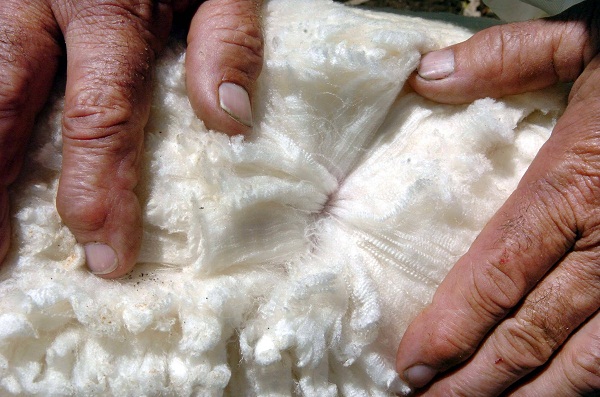
With a 36.4 per cent/kg increase in payment to members this year, British Wool British Wool is paying almost £8.4 million to members. “This represents a huge recovery from the challenges of 2020,” explains Andrew Hogley, CEO. Improved auction prices for wool over the last 12 months alongwith a reduction in operation costs helped British Wool increase members’ payments.
Wool recovery to continue through 2022
Hoglay affirms, his organization is confident of sustaining the strong demand witnessed over recent years. He believes, the recovery in the wool market will continue through 2022, and help further improve prices for the 2022 wool clip.
According to Hoglay, British Wool’s unique collective marketing system ensures a consistent product for buyers and manufacturers alongwith maximum prices at the auction. The system collects, grades and tests wool on behalf of its farmer members, thus helping the organization drive demand across the supply chain and from consumers, he explains.
The ultimate aim of British Wool is to boost members’ payments by adding value to the organization. The firm determines grade of returns to members by calculating the average auction price for the season, Hoglay notes. “For 2021 clip, returns will be around 40p per kg for many core grades, around 30p per kg for Blackface wool and around 15p per kg for Welsh and Swaledale,” adds Hoglay.
Ensuring higher returns for farmers
Returns for a few specialty wool types such as Herdwick and Bluefaced Leicester are likely to be significantly higher, Hoglay points out. For instance returns for Herdwick wool will be around 80p per kg and for Bluefaced Leicester, will be around £5.50 per kg. An additional £1.00 per kg is also being paid out on most types of organic certified wool.
On the whole, the returns offered by British Wool are competitive relative to the prices offered by competitors and in many cases significantly higher, observes Hoglay. However, the organization does not believe in making a profit from sale, he adds. It sells on the behalf of members and only deducts the cost of marketing and processing from sale price.
Schemes for maximizing wool value
The organization plans to continue with its free haulage scheme introduced in 2021. This scheme includes free onward carriage for members selling wool at the organization’s drop points. The organization also plans to continue with the lower threshold limit introduced for the volume premium payment. This scheme entails, clips of 2,000 kg or more will continue to receive an additional 4 per cent/kg with further incremental increases for those delivering larger volumes.
These schemes will help British Wool maximize the value of wool for members. The organization urges farmers to work together and market their wool through British Wool to get maximum returns for this year’s clip and beyond.
Canada’s apparel imports surge 13.63% in Q1’22
Canada’s apparel imports surged by 13.63 per cent in Q1 ’22 to $2.44 billion, as per official statistics.
As per an Apparel Resources report, imports from China surged by 9 per cent Y-o-Y to $735.23 million in Q1 ’22. The share of China reduced to 30 per cent in Canadian apparel import values during Q1 ’22 from 31.40 per cent in Q1 ’21.
Imports from Bangladesh surged by 35.28 per cent Y-o-Y to $366.61 million in the review period. Imports from Vietnam grew by 14.44 per cent to $293.16 million, whereas imports from Cambodia declined significantly by 14.60 per cent on Y-o-Y basis to $213.65 million.
Apparel imports from India surged by highest 46.38 per cent Y-o-Y to $94.69 million.











