FW
Fashion for Good provides disruptive model, focus more on Asia
Fashion for Good, based in the Netherlands, has built a hub for circular fashion and a global network of entrepreneurs, designers, brands, manufacturers and investors dedicated to ripping apart the existing fast fashion model and creating a less exploitative and more sustainable industry.
To accomplish this feat requires transforming the way textiles and apparel are produced, in the places where they are produced. To that end, over the past couple of years, Fashion for Good has laid the groundwork to support the growth of sustainable manufacturing, through an accelerator program and an investment fund squarely focused on the Asian continent.
In February 2020, the organization kicked off its Asia Innovation Program in Mumbai, which provides fashion entrepreneurs help with product and business development, mentoring and connections to brands and investors. At the same time, Fashion for Good and a group of investor partners also launched the Good Fashion Fund, a vehicle dedicated to financing disruptive production technologies in India, Bangladesh and Vietnam.
Launched in March 2017, Fashion for Good welcomed the first participants in its accelerator and scaling programs that same year. While everything moved online with the pandemic, Fashion for Good typically invites 10 to 15 startups per program each year to Amsterdam for nine months.
Asahi Kasei introduces Ecosensor, a sustainable line of fabrics
Ecosensor is Asahi Kasei Advance’s high-tech fabric collection that implements a new generation of values, with the aim of keeping nature, body and mind in harmony. The whole collection is focused on advanced technology and environmental responsibility. Thanks to Ecosensor’s unique value-chain based on recycling technology, most part of its yarns are certified by the renowned GRS (Global Recycled Standard). Even the dyeing and finishing phases - key moments for performance wear - have been certified by international labels such as bluesign and Oeko-Tex Standard 100.
Ecosensor’s new references meet the needs of the contemporary consumer, such as durability, well-being and performance. Furthermore, they are made with certified ingredients, through a completely traceable and transparent production process and supply chain. Being capable of combining active climate control, exquisite touch, lightness and comfort with sustainable values, Ecosensor stands out as a unique eco-high-tech performance proposition in its market.
Featuring a total of 36 fabrics, the collection is composed of seven outerwear fabrics, 22 sportswear fabrics and seven innerwear fabrics. Dominant are the recycled polyamide and polyester yarns. The stretch component present in 22 articles of the collection is based on Roica EF by Asahi Kasei - the sustainable recycled stretch yarn made from pre-consumer waste.
Indonesia’s textile industry expect recovery by 2022
Indonesia’s export volume is expected to approach pre-Covid levels only by next year. The export-oriented textile industry’s average utilization rate has surpassed 100 per cent, with a number of corporate operators even boosting capacity. As a consequence of unresolved global logistical issues, Indonesia’s garment exports did not see price revisions. Several exporters use a freight on board plan, which entails the buyer’s paying the container expenses.
For the third quarter Indonesia’s textile and apparel industry contracted 3.34 per cent. In the first quarter the textile and apparel industry contracted 13.28 per cent. In the second quarter there was a 4.54 per cent decline. As for last year, the textile industry contracted 8.88 per cent.
However, Indonesian Textile Association expects a turnaround by the end of year, driven by high demand and recovering market. Even if this does not happen, the industry hopes to reduce contraction rate compared to last year. Utilization began to improve in October 2021 and almost reached 80 per cent. The average utilization of the textile industry in September 2021 was at 72.31 per cent. In contrast, the apparel industry reached 84.83 per cent, and the leather, leather goods and footwear industry reached 80.18 per cent.
Cambodia’s apparel exports grow in 2021 despite Covid-19
Cambodia’s garment exports increased by 11.40 per cent from January to September 2021 compared to the same time previous year reveal General Department of Customs and Excise stats. Despite Covid, the Cambodian garment industry managed to avoid falling into negative territory. The industry has been gaining market share as a result of extraordinary hurdles stemming from political concerns and Covid consequences of rival nations. The surge in garment exports bodes well for economic activity in the country as other nations grapple with the difficult conditions imposed by the virus. This year Cambodia was lucky to receive some orders shifted from Myanmar and would have grown bigger were it not for the February 20 community outbreak.
The country is working to simplify the local investment and business climate in order to create trust in businessmen and investors as market access to a variety of nations is expanded. Cambodia has inked new free trade agreements with China, South Korea, and other markets in order to make Cambodia a more attractive investment destination. Cambodia’s garment exports fell 10.44 per cent in 2020 compared to 2019. The EU has decided to withdraw one-fifth of the Everything But Arms (EBA) for Cambodia covering Cambodia’s exports of garment and footwear products, travel goods, and sugar. Without EBA, Cambodia will find it difficult to continue the necessary transformation of the textile industry.
Global denim fabric market recovers
The global denim fabric market is growing at 4.4 per cent a year, reveals Allied Market Research stats. The availability of denim fabric at reasonable prices and new socio-economic trends are driving the growth of the global denim fabric market.
The rise of biodegradable denim fabric has opened new prospects. But price instability of cotton and ecological risks related with the use of synthetic dyes confine the market to some level. The Covid outbreak impacted overall supply chain, thereby upsetting the overall growth of the global denim fabric market. The rise in the prices of raw materials, especially cotton and cotton yarn, cut the production of denim fabric, especially during the early phase. Moreover, the dropping income of customers has given way to a reduction in the demand for premium denim products.
The Asia Pacific region got the highest revenue share in 2020, getting nearly four-fifths of the entire market share, and is projected to continue its lead by 2030. From January to September 2021 Bangladesh’s denim exports to the US registered a whopping 31.40 per cent yearly increase. As the world slowly goes back to normal, fashion item consumption is once again showing signs of growth.
Fashion industry needs $1.04 trillion to achieve net zero by 2050: Report
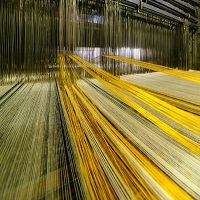 To curb carbon emissions and achieve net-zero by 2050, the global fashion industry needs to introduce disruptive solutions and unprecedented actions, says a new report by Fashion for Good and Apparel Impact Institute. Sponsored by HSBC, the report charts out a trajectory for the industry to meet its net-zero ambition, mapping the integral levers such as renewable energy across existing solutions and innovative solutions such as next generation materials.
The report breaks down the required funding of $1 trillion by solution category and identifies the types of funders likely to benefit from the positive returns. Titled, ‘Unlocking The Trillion-Dollar Fashion Decarbonization Opportunity: Existing And Innovative Solutions’, the report estimates reduction in emissions of existing and innovative solutions, and calculates the finance needed to bring them to scale and drive the industry to net-zero by 2050.
ESG investments to reach $50 trillion by 2025
Majority of the $1 trillion spend is allocated to projects that offer an attractive financial, as well as environmental, return on investment. More than $35 trillion of financial capital is available globally for good return Environmental, Social, and Governance (ESG) investments, a figure expected to exceed $50 trillion by 2025 according to insights from Bloomberg Intelligence. However, critical barriers to unlocking the required financial capital remain. The report highlights these barriers and presents examples of financing opportunities.
The financing opportunity is multi-faceted and will require committed and coordinated effort by brands, manufacturers, philanthropy, government, and industry organisations. The report splits the amount of finance required per emission-reduction solution across the different financiers, appealing to different risk appetites and profiles, and providing a nuanced and detailed pathway to achieving net-zero.
Most reductions from existing solutions
The report estimates 47 per cent of carbon dioxide reductions come from implementing existing solutions while 39 per cent come from scaling innovative solutions and 14 per cent some from other solutions including reducing overproduction, material efficiency improvements, and scaling circular business models.
It evaluates seven solutions to reach net-zero in the fashion industry by 2050, including a shift to renewable energy, sustainable materials and processes, accelerating the development of next generation materials, and phasing out coal, amongst others. The total cost of implementing these solutions and achieve net-zero is $1.04 trillion, including $639 billion towards existing solutions and $405 billion towards innovative solutions
India’s top denim maker Vishal Fabrics aims at Rs 2000 crore topline
Denim maker Vishal Fabrics is aiming for Rs 2000 crore topline in the next two fiscals. The denim maker is also investing in the expansion of its current capacity to increase denim production. The Ahmedabad-based company is encouraged by the two exceptional quarters in the first half of this fiscal. Vishal Fabrics caters to the premium and the super-premium end of the denim segment.
The company is also expanding its overseas presence by adding new markets in Latin America and Europe. This fiscal, it is looking for a ten per cent contribution from the export segment. From the next fiscal year, the target will be around 20 per cent. Vishal Fabrics has no plans to go into garments and apparels and will be confined to the B2B segment. Vishal Fabrics is part of the Rs 10,000 crore Chiripal Group.
India is one of the fastest-growing denim markets, where the domestic market has a CAGR of eight to nine per cent as compared with four to five per cent of denim as a fabric in the global market. Consumption of denim is on the rise in the country as it is now penetrating at the bottom level of the consumption pyramid at Tier III, IV and V places.
PVH Corp shuts shop in Ethiopia
Global clothing manufacturer PVH Corp is winding up operations in Ethiopia. This could deal a blow to Ethiopia’s once rapidly growing economy and has been prompted by the US’ decision to cut Ethiopia from a US trade program, the African Growth and Opportunity Act, because of violations of internationally recognised human rights. The sanction goes into effect in January 2022. Unrest in the Tigray region of Ethiopia has been marked by gang-rapes, forced expulsions and manmade famine. Thousands of people have been killed.
As the crisis spreads – and if Ethiopia does lose AGOA eligibility – companies will increasingly be unable to source from Ethiopia. This will hurt Ethiopia’s economy, particularly the women who comprise the bulk of the workforce in the country’s apparel industry.
PVH Corp’s brands include Calvin Klein and Tommy Hilfiger. It has been a marquee occupant of Ethiopia's model industrial park in the city of Hawassa, where Africa’s second-most populous country has made clear its aspirations of rapid, Chinese-style development. Businesses like PVH had entered Ethiopia because of the government’s push in recent years to build a network of industrial parks to make clothing and footwear for export, along with the country’s large population of more than 110 million people and wages that are significantly lower than even places like Bangladesh and Cambodia.
Severe inflation hits Turkey’s clothing retail
Turkey is facing a high rate of inflation. The nearly 20 per cent annual inflation rate is driven by food, services, housing and transportation prices, leaving consumers with little money for their clothing needs. So people are purchasing only the minimum necessary textiles for their daily needs. Decrease in domestic demand will impact manufacturing as textile-apparel companies will cut down on their production.
Accompanying high inflation is the weakening currency. Turkey’s currency lira has lost around 25 per cent of its value since the beginning of 2021. Meanwhile, in addition to the high cost of fuel and other imports, the government this month raised the price of natural gas supplied to the industry by 48 per cent, as a global price spike drove up import bills.
One of the largest gas importers in Europe, Turkey depends on pipeline gas from Russia, Azerbaijan and Iran as well as liquefied natural gas (LNG) imports from Nigeria, Algeria and spot markets. As a result of the current scenario, new investment in the country’s manufacturing sector, especially from domestic players, will fall drastically. Already, people have started shifting their savings to gold and foreign currencies. One major reason for the high rate of inflation and the weakening of the currency is the government’s insistence on low interest rates.
Birla Cellulose retains top Canopy ranking
Birla Cellulose, the pulp and fiber business of the Aditya Birla Group, has for the third year in a row retained top position in Canopy’s Hot Button Report. Birla Cellulose has been awarded with a dark green shirt for its efforts in the manmade cellulosic fiber industry, in supporting and conserving ancient and endangered forests, for bringing transparency across the value chain and game changing solutions for a circular business model in the fashion industry. Its efforts and investments are focused on creating innovative solutions for ecological challenges. Over the years, Birla Cellulose has raised its benchmarks in sustainability performance and targets scaling up the production of circular fibers to a level of 1,00,000 tons per annum by 2024. Its award-winning product Liva Reviva is made by utilising cotton waste as feedstock. As a leading sustainability-focused MMCF producer, Birla Cellulose operates 12 sites that apply environmentally efficient closed loop technologies that recycle materials and conserve natural resources.
Canopy’s Hot Button Ranking is the go-to resource for brands and retailers in the fashion industry when it comes to ensuring that they are sourcing from MMCF producers following sustainable forestry practices in order to eliminate the risks related to biodiversity loss and deforestation in their supply chain.