FW
Victoria’s Secret Q3 sales up seven per cent
Victoria’s Secret recorded seven per cent increase in sales for the third quarter. This performance reflects growth in all core categories. The brand is working at transformation, deepening customer connections and improving operational fundamentals.
But 45 per cent of the inventory the company had ordered for Fall has been held up due to supply chain disruptions. In particular, 25 per cent of the retailer’s pajama sets are currently late, at a time of year when they are popular as gifts. The retailer has taken measures to lessen the negative effects of the hold-ups, canceling some orders and attempting to avoid shipping issues by pivoting towards air freight, which will be used to import some 90 per cent of Victoria’s Secret holiday inventory. Nonetheless, freight issues may cost the company a total of $150 million in the third and fourth quarters.
Currently, Victoria’s Secret expects its fourth quarter sales to be in the range of flat to up three per cent compared to the fourth quarter of 2020. The company spun off from L Brands earlier this year and achieved net sales of $1.44 billion in the second quarter. This compares to sales of $1.35 billion in the same period in the previous year.
Gap Q3 sales down one per cent, online sales sees a rise
For the third quarter Gap’s net sales were down one per cent. Online sales for the quarter increased 48 per cent. Global supply chain disruption, including Covid-related factory closures and continued port congestion, caused significant product delays in the third quarter. Meaningfully reduced inventory positions throughout the quarter negatively impacted sales.
While Gap entered the third quarter with growing momentum, acute supply chain headwinds affected its ability to fully meet strong customer demand. Still, it made an intentional investment in building enduring customer loyalty with accelerated use of air freight to serve them this holiday, choosing long-term growth opportunity over near term impact to profitability. The aim is to restructure and digitize the business with an eye on creating a better future, faster.
The company remains focused on digital dominance through investing in its e-commerce platform, strategically closing unprofitable stores and partnering to amplify in international markets. Gap has entered into partnership agreements in the UK, Ireland, France, and Italy, which are expected to improve the profitability of its European business. The launch of a second Gap Home collection at Walmart has expanded its assortment to include furniture and rugs.
Gap is a portfolio of purpose-led, billion-dollar lifestyle brands including Old Navy, Gap, Banana Republic, and Athleta, and the largest specialty apparel company in the US.
India’s textile industry says yes to uniform GST
The uniform goods and services tax (GST) rate at 12 per cent on manmade fibers, yarn, fabrics and apparel has addressed the inverted tax structure in the manmade textile value chain. The changed rates will help the manmade fiber segment grow and emerge as a big job provider in the country. The textile and apparel industry had for long been demanding the removal of the inverted tax structure on the manmade fiber value chain.
GST on manmade fiber, manmade yarn and manmade fabrics was 18 per cent, 12 per cent and five per cent respectively. The taxation of inputs at higher rates than finished products created a build-up of credits and cascading costs. It further led to the accumulation of taxes at various stages of the manmade fiber value chain and blockage of crucial working capital for the industry. The inverted tax structure caused an effective increase in the rate of taxation of the sector. The world textile trade has been moving toward manmade fibers but India was not able to take advantage of the trend as its manmade fiber segment was throttled by the inverted tax regime.
The 12 per cent uniform GST rate will reduce the compliance burden of industry players. Since a significant portion of manmade fiber products is expected to be exported, it will lend a better scope for encashing the unutilised input tax credit.
Kitex Q2 profit up 44 per cent
For the second quarter Kitex Garments’ consolidate profits rose 44.4 per cent to Rs 25.72 crore and sales went up 33.7 per cent to Rs 178.09 crore over Q2 FY21. Kitex Garments is engaged in manufacturing of fabric and readymade garments. The company operates through two business segments: garments and fabrics. The firm also exports cotton garments, principally infants’ wear. Kitex is a vertical set-up with knitting and processing of fabrics. The facility in Kerala covers an area of 1,80,768 sq ft, one of the largest in the world under one roof. The garmenting unit uses the latest machinery for pattern Computer-Aided-Design, plotting and grading. It has automatic spreader machines which enhance the speed of spreading and automated cutting machines for faster and precision cutting. Kitex employs nearly 4,372 people with a daily capacity to manufacture 3,60,000 units of infant garments.
Kitex Garments has incorporated a new subsidiary company under the name of Kitex Apparel Parks. The subsidiary company is engaged in the business of textile items, such as yarns, fabrics, garments, apparels made from natural or synthetic fibers or from blends of both including children’s garments, babywear, infants’ wear, menswear, women’s wear, irrespective of age limit and the like and also in procuring all the raw materials and other auxiliary material services required for the same.
Coats back on track to reach full-year expectations
Coats is bouncing back from the pandemic. In the three months to the end of October 2021, its organic revenue was six per cent higher than the same period in 2019. And the world’s leading industrial thread manufacturer is on track to meet its full-year expectations. Coats’ pricing and productivity actions continue to offset inflationary pressures. Overall in the latest quarter, on an organic basis, group revenue rose 22 per cent compared to last year. Strong operational performance, demand recovery, market share gains and customer wins have continued, despite recent lockdown impacts in Vietnam. The lessons learnt from shutdowns around the globe in 2020 mean the group continues to be well-placed to manage regional Covid disruption as its global footprint and organisational agility allow many of its customers to be supported from other manufacturing sites.
Coats continues to see positive end market sentiment across the US, Europe and Asia. For the remainder of the year, and into 2022, Coats will continue to drive profitable revenue growth by focusing on its strong customer relationships, digital innovation and sustainability credentials and ongoing pricing and productivity actions.
Pre-lockdown fitness trends are merging with pandemic-hit consumers’ love of all-things sporty and comfortable to carry on driving this segment ever higher.
Europe’s textile labeling laws favor synthetic over natural fibers
New textile labeling laws in Europe are giving a better rating to synthetics as compared to natural fibers such as wool, cotton and mohair. The fact that natural fibers come from renewable sources is not being accounted for. The wool industry wants the EU to recognize renewable sources when it comes to textile sustainability ratings. The ‘Make The Label Count’ campaign aims to influence proposed European Union labeling laws which would see swing tags include a sustainability rating on every fashion garment.
There are concerns the current plan would see natural fibers rated poorly compared to synthetics based on water use, carbon footprint and recyclability. As per Dalena White, Secretary General of the International Wool textiles Organisation, this methodology would leave natural fibres like wool, cotton and mohair worse off. The wool and cotton industries are concerned the methodology does not factor in issues including the use of fossil fuels and growing concern about micro plastics. Some 34 per cent of all micro plastic pollution in the oceans is estimated to come from synthetic textiles. Similarly wool brokers are concerned plastic bottles recycled into clothing have become popular among those promoting sustainability, but that does not take into account those clothes ending up in landfill.
The EU is not expected to implement textile labeling until at least 2023, but till then, till there is some universal standardised labeling for sustainability, the onus is on the consumer to do a bit more research and ask more difficult questions of brands about how they produce their clothes.
Bangladesh RMG makers want lower value addition for GSP eligibility
 Bangladesh garment makers are urging the government to lower threshold for local value addition as they are already required to add more local value to be eligible for the European Union’s proposed new generalized scheme of preferences (GSP) framework.
As per trade economists and industry insiders, henceforth Bangladesh garment makers will have to increase value addition to their exports by 40 per cent in order to avail GSP benefits. In case of lower local value addition, woven manufacturers will not get duty-free access to the EU market after Bangladesh’s graduates from the least developed country status by 2026.
Value addition of 20 per cent, as demanded by Bangladesh Garment Manufacturers and Exporters Association (BGMEA), will discourage local industrialization, believe experts.
No incentives for firms failing to add value
Stakeholders and analysts recommend stripping the firms of incentives if they fail to add enough local value to their products. They believe, 20 per cent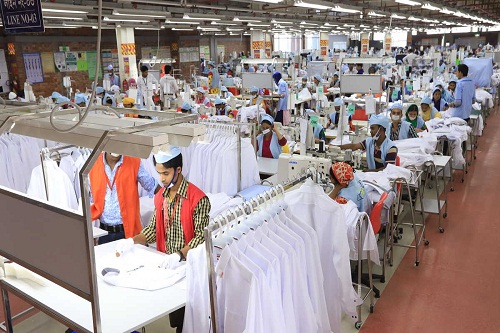 value addition should be allowed for new manmade fabric-based items except for five major ones, which account for about 70 per cent of Bangladesh apparel export earnings.
As Mohammad Abdur Razzaque, Chairman, Research and Policy Integration for Development (RAPID) Society points out, though prices of raw materials are increasing, the prices of final products are not increasing, making it difficult to maintain the value addition ratio. However, the industry should still emphasize on value addition to negotiate better prices with brands and buyers, he adds. Buyers are offering prices calculating the fiscal incentives. However, exporters are not getting these benefits,
Lower value addition may cause loss of EBA facility
If apparel makers insist on only a 20 per cent value addition, they will not be able to meet the new GSP double transformation condition for exports to European countries. This may cause Bangladesh to lose the opportunity to export to the EU market under the Everything But Arms (EBA) facility, while exports to India under South Asian Free Trade Area (Safta) and even to China will require 40 per cent value addition.
Faruque Hassan, President, BGMEA, has urged the government to relax the value addition condition for apparel exporters for two years. He hopes, Bangladesh will be able to add more value to woven products before the LDC graduation as a number of companies are investing in high-value yarns and accessories. Moreover, the government also provides policy support for this. He recommends, a 10 per cent cash incentive on MMF-based new products to encourage local value addition in high-value products.
According to the Bangladesh Bank Quarterly Review on RMG, the apparel sector's value addition reached 64.98 per cent during the first quarter (July-September) of the last fiscal year. It had remained static between 60 and 64 per cent for almost a decade before that, as per data from TBS.
Exporters recommends 25% wastage rate for knitwear
In January this year, the BGMEA and the Bangladesh Knitwear Manufacturers and Exporters Association (BKMEA) had sent a proposal to the commerce ministry to increase the maximum wastage rate to 40 per cent.
However, a committee formed by the commerce ministry to verify the actual wastage rates in garment factories, recommended setting the maximum wastage rate by averaging the amount of wastage of similar factories. It proposed a 25 per cent wastage rate for basic knitwear including T-shirts, polo shirts, trousers, shorts, skirts, pajamas; 28 per cent for specialized items like rompers, tank tops, dresses, gowns, hoodies, and lingerie items; and 3 per cent for items like jumpers, pullovers, cardigans, vests, and socks.
US imposes duty on polyester textured yarn imports
The US will impose an anti-dumping duty on imports of polyester textured yarn (PTY) from Indonesia, Malaysia, Thailand and Vietnam. The justification is that these are being sold in the United States at less than fair value. The aim is to give new hope for domestic producers and their workers as fair pricing will be restored to the market.
PTY is a synthetic multifilament yarn that is manufactured from polyester (polyethylene terephthalate) and produced through a texturing process, which imparts special properties to the filaments of the yarn, including stretch, bulk, strength, moisture absorption, insulation, and the appearance of a natural fiber.
In October 2020, two major US synthetic yarn producers—Unifi Manufacturing and Nan Ya Plastics Corporation—filed petitions with the commerce department and the USITC alleging that dumped imports of polyester textured yarn from the above four countries were causing material injury to the domestic industry. The department initiated the investigations in November 2020, and the USITC preliminarily determined in December 2020 that imports from the four countries were harming the domestic industry.
The imposition of fairly large import duties makes filament yarn more expensive and becomes a burden for importers in the US. So to continue to boost export market growth, the textile and textile products industry in Indonesia is now focusing on expansion to develop products in accordance with the wishes of buyers, which are currently more focused on green and functional products.
Turkey’s Q3 garment exports up 25 per cent
Turkey’s garment exports increased 25 per cent year over year in the first three quarters of 2021, reveals Turkish Statistical Institute figures. Exports of knitted and crocheted clothes and accessories climbed 35 per cent; exports of non-knitted apparel and accessories climbed 14.7 per cent; Carpets, mats, matting, and tapestries exports increased 34 per cent; exports of used clothes, other textile goods, and rags increased 19.7 per cent. Meanwhile, Turkey’s cotton, cotton yarn, and cotton textile imports surged 34.2 per cent.
Turkey is also facing a high rate of inflation. The nearly 20 per cent annual inflation rate is driven by food, services, housing and transportation prices, leaving consumers with little money for their clothing needs. So people are purchasing only the minimum necessary textiles for their daily needs. The decrease in domestic demand will impact manufacturing as textile-apparel companies will cut down on their production. Accompanying high inflation is the weakening currency. Turkey’s currency lira has lost around 25 per cent of its value since the beginning of 2021. Meanwhile, in addition to the high cost of fuel and other imports, the government this month raised the price of natural gas supplied to the industry by 48 per cent, as a global price spike drove up import bills.
Fashion industry to be 80% circular with increased investments in technologies: Study
The fashion industry can become 80 per cent circular by 2030 with increased investment in existing recycling technologies and infrastructures, says Global Fashion Agenda. Pre-competitive collaborations can play a critical role in accelerating the industry’s transition to sustainable and inclusive growth. Major recycling technologies deliver better environmental outcomes. Plus, all technologies have the potential to be more cost effective than using corresponding virgin materials if they are scaled. Current technologies have the potential to deliver 75 per cent textile-to-textile recycling into the fashion system, and a further five per cent recycled feedstock from other industries.
Through convening influential players throughout the fashion value cycle, developing traceability of waste streams and aligning on mutual incentives, pre-competitive collaborations play a unique role in assuring supply, demand and attracting commercial investment where it is needed at pace. The necessary recycling technologies exist, deliver huge improvements in environmental impact and economics work at scale. The challenge is providing conditions for scaling. With sufficient investment, supportive policies, and by enabling pre-competitive collaborations, it is possible to create a profitable circular system and accelerate fashion’s journey to net zero. The Circular Fashion Partnership in Bangladesh is a cross-sectoral project to scale post-industrial recycling and capture textile value domestically in Bangladesh.