FW
Bangladesh sees a drop in EU garment orders
Export orders from Europe for garments made in Bangladesh declined by 40 per cent to 45 per cent in June 2020 compared to the previous year. Over half of Bangladesh’s exportable items are sent to the European Union. Europe is Bangladesh’s main export market for readymade garments.
The resurgence of Coronavirus infections in Europe will have a significant impact on Bangladesh’s readymade garment business. The ongoing pandemic spread in major EU markets has Bangladesh worried. After weathering the pandemic last year, the readymade garment sector had begun to receive orders and was back on track. Workers lost earnings from March to May 2020, because to a lack of orders to keep firms afloat. The income of 82 per cent of workers decreased. Workers’ mental health and overall emotional well-being were also harmed, as they worried about the epidemic as well as their financial prospects — paying for their families, feeding them, and caring for their children. The entire workforce fell victim to Covid during the lockdown periods.
Europe has once again become the epicenter of the coronavirus pandemic, with many European Union nations recording the highest Covid cases in recent days. Bangladesh is concerned about the current spread of coronavirus in major EU markets. The readymade garment sector had started getting orders and had been on track after overcoming the pandemic last year.
Global fashion industry to recover in 2022, surpass 2019 levels: BoF-McKinsey Report
The latest ‘State of Fashion 2022’ report by The Business of Fashion and McKinsey & & Company released yesterday states, global fashion industry is set recover in 2022, with fashion sales surpassing 2019 levels by 3-8 per cent. What’s more, recovery will strongest across China and the US, with Europe lagging behind. The other key highlights of the latest report are : Supply chain pressures will be the main challenge for industry, posing a risk to the pace of recovery with 67 per cent businesses expecting to increase prices next year; Sustainability will remain high fashion’s agenda, with 60 per cent businesses ramping up investment in closed-loop recycling solutions to reduce environmental impact; 32 per cent industry executives identified digital as the biggest opportunity for growth, followed by sustainability (12 per cent).
Key Takeaways
The report done is based on analysis of exclusive interviews with top industry executives and a survey of more than 220 international fashion executives and experts, providing an authoritative view on what lies ahead for the industry.
The report identifies 10 themes:
• Uneven Recovery: Recovery from the pandemic will be uneven across different geographies; those with strong healthcare and economic resilience will outperform their peers. Fashion businesses with international footprints will need to assess local conditions regularly to mitigate risk. It states approximately 4 out of every 5 vaccines distributed globally by September 2021 were in high- and upper-middle income countries.
• Logistics Gridlock: Pressure on global supply chains, rising costs and logistical logjams threaten the industry’s ability to deliver products to customers. Businesses must rethink their sourcing strategies and look to implement new supply chain management to cope with customer demand in the year ahead. Almost 49 per cent of fashion executives signalled supply chain disruptions as the number one theme to impact their business in 2022.
• Domestic Luxuries: International tourism will not fully recover until at least 2023. To compensate for the loss of international shoppers, luxury brands should engage further with domestic consumers to capture a bigger share of the domestic market. 51 per cent of 2019 air traffic flows between Asia and Europe are expected to recover in 2022.
• Wardrobe Reboot: Loungewear and sportswear enjoyed a boom during the pandemic, but as the world begins to open up once again as social restrictions ease, consumers will reallocate wallet share to other categories as they adjust to new lifestyles. 37 per cent of fashion executives expect occasion wear to be a top-three category for year-on-year sales growth.
• Metaverse Mindset: Fashion brands looking to engage with high-value young consumers should explore the potential of non-fungible tokens (NFTs), gaming and virtual fashion as new routes to community building and commerce. 81 per cent of Gen Z played video games in the past six months, averaging 7.3 hours per week.
• Social Shopping: Fashion players are using social commerce to create seamless shopping experiences from discovery to purchase. Though opportunities vary by market, companies should embrace in-app checkouts and test live streaming, augmented reality and other associated technologies. 37 per cent of fashion executives cited social commerce as one of the top three themes that will impact their business in 2022.
• Circular Textiles: The scaling of closed-loop recycling could help reduce fashion’s environmental impact at the material level. As these technologies mature, businesses will need to embed them into product development and adopt large-scale collection and sorting processes. 60 per cent of fashion executives have already invested or plan to invest in closed-loop recycling next year.
• Product Passports: Brands are increasingly using product passports to share information with consumers and partners to boost transparency, authentication and sustainability. However, businesses must coalesce around common standards and engage with pilot projects at scale. Approximately 2 out of 5 fashion executives plan to adopt product passports in 2022 or have already done so.
• Cyber Resilience: Businesses face more threats of cyber attacks and risks of improper data handling than ever before. Fashion players must urgently improve their defences and invest to make digital security a strategic imperative. 53 per cent fashion executives say it is likely or very likely their company will experience a significant cyber attack in 2022.
• Talent Crunch: Emerging from the pandemic, employees from upper management to the retail front line will be reconsidering their priorities. In order to attract and retain the best talent, companies must create flexible, diverse and fully digitised workplaces. 45 per cent of fashion employees cited “sense of purpose” as one of the most important factors in choosing to remain at their employer.
RSWM invests in denim and yarns
RSWM is investing close to Rs 350 crores across four plants, covering its prime verticals of denim and yarns. Around Rs 300 crores of the proposed investments are being made this fiscal and 80 per cent of it will be financed through bank loans. The remaining is via internal accrual. The capex will be fully operational by fiscal year 2023. The investments are expected to have a positive impact on the topline. Order books are to the tune of Rs 250 crores a month, going by the current run rates, for the months beginning October to January. This means RSWM will be using up its full capacity for these months.
RSWM is one of India’s largest manufacturers and exporters of synthetic and blended spun yarn. RSWM’s capacity at present is 300 tons a month. Plans are afoot to increase it to 1000 tons over the next 18 to 24 months keeping in mind the rising demand for athleisure offerings. The segment has seen a nearly 30 per cent growth with branded apparel players expanding their portfolio in categories like track pants, active wear and so on. Nearly 30 per cent of RSWM’s total sales volume comes from exports across 78-odd nations.
Promising season for cotton farmers
The coming season looks like a promising one for cotton farmers, with high prices expected to continue through the 2021-22 season, says the International Cotton Advisory Committee. But prices are a double-edged sword. Higher income for farmers is a good thing and it could drive them to increase the global acreage under cotton but those costs are usually passed along the supply chain, which makes cotton less competitive against other fibers. Prices are expected to be volatile through the remainder of the 2021-22 season but it is unlikely they will climb much higher than the current point. While mill use is expected to remain robust throughout 2021-22, global stocks are believed to be sufficient to meet the demand. At the end of the 2020-21 season, global stocks are estimated at 20.35 million tons.
Formed in 1939, the ICAC is an association of cotton producing, consuming and trading countries. It acts as a catalyst for change by helping member countries maintain a healthy world cotton economy, provides transparency to the world cotton market by serving as a clearinghouse for technical information on cotton production and serves as a forum for discussing cotton issues of international significance. In addition, members can take advantage of the ICAC’s global network of cotton researchers.
Denim exports from Bangladesh to the US on the rise
From January 2021 to September 2021 denim exports from Bangladesh to the US rose 31.40 per cent, making Bangladesh the top denim supplier to the US reveal OTEXA figures. But in the same period prices of Bangladesh-made denim fell 2.46 per cent. While unit prices of denim made in Mexico grew by 1.25 per cent.
China’s dominance as one of the top denim sourcing countries has diminished significantly. Despite the fact that the country offers one of the bottommost unit prices among the top five denim exporting countries, all brands are lowering their reliance on Chinese cotton. And other prominent denim exporters are grabbing this opportunity. An array of suppliers from Vietnam, Pakistan and Cambodia to Egypt, Jordan and Nicaragua, have consistently posted gains. US companies look elsewhere to save costs and reduce risks. They are accelerating the efficient and effective diversification of their manufacturing base.
Meanwhile consumers in the US are more into basic denim rather than high end denim. The US market is embracing denim clothing well in 2021 after falling in 2020 and 2019 on a yearly basis. And prices of denim have drastically gone down. This shows that consumer buying trends have shifted from high end denim to basic jeans and the US is looking for low-cost sourcing countries.
Ghana introduces VAT exemption on certain textile products
Ghana is making efforts to recover after the Covid pandemic. This includes hiring an additional 38,000 nurses, waiving employee taxes and providing free water and electricity to millions of households. Several policies have been launched in the field of taxation. On main impetus is exemption of VAT on certain textile products. This is expected to increase the profits of business actors and expand their production.
VAT tax was bleeding textile companies. The tax component meant the cost was passed on to the depots, wholesalers, retailers and ultimately customers, who had to pay higher prices. Second, reviewing the reduction in import duty rates on all goods. The goal is that the policy of reducing import duty tariffs that are currently in effect can be more efficient and on target. Third, the reduction of the VAT rate on gold sales from unprocessed miners from three per cent to 1.5 per cent. Fourth, the creation of a property tax administration platform in 2022 with the hope of increasing tax revenue and tax administration accountability. Fifth, the imposition of electronic user fees on all electronic transactions, such as bank transfers and digital payments. The levy rate is 1.75 per cent. These various policies are expected to accelerate the recovery of the national economy.
Armani stops using angora wool
The Italian luxury company has added angora wool to the list of excluded materials under its fur-free policy and joins a string of brands banning the extremely soft wool removed from live rabbits, under pressure from animal rights organisations and more environmentally conscious shoppers. Armani’s move marks another step towards sustainability after the group banned animal fur in 2016 and signed in 2019 the Fashion Pact with other major industry players to address climate change.
Angora rabbit fur is being used for sweaters, hats, gloves, and more. Angora rabbits have long, soft fur. Most angora comes from rabbits on Chinese factory farms. The rabbits writhe in agony as workers tie them down and rip out their fur.Brands like Calvin Klein, H&M, Marks & Spencer, Tommy Hilfiger, and Topshop have dropped angora wool from their clothing lines. So far more than 300 major retailers have banned angora.
Then there is mohair. Most of the world’s mohair comes from farms in South Africa. Shearers throw angora goats, cut off swaths of their skin, and cut conscious animals’ throats. Workers pick up goats by the tails, likely breaking them. One farmer dumped rams into tanks of cleaning solution and shoved their heads into the liquid, which would poison them if they swallowed it.
Adidas completes second share buyback
Adidas has completed its second share buyback program this year. Between October 18, 2021, and November 25, 2021, the company bought back 1,619,683 shares. Taking into consideration the first share buyback conducted during the third quarter, Adidas bought back 3,471,205 shares.
Strong cash returns are an essential part of the company’s new strategy. Driven by the significant topline growth and strong bottomline expansion, Adidas will generate substantial cumulative free cash flow until 2025. The majority of this will be distributed to shareholders through regular dividend payouts in a range of between 30 per cent and 50 per cent of net income from continuing operations, complemented with share buybacks.
Dividends as well as share buybacks are key components of this strategy aimed at resulting in significant value creation. Against this background, Adidas plans to continue regular share buyback activities early next year. This will be complemented by returning the majority of the cash proceeds from the Reebok divestiture to its shareholders after closing of the transaction, which is expected to occur during the first quarter of 2022. As announced in October 2021, Adidas intends to cancel the majority of the shares repurchased as part of its buyback activities. For the third quarter Adidas’ inventories decreased 22 per cent.
Adaptive clothing market growing at four per cent
The global adaptive clothing market is witnessing a CAGR of 4.1 per cent. Adaptive clothing is clothing specially designed for people with varying degrees of impairment, which includes acquired disabilities, birth defects, congenital developmental disabilities, and other physical disabilities. Clothing specifically designed to meet the needs of these groups can provide a sense of empowerment and improve the quality of life for many individuals. There are options available that offer these individuals greater choices in terms of style, fit, and functionality, allowing them to purchase items that look great and function well.
Leggings, tights, socks, and pants are all types of adaptive clothing that are suitable for those who may be struggling to walk, talk or perform ordinary tasks on a daily basis. Leggings and tights are among the easiest types of wearable garments to break in, thanks to the way they hug the body and are designed to mold to the individual wearer’s shape and size. Adaptive apparel such as these particular types of clothing are made using high quality, durable materials that resist ripping, tearing, and fading.
Asia Pacific is expected to witness high growth, owing to the significant amount of population with various disabilities, particularly in economies such as India.
Hybrid edition of Gartex Texprocess opens in New Delhi on December 3
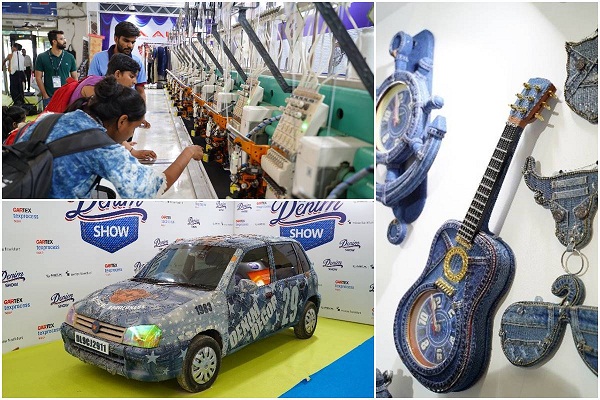
India’s leading B2B exhibition for garment and textile manufacturing Gartex Texprocess India 2021 opens on December 3 to 5, 2021in its first hybrid edition in the post-pandemic market. The event is a crucial business and networking opportunity for garment and textile manufacturers. The three day event to be held at Pragati Maidan, New Delhi will share space with Screen Print India.
Best technologies on display
After facing the challenges posed by the pandemic, the garment and textile manufacturing industry is looking to bounce back with growing industry demands. With an aim to support local businesses in the road to recovery, Gartex Texprocess India, the leading B2B platform on garment and textile machinery, fabrics, accessories, and allied industries is being organised by Messe Frankfurt India & MEX Exhibitions. Designed as a dedicated platform for buyers and sellers, Gartex Texprocess India will create a strong business environment where businesses can witness industry’s latest innovations, engage in hardcore networking and explore lucrative opportunities for their respective businesses.
The fair incorporates live product demonstrations of latest innovative machines and solutions offered by the sellers’ network with leading players from the industry. Over 100 brands will be on showcasing including: AURA, Baba Machines, ColorJet India, Ramsons Garment Finishing Equipments, Jaysynth Dyestuff (India) Limited, and Morgan Tecnica, among others.
There will be focused product zones: Digitex, India Laundry, Fabrics & Trims, Garmenting & Apparel Machinery, and Embroidery Solutions co-located with the Denim Show and Screen Print India. These incorporated shows and focused segments add more weight to the wide areas encompassing the entire gamut of garment and textile manufacturing solutions for the industry.
A major center of attraction at Gartex Texprocess India is the Denim Show that features top trends and advancements in denim. Uniting businesses for the first time after the pandemic, the Denim Show aims to provide a strong professional platform for the denim fraternity to witness development of original products and witness an innovative range of denim solutions, fabrics, finishes, and technology showcased by industry’s leading manufacturers such as: Creora, Arvind, Raymond UCO Denim, Reliance Industries, Ginni International, Jindal Worldwide among others.
The Digital Symposium at Gartex Texprocess will promote exchange of ideas, and showcase latest trends and innovations. Experts will share insights on valuable industry related topics like: Finding a Solution to Sustainable Garment Manufacturing; Carbon Neutrality in Denim Industry etc.
Screen Print India an added attraction
Held in co-location with Gartex Texprocess India, India’s leading B2B trade fair for the screen, textile, sublimation and digital printing technologies, Screen Print India is also set make its return as an hybrid edition. Showcasing latest trends, it will showcase top innovations and developments in screen and textile printing from brands such as Green Printing Solutions, J N Arora & Co, Konica Minolta Business Solutions, Skyscreen International and Zydex Industries among others.
Overall, the new edition of Gartex Texprocess India will provide a strong impetus to localisation by reconnecting businesses and supporting recovery and growth of the garment and textile industry.