FW
Trade show MIM to define sustainability in Moroccan context
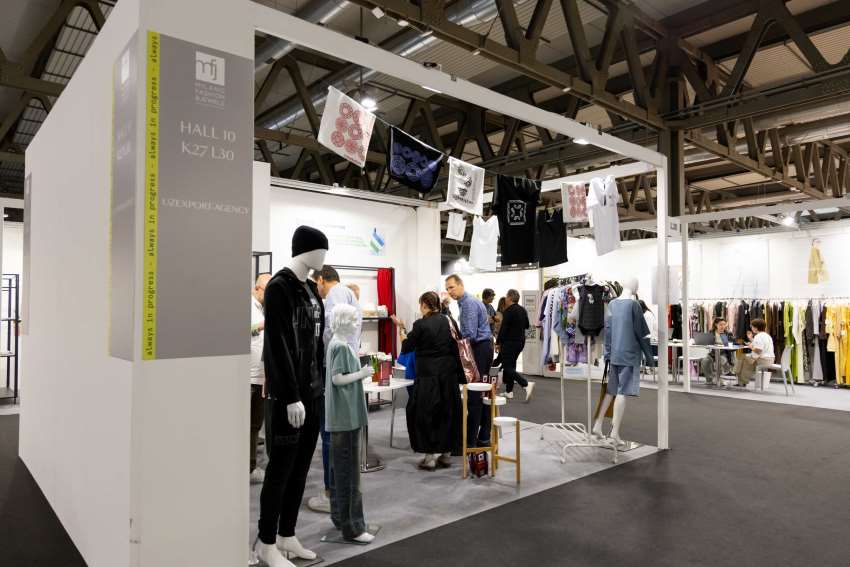
Through this edition of the Maroc In Mode (MIM) trade show, organizer AMITH aims to embrace environmental issues by defining sustainability in the Moroccan context through a continuous commitment International trade show of the textile and garment industry. The trade show will be held on March 30 and 31, 2022 at the the El Jadida International Exhibition Center, near Casablanca, Morocco.
Organized by the Moroccan Association of Textile and Garment Industries (Association Marocaine des Industries du textile et de l’Habillement – AMITH), the trade show is a platform for professional meetings offering a diverse and inclusive experience.
The upcoming edition will be identified with an umbrella theme and the expression - “Dayem”, a word that in Arabic language means “sustainable”, conveying how the approach to environmental, social and economic sustainability is becoming a key aspect for the industry.
For this edition, the show will also focus on a wider range of themes and will also include, along with sustainability, innovation. It will also expand its offer and will present the different categories of players within the textile value chain and will present the fabrics, manufacturing, home textiles, accessories innovation, machinery and services categories.
Winners of Woolmark Performance Challenge announced
The Woolmark Company has announced the prize winners for the Woolmark Performance Challenge 2021/22. As per a Fashion Network report, the company selected 12 most promising ideas as finalists from over 400 global entries before judges selected the winners for each category. Claimed to be the “preeminent ideas platform for the sports and performance market”, this year, the Woolmark Performance Challenge partnered with two brands for the first time: Swiss running specialist On, and Italian skiwear firm Salewa.
Caroline Schinle from Albstadt-Sigmaringen University was awarded an internship with On while Harleen Kaur from the Pearl Academy bagged a new Research Opportunity award. Kaur’s submission identified a gap in the market to address the needs of pregnant and post-partum runners, creating activewear that works with, rather than against, the changing body. The idea supports both the mother and foetus in the correct areas, providing coolness when the body temperature rises, and monitoring the baby’s health using a foetal heart rate monitor.
Meanwhile, Dan Winegar from the University of Oregon was selected by Salewa for an internship for his idea that automatically adjusts insulation thickness to maintain comfort during and after exercise. The resultant 3D flexible fabrics can change from insulating to cooling modes depending on the levels of skier activity.
Additionally, IED Milano student Francesco Matera was the €10,000 Woolmark Research Bursary recipient, envisioning a garment that acts like a second skin, adapting to the body in motion. His design uses strategically placed zones of high compression using elastane in seamless knitted garments to support and manipulate the wearer’s muscles and limbs during exercise.
Sciessent bags GOTS certification for NOBO anti-odor technology
Global leader in antimicrobial, anti-odor, anti-pilling, and water repellent technologies, Sciessenthas bagged GOTS Certification for its NOBO anti-odor technology.
A worldwide leading textile processing standard for organic fibres, including ecological and social criteria, GOTSis backed by independent certification of the entire textile supply chain.
As per a Knitting Industry report, the GOTS certificateapproves NOBO’s chemistry formulation while its production processes as meeting the required ecological and social global sustainability criteria. It also acknowledges NOBO as an ecologically and socially responsible product with no adverse effects to the ecosystem or biodiversity throughout its lifecycle.
Specifically formulated to reduce odor in natural and synthetic fabrics, NOBO adsorbs compounds responsible for body odor without the use of an antimicrobial.
In addition to being GOTS certified, NOBO is also bluesign approved and listed on the Zero Discharge of Hazardous Chemicals (ZDHC) Foundation ZDHC Gateway, complying with ZDHC Level 3 requirement.
Harbour 9 unveils new women’s apparel range
Homegrown weekend-wear brand Harbour 9 recently unveiled its thoughtfully designed range of women's apparel line. Ideal all the ladies who love to present their tastefully styled, gracefully groomed, naturally charming, and confident personality, the range ensures a perfect balance between fun and classics
Its clothes are manufactured completely in India, right from sourcing the materials to the final product. The new range meets the contemporary lifestyle trend of women. The products are priced consciously. Harbour 9 also believes in reducing the negative impact on the environment through their eco-friendly practices.
Manoj Jain, Director, Harbour 9 says, the new exclusive line of women’s apparel is. custom-made to fit across sizes, The range is in line with the contemporary lifestyle taste of modern women.
Garment Corporation 10 ramps up production capacity
Garment Corporation 10 is ramping up its production capacity to meet buyers’ demands, says Than Duc Viet, General Director. As per a Vietnam.net report, the company has been flexible in implementing its business strategies, so the orders it has received are enough for the firm to implement until the end of this June. Despite the Covid-19 pandemic, the prospect of the garment market remains bright.
As local textile-garment firms have gained experience in responding to Covid, they now can facilitate production and adapt to the COVID situation concurrently.
Le Tien Truong, Board Chairman, Vietnam National Textile and Garment Group (Vinatex), says, the group is set to o achieve its growth rate of over 8 per cent this year. To obtain sustainable development in 2022, Vinatex aims to focus on speeding up digital transformation and continue to develop its supply capacity for the hosiery sector.
In 2022, VITAS forecast that local textile-garment firms will continue to face a host of challenges, including logistics costs rising threefold against the average figure recorded over the past five years; disadvantages in terms of exchange rates that left Vietnamese textile-garment items less competitive than those of its rivals; and labor imbalance.
Further, these firms in the field have to face other obstacles such as the competition from major rivals including China, India, Bangladesh and the market share of the sector.
Data from the Ministry of Industry and Trade showed that the textile-garment sector exported US$39 billion worth of goods in 2021, rising 11.2 per cent year-on-year, but its market share made no progress.
Foot Locker appoints Samantha Lomov as first President-Global Brands
New York-based specialty athletic retailer Foot Locker has appointed Samantha Lomow as its first president, global brands.
In the new role, Lomov will oversee Foot Locker’s global brand portfolio and operating divisions across North America, EMEA, and APAC. As per Fashion Network, she will equally work closely as part of the executive team to advance the company’s long-term strategies for continued innovation, growth, and profitability.
Lomow officially took on the position on Friday. She will report directly to Frank Bracken, executive vice president and chief operating officer.
She joins the company from Hasbro, Inc., where she served as president, branded entertainment, bringing over 25 years of global brand innovation, strategy, and business transformation experience across consumer products, entertainment, and licensing.
She also sits on the board of managers of Claire’s Holdings LLC, serving as chair of the nomination, governance and ESG committee and as a member of the audit committee.
Coloreel sells first US multi-head units to Hirsch Solutions
With its unique technology for digital dyeing of textile thread on-demand for more sustainable and creative embroideries, Coloreel has sold its first multi-head in the United States to Hirsch Solutions, the world’s largest distributor of embroidery machines. The six units will be placed over a Tajima TMEZ 6 head embroidery machine for one of Hirsch’s innovative customers based in California.
The deal is announced shortly after the very successful Impressions Expo at Long Beach, Los Angeles US, where Coloreel and Hirsch demonstrated live the unique capabilities provided by Coloreel’s products and technology to several hundred interested visitors.
Sven Öquist, VP Sales, Coloreel Group AB, says, Coloreel’s partnership with Hirsch provides Coloreel with the ultimate reach into the US embroidery market and this order of a six multi-head unit is another great step in its growth journey in US. The installation will enable the brand’s customer to meet the fast-rising demand for its more environmentally friendly and creative embroideries.
Chic Spring Shanghai relocates to Nanjing
Asia's largest fashion fair, Chic Spring Shanghai, will be relocated to Nanjing from May 20-22, 2022.
The event will represent various international joint participations. The province of Jiangsu with its capital Nanjing includes numerous fashion clusters such as the Changshu Garment Industrial Cluster for leather and downwear, menswear, womenswear, the Suzhou Garment Industrial Cluster or the Xinqiao Knitwear industrial cluster in Jiangyin. Nanjing itself is known for its womenswear industry.
At the state of the art Nanjing International Expo Center, Chic will offer in halls four, five and six a concentrated overview of the latest trend developments in fashion to the trade visitors. Chic Springas a fashion and lifestyle fair shows the areas of womenswear, menswear, kidswear, denim, shoes and bags, accessories, designers and streetwear in clearly arranged segments.
Chicis organized by Beijing Fashion Expo Co. and China World Exhibitions and sponsored by the China National Garment Association, the China World Trade Center and the Subcouncil of Textile Industry (CCPIT)
Barcelona to scale the new B2B app
Jaimin Gupta, Managing Director and Promoter, Barcelona- India’s leading men’s wear fashion brand, which launched the Barcelona B2B app in January’2022, now aims to scale the App.
Barcelona for business, a B2B app, offersa wide range of fashion apparels in wholesale for garment retailers allowing them to purchase wholesale stock in bulk for their garment shops. The App is available in Android as well iOS.
Jaimin Gupta, a business development veteran with immense exposure in the textile and retail sector, leads Barcelona’s nationwide expansion.
With more than 6 years of experience in all aspects of textile industry, Gupta has been spearheading Stitched Textiles by leading a core team of more than 300 employees, managing country wide 90 plus retail stores and is also expanding empanelling of nationwide retailers on the Barcelona B2B app with utmost zeal.
Being insightful with his vision he has created a roadmap to empanel 10 lac garment shops of India to the Barcelona B2B app in the coming time.
Archroma launches tow new acid dyes
Archroma, a global leader in specialty chemicals towards sustainable solutions haa added two new metal-free* and halogen-free* acid dyes in its Nylosan® S range.
Dark shades represent approximately 80 per cent of the outdoor and sportswear textile market, which is also under pressure to offer more sustainable articles. In this context, the new Nylosan® Navy S-3R and Black S-3N, especially developed by Archroma for polyamides and blends, meet four long-standing market demands for blacks and navies.
First, the Nylosan® S range offers metal-free* alternatives to dyestuff generally used to dye polyamide and nylon and which usually contain metals. The new Nylosan® Navy S-3R and Black S-3N are taking the industry standard one step further by offering a halogen-free* option to those manufacturers, brands and retailers who are looking to offer the safest grade available.
Second, the Nylosan® S range now comprises a wide gamut of colors, with these new dyes targeting the color matching and fastness specifications of the iconic blacks and navies of major sportswear brands. In order to support this color matching process, Archroma makes available the colorimetric dye primaries for the mills in order to (re)match the color standards.
Third, the new navy and black dyes display the same color constancy as the dyes used in many leading color standards, which means the navy and black colors created with Nylosan® S range will be non-metameric to the color standard under multiple light sources, whether artificial or natural, indoor or outdoor.
And fourth, the introduction of the new Nylosan® Black S-3N makes dyeing a metal-free* black on polyamide finally possible – something that was not available before.