FW
Archroma introduces two new dyes
Archroma is introducing two new metal and halogen-free* acid dyes, Navy S-3R and Black S-3N to its Nylosan S range. Especially developed for nylons and blends, these dyes meet long-standing market demands. As per an Innovation in Textiles report, the Nylosan S range offers alternatives to dyes generally used for nylon dyeing and contains metals. Both the new dyes offer a halogen-free option to traditional dyes.
The full Nylosan S range offers a wide range of colors, with the new dyes targeting the color matching and fastness specifications of the blacks and navies of major sportswear brands. These navy and black dyes display the same color constancy as the dyes used in many leading color standards. Both of them have high fastness and buildup, and a wide shading gamut for industry-leading metal-free acid dyes. They are REACH registered and bluesign approved.
Pull & Bear ventures into the metaverse
Pull & Bear has become Inditex’s second brand after Zara to venture into metaverse. Pull & Bear has launched a virtual reality project for the metaverse that features everything froma virtual showroom to a fitting room, and even a surfing game that allows users to interact with the retail brand. The brand plans to make the immersive experience available to users via the ‘Meta Quest 2’ virtual reality glasses. It will also make a portion of this new universe available through a web adaptation to enable users to access it.
To carry out this project, Pull & Bear launched six digital looks plucked from collections that are more geared towards generation Z. Developed in partnership with La Frontera VR and Meta Creative Shop, the digital project aims to create a universe where garments will be compatible with the Ready Player Me platform's apps and games, such as VRChat, Sommium Space, LIV and Animaze.
Founded in 1991, Pull & Bear focuses on the teen apparel market, alongside other Inditex-owned retailers such as Berksha and Stradivarius. It operates through its own e-commerce site and a total of 706 physical stores worldwide.
HD Wool to expand customer base in partnership with Rudholm Group
Manufacturer of HD® Wool Apparel Insulation, HD® Wool has partnered with Rudholm Group a leading global provider of sustainable garment accessories, sustainable packaging, state-of-the-art digital solutions, and logistical services for the textile industry. As per a Textile World report, the partnership aims to expand HD Wool’s growing customer base in Europe and Scandanavia.
Established in 1951, Rudholm has 22 global offices and nine manufacturing hubs worldwide providing sustainable product solutions to leading brands around the world. The company is the leading European distributor of garment accessories to outdoor and lifestyle brands and retailers. Through its collaboration with HD Wool Apparel Insulation, aims to offer verifiable, sustainable solution to customers looking for renewable, natural components to support their corporate sustainability objectives.
The partnership will enable the company to produce greener products with the least impact on the environment, says Mikael Dahlin, CEO.
India’s textile ministry sees huge scope for MMF segment globally
There is a huge scope for the manmade fiber segment both in India and globally, opines Darshana Vikram Jardosh, Union Minister of State for Textiles. Addressing members of the Synthetic and Rayon Textiles Export Promotion Council (SRTEPC) at its Export Award Function, Jardosh said, the government has approved Production Linked Incentive (PLI) Scheme for Textiles to boost the MMF sector in India. With an outlay of Rs 10,683 crore, the scheme aims to promote production of MMF apparel, fabrics and products of technical textiles in the country.
The government has also approved setting up of Seven Greenfield and Brownfield Pradhan Mantri Mega Integrated Textile Region and Apparel Parks with an outlay of Rs. 4,445 crore for seven years upto 2027-28. These parks will make the Indian textile industry globally competitive, attract large investment and boost employment generation.
The scheme of Rebate of State and central Taxes and Levies (RoSCTL) effective from March 2019 has been extended till March 31, 2024 for export of apparels, garments and madeups in order to make the technical textiles industry on par with the best in the world. In addition, the government is implementing various schemes viz the Amended Technology Upgradation Fund Scheme (ATUFS), Schemes for the development of the Powerloom Sector(Power-Tex), Scheme for Integrated Textile Parks (SITP), SAMARTH- The Scheme for Capacity Building in Textile Sector, etc. for attracting investments and upgradation of skills in the Textiles sector, said Jardosh.
APLF to hold Fashion Access in Dubai this year
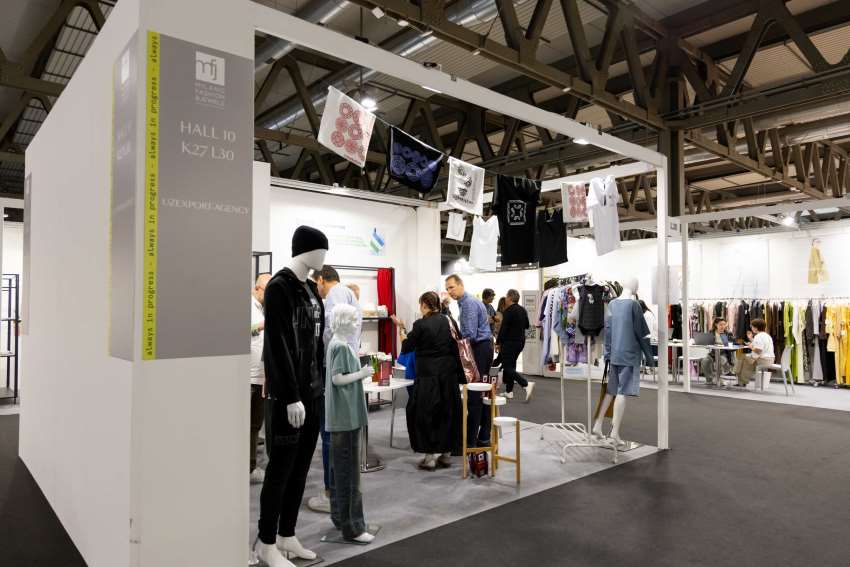
World’s leading leather trade show, APLF will host a Special Edition this year for the first time ever in Dubai. To be known as Fashion Access Dubai, the event will feature over 50 fashion-oriented exhibitors having the production capabilities and certificates to create fashion accessories ranging from bags, footwear, leather goods and leather garments. The event will attract top quality and innovative Original Equipment Manufacturers, Original Design Manufacturers suppliers as well as independent brands of bags, footwear, leathergoods, travelware and fashion. It will be held alongside the APLF Leather and Materials+ show, the leading international trade fair for innovations in leather, materials and components.
Strategically located in Hong Kong, APLF offers a professional business platform for suppliers to meet thousands of international buyers. Besides the well-established APLF Leather show, a separate show named Materials+ will be held to cater to the rising demand for innovative materials and components by the leathergoods and sportswear markets.
Bangladesh apparel exports to US, Europe grow despite the war

Russia-Ukraine war failed to impact Bangladesh’s apparel exports that grew 52 per cent year-on-year to $1.63 billion during the first two weeks of March. As per an RMG Bangladesh report, most of the growth was spurred by continued global demand and the country’s leveraging of anti-China sentiments in the US and European countries.
As per Bangladesh Garment Manufacturers and Exporters Association (BGMEA) the country’s apparel sector grew over 200 per cent year-on-year in a single day during the period even though Russian banks were cut off from SWIFT, the main international payment system, and shipping lines declined to carry any goods to the country
Future uncertain despite robust growth
Readymade garment exports grew 30 per cent to $27.49 billion from July to February’22 over the corresponding period in previous year, shows data published by the Export Promotion Bureau (EPB). Farque Hassan, President, BGMEA says, Bangladesh apparels exports recorded robust growth during the war. However, future cannot be predicted due to the current volatile situation. Apparel exports to the US surged during the period and are expected to continue growing.
Anti-China sentiments boost exports to EU, US
Fazlul Hoque, Former President, BKMEA and Managing Director, Plummy Fashions explains, increase in domestic demand too is a big reason for orders from the US market. US’ diversification from China is also encouraging them to place more orders with Bangladesh. Exporters to Russia are facing payment and shipment delays though buyers have assured them of receiving goods and making payments through alternative arrangements, he adds. Mostafiz Uddin, Managing Director, Denim Expert, Founder and CEO, Bangladesh Apparel Exchange points out rising freight costs triggered by the war, are also affecting apparel exports to Russia. However, Bangladesh’s exports to the US and EU are growing amid rising anti-China sentiments in these countries, notes Fazlee Shamim Ehsan, Vice President, BGMEA. Buyers in these regions trust Bangladesh entrepreneurs despite a significant rise raw material prices.
Exports to US surge 45 per cent
Office of Textiles and Apparel (OTEXA) stats indicate Bangladesh apparel exports to the US surged by over 45 per cent to $756 million in terms of value and volume in January 2022. In terms of volume, Bangladesh’s apparel exports to the US grew by 2.17 per cent to 282.38 million sq. mt. in January 2022 as it emerged as the single-largest export destination without any duty preference.
The US imported apparels worth $1.90 billion from China during the month while it received shipments worth $1.27 billion from Vietnam. US’ apparel imports from other major sourcing destinations, such as India, Pakistan and Cambodia, grew 53.40 per cent, 44.41 per cent and 42.12 per cent respectively. Overall, US’ apparel imports surged 36.60 per cent to $7.54 billion in January this year from $5.52 billion in the same month of 2021, shows OTEXA data.
Bespoke clothing market grows in India with personalized apparel production

There was a preference for bespoke or customized clothing in India long before ready-to-wear apparel made inroads in the domestic market. However, the entry and growth of international and domestic fashion brands in the 1990s gave rise to the ready-to-wear clothing culture in the country. Yet, there are many who prefer made-to-order clothes. They demand a better quality and fit in their garments over traditional ready to wear clothes that could often be ill-fitting. This is once again giving rise to the organized custom clothing sector in the country with a wave of new business erupting on high streets across metros.
Memorable shopping experiences for customers
Rather than just a product, these new companies focus on offering a memorable shopping experience. They offer a great alternative to ready-to-wear clothes through their adoption of a technology-focused lean methodology to test products, get user feedback and engage with influencers.
Rapid advancement of fashion technology is also enabling fashion firms to upgrade their supply chains, develop digital channels and increase revenues. The pandemic has compelled these companies to adopt change and technology innovations for more customer enhancement.
AR/VR and online marketplaces emerge
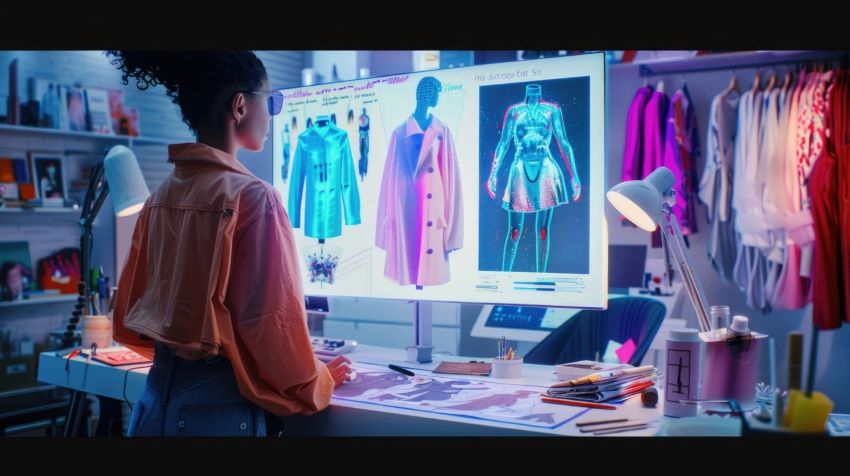
Many of these companies are exploring digitalization in the form of VR/AR configuration, 3D design and graphics, virtual fitting and trial rooms, digital Apparel, AI buyer prediction testing, etc. They are also employing sustainable materials. Others are developing a bespoke clothes online marketplace to help buyers select fabrics, accessories, and styles, as well as designers, tailors, and manufacturers.
Most of these platform use AI and data analytics to scan and analyze millions of data on different social media platforms. This helps fashion marketers estimate customer demand and trends accurately. With the help of data, companies can schedule their product releases. 3D software and apps enable customers try new clothes Buyers can also use the 3D design on the platform to take their photos and post them on the app. These photographs help buyers generate a 3D model to enable customers try on new clothes from their home. They can also use other apps including bespoke apparel design in 3D view, quick order tracking with ERP, confirming orders via WhatsApp using a 3D engine, and a virtual QR textile sample book, etc.
Another is uploading the photo of their preferred clothes from any source and identifying the most appropriate product from the brand’s website with the aid of visual AI, natural language processing, and tailored search engines.
Solutions for contact-free shopping
AR and VR systems can also serve customers for contact-free purchasing in retail stores. They can provide 3D e-commerce experience to help compare products from anywhere. Fashion startups across India are trying to build new technologies either internally or through collaborations. They aim to provide customers a lifetime shopping experience through technologies like 3D modeling and digital body measurement tools.
Some companies are expanding their collections to incorporate buyers’ traits and personal preferences and provide unrestricted customization.
New technologies to boost mass-customization
Despite the emergence of regional and internet players in India’s ready-to-wear apparel market, demand for customized clothing is set to grow. Introduction of new technologies is likely to encourage mass customization and personalized production. This will boost customized clothing trend which is set to growth at steady rate.
PEL’s turnover to cross Rs 414 crore by FY24
One of India's leading manufacturers and exporter of value-added specialty polyester filament yarn (SPFY) and embroidery and laces, Pioneer Embroideries (PEL)can cross turnover of Rs 414 crore by FY 24 from Rs 226 crores in FY22, according to a research report by Profit Mart Securities.
The report said that on the bottom line level, the company is expected to record a PAT of Rs 13 crore in FY22, which is expected to bounce back to Rs 16 crore in FY23 and Rs 21 crores in FY24. Thus on a conservative basis, PEL should record an EPS of Rs 5 for FY22.
PEL has its manufacturing facility for SPFY at Himachal Pradesh and runs three embroidery and laces manufacturing facilities at Gujarat, Dadra & Nagar Haveli and Tamil Nadu. It owns two strong brands, Silkollite in the SPFY segment and Hakoba , a heritage brand, in the retail segment for embroidered fabrics, garments, salwarkameezdupatta (SKDs) and sarees.
Remove customs duty on raw cotton, urges Chairman, TEXPROCIL
ManojPatodia, Chairman, The Cotton Textiles Export Promotion Council (TEXPROCIL), urged the government to remove Customs duty on raw cotton and include Made ups in the scheme for duty-free imports of specified items that have been introduced in the Union Budget 2022 for textile garments which will lead to significant growth in exports of Made-ups.
Patodia said, India’s exports of cotton textile products such as made-ups ((including home textiles), fabrics and yarns reached $13.95 billion from April 2021 to February 2022, surpassing the Government's target of $ 12.50 billion.
Exports of Cotton textiles have exceeded the target by 102 per ent in 11 months itself .The extension of the RoSCTL scheme for Made-ups and Garments for three years till March 31, 2024, and covering of the entire value chain of textile products under the RODTEP scheme, helped make the sector make competitive, he added,
Tirupur knitwear exports grow to $4 billion: TEA
Knitwear exports from Tirupur grew to $4 billion this financial year, says Raja Shanmugham, President, TirupurExporters Association. Exports from Tirupur contributed one per cent to the total exports worth $400 billion from the country, he adds.
Shanmugham also appreciated Prime Minister NarenderModi for granting rebate on State and Central taxes and levies (RoSCTL) for three years for the garment sector, remission of duties and taxes on export products (RoDTEP) for other industries, additional 10 per cent credit under emergency credit-line guarantee scheme (ECLGS), continuance of interest equalisation scheme with retrospective effect from October last year.