FW
India’s cotton yarn exports surge to highest level in January
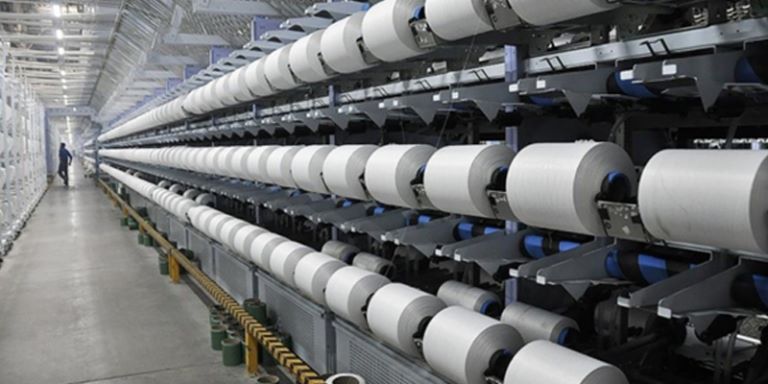
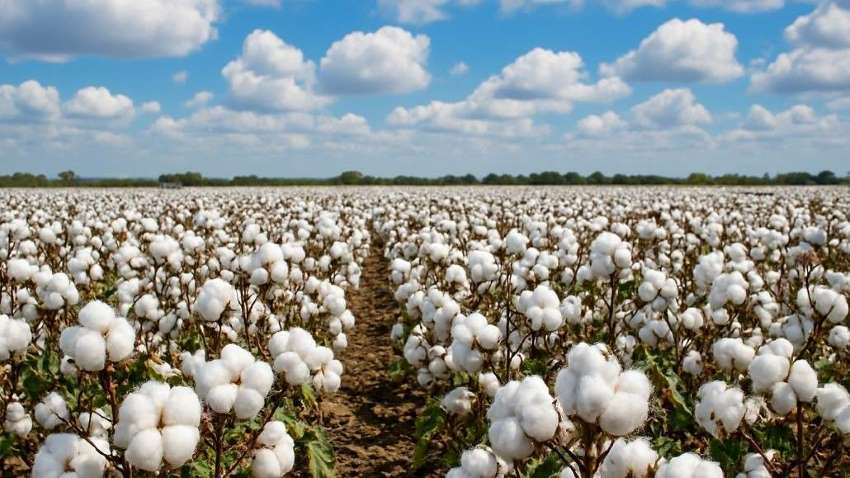
India’s cotton yarn exports surged 96.92 per cent Y-o-Y to $493.30 million in January 2022. Despite domestic outrages, India’s revenue from cotton yarn exports grew 79.64 per cent to d $4.69 billion in January 2022. Export revenues from Bangladesh and Turkey surged to $220.45 million and $32 million respectively.
Country wise cotton yarn exports to Bangladesh grew by a whopping 338.36 per cent in January ’22; exports to Turkey went up 1,503 per cent from $2 million a year ago. Exports to Portugal grew 324.86 per cent to $25.78 million during January ’22. Meanwhile India’s exports to China declined 59.24 per cent during the month to $23.65 million, as against $58 million in the same month of 2021.
H&M adds third party brands to Germany and Sweden websites
H&M has added third party brands to its e-commerce sites in Germany and Sweden on a trial basis. As per a Retail Wire report, the third-party brands added by H&M on these sites include &Other Stories, Arket, Monki and Weekday. H&M is also listing non-related brands like Crocs, Fila, Lee and Wrangler on these sites. It currently has 13 women’s and 15 men’s labels on the German and Swedish sites.
H&M offers online shopping in 54 countries, and nearly one-third of the company’s total sales are conducted through its sites. Last year, the company reported a 2.8 per cent increase in gross margin to 52.8 percent for last year from 50.0 in 2020. The new addition puts H&M in the company of other large retailers Amazon, Target, Walmart that are doing the same. That list will soon include Macy’s which plans to launch its own curated marketplace in the second half of 2022.
Wrangler launches first denim collection from organic cotton
As a part of the Jeans Redesign Project, Wrangler has launched its first denim collection made with 100 per cent organic cotton. The collection features a biodegradable patch, raw copper shanks and buttons without any chemical finishing, and stitched bar tacks to replace metal rivets, which make the garments easier to recycle. It aligns with the brand’s own target to source 100 per cent sustainably-grown cotton by 2025.
The Spring/Summer 2022, collection features the classic Greensboro fit in natural indigo for men. For women, it offers three jeans fits – the straight-leg Wild West and wide-leg Worldwide styles, both in a darker wash, and the Barrel fit in a mid-blue wash. A set of guidelines aiming to change the way jeans are designed and made, The Jeans Redesign Project was launched by the Ellen MacArthur Foundation n 2019. The project uses the principles of a circular economy to encourage the denim industry to create long-lasting, recyclable jeans.
Under its WeCare Wrangler platform, Wrangler has launched the Indigood initiative that aims to reduce water usage by more than 90 per cent during fabric production. Wrangler also aims to achieve 100 per cent renewable energy and preferred chemistry by 2025, and reduce water consumer to 50 per cent by 2030.
Kering appoints GianfilippoTesta as CEO, Alexander McQueen
Kering has appointed GianfilippoTesta as CEO of Alexander McQueen, effective May, 2022. He will report to François-Henri Pinault.
He succeeds Emmanuel Gintzburger, who has decided to leave the Group to pursue new professional challenges outside Kering.
GianfilippoTesta is an Italian national with a long track record in the luxury industry in Europe and Asia. He started his career at TAG Heuer in 2002 and went on to hold a range of roles at LVMH, specifically atFendi in Italy, Japan and Hong Kong. He joined Kering in 2016 as Gucci President Greater China and since 2019, he has been President of EMEA and VP Global Retail at Gucci.
As CEO of Alexander McQueen, GianfilippoTesta’s mission will aim at accelerating the expansion of the British luxury House to tap its full potential. A global Luxury group, Kering manages the development of a series of renowned Houses in Fashion, Leather Goods and Jewelry: Gucci, Saint Laurent, BottegaVeneta, Balenciaga, Alexander McQueen, Brioni, Boucheron, Pomellato, DoDo, Qeelin, as well as Kering Eyewear.
War Impact: Orders to Tirrupur,Noida exporters decline 25 per cent
Orders from global brands Mango, Zara and H&M for garment makers n Tiruppur and Noida have declined by 25 per cent due to suspension of operations in Russia. Zara-owner Inditex has closed 502 shops in Russia besides stopping online sales a fortnight ago. H&M has also suspended operations in Russia, while Mango has also temporarily closed its 120 shops in Russia.
This has led to a 15 per cent decline in fresh orders, says Lalit Thukral, President, Noida Apparel Export Cluster. The apparel export cluster houses 3,000 units, with an annual turnover of nearly Rs 30,000 crore. Raja Shanmugam, President, Tirupur Exporters' Association adds, fresh orders from brands like Zara, Mango, H&M have dropped 25 per cent since Russia’s invasion of Ukraine. Shipments through the Black Sea have also come to a grinding halt and exporters are now sending garments by air. This has shot up air freight rates upto Rs 500 per kg from Rs 150 per kg.
Exporters are worried about Q1 of FY23 as they do not know how long the war will continue and how the world will react to it, adds Shanmugam. In current fiscal, Tirupur exporters expect to exports garments worth Rs 3,000 crore while they have set a target of Rs 40,000 crore in FY23.
Nike’s Q3 revenues surge to $11 billion
The third quarter revenues of global sportswear giant Nike Inc surged to $11 billion as footfalls at the US firm’s stores returned to normal levels. As per Fashion Network, Nike’s net income during the quarter ending February 28 declined 4 per cent to $1.4 billion, while diluted earnings per share were $0.87. Quarterly revenues increased 5 per cent to $10.9 billion compared to previous year and up 8 per cent on a currency-neutral basis. Direct sales surged by 15 per cent to $4.6 billion on a reported basis and by 17 per cent on a currency-neutral basis.
The brand’s wholesale revenues declined 1 per cent on a reported basis while they increased by 1 per cent on a currency-neutral basis. The brand’s growth in EMEA and APLA was offset by declines in North America and Greater China. Nike’s digital sales increased by 22 percent on a currency-neutral basis, led by 33 per cent growth in North America, EMEA and APLA, offsetting declines in Greater China.
Revenues surged 8 per cent on a currency-neutral basis to $10.3 billion led by 13 per cent growth in EMEA. Revenues for Converse increased by 2 per cent to $567 million, led by strong performance in North America and Europe, partially offset by declines in Asia. The brand’s profits were hindered by expense incurred in creating demand, Its total expenses surged by 20 per cent to $854 million, Most of these were spent in brand campaigns and continued investments in digital marketing to support digital demand. Nike’s operating overhead expenses also increased 115 to $2.6 billion, primarily due to strategic technology investments and wage-related expenses.
Mumbai to host first edition of The Denim Show in May

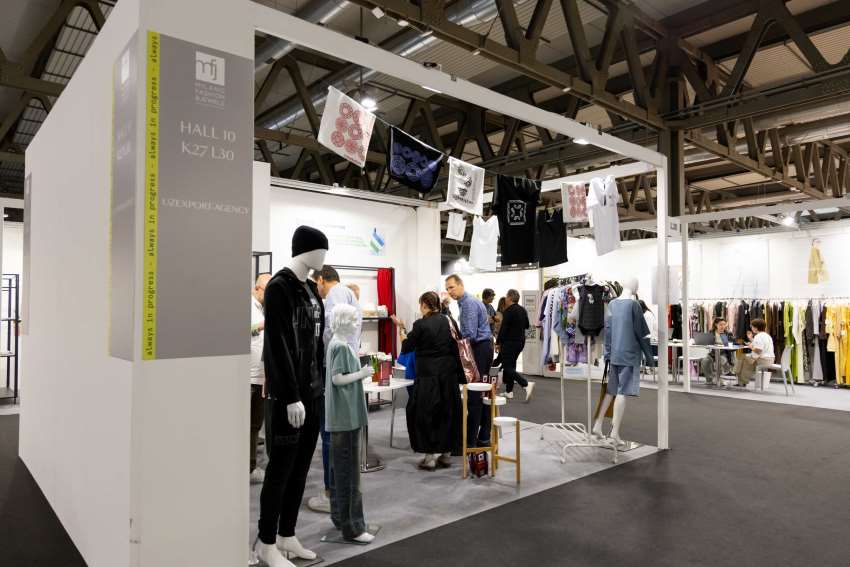
Mumbai is set to host its maiden Denim Show from May 12 to 14, 2022 at the newly launched Jio World Convention Centre (JWCC). Denim has emerged as one of the fastest segments to recover from the pandemic with a growth of 12 per cent CAGR this year, says Gagandep Singh, Secretary General, Denim Manufacturer Association. Currently the second largest producer of denim fabric after China, India produces 6 billion meters per annum and approximately 150 million meters capacity per annum of denim fabrics annually, adds Singh. The Indian denim industry has evolved significantly with ever changing fashion trends making its way into other utility-driven products.
The first ever Denim show being hosted in Mumbai aims to attract India’s denim mills and leading brands under one roof to tap opportunities through the versatility of denim - the fashion statement of future.
Going back to vintage fabrics and shades
The denim industry is going through a huge transformation in terms of fits and fabrics with the women opting for more relaxed and flared fabrics while men’s denims going for stretch fabrics with clean and basic washes. Both segments are opting for hand-crafted denims, creating a greater need for superior spinning techniques, finer counts and blends. And for the last few seasons, the demand is more for overdyed, tinted and colored jeans.
Traditionally dominated by faux knit fabrics, the domestic denim market is slowly moving towards more classic and authentic denims to counter recent cost escalations. According to one of India’s top denim fabric manufacturer LNJ Denim, the industry is going back to vintage and versatile pure indigo shades with emphasis on clean and mild washes, raw look for basics and distressed and bleached denims for all genders and age groups.
Adopting circularity in production
Denim mills like Raymond UCO are adopting circular production processes to create more responsible fabrics. Raymond for example, is developing high-quality denim fabrics form recycled polyester from ocean-bound plastics and Blu 2.0: a unique indigo dyeing process. The brand recycles ocean-bound plastics into fibers and blends them with cotton to weave sustainable denims. This reduces freshwater consumption and effluent load in the dyeing process by about 85 per cent. It also encourages use eco-friendly dyes like natural indigo to reduce dependence on synthetic chemicals. Raymond has also curated a special denim collection which is environment-friendly and offers ultimate comfort, breathability and moisture management. This collection will be displayed at the upcoming Denim Show.
Sudhir Deorukhkar, Head-Marketing says, these small steps towards creating more responsible denim fabrics will help the brand reduce gap between fashion and sustainability. Ashish Bhatnagar, Marketing Head, LNJ Denim points out, persistent focus across stages of fabric making has made sustainability a habit for the brand. It will display functional, sustainable and superior hand-feel denim fabrics made through various blends, spinning as well as finish innovations at the three-day Mumbai Show.
Highlighting industry processes
Innovative, fashionable, sustainable, the Denim Show will highlight industry process during the three days. The event will be attended by leading brands including: Hyosung India, Jindal Worldwide, Arvind, Ginni International, Raymond UCO Denim, Bhaskar Denim, LNJ Denim, Oswal Denims, KG Denim, Nandan Denim, and Ashima Group, etc. It’s being jointly organized by Messe Frankfurt Trade Fairs India and Mex Exhibitions under the umbrella of Gartex Texprocess India. The show will also cover latest developments in textile, garment machinery and screen printing industry. The aim is to garner new investments and showcase latest developments in the market.
India’s T&A exports to touch $60 billion in 2025-26: Wazir Advisors

After shrinking 22 per cent to $1.3 trillion in 2020 from $1.6 trillion in 2019, global apparel market recovered to reach $ 1.5 trillion in 2021. As per Wazir Advisors’ annual report ‘Indian Textile and Apparel Industry 2022’, the market is expected to grow at 4 per cent CAGR from 2019-2025 to reach approximately $2 trillion in 2025. In 2020, global textile and apparel trade declined 8 per cent to S$ 774 billion from 2019. Growing at 3 per cent CAGR, trade is expected to reach $1 trillion by 2025.
China leads global exports in 2020
China emerged the largest exporter of textiles and apparels in 2020 with a 38 per cent global share. The second largest textile and apparel exporter was Vietnam. The US was the largest exporter of natural fibers in 2020 with a market share of 30 per cent while China led manmade staple fibre, MMF spun yarn and MMF filament yarn exports with a market share of 17 per cent, 36 per cent and 35 per cent, respectively.
China also emerged the leading exporter of knitted and woven fabrics, apparel and home textiles in 2020; followed by Bangladesh and Vietnam as the second and third largest apparel exporters.
India’s T&A exports to reach $60 billion
From $31 billion in 2020-21, India’s textile and apparel exports are expected to grow 28 per cent to $ 40 billion in 2021-22, the report predicts. Exports are expected to grow further at 11 per cent CAGR to touch $60 billion in 2025-26. A leading textile exporter, India was amongst the top five exporters – of natural yarn and fiber, MMF spun yarn, filament yarn, woven fabric and home textiles during the year. However, it lagged in MMF staple fibers, knitted fabric and apparels.
India was the largest exporter of staple fibers with a share of 71 per cent in 2020-21.It also exported yarns worth $4,329 million during the year. Export of spun yarn declined at a CAGR of 4 per cent while that of filament yarn declined at 8 per cent.
T&A imports to grow 10 per cent CAGR
India’s T&A imports are expected to grow to $8.2 billion in 2021-22 and further to $12 billion by 2025-26. India’s fiber imports declined 4 per cent CAGR to $1 billion in 2020-21. Imports of natural fibers declined though manmade staple fiber imports increased marginally.
India’s yarn imports grew to $1,254 million in 2020-21. Import of certain yarns like manmade spun yarn, VFY and PFY grew substantially while imports of cotton and nylon yarns declined to a large extent. India’s imports of total woven fabric declined 4 per cent CAGR during the year while knitted imports fabric increased 4 per cent CAGR during the period.
However, India’s garment exports declined 6 per cent CAGR to $12,290 million during 2020-21. Exports of made-ups grew at 3 per cent CAGR to reach $7,444 million. India imported garments worth $881 million and $967 million worth of made ups during the year.
Technical textiles export grow
India’s technical textiles market grew at a 10 per cent CAGR in 2019-20. However, the COVID-19 outbreak caused a 12 per cent decline in the market in 2020-21. India’s technical textiles exports grew at 9 per cent CAGR to reach approximately $ 2,370 million during 2020-21. Imports of the same grew to $ 1,395 million during the year.
Turkey’s textile & clothing sector diversifies to manage Russia-Ukraine war losses
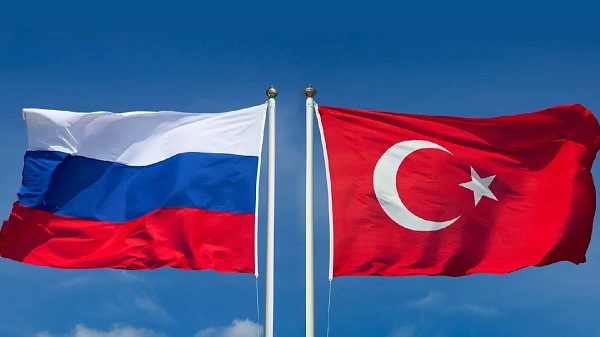
With commercial ties with both countries, Turkey is experiencing numerous disruptions due to the ongoing Russia-Ukraine war. In 2021, Turkey’s foreign trade with Russia was worth $32.5 billion, of which, $27.5 billion was generated from imports, primarily natural gas. Similarly imports from Ukraine exceeded $2 billion and exports totaled over $4 billion.
Representing 4.43 per cent of the total world trade, the Turkish textile industry emerged as the fifth largest exporter in 2020. Its operations were mainly affected by the war as many orders of both textile and ready-to-wear garments are cancelled. Seref Fayat, President, TOBB Turkey Garment and Apparel Industry Councils Assembly points out, orders worth approximately $200 million were cancelled including goods already produced.
Russia, Ukraine important export destinations
In the first two months of 2022, Turkish ready-to-wear and apparel industry exported goods worth $3.4 billion. Data from the Turkish Exporters Assembly (TIM) shows, ready-to-wear and apparel exports to Russia amounted to $286.5 million in 2021 while exports of textiles and raw materials amounted to an average of $298 million. Russia emerged the second largest export destination after Germany with a 7.7 per cent share in 2021, points out Mustafa Senocak, President, Istanbul Leather and Leather Products Exporters’ Association (IDMIB).
Turkey exported approximately $173 million worth of ready-to-wear and apparels, $115 million worth of textiles and raw materials to Ukraine in 2021. It signed an FTA with Ukraine during President Recep Tayyip Erdoğan’s visit to the country on February 3, 2022.
Ukraine poses strong competition to Turkey
Ukraine exports around 80 per cent of its textile products. With 2,500 textile production workshops/factories, the country can become a strong competitor to Turkey. It has over 500 fabric production factories employing more than 16,000 people. All major fashion brands including Adidas, Hugo Boss, Marks & Spencer, Tommy Hilfiger, Zara have production centers in Ukraine. The first three product groups that Turkey imports the most from Ukraine are light rubberized knitted fabrics, knitted sweaters and non-knitted men’s suits, according to the 2019 reports.
Russia introduces new policies to boost production
In 2021, Turkey’s foreign trade with Russia was worth $32.5 billion, of which products worth $27.5 billion were imported from Russia, primarily natural gas. In 2020, Russia exported ready-to-wear garments worth approximately $30.5 billion. Of this, women’s clothing made up the biggest part of $16.6 billion while the rest belonged to men’s and children’s clothing. The most imported product groups included non-knitted women’s suits, women’s non-knitted coats, and knitted sweaters.
To boost textile and apparel production, Russia has introduced new policies. The country has around 40 large and 2,000 medium-sized textile enterprises in Ivanova. Moreover four Turkish companies operate in the region. However, employment in Russia’s textile sector has declined to 85.2,000 from 749,000 in 2000. The ongoing war has made Turkey’s textile and clothing market uncertain with manufacturers seeking to diversify with minimum losses.
Global apparel industry to reach $2.2 trillion by 2025: Chairman, JAAF
Sharad Amalean, Chairman of the Joint Apparel Association Forum (JAAF), says, the global apparel industry will reach $2.2 trillion by 2025.
With sharp price points and constant pursuit of cost efficiencies, the apparel industry currently faces competing priorities, Amalean adds. The pandemic has brought these aspects even more sharply into focus; brands and companies have increased their vigilance on the social, environmental, governance and ethical aspects of manufacturing. Only those that take a holistic view of their production and eco-system will thrive while those with scant respect for ethics, the environment and social responsibility will not find favour with customers.
Having built a reputation of being a sustainable and ethical manufacturing destination, Sri Lanka is well placed to thrive in this evolutionary phase. The Sri Lankan apparel industry is on track to achieve its revenue target of $8 billion by 2025, adds Amalean