FW
Finland offers groundbreaking solutions in sustainable materials: Report
Finland now offers new groundbreaking solutions in sustainable materials and business models. The country’s solutions span every level of ecosystem, from waste handling, treatment, sales and usage, collection and recycling to identification and waste handling
Leading Finnish firms experts like Rester, NordShield, Emmy, Spinnova and Infinited Fiber Company offer innovations across the textile ecosystem. As per Marika Ollaranta, Head-Bio and Circular Finland Program, Business Finalnd, these innovations include evolutionary solutions that cover the whole life cycle of a textile. Governments, consumers and the industry are waking up to the challenges of a very single-use oriented industry, but more work is needed to build awareness and change mindsets and behavior to make the cycle more sustainable, he said. His company, Rester collaborates closely with Southwest Finland’s municipal waste management company LSJH in a project that brings together the private and public sectors in textile waste handling.
NordShield’s patented technology enables natural antimicrobial treatment of textiles while Spinnova and Infinited Fiber Company introduced innovative ways of making fiber out of wood pulp and discarded textiles. Emmy Clothing Company has created a transparent resale-as-a-service for clothes, which makes it possible for all actors in the ecosystem to participate in prolonging a textile’s life cycle. Responding to growing issues of textile waste, Finland also aims to introduce new textile recycling regulations by 2023.
IFC to set up $50 million financing facility for Brandix Lanka
International Finance Corporation (IFC) proposes to set up a $50 million long-term financing facility for Brandix Lanka to sustain operations and preserve jobs in the country. As per a Daily Mirror report, last year IFC had proposed a similar financing facility to Sri Lanka’s MAS Holdings for its workforce in Sri Lanka. However, the status of that proposed facility is currently pending.
IFC’s $50 million loan will help Brandix finance medium and long-term working capital requirements and the growth and maintenance of capital expenditure in Sri Lanka. The proceeds from the proposed investment will be used exclusively for the company’s Sri Lankan operations.
The proposed funds would allow operating subsidiaries of Brandix retain employment, generate export revenues and continue as going concerns. At the market level, the proposed project will help protect exports growth and promote resilience while limiting disruptions along the domestic and global supply chain.
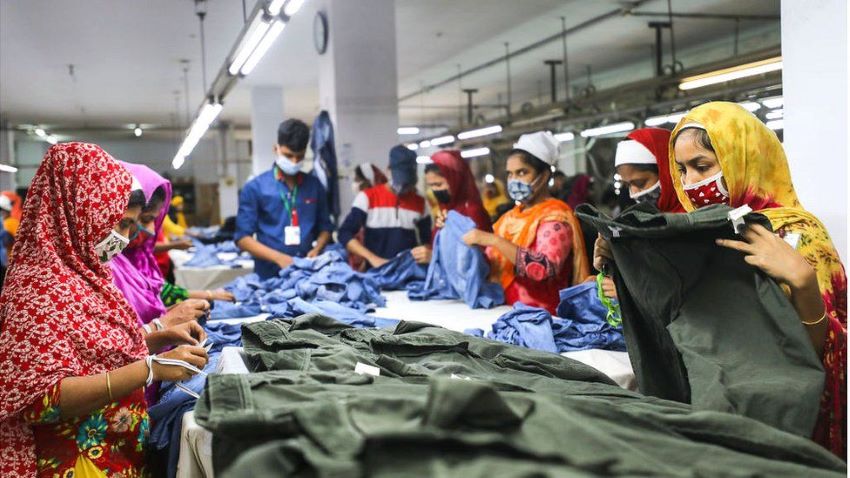
Brandix is considered the largest apparel exporter in Sri Lanka and it also has operations in India, Bangladesh, Haiti and Cambodia. Overall, it employs a workforce of over 60,400 and around 35,000 staff is based out of Sri Lanka, consisting of 33,260 associates and staff and 1,740 executives.
Transparency to be highly important for all stakeholders: Report
An April 2020 report issued by The Apparel Coalition concludes, henceforth, transparency will be highly relevant for all industry stakeholders. The industry will leverage sustainability through technology to drive innovation across design, supply chain management, and new business models.
In Australia, the coalition adopted the Better Cotton Initiative, a mass balance system which tracks the trade of cotton produced under BCI determined practices and allows it to be used with conventional cottons, so long as they are used in equal proportions. This platform reaches over 10,000 supply chain participants, whilst supporting sustainable farming practices in developing countries.
The coalition is also using various methods to trace cotton back to the farm level. There are traceability technologies currently being used in Australia, Oritain and Fibre Trace which provide different methods for retailers to trace and verify the raw cotton that makes up the yarn and fabric they are sourcing. BCI is itself launching a project to explore a traceability system and the planning phase is underway.
In Australia, its MyBMP program covers 10 key areas farm operations and includes online self-assessment mechanisms and practical tools and auditing processes to ensure that Australian cotton is produced according to best practice. MyBMP underpins our BCI registration and is an excellent opportunity to promote our social license to operate; the reach can expand beyond proving to ourselves and our legislature that we are a responsible agricultural industry.
Spring editions of Intertextile Shanghai fairs postponed
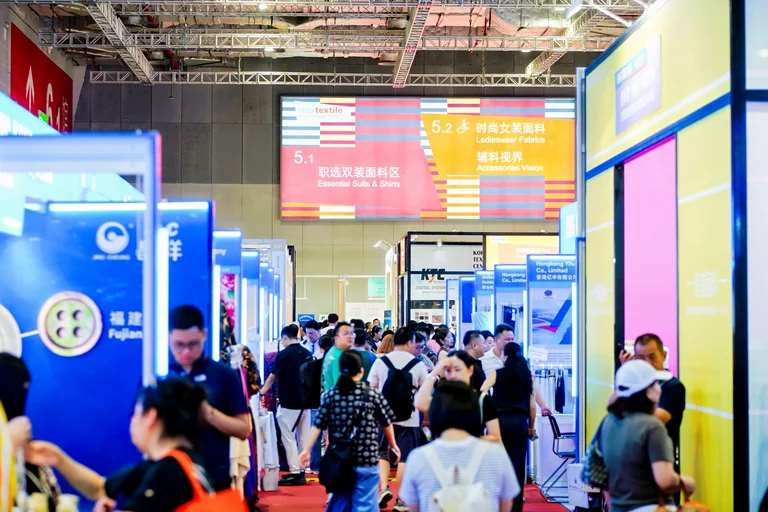
The spring editions of the three fairs – Intertextile Shanghai Apparel Fabrics, Intertextile Shanghai Home Textiles and Yarn Expo Spring – that were due to take place from March 10 – 12, 2021 will be postponed, with a new date to be announced shortly.
Intertextile Shanghai Apparel Fabrics is co-organised by Messe Frankfurt (HK) Ltd; the Sub-Council of Textile Industry, CCPIT; and the China Textile Information Centre. The co-organisers of Yarn Expo are Messe Frankfurt (HK) Ltd and the Sub-Council of Textile Industry, CCPIT. Intertextile Shanghai Home Textiles is co-organised by Messe Frankfurt (HK) Ltd; the Sub-Council of Textile Industry, CCPIT; and the China Home Textile Association (CHTA).
Messe Frankfurt’s China textile fairs form a part of the company’s Texpertise Network, which consists of some 50 fairs around the world.
Bangladesh will continue to enjoy GSP on trade till 2027: British High Commissioner
According to Robert Chatterton DicksoBritish high commissioner in Dhaka, Bangladesh would continue to enjoy the generalized system of preferences (GSP) on trade until 2027, i.e., till three years after it graduates from the least developed country (LDC) status. The two countries will find out a mechanism to maintain a trade regime beneficial for both after 2027.
Speaking on the outcome of the first-ever UK-Bangladesh Trade and Investment Dialogue held in Dhaka recently, Dickso said, the GSP includes quota-free and duty-free market access to the United Kingdom for all products other than arms and ammunition.
According to him, UK is the third largest export destination of Bangladesh and the country maintains a positive trade balance with the UK.
The major exportable items include readymade garments, frozen food, IT engineering, leather and jute goods and bicycle.
Vietnam textile and apparel exports up three per cent in January
In January 2021 Vietanam’s export turnover in textile and garment industry rose 3.3 per cent year on year. Some products enjoyed a high growth rate of between 9 per cent and 36 per cent. The industry achieved 20 per cent growth in the US market for the first time.
Despite the global fashion industry suffering from a range of challenges caused by the pandemic, the Vietnamese garment and textile industry recorded positive growth in market shares to major locations such as the United States and Europe. But this year marks the first time in 25 years that Vietnamese textile exports recorded negative growth rate of 10.5 per cent comopared to 2019. This year, local businesses are expected to boost market expansion and maximize benefits from free trade agreements such as the EU-Vietnam Free Trade Agreement and the Comprehensive and Progressive Agreement for Trans-Pacific Partnership to bolster exports.
The global fashion industry’s profits saw a 93 per cent dip, with more than 10 major fashion brands going bankrupt and roughly 2,00,000 workers in the fashion supply chains in the US losing their jobs. However the global textile market is anticipated to bounce back during the second quarter of 2022.
US industry calls for appointment of fashion czar
Clothing brands, experts and organisations in the US are hoping a fashion czar is appointed. Since there is a lack of accountability among brands that claim to be sustainable, as well as varying definitions about what is or isn’t sustainable, such a political appointee is expected to coordinate and advocate for policy in the fashion industry, much like John Kerry does for international climate efforts. So the spotlight will be on not just the clothes but also the practices and policies of the industry.
Even though the United States is no longer where most of the world’s clothes are made, it is the base of some of the world’s largest fashion brands and is the breeding ground for the next wave of fashion labels with innovative new business models and materials. And American consumers have huge spending power. On the production end, more than 1.8 million Americans are employed by the fashion industry, although more than 95 per cent of clothing sold in the US is imported.
Those who have signed the open letter have called for action on the federal level to address environmental, labor, health and domestic production issues in the fashion industry. Signees include companies that have fashioned their approach around sustainability and ethical practices.
UK exit leaves business in a fix
Post Brexit, when the United Kingdom finally left the European Union at the end of December 2020, there were many problems for businesses working across the area. The EU-UK Free Trade Agreement is not the panacea that businesses were led to believe it would be. Although the agreement avoids duty costs, VAT still applies. Similarly, the complicated issues with rules of origin now in place coupled with increased paperwork and border checks are making it near-impossible for some brands to operate.
The fashion industry, which works extremely closely with its European neighbors, has been hit hard. A large proportion of fashion brands – particularly in the sustainable space – manufacture and source materials in Europe and 80 per cent of UK clothing exports are currently sent to the EU. Considering the complicated supply chain for many fashion goods (for example, multiple parts and materials sourced from different countries), the change in rules demanding declaration of origin is also proving problematic.
Customers in Europe who have ordered goods from the UK (and vice versa) are increasingly seeing expensive clearance orders being served when parcels arrive at the door. Customers frequently reject these steep fees and the goods are then returned to the sender. While this back and forath creates unnecessary additional emissions, the returned items often end up being wasted.
Tirupur to host textile expos DyeChem World, KnitProcess
DyeChem World and KnitProcess will be held in Tirupur, October 22 to 24, 2021. DyeChem World will cover the entire range of textile dyes, chemicals, finishes, technologies. Being the first of its kind show in South India, DyeChem World will create a platform for interaction and knowledge sharing between the dyes and chemicals and textile industry. On the other hand, KnitProcess will help the industry to explore and adopt the latest innovations in knitting and post processing sector, covering the entire value chain of knitwear processing technologies till garmenting.
The highlight of the events will be the CEO Summit which will see head honchos from the global textile and apparel, fashion brands and retail industries. While the primary aim of the meet is to have a highly interactive and candid networking for business, it would also have serious deliberations on the core issues of sustainable practices, sourcing and adopting it to the supply chain.
Tirupur, the knitwear capital of India, accounts for 60 per cent of India’s knitting, processing and apparel capacity. The cluster is now turning to new investments. A strategic relook by retailers and brands on sourcing destinations after the pandemic, the American embargo on knitwear made from Chinese cotton and the competitiveness induced by the currency exchange rate bring a silver lining to Tirupur.
SAC transformed business models in last one decade
Sustainable Apparel Coalition is 10 years old. The organization marks its anniversary at a critical inflection point for the industry, characterized by a devastating global pandemic, a changing climate and surging social unrest. Launched in 2011 with shared goals of creating eco-friendly products based on a standardized approach for measuring sustainability, the organization has come a long way. Its roster has ballooned past 250 members with a collective annual revenue of $845 billion, including household names such as Amazon, Asos, Gap, H&M, Levi Strauss, Nike, The North Face and VF Corp.
The SAC’s tentpole product, the Higg Index, has expanded into a suite of sustainability assessment tools deployed by more than 21,000 organizations across 190 countries. SAC has helped bolster efforts to improve labor conditions in the garment supply chain. Over the last ten years, it has worked collaboratively across the industry to develop and launch the Higg Index, providing cutting-edge, standardized sustainability tools for the industry. Higg will be central to the SAC’s mission of transforming businesses for exponential impact.
SAC will be transitioning its focus from developing standardized measurement tools to developing standardized communication that increases transparency and offers industry insights, driving collective action at scale.