FW
Global fashion revenue declines 21.8 per cent in 2020: Study
As per a survey by the research office of Italian investment bank Mediobanca, the aggregate revenue of leading fashion multinationals plummeted by 21.8 per cent in the first nine months of 2020 owing to the impact of the pandemic. Fashion Network estimates this revenue slump to be five-times worse than the 4.3 per cent shortfall suffered in the same period by major international industrial groups.
In the first nine months of 2020, revenues of European fashion market declined 23.7 per cent while those of Asia, Japan excluded, declined 10.1 per cent. Online sales in these markets rose by 60 per cent though they could compensate for the fall in total revenue. The study states, the fourth quarter offers a glimmer of hope as revenues of fashion companies have risen by approximately 17 per cent, compared to the year’s first three quarters. Italy’s fashion sector will start recovering in 2021. It will reach pre-pandemic levels by 2023.
Arvind launches new Indigo Knits collection
Arvind has launched its new Infiknity collection featuring more stretch indigo knitted denims. As per Carved in Blue, made with processes including circular knitting for seamless construction, these knitted denims provide a versatile solution for the needs of consumers.
Arvind offers a plethora of constructions in indigo dyed knits. It uses circular knitting with indigo yarns and integrates it with seamless garment technology to enhance their comfort factor. These denims offer a perfect mold for all body contours, infusing ease in movement for regular, as well as highly active lifestyles, making this product multifunctional and easy to wear.
The denims are manufactured with reduced processes that help the company to control their carbon footprint, energy consumption and contribute towards water conservation. They are made using Tencel™ branded lyocell fibers which offer natural comfort and environmentally responsible closed loop production process.
A comprehensive e-com policy needed to boost FDI in India
 Multiple changes made in India’s ecommerce FDI norms to promote domestic retailers in the past few years are causing roadblocks to global ecommerce companies like Jeff Bezos-owned Amazon and Walmart-owned Flipkart India’s ecommerce players are compelled to mention the ‘country of origin’ on every product sold across their marketplaces. The government also plans to tighten FDI rules besides banning a seller with a foreign stakeholder. If formalized, these changes will hurt Amazon India the most as it holds indirect stakes in two of its biggest online sellers in India, Appario and Cloudtail. The government also plans to levy a 2 per cent equalization levy or digital services tax on these products.
The rise of Joe Biden led Democratic government in the US has given American ecommerce companies much needed boost to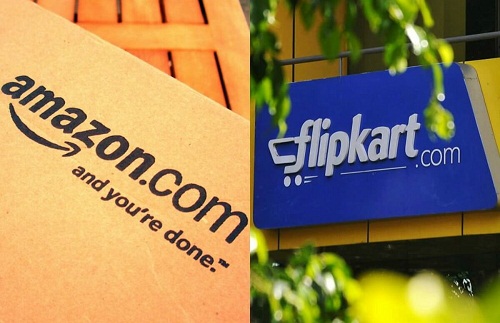 survive the business challenges in India. Both Amazon and Flipkart are getting sufficient support from the current US government. As per government’s Congressional Research Service (CSR) report, the new FDI norms on raising foreign equity caps for insurance and defence and other strides will help India attract foreign investments.
New amendments in FDI rules
However, despite these changes, ease of doing business seems to be far from reality in India. Since 2016, the Indian government has been tightening FDI policies for these e-commerce marketplaces. The latest amendment, known as Press Note 2 (2018), allows 100 per cent FDI in in India’s marketplace model under certain conditions. This entails Press Note 2, ecommerce companies operating marketplaces in India cannot own any of the inventory sold on their marketplace. Also they cannot influence the sale of goods directly or indirectly. Another rule these companies have to abide by is not to hold an equity share in a vendor’s firm that intends to sell on the said e-commerce entity.
No impact of trade relations with other nations
Abhishek Rastogi, Partner, Khaitan & Co is confident India’s investment-related decisions regarding marketplace model will not impact its trade relations with other countries as India has the right to take such calls. He reveals the Indian government plans to simplify FDI norms and direct the management of indirect stakes of these global companies in Indian subsidiaries. The government has initiated a draft ecommerce policy that mandates the approval of nodal ministry whenever changes in ecommerce regulations are made. The policy also aims to invite and encourage foreign investment in ‘marketplace’ model alone. It debars an e-commerce platform with a foreign stakeholder from owning or controlling the inventory on its platform.
Importance of the India-US partnership
The Indian e-commerce space is currently engaged in a swadeshi versus videshi battle. Comparing Amazon to the East India Company, lobby groups are promoting Mukesh Ambani’s Reliance Industries and its subsidiaries under the swadeshi label. On its part, the government plans to promote MSMEs by making certain changes in FDI regulations.
However, despite this, India cannot ignore the Biden government as it needs to acquire a greater access to American products across farming, medical devices and agricultural implements. It also requires a reduction in import duties on some information and communication technology products. In turn, it seeks to resume export benefits to certain domestic products under the GSP, exemption from high duties imposed by the US on steel and aluminium products. It also plans to provide greater access to its products across the agriculture, automobile and automobile components and engineering sectors.
According to Jayant Dasgupta, Former Indian ambassador, WTO, India’s goods and services trade with the US totaled $146 billion in 2019. Exports to the US was $58.6 billion and imports was $87.4 billion. Its FDI in India (stock) increased 8.2 per cent to $45.9 billion in CY2019.
US focus to help India counter China threat
For quite some time now, India has been planning to reduce its trade dependency on China. Last year, it monitored all popular Chinese digital platforms operating in China as well as FDI inflows from Chinese investors. In such circumstances, it needs to support the US by offering trade concessions under the MFN (Most Favored Nation) clause, which also extends to China and many other nations under the WTO guidelines, adds Dasgupta.
India’s future stand on FDI for ecommerce marketplaces depends on its relations with the Biden government. Though the country is free to protect its domestic sellers, the current market size of Amazon and Flipkart requires it to introduce a comprehensive ecommerce policy that has little scope for sporadic changes.
Sturdier supply chain partnerships to define sporting goods industry in 2021
 A new study by the World Federation of the Sporting Goods Industry and McKinsey & Company highlights supply chains as one of the main challenges for the sporting goods industry in 2021. Titled, ‘Sporting Goods 2021 – The Next Normal for an Industry in Flux’, the study says, for the first time since the financial crisis, the sporting goods industry’s growth declined 7 per cent to $348 billion. Most brands, retailers and manufacturers reported losses in 2020 despite a rebound in business after the 1st and 2nd COVID-19 lockdowns.
Bright future outlook
The report predicts a positive outlook for sporting goods industry over the next 12 months despite uncertainties due to second COVID wave and slow vaccination process. Sporting events like the Olympic and Paralympic Games and the UEFA European Football Championships are likely to make a comeback along with other home, outdoor and digital activities. Over 60 per cent sporting goods stakeholders are optimistic the current year will be better than 2020. They hope to build sturdier supply chain partnerships and explore local alternatives.
Faster processes and deeper ties
The report states, e-commerce model progressed as much as four years in the first month of the pandemic. E-commerce companies were more agile and had regular product runs closely associated with demand. The lead times of Asian suppliers and lead times of big sporting goods companies reduced to 30 days. The industry also explored near-shoring and re-shoring options to cut lead time and shipping insecurities caused by trade rule worries. Around 73 per cent sporting goods leaders are now engrossed in building closer relations with suppliers. Around 60 per cent expect to strengthen their supply chains over approaching period.
To benefit from these shifts in supply chain logistics and capabilities, industry leaders need to adopt a new business model that speeds up identification, production schedules, and supplier contracts. Also, companies need to focus on deeper ties with suppliers to make operations more agile and responsible.
Trends for 2021
The report also identifies the trends that will dominate sporting goods industry in 2021:
Athleisure: The pandemic has blurred the line between home and office. Hence, there is rising acceptance of athleisure in formal environment. Over 75 per cent expect the athleisure market will grow, and 33 per cent attribute its growing popularity to COVID-19.
Sustainability: COVID-19 has also accelerated demand for sustainable products. Around 67 per cent consumers emphasize on sustainable materials while buying clothes. From mid-2017 to mid-2020, the number of net new ‘sustainable’ SKUs introduced in the online market grew 58 per cent per annum.
Digital fitness: Driven by social distancing and stay-at-home requirements, digital fitness gained popularity last year. Though not a complete for traditional sports and exercise, this trend is likely to culminate in a hybrid model including free and paid apps, livestream and (non-)connected equipment.
Online shopping: Online shopping for sporting goods increased thrice as much from 2019 to H1 2020. Experts expect this trend to stabilize at around 25 per cent in 2021.
Shift in marketing: Cancelling or postponement of sports events encouraged sports marketing to shift from physical assets to influencers on social media channels. Around 43 per cent respondents do not expect sporting goods marketing to be as closely linked with major sporting events in future.
New retail experiences: Lockdown measures have accelerated the crisis for brick and mortar stores. Around 45 per cent respondents expect companies to set fewer stores in the current year. They also expect stores to offer new facilities and make the shopping experience more memorable.
Rise in cotton yarn prices affects small exporters in Tiruppur: TEA
According to the Tiruppur Exporters Association, the rise in cotton yarn prices and intermittent supply of cotton yarn in the past two months has affected small exporting units in Tiruppur.
There is a lack of a level-playing field due to non-existence of free trade agreements with the European Union, the United Kingdom and Canada, whereas competing countries like Bangladesh, Vietnam, Cambodia, Sri Lanka, Pakistan, Myanmar are now enjoying duty-free status in these markets, TEA said.. TEA requested the government to announce without delay the rates of the Scheme for Remission of Duties and Taxes on Exported Products (RoDTEP).
The trade body also requested the government to permit extension of Interest Equalisation Scheme for another three years, which will help the MSME exporting units to work out their costs accordingly and strive to take more export orders.
Recession leads to closure of 30% of Egypt’s factories
Recession and deteriorating economic conditions have led to closure of 30 per cent of Egypt’s textile factories, says MP Enas Abdel Halim. As per the Middle East Monior, the remaining factories had reduced production by 50 to 70 per cent.
Egypt had about 1,260 spinning, weaving and dyeing factories registered in Mahalla, but now only 320 factories are operating, employing 120,000 workers.
Halimwarned the government against neglecting this issue, while calling for the Minister of Trade and Industry, NevinJama, to be questioned in parliament about the recent deterioration in the textile sector.
Egypt's unemployment rate rose to 9.6 per cent in the second quarter of 2020 compared with 7.5 per cent a year earlier, due to the coronavirus pandemic, the statistics agency CAPMAS revealed in August.
Who’s Next cancels January edition
Ready-to-wear event Who’s Next had already cancelled this year’s January edition, and must now also give up on an event organised jointly with Première Classe at the Tuileries Gardens in Paris
As a result, Who's Next will not be held this season, while accessories show Première Classe will take place, but in reduced format. The next edition of Première Classe will be held exceptionally at the WSN headquarters, in the heart of Saint-Germain-des-Prés, as a highly exclusive physical showroom.
The showroom will be open for four days, from March 5 to 8, featuring about 40 fashion accessories exhibitors and a few ready-to-wear labels, with names like Inouitoosh, April Please, Paraboot, Be Parisian, Macon &Lesquoy, Herbert Frère Sœur, MaisonBoinet and Ubac Shoes.
WSN is now hoping to be able to return to the Porte de Versailles exhibition centre in early September with Who’s Nextand at the Tuileries Gardens in October with Première Classe.
Welspun partners Res.Q for digital factory floor
The Welspun Group has partnered Res.Q, a cutting-edge shopfloor process digitization solution to create a digital factory floor. Welspun will start digitization process with quality management module which is Res.Q | QMS.
According to Res.Q, the textile business of Welspun group began their search for a Quality Management Solution for Anjar, Gujarat facility. Their search criteria included an agile, user-friendly and a real-time tool in order to make data-driven decisions.
Res.Q’s installation at Welspun is the first deployment being executed 100 per cent remotely by the Team of Engineers at Res.Q, effectively showing how simple the solution is to deploy. The project is being undertaken in the midst of a global pandemic, limited travel. The company hopes to deliver value while working totally remotely, said Thushitha Kularatne, CEO, Res.Q.
Telangana to create textile value chain in the state
After having excelled in the fields of IT and pharma, Telangana has now set its sights on the textile sector. The state aims to create an end-to-end value chain for the industry to boost its prospects, says a Times of India report. One of the state’s plan is to set up the country’s largest textiles park — Kakatiya Mega Textile Park (KMTP) —over 1,200 acre for offering a complete manufacturing ecosystem for the textiles and apparel industry within its premises.
According to Jayesh Ranjan, Principal Secretary, IT & industries, Telangana, the state has acquired the required land for the project and is currently developing its infrastructure. It has also allotted 350 acre to two companies, Youngone Corporation and Ganesha Ecosphere. KMTP will also set up plug-and-play infrastructure for local weavers and textile manufacturers and a common effluent treatment plant. It will set up training centers in Warangal and its catchment villages to train the local population.
The state government also plans to set up country’s first technical textile testing lab with the help of the Centre at KMTP this year. The lab will be set up with an investment of Rs 150 crore.
Monforts Centre receives 36-roller raising machine
The Monforts Advanced Technology Centre in Monchengalbach, Germany received 36-roller raising machine manufactured in 1918. Introduced by Monforts, the raising machine proved to be a revolutionary product in the 19th century as it used low friction ball bearings for its raising rollers. This reduced the wear and maintenance of the raising rollers.
Despite current travel restrictions, the Monforts Advanced Technology Centre (ATC) is fully operational for industrial-scale trials and is run by highly experienced staff on behalf of customers. Since its opening in 2013, the technology centre has invested over €3 million in equipment. Spread across 1,200 sq m, the centre houses two full finishing lines, engineered to accommodate an extremely diverse range of processes based around the industry-leading Montex stenter, in addition to a Thermex range for continuous fabric dyeing and the newly developed CYD process for yarn dyeing.