FW
Gap threatens retailers of shutting stores across UK
Gap has threatened landlords of shutting all stores across the UK in July and becoming an online-only business, resulting in the loss of thousands of jobs. As per Retail Gazette, the US fashion retailer has 95 stores across the UK. In October, it announced plans to shift to a franchise-only model. However, it is putting increased pressure on landlords as it tries to break lease contracts early.
In December, the brand announced plans to close one of its two stores on Oxford Street in central London. It operates large flagship stores down the famous shopping street opposite Bond Street underground station. Their closure reflects the difficulties the apparel retailer faces due to the COVID-19 pandemic.
As of February 1, 2020, Gap’s UK retail sales fell by 9.5 per cent to £195.1 million that year, while it produced operating losses of £40.7 million.
Euratex urges European Commission to introduce right conditions for growth
On the occasion of EU Industry Days, Euraterx urged the European Commission and member states to set the right conditions to improve competitiveness and resilience of textile and clothing industry. Euratex urged the European Commission and member states to introduce effective market surveillance, avoid unfair competition and guarantee level playing field. It should also support the transition towards a more sustainable and digital industry through specific funds and programs. Moreover, the sector should reduce future risks by diversify its supply chains and promote nearby production.
Euratex also proposed a market proof approach for Europe when moving towards sustainability & circular economy. It should also help education systems and institutes to develop comprehensive and leading-edge T&C knowledge. It can do so through LongLife Learning, Erasmus + and the Pact for Skills Initiative.
Lastly, Euratex advised Europe to have a coherent approach when legislating in different areas. All policies, from the Green Deal to the Sustainable Chemicals strategy, from the EU Trade strategy to the EU Industrial one, should be consistent and not hamper industry.
As the voice of the European textile and clothing industry, Euratex works to achieve a favorable environment within the European Union for design, development, manufacture and marketing of textile and clothing products.
Online shoppers move away from discounts focus on safety and quality
 COVID-19 has reemphasized the importance of quality, especially while buying FMCG products. Earlier, Indian consumers let discounts determine most of their purchase decisions. However, now they are looking for value-added products, says a report by Bengaluru-based research firm RedSeer Consulting. As per Business Insider report, India’s overall e-commerce transaction value fell from April to June 2020, peak months of lockdown. However, it soon picked up as people avoided venturing out of homes and preferred buying their essentials online. RedSeer Consulting expects this trend to continue in 2021, advancing the growth of the online shopping in India, and compelling brands to focus on their online operations, says Mrigank Gutgutia, Director.
Gutgutia categorizes Indian online shoppers into two types. One, who buy their usual products irrespective of large discounts being offered online, and other who focus more on the quality of products. Gutgutia says, this phenomenon is common across all tiers of cities.
Small cities focus on safety, quality
Consumers in Tier II and III are opting for online shopping because of the safe shopping experience it offers and guarantees on product quality. Discounts are one of the last reasons for shopping online in these cities, adds Gutgutia. Essentials were one of the most sought after categories during the pandemic. The category saw the highest average order value growth last year as more people in Tier II and III chose value over price, says RedSeer Consulting. This is pushing more Flipkart’s consumers to move away from being trial only to long-term consumers. The e-tailer aims to focus more on subscription only program in 2021.
DTC brands gain popularity as consumers opt for organics
Consumers are also moving away from aggregator e-commerce portals to Direct to Consumer brands as witnessed by the growth in revenue of brands like boAt, MamaEarth last year. As Mangesh Panditrao, Co-Founder, Shoptimize, a startup which helps businesses come online, says, COVID-19 has brought the focus back on quality and human wellness. It has reduced the importance of product price by increasing the popularity of organic food and wellness products, locally sourced produce, sustainably farmed goods, and vegan/cruelty-free products. The company’s clients have seen a 40 per cent increase in AOV (Average Order Value) this fiscal compared to last year.
Gutgutia believes this trend of online spending won’t change soon as more people plan to increase their spending on online shopping in 2021 too.
British fashion houses looks for innovations as Brexit complicates business
 The British fashion industry is facing its toughest times as noted designers including JW Anderson, Erdem and Christopher Kane have opted out of this year’s London Fashion Week that begins today. And Burberry, which plans to participate in the show, will release only its menswear collection, deferring the release of women’s wear to a later date, says a report by the Womens Wear Daily.
In times like these, the industry is looking outward for solutions. British Fashion Council has roped in new sponsors in its tech companies, TikTok and Clearpay, besides launching London Fashion Week in Seoul, South Korea, through collaborations with multibrand retailer Boon the Shop. Supported by the British government’s Great Campaign, this project aims to showcase 11 designers including Alessandra Rich, Alighieri, Charles Jeffrey Loverboy, JW Anderson and Wales Bonner. It will include an online forum, to be co-hosted by BFC and WWD Greater China that will focus on British fashion businesses in the region.
No single advantage to British brands
The industry is currently in a mess as fashion houses are being made to fill out multiple value-added tax forms; decide who pays VAT, and bankroll the extra charges on materials and supplies they import from regions such as Asia, and then later export as finished goods to the EU.
The industry is not offering a single advantage to brands, says Stefano Martinetto, CEO and Co-Founder, Tommorrow London, which had to take extra warehouses in the UK besides paying duties on all deliveries to retailers outside UK. This doubled operational costs. However, the brand remains committed to protecting customers’ rights.
Another brand Temperley London had to organize a logistic platform in Italy to ensure the consistency and competitiveness of deliveries. Large brands such as Burberry, Next and Asos have to pay trade experts to pick through the complex rules of origin and VAT costs of doing business with Europe; while businesses sourcing and manufacturing outside the UK have to pay additional costs for everything from couriers to suppliers. In addition, these brands face delivery delays as the government has not expressed clear support to the industry.
European retailers ‘wait and watch’
European retailers are also being watchful while buying British goods. Luxury Italian retailer Modes Group is following the digital London Fashion Week before it decides to buy from British brands while Federica Montelli, Head-Fashion, La Rinascente aims to continue supporting British designers even though Brexit has made things complicated for the industry. Online retailers, outside UK, are returning their goods as they don’t want to pay extra charges. This leaves brands with no option but to destroy their goods, says Carlota Barrera, an emerging men’s wear designer.
Last year, the British government repealed tax-free shopping scheme for outsiders, adding to woes of the ailing industry. According to Tamara Cincik, CEO, Fashion Roundtable, if the government doesn’t revise its VAT policy, the British Fashion industry will remain in trouble long after lockdown eases. Buyers outside the EU continue to support London fashion houses. As Roopal Patel, Senior Vice President and Fashion Director, Saks Fifth Avenue says, she looks forward to discovering new talent at London Fashion Week while Mia Young, Chief Merchant, Lane Crawford, wants to see British brands’ innovativeness this season.
Inditex collaborates with MCSC to address climate change
Inditex has collaborated with the MIT Climate and Sustainability Consortium (MCSC), to accelerate large-scale, real-world implementation of solutions to address the threat of climate change. The MCSC brings together leaders from a broad range of industries to work together, and with MIT, to build a process, market and ambitious implementation strategy for environmental innovation.
Inditex will work alongside other global companies to cooperate in trying to find a solution to the climate crisis. Through leadership from MIT’s School of Engineering and in collaboration with students, faculty and researchers from across MIT, the MCSC aims to drive down costs and lower barriers to adoption of best available technology and processes; speed retirement of carbon intensive power generating and materials-producing equipment; direct investment where it will be most effective; rapidly translate best practices from one industry to the next in an effort to deploy social and technological solutions at a pace more rapid than the planet’s intensifying crises.
Inditex currently also collaborates on investigative projects linked to sustainability and corporate management with Tsinghua University, the Universities of a Coruña, Santiago de Compostela, Comillas Pontifical and the Polytechnic University of Catalunya, among others.
Birkenstock opens first mono-brand retail outlet in Bengaluru
German footwear and lifestyle brand Birkenstock has opened its first mono-brand retail outlet in Bengaluru.
As per Fashion Network, the store measures 170 square metres and is spread over two floors, housing over 320 models from Birkenstock’s classic and seasonal collections.
The launch of the Bengaluru store is a stepping stone to strengthen the brand’s presence across India and continue with its growth plan for the year ahead. Birkenstock has recently launched stores in Delhi, Hyderabad, Chennai and Mumbai. The brand plans to continue expanding across India’s metros to strengthen its brick-and-mortar presence in the country.
Birkenstock, which has a history dating back to 1774, uses sustainable core materials for its footwear including natural cork, natural latex milk, and jute. Birkenstock’s Bengaluru store launched with a display dedicated to orthopaedic footwear as well as a display for its vegan collection.
BASF granted Eco Passport by Oeko-Tex Certification
An Eco Passport by Oeko-Tex certification has been granted to the performance materials divisions of BASF, a German chemical company and one of the largest chemical producers in the world.
As per reports, the certificate offers many competitive advantages to the chemical giant. It aligns with the company’s future and long-term sustainability goals, which include providing solutions that help reduce material consumption in application, extending their life cycle and committing and engaging to end plastic waste.
Two of BASF’s products named Haptex, which are innovative synthetic leather solutions, have successfully achieved the Eco Passport by Oeko-Tex certifications with ZDHC MRSL Conformance Level 3. During a multistep process, it is analyzed, whether each individual ingredient in the chemical product meets the statutory requirements and if it safe to human health.
The BASF Group has subsidiaries and branch offices in over 80 countries and production sites on five continents. The performance materials division in Singapore brings together BASF’s entire materials know-how regarding innovative, customised plastics.
Jan Van Mossevelde is the new Global Brand President for icebreaker
Jan Van Mossevelde has been appointed new Global Brand President VF Corporation’s brand icebreaker®. Van Mossevelde will succeed Greg Smith, who quit to pursue new opportunities. He will be based in Auckland, New Zealand and report to Martino Scabbia Guerrini, President - EMEA region. Since 2019, Van Mossevelde has served as the Vice President and General Manager of the icebreaker® in the EMEA region. Before joining as General Manager, Global Brand Management and Demand Creation in 2015, he served as Vice President, Strategy, for VF’s EMEA region.
Prior to VF Corp, Van Mossevelde was employed with Procter & Gamble for 15 years. Here, he held numerous marketing and brand leadership roles. His experiences included P&L portfolio management, driving global innovation design for the billion-dollar category of laundry detergent pods, and serving as Chief Marketing Officer for the company’s Germany, Austria and Switzerland operations.
DyeChem World and KnitProcess to be jointly held in Tirupur
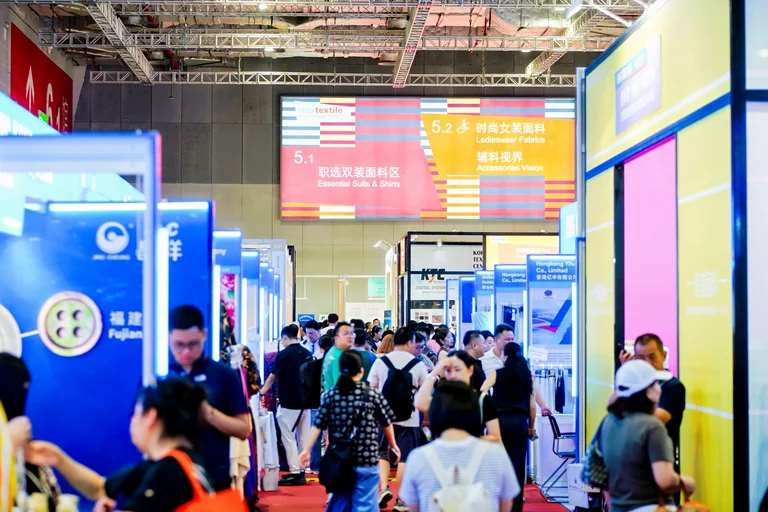
Twin exhibitions DyeChem World and KnitProcess will be held jointly in Tirupur from October 22-24, 2021. To be organized by Tirupur’s NIFT-TEA College of Knitwear Fashion, AIC NIFT TEA Incubation Centre for Textiles and Apparels and Textile Excellence; SDC International India will be the co-organizer of the event. Covering the entire range of textile dyes, chemicals, finishes and technologies, DyeChem World will create a platform for interaction and knowledge sharing between the dyes and chemicals and textile industry.
KnitProcess exhibition will help the industry explore and adopt latest innovations in knitting and post processing sector. The exhibition will cover the entire value chain of knitwear processing technologies till garmenting. The important highlight of the events will be the CEO Summit which will bring together all the head honchos from the global textile and apparel, fashion brands and retail industry.
The primary aim of the meet is to facilitate an interactive and candid networking for business. However, it will also discuss core issues of sustainable practices, sourcing and adopting it to supply chain.
COVID-19 leads to decline in maternity wear sales
As per Allied Market Research’s new report, titled, ‘Maternity Wear Market,’ COVID-19 outbreak has led to a decline in sales of maternity wear across the globe. The main reason for the decline is disruption in export and import activities all over the globe. Disruption halted trade of major clothing and apparel exporters China and India. Customers are not getting their products on online channels.
However, after the lockdown ends, the industry is expected to see an upward growth and products will also be easily available on retail outlet as well as e-commerce platform. The maternity wear industry is expected to boost market growth. However, low birthrate remains an obstacle in the growth of this industry.
Alaska, Washington, and Monaco have recorded the lowest birthrate, hampering the growth of the maternity wear market in these regions. North America holds the maximum revenue of maternity clothing wear because of celebrity influencers over social media and high disposable income. There is high demand for formal wear in North America because of a large number of population being women, which again boosts the need for maternity clothing during pregnancy. Asia-Pacific is also a potential market for maternity wear because of increasing pregnancy photoshoots, which increases demand for purchasing branded maternity wear in countries like India and China.
These countries also have high birth rates, which, in turn, increases the need for maternity wear, boosting sales and revenue of this industry