


FW
Archroma makes references of Color Atlas Library available
A global leader in specialty chemicals towards sustainable solutions, Archroma has made 5’760 color references of its Color Atlas library available in ASE file format for open access to the users of most design software for fashion, apparel, and textiles. With this, designers and stylists are given open access to the largest library of colors for cotton and polyester.
ASE or .ase (for Adobe Swatch Exchange) files are used to upload, share and access colors through the swatch palette of design software such as Photoshop, Illustrator and most CAD (Computer-aided design) systems.
The Color Atlas by Archroma was launched in 2016 to provide fashion designers and stylists with off-the-shelf color inspiration that can be implemented in production with just a few clicks.
The Color Atlas continues to evolve in line with Archroma’s commitment to sustainability through innovation. The company describes its approach as “The Archroma Way to a sustainable world: safe, efficient, enhanced, it’s our nature”.
All color references available in the Color Atlas have been formulated with products that comply with leading international eco-standards, and can be selected based on the desired sustainability profile.
Each color from the Color Atlas by Archroma® is available for purchase from Archroma as a physical color standard that includes precise digital data and access to global dyeing technical support.
Tunisia’s textile and clothing exports increase 21.86% from Jan-May’22
Tunisia’s textile and clothing exports grew 21.86 per cent to touch €1,137.8 million in the first five months of current year compared the same period in 2019 when the export valued exceeded 12.05 per cent to €1,015.4 million. In May, Tunisia’s exports increased 38.77 per cent.
The value of its ‘pants’ exports increased 28.73 per cent in dinar until the end of May 2022. Tunisia’s exports to the French, Italian, German, Belgian, Spanish, English and Portuguese markets grew 15.3 per cent, 28.3 per cent, 43.3 per cent, 12.2 per cent, 24.9 per cent, 40.6 per cent, and 44.8 per cent respectively, while exports to the Dutch market declined 5.1 per cent. Exports of ready-to-wear to the European Union grew 24.28 per cent to €871.9 million at the end of May 2022, compared to the same period last year. These exports make up 77 per cent of all exports of the sector.
India’s textile and apparel exports to grow to $110 bn in six years: Bain & Co
India’s textile and apparel exports are set to grow to $95-110 billion by the next six years from $44.40 billion in FY’22, as per the latest Bain & Co report. As per the report, India’s total merchandise exports are expected to reach $1 trillion by FY ’28. Manufacturing exports are set to grow at 15 per cent CAGR to reach $418 billion in FY’22.
Exports from other sectors such as chemicals ($110-130 billion), electrical and electronics ($120-145 billion), automotive ($45-55 billion), pharmaceuticals ($45-50 billion) and industrial machinery ($70-75 billion) too are estimated to grow significantly.
Rising capacity expansion, government support, increased mergers and acquisitions and PE/VC-led investment, are set to boost the country’s sustained economic growth in the years to come, says Deepak Jain, Partner, Bain and Company and Co-author,
Growth of India’s $1 trillion manufacturing exports will be driven by priority sectors such as chemicals, auto, electronics, pharma, textiles and industrial machinery that will contribute 50-60 per cent share of manufacturing exports, adds Sushil Pasricha, Expert Partner, Bain & Company and Co-author.
ICA signs three MoUs to facilitate new collaborations
To acknowledge the alliance between organizations, the International Cotton Association (ICA) has signed three more memorandum of understandings (MoUs). The most recent MoUs signed by ICA include Aid by Trade Foundation with its initiative Cotton Made in Africa (CmiA) (signed earlier this month), the U.S. Cotton Trust Protocol (signed last February) and the International Textile Manufacturers Federation (ITMF) (signed in 2021).
These MOUs will help organizations collaborate with each other to work towards a number shared goals including promotion of sanctity of contract; training and visit programs; information exchange and dissemination; diplomatic initiatives; testing and quality issues. They will make trading safer besides strengthening the relationships between organizations with increased communication and collaboration, says Alex Hsu, President, ICA.
The ICA also has a formal commitment and bilateral agreement on safe trading with the Better Cotton Initiative (BCI) and existing MoUs with the Cotton Association of India (CAI), China Cotton Association (CCA) and China National Cotton Exchange (CNCE).
Lineapelle London to present Fall-Winter 2023-2024 trends
Lineapelle London will present the Fall-Winter 2023-2024 trends in the Ham Yard Hotel in the city. It will be a prelude to the 100th edition of Lineapelle scheduled to take place at Fieramilano Rho from September 20-22, 2022. Held from July 13-14, 2022 in Manhattan, the Lineapelle New York exhibition showcased 119 exhibiting companies, 60 from Italy and 59 from abroad.
Fulvia Bacchi, CEO said, organized for the last 20 years, the exhibition continues to serve ‘Made in Italy’ products and stabilize business between the two companies. The pandemic has made clients more attentive to sustainability and value addition in products, she adds. Exhibitors at the show said, it provided them a networking opportunity with established top brands and many potential new customers and start-ups looking for solutions to differentiate their supplier network in Europe and, above all, Italy.
Froy Club awarded with C.L.A.S.S. ICON Award 2022
C.L.A.S.S. Eco Hub has selected experimental and responsible project in Milan, Froy Club as the winner of C.L.A.S.S. ICON Award 2022. The annual contest aims to sponsor a visionary creative for combining design, responsibility, innovation and communication. Giusy Bettoni, CEO and founder of C.L.A.S.S says, the firm was impressed by the project’s mastery in knitwear. The interesting colors and shapes used in the project are cherry on top.
The project is rooted in Armenian culture to paint an image enriched by the melting pot of other traditions, using an artistic language with blurred boundaries. Through its collections, the brand tells stories of everyday life, populated by characters who embody the vices and virtues of contemporary society.
Working with a sustainable ethic, Froy reconciles traditional know how and innovative techniques to create hybrid, versatile and speaking surfaces. The brand uses Italian certified fabrics and yarns that meet European standards, selecting the highest possible number of natural materials to create high-quality products with a circular life. Froy also chooses GOTS, FSC and OEKO-TEX certified fabrics and yarns in order to support a clear production chain.
Rising domestic consumption to drive textile and apparel demand: TTF
Experts believe, the current trend of uncertainty in the textile and apparel sector is transitory and vibrant domestic consumption will drive demand in the next few with exports volumes reviving. Since last three months, Indian textile and apparel sector has been facing several challenges in demand and operational profits.
Domestic consumption is expected to grow nominally due to GDP expansion and the economy opening up. The $85 billion apparel industry will expand at least 5 to 7 per cent this year. As per Prabhu Dhamodharan, Convenor, Indian Texpreneurs Federation (ITF), demand for yarn and fabric is expected to surge with the approaching festive season.
Buying will reappear as raw material prices have fallen and manufacturers have exhausted their inventories, he adds. Supply of yarn and fabrics dropped in May. This is expected a favorable demand trend in the upcoming cycle, he adds..
Buyers are expected to reappear with pre-COVID levels of orders once their inventories decline due to current discounts, indicate international buyers.
US data for May indicates strong import trend. The US imported Rs. 66,000 crore worth of apparels in May, which is higher by 5 per cent compared to the previous 3 months’ average. Reduction in freight and raw material cost will also help in boosting overseas demand for textiles.
Clean Clothes Campaign launches initiative to ensure fair wages to laborers
Clean Clothes Campaign launched its new initiative: Good Clothes, Fair Pay on July 19. .The campaign was launched with an aim to collect one million signatures from European citizens to support the European Citizens Initiative (ECI) that urges the industry to pay fair wages to workers. The campaign urges brands and retailers to propose, implement, monitor, and publicly disclose a time-bound and target-bound plan to ensure fair living wages to workers. It urges them to identify risks groups hit hard by low wages.
The Good Clothes, Fair Pay campaign will run for exactly one year. On collecting one million signatures, the Citizens Committee will discuss the content of the proposal directly with the European Commission. The issue of living wages has become more relevant than ever, Decades of poverty wages render workers helpless in providing basic needs for themselves and families, says Mario Ivekovic, Novi Sindikat, a labor union in Croatia.
Sales recovery drives up apparel brands expansion plans in India

Apparel retail has started buzzing again with prices increasing in both India and globally. The apparel and footwear segments in India are growing in double digits with offline retailers’ revenues rising almost 25 per cent this year, as CRISIL report indicates. Encashing on this, Indian apparel retailers are setting up new stores besides exploring new formats. Retailers are increasing their store count by 15 per cent this year, opines Pankaj Renjhen,COO & Joint Managing Director, Anarock Retail.
Brands expand as sales surge
Apparel retail has so far remained unaffected, despite inflation in fuel and other commodities leading to a price rise across categories. Sales in discretionary segments such as fashion and jewelry, have surged past COVID levels. A survey by the Retailers Association of India in May 2022 shows, retail sales in India jumped 23 per cent increase in April compared to the pre-pandemic period. Apparel brands including Shoppers Stop and Aditya Birla Fashion and Retail have announced plans to expand their physical store network. Shoppers Stop plans to open 20 small sized stories and 20 beauty stores over the next two years.
Likewise, Indian Terrain plans to expand in Tier I and III cities. Aditya Birla Fashion and Retail (ABFRL), is also looking to add over 100 new stores of Ethnicwear and Pantaloons annually.
International brands expand India presence
Meanwhile, many international brands are also opening large-format stores outside metros. Japan’s Uniqlo is now opening new stores in Tier-II cities, while brands like, Zara and H&M have been expanding in other Indian cities. German footwear brand Birkenstock plans to open 25 outlets while Italy’s Pianoforte Group aims to launch 20 stores each of the Yamamay and Carpisa brands.
Cheap mall space boosting brand expansion
The pandemic has made mall space cheaper by around 20 per cent and the trend is likely to continue in 2022, says Kirti Khosla, Marketing Agent, Pianoforte, which is expanding its Yamamay and Carpisa stores. Similarly, DLF Malls is adding 130 unique brands across its retail and F&B categories in Delhi-NCR. The developer is seeing a heavy demand in athleisure and beauty segment, says Yogeshwar Sharma, DLF Retail - International.
Another trend that’s driving expansion is opening of more stores in Tier-II, III towns. Tier-II cities such as Indore, Lucknow, Ahmedabad, Jaipur, Udaipur, Chandigarh and Mohali are set to witness supply of close to two million sq ft of Grade A malls space, notes Shibu Philips, Director-Shopping Malls, Lulu Group India.
Fashion retail surges globally
And not just India, 2022 has been a good year for fashion retailers across the globe. Sales revenues of apparel retail in US increased 36.37 per cent over 2020. Growth continues in 2022 with apparel retail sales surging 13.76 per cent in January to April ’22 to $81 billion, as per OTEXA, reports.
In fact, the first quarter income of Macy’s, the reputed clothing giant, grew 178 per cent to $286 million owing to its Polaris turnaround strategy. Sales rose 13.6 per cent to $5.3 billion. Similarly, the sales of Abercrombie & Fitch Co grew 4 per cent to $813 million. Guess saw its first quarter revenue surge 14 per cent to $593.5 million – all thanks to licensing sales and Americas wholesale revenues..
Retailers, across the UK, have also witnessed consistent apparel sales growth. Sales of British athleisure brand Gymshark grew 54 per cent to £402 million while British luxury brand Burberry also saw its revenues increase 21 per cent to £ 2.8 billion for the year ended April 2022.
China’s stockpiling move fails to boost cotton prices
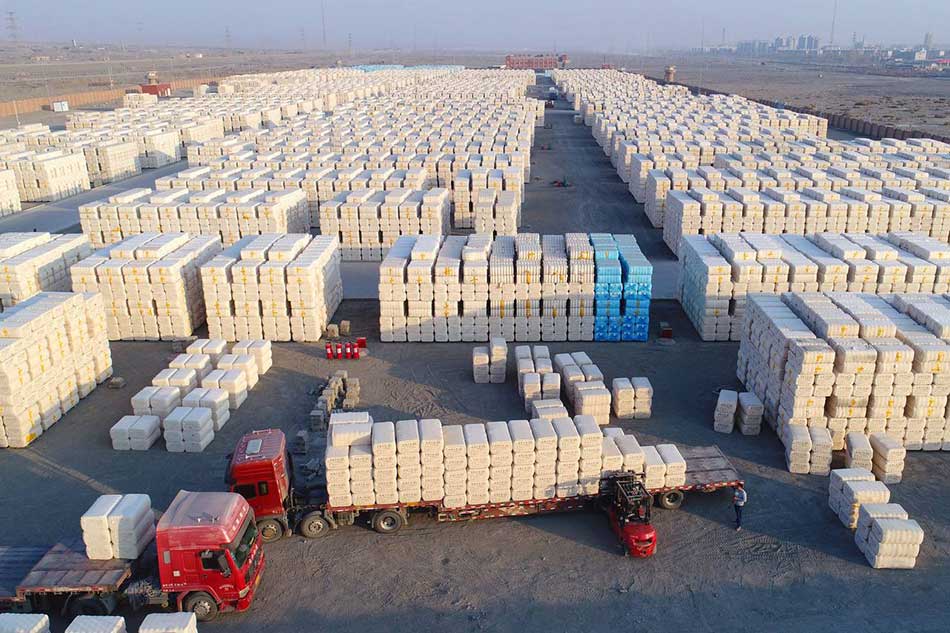
To boost recovery of China’s cotton market, Beijing aims to buy half a million tons of Xinjiang cotton for state reserves. China’s cotton market has been on decline ever since US announced ban on cotton made in Xinjiang.
Beijing has announced plans to buy between 300,000 and 500,000 tons of Xinjiang cotton, indicates the China National Cotton Reserves Corporation (CNCRC). Cotton will be bought at domestic spot price of below 18,600 yuan ($2,770) a ton, says CNCRC.
Cotton demand declines
Having restocked reserves between December 2020 and March 2021, CNCRC has been witnessing lowered demand for its cotton since its purchase announcement.
Cotton stocks on Zhengzhou Commodity Exchange have been on a decline since the announcement.
Last autumn harvest season, cotton-ginning mills purchased raw cotton at the cost of around 24,000 yuan per ton, says a cotton mill owner. This years’ purchase at below 18,600 yuan per ton indicates a loss of 6,000 yuan per ton, he adds.
Labor law causes price decline
The implementation of the US’ Ugyur Forced Labor Prevention Act is causing a steep decline in the prices of Xinjiang cotton. Lasting for eight years, the act has banned all US imports from Xinjiang which produces around 91 per cent of China’s cotton. In 2021, the region produced 5.27 million tons of cotton.
Cotton produced in the region is either consumed locally or sold to other provinces to be converted into fabrics or garments for national and international markets.
The pattern of weak demand continues
Now, with the US ban on Xinjiang cotton, downstream textile manufacturers, especially those that export their produce, are likely to avoid refilling stocks. This is likely to pressurize upstream suppliers in the prices.
Wu Xinyang, Analyst, China Futures believes, stockpiling only provides manufacturers with limited liquidity, it does not boost prices. It aids processing enterprises increase sales but cannot restructure the pattern of weak demand and supply in the market. Wu says, the US ban will only boost sales of foreign cotton, and more purchases on Xinjiang cotton.











