


FW
Booming sales drive apparel prices as consumers shop for more high-end garments
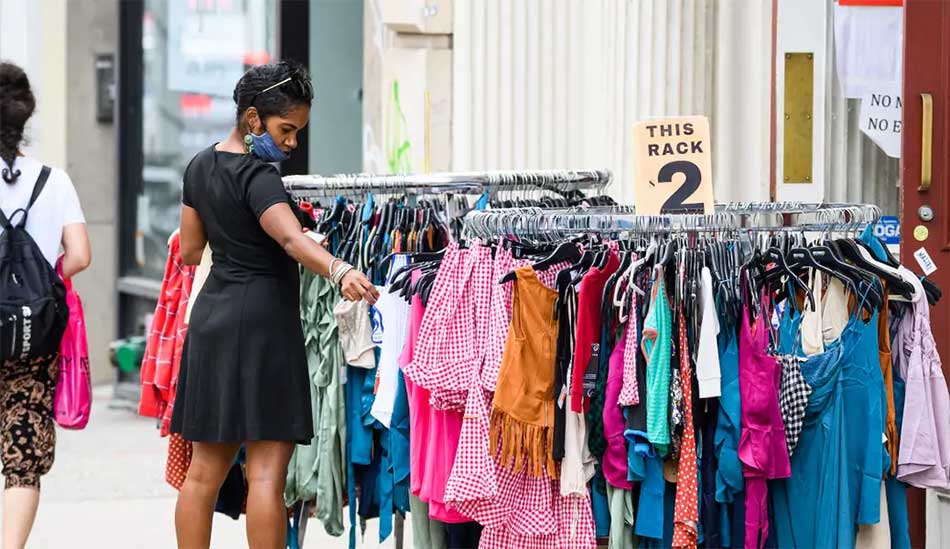
Refreshing wardrobes has now become more expensive for consumers with apparel prices rising 0.8 per cent in June compared to May and 5.2 per cent year over year, according to the US Bureau of Labor Statistics’ consumer price index.
In recent times, many apparel retailers including Target, Gap and Walmart announced markdown plans to rid themselves of the unsold inventory. Yet, apparel prices continue to rise, boosting jobs in the labor market.
Apparel market growth is being driven by consumers return to normalcy, says Kristen Classi-Zummo, Analyst-Fashion Apparel, NPD Group. Retailers’ revenues including Levi Strauss & Co, grew 15 per cent Y-o-Y during the quarter ended May 29. However, revenues of value brands that drive a small amount of the company’s overall sales and are sold by Walmart, Target and Amazon, declined in mid-single-digit from a year ago, says Chip Bergh, CEO.
Walmart reported mixed results during the first quarter of this fiscal. On one hand, the retailer had to mark down some of its clothing items as shoppers curbed discretionary spending; on the other, it could not match demand for apparel from more fashionable and high-brands such as sundresses and tops from Scoop, avers Charles Redfiled, Chief-Merchandising. US apparel sales grew 5 per cent Y-o-U from January to May and 13 per cent over the same period in 2019, affirms Classi-Zummo
Demand for formal wear surges
Demand for formal attire has grown with more Americans are going for weddings or heading to offices, she adds. A few consumers are also buying clothing items not for sale, says Kristen Classi-Zummo. For NPD Group, sales of women’s dresses surged 42 per cent Y-o-Y from January through May. From 2019-levels, sales the growth was 14 per cent.
Sales promotions to drive down inventory
Change in consumers’ demands impacted retailers who stocked wrong apparel items for example, GAP had stocked fleece hoodies and active clothes. The inventory levels of Abercrombie & Fitch and American Eagle Outfitters also rose 45 per cent and 46 per cent respectively from a year ago as few items did not sell and easing of supply chain delays led to piling of inventory. To rid themselves of unsold inventory, retailers Walmart and Target launched aggressive sales promotion initiatives. Apparel sales declined 8 per cent in volume against the same year-ago period, as per figures from NPD Group. This could pull down sales over time, analyst warn. Already, 35 per cent consumers are either buying or plan to buy less apparel, as per a survey by equity research firm Jefferies in June. Consumers earning less than $100,000 plan to cut back apparel spending.
Polarization in income groups
Contrary to last year, retailers have had to pass on more of their costs, including increased raw material or transport costs, to consumers. This has led to an increase in the prices of apparel. The growth in apparel prices is also being driven by higher-income shoppers who still have the means to pay for more expensive brands and clothing items, adds Classi-Zummo. For instance, swimwear priced at or above $100 is witnessing the biggest rise in demand.
This is polarizing consumers according to their income groups. While consumers with higher incomes continue to drive apparel sales, those with lower-income are deferring purchases, Classi-Zummo confirms.
European apparel makers urge nearshoring textile machinery
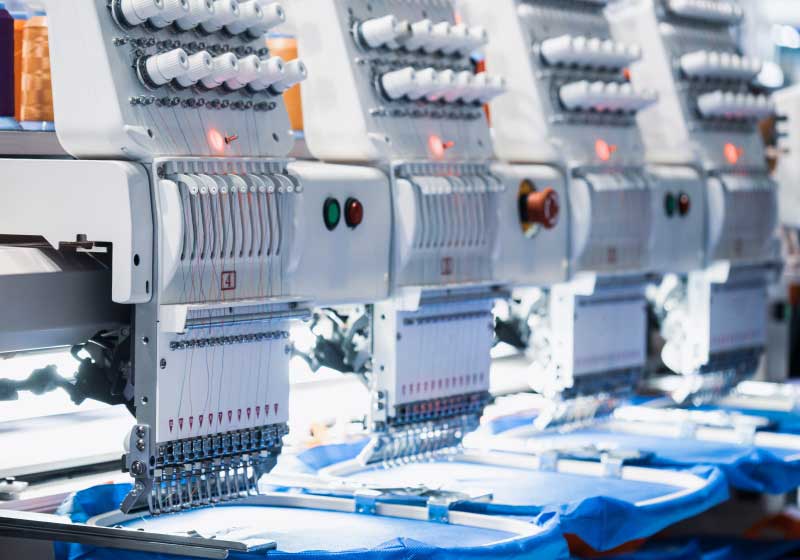
Apparel makers are urging European manufacturers of equipment ranging from embroidery machines to textile cutters to bring back production closer home.
Arthur Kitta, Head-Sales-Europe and Africa, Durkopp Adler GmBh attributes this to the desire of factories in Europe, North Africa and Middle East to expand and modernize their units. The sewing machine manufacturer from Bielefeld, Germany, is itself witnessing a surge in demand from the garment sector in and around Europe, as well as the Middle East.
The pandemic has bled garment supply chain and the situation is yet to improve. Prices of container shipping have increased with deliveries also being delayed. These factors are prompting apparel companies to set up factories closer to demand. With garment customization, the trend for nearshoring has also grown, says Rolf Köppel, Segment Manager-Textiles, Zünd Systemtechnik AG. Companies are looking for technologies to accelerate production in Europe and America besides investing in digital cutting technologies.
Technological innovations fuelling the nearshoring trend
Rise in the nearshoring is being propelled by innovations in technologies. Machine manufacturers are launching new tools to quicken production. For instance, D3 cutter machines from Zund Altstätten, Switzerland, have two heads to cut the laid-on textiles and are able to cut more textiles in the same amount of time.
Krefeld-based company ZSK Stickmaschinen GmbH is modernizing its machines. The company showcased embroidery machine at Texprocess that requires a single process to stitch thick sewing threads and thin embroidery threads. These machines will allow the company to produce garments faster in Germany, says Frank Giessmann, Sales Director-US, ZSK Embroidery Machine
Figures from the German Engineering Federation show, business for textile machinery manufacturers has been recovering since last year. New orders for German machinery manufacturers increased 66 per cent while sales surged 0.1 per cent. Exports of textiles machines from Germany grew 8 per cent to €442 million.
New orders are keeping the textile machinery sector alive after the pandemic-related slump, explains Elgar Straub, CEO, VDMA Textile Care, Fabric and Leather Technologies trade association. However, future outlook for the industry remains uncertain given the rising raw material prices, massive delivery delays and difficult transport conditions. Garment companies are also avoiding investments in new equipment. They are only upgrading their existing machines, adds Giessmann.
Still, a distant dream
The willingness to invest amongst fashion manufacturers is on the rise. But, they are yet to receive orders, adds Kitta. Textile machinery manufacturers are now betting on nearshoring to boost orders. Nearly 40 per cent of the over 70 supply chain managers of leading companies surveyed by consulting firm McKinsey at the end of 2020 revealed plans to shift to a more local supplier base. However, only 15 per cent actually did so.
Prominent amongst these is apparel company C&A, which has once again started manufacturing jeans in Mönchengladbach. Nearshoring still appears a distant dream for apparel companies though they continue to buy individual lines in Europe and new technologies in North Africa, adds Köppel.
Apparel companies face delivery delays
Orders for apparel companies had earlier dropped due to the COVID-19 outbreak. Now, these companies are facing delivery delays. The order backlog at Dürkopp Adler has increased as the company has not been able to increase capacities as quickly due to delays in deliveries, Kitta says. The average waiting time for shipments has now increased to around 12 months from the earlier three months, he rues.
Indonesia to use new technologies to increase textile industry competitiveness
Making Textile and Textile Product (TPT) industry, is one of priority areas in the Making Indonesia 4.0 roadmap. the Ministry of Industry (Kemenperin) aims to use new technologies to produce clothing textiles for more specific needs and increase the competitiveness of the domestic textile industry. Indonesia's modern textile industry commenced operations with the establishment of Textiel Inrichting Bandoeng (TIB) in 1922. It completed 100 years in 2022. At this stage, the textile industry is expected to grow with innovations by adopting new technologies and manufacturing process, says Agus Gumiwang Kartasasmita, Minister of Industry.
The textile industry is also expected to adopt the principles of a circular economy through sustainable textile and fashion, he adds. The Ministry of Industry continues to strive to improve the competitiveness of the textile industry through various efforts. In 2022, the ministry will continue to provide engine price discounts. Till date, 10 textile and textile industry companies have taken advantage of this program through the Agreement for the Granting of a Rebate Reimbursement (P4H), Kartasasmita adds.
In 2022, the Ministry of Industry will focus on providing incentives to purchase machines for the fabric improvement industry and the fabric printing industry, as well as on machines/equipment with 4.0 technology such as artificial intelligence, internet of things, augmented reality/virtual reality, advanced robotics, 3D printing and machine to machine communication, he notes.
To increase the competitiveness of the textile industry sector, the Ministry of Industry aims to train and competent industrial human resources (HR), one of which is through vocational education, Kartasasmita adds.
Elevate Textiles acquires membership of Textile Exchange
Parent company of Cone Denim, American & Efird, Burlington, Gutermann and Safety Components, Elevate Textiles has acquired membership of the Textile Exchange Organization a global non-profit driving positive impact on climate change across the textile and fashion industries. The membership will enable Elevate and its brands to accelerate and further expand adoption of preferred fibers. It will guide the company towards a more meaningful production starting at sourcing raw materials and fibers.
Elevate Textiles currently participates in Textile Exchange’s 2025 Recycled Polyester Challenge. Launched by Textile Exchange and the United Nations Framework Convention on Climate Change’s Fashion Industry Charter for Climate Action, the challenge aims to help initiate a shift in the market toward the uptake of recycled polyester and the reduce greenhouse gases.
According to Jimmy Summers, Chief Sustainability Officer, Elevate Textiles, the company currently uses Textile Exchange standards at many of its facilities, specifically Organic Content Standard, Recycled Content Standard and Global Recycled Standard.
It looks forward to continuing working with the organization and provide customers and stakeholders with responsibly and sustainably sourced materials possible, he adds.
Puma keen to increasing sourcing from Bangladesh
In a recent meeting with Farque Hassan, President BGMEA, Anne-Laure Descours, Chief Sourcing Officer, Puma has said, the brand is keen to source more apparel products from Bangladesh, especially value-added and sustainable items. As per a Textile Today report, the meeting was also attended by Moyeen Hyder Chowdhury, Branch Manager, Puma-Bangladesh and Asif Ashraf, Director, BGMEA.
Highlighting the potential of Bangladesh as a sourcing country for value-added sportswear, outerwear, swimwear, activewear and workwear Hassan also apprised Descours about the RMG industry’s increased focus on diversification of products, especially non-cotton and high-end apparels.
389 exhibitors present A/W 2023-24 collections at 35th Milano Unica
The 35th edition of Milano Unica ended successfully with 389 exhibitor companies presenting their A/W 2023/2024 collections of high-end textiles and accessories for menswear, womenswear and kidswear. In addition, the exhibition also held 56 research and innovation areas, taking the total number of exhibitor companies up to 445.
Held from July 12 to 14 in Italy, the event was attended by 4,052 visitors, of which 2,799 Italian and 1,253 from other countries. The event recorded increased participation from the US, with 162 companies attending the event. In addition, there were significant numbers of visitors from Japan Korea and Australia, with 20 companies attending the trade show for the first time, all indications of a positive trend in the markets of the Far East.
Introduced by Alessandro Barberis Canonico, President, Milano Unica, the exhibition opened with a speech by the Minister of Economic Development, Giancarlo Giorgetti, who thanked the entrepreneurs for overcoming the difficulties involved in moving towards innovation. He also emphasized on the government’s intention to support textile and clothing companies in promoting their development and internationalization by supporting the system.
The first trade show to hold an in-person edition, in September 2020, following the delicate health situation, Milano Unica also held its digital edition with the online marketplace, e-MilanoUnica Connect.
Next Texworld Evolution Paris scheduled from February 06-08, 2023
The next edition of Texworld Evolution Paris will be held from February 6-8, 2023 at the Parc des Expositions de Paris-Le Bourget. The last edition held in July recorded a 29 per cent increase in visitors and marked the return of foreign buyers. In total, around 3,700 buyers attended the event alongwith international textile and finished product manufacturers selected by the Messe Frankfurt France team.
Over 3 days, around 3,700 professional buyers discovered 400 exhibitors gathered in Hall 4 of the Parc des Expositions de Paris - Le Bourget. The event also marked by the return of foreign visitors, whose proportion reached 83 per cent compared to 65 per cent in February. International buyers, particularly from Europe, attended the event in large number, followed by Turkish buyers, Germans, Dutch and Americans.
Exhibitors from China, India, Korea and Turkey attended the event. The products displayed by The Pakistani weaver Kohinoor Mills, which offers high-quality menswear cotton fabrics in the Elite area generated many buyers’ interests. Indian embroiderer Veekay International met buyers from nations that are not usually present at European trade fairs, such as Kosovo, Nigeria or Ghana, who placed orders for local markets.
At the Apparel Sourcing Paris show that was held concurrently, exhibitors also reported numerous contacts, such as the children's clothing manufacturer Raj Krupa Textiles, which had numerous engaging exchanges with buyers. Similarly, womenswear brand Smash Creations met with several European buyers looking for new sourcing opportunities to build a rather high-end offer.
Uniqlo’s revenues grow by 13.7per cent 9MFY’22
The revenues of Fast Retailing brand Uniqlo International grew 13.7 per cent Y-o-Y to ¥841.2 billion while the operating profit of the brand grew by 35.8 per cent Y-o-Y to ¥132.7 billion during the first nine months of FY23. The depreciation of the Japanese yen boosted sales and operating profit in yen terms. However, growth in local currency terms was boosted by a significant increase in revenues and profits from the South Asia, Southeast Asia and Oceania region and the North America and Europe (excluding Russia) regions. Revenues and profits from the Greater China region declined owing to the restrictions on general movement put in place to address the spread of COVID-19 infections.
Uniqlo’s parent company, Fast Retail Group’s revenues and profit rose to ¥1.7651 trillion and ¥271.0 billion during the first nine months of the current financial year. The company also recorded finance income net of costs of ¥78.1 billion due to the recording of a ¥77.8 billion foreign-exchange gain on foreign-currency denominated assets and other items. As a result, profit before income taxes rose by 42,2 per cent Y-o-Y to ¥349.2 billion yen.
Fast Retailing is advancing its LifeWear concept in everyday clothing. The entire Fast Retailing Group will accelerate its transition to a new business model based on the LifeWear concept. It will focus on the six principles of creating new value through products and services; respecting human rights in its supply chain; respecting the environment; strengthening communities; supporting employee fulfillment and implementing good corporate governance.
Fosun International to expand portfolio, focus on increasing US, China sales
China’s Fosun International plans to expand its portfolio by adding the Lanvin and St John Knits fashion brands, indicating a resilience of the luxury industry to current inflation and recessionary pressures. As per a SCMP report, Fosum will first list Lanvin on the New York Stock Exchange via a blank-check company in October or November. The brand will be acquired later next year, says Joann Cheng, Chairman and CEO, Lanvin Group.
Lanvin owns the eponymous French fashion brand as well as Italian shoemaker Sergio Rossi, Austrian lingerie brand Wolford, US womenswear St John Knits and Italian menswear brand Caruso. The company plans to boost US and China sales besides expanding its product range, diversifying beyond European brands and targeting younger consumers. The brand was acquired by Chinese conglomerate Fosun in 2018.
The acquisition could follow the template established by Lanvin’s acquisition of Sergio Rossi last year, which allowed it to expand its accessories range, says David Chain, COO. The company aims to tap the beauty and skin care sectors.
In 2021, Lanvin’s revenue grew 39 per cent, including sales from Sergio Rossi after the brand was acquired in the second half. The brand is poised to achieve profitability before taxes, depreciation and other items by 2024 as planned. It also filed its registration statement to list with the Securities and Exchange Commission.
Global cotton trade to rise marginally next season: USDA
Global cotton trade is either likely to remain stagnant or will rise marginally in the next global season despite production increasing by 3.3 per cent, says US Department of Agriculture (USDA). The association attributes this to the decline in consumption by China, Bangladesh, and Vietnam due to negative macroeconomic forces dampening consumer demand for goods. The World Bank and the Organization for Economic Co-operation and Development recently downgraded global economic outlook while the International Monetary Fund also projected a decline, as per USDA’s latest ‘World Markets and Trade’ outlook.
The decline in projected consumption is attributed to factors including the recent rise in cotton prices, high container rates and limited supply, besides rising inflation and hike in interest rates globally, including the Federal Reserve’s recent actions, the association added.
Next season’s global output is likely to reach 153.7 million bales (of 170 kg each) against 148.80 million, estimated USDA. India and China will produce 35.2 million bales each, it added. India’s cotton crop this season will increase by 12 per cent to 31.37 million bales, in line with the trade’s revised estimates, while China’s crop is projected at 34.5 million bales.
The USDA has lowered its global crop estimates for next season from 155.31 million bales a month ago. Subsequently, it lowered consumption for next season from its outlook a month ago. However, it will be marginally higher than the current season.
Consumption or next season is estimated at 153.49 million bales against 153.42 million bales this season. Global imports are estimated at 59.38 million bales against 55.48 million bales. However, they are lower than the June outlook of 60.81 million bales.











