


FW
Performance Days 2024 Spring Fair sets new records
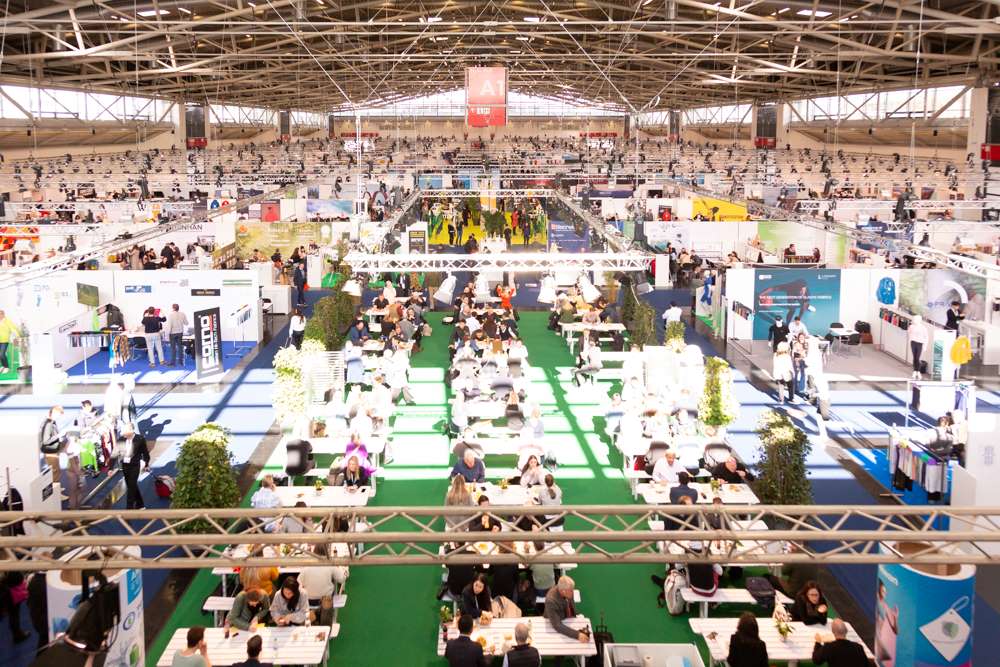
The recently concluded Performance Days Spring Fair 2024 was a resounding success, exceeding expectations and solidifying its position as a leading industry event. Held on March 20th and 21st at the Munich Trade Fair Center, the fair attracted a record-breaking number of participants, with over 3,000 trade visitors and nearly 440 exhibitors from across the globe.
This year's fair served as a platform for the sports and fashion industry to explore upcoming trends for the S/S 2026 season. Visitors gained insights into innovative materials and fiber developments, fostered new collaborations, and exchanged ideas that will shape the future of textile design.
A wealth of information platforms
Performance Days offered a diverse range of information platforms catering to the industry's needs. The Trend Forum, featuring the highly anticipated "Beyond Bottles - the Future of Polyester" Focus Topic, attracted significant interest. Additionally, the newly integrated Footwear Area, complete with a dedicated forum, provided a space for footwear-specific discussions.
Other highlights included the Innovation Area showcasing cutting-edge developments, the program of insightful Expert Talks, and the Sustainability Lounge. The Media Lounge and the new Reality Zone offered additional opportunities for learning and networking. The Reality Zone, in collaboration with Accelerating Circularity, focused on solutions for a circular textile supply chain. The Italian Bar served as a central meeting point, fostering connections and industry get-togethers.
Record attendance and industry recognition
Marco Weichert, CEO of Performance Days, expressed his delight at the fair's success. The record attendance is a testament to the event's significance for the textile industry. Weichert emphasized Performance Day’s role in driving innovation and shaping the future of textile design.
The diversity of participants, including designers, buyers, manufacturers, and experts, contributed to a vibrant exchange of ideas and expertise. This collaborative environment is crucial for advancing the industry.
New Platforms: Reality zone and technology hub
Performance Days continues to evolve beyond a traditional material fair, establishing itself as a comprehensive information platform. Two new platforms debuted at the Spring Fair and are slated to continue at the upcoming autumn event.
The Reality Zone introduced a workshop format, collaborating with Accelerating Circularity to explore solutions for a circular textile supply chain. The workshops connected polyester recyclers with fabric producers, fostering collaboration and promoting the use of recycled materials.
The Technology Hub, another exciting addition, addressed the growing trend of digitalization. Companies showcased solutions for digitalization processes within the textile industry. This platform provided a space for discussing and exploring innovative technologies that support sustainable practices.
Expert talks, sustainability lounge spark engagement
The Expert Talks program, featuring presentations, panel discussions, and Pecha Kuchas, remained a popular attraction. Kim Scholze, CSO at Sympatex, stepped in as moderator, leading insightful discussions on various topics. These included current trends in the Trend Forum, the future of color palettes, and achieving sustainability within the footwear industry.
The Sustainability Lounge, focusing on learning, participation, exchange, and networking, was equally well-received. Organizer Anna Rodewald highlighted the importance of collaboration and knowledge sharing for achieving sustainability goals within the industry.
Looking ahead
The next Performance Days fair is scheduled for October 23rd and 24th, 2024, at the Munich Trade Fair Center. The Performance Days platform, including the Marketplace and inspiring Material Stories themes, will continue to be a valuable resource for the industry throughout the year.
Intertek launches iCare to enhance transparency in India’s textile industry
A global leader in providing Total Quality Assurance services across industries, Intertek has launched the digital platform iCare in India, following its successful debut in Türkiye last November.
Offering a comprehensive solution for managing and monitoring the testing processes of textile manufacturers, Intertek addresses the longstanding issues of transparency and traceability in lab sample processing and testing. The platform leverages Intertek's unparalleled Science-based Customer Excellence Advantage to enhance the industry’s capability to deliver products to market.
Driven by regulatory demands and evolving consumer expectations, the textile industry increasingly demands holistic, data-driven Total Quality Assurance solutions. iCare caters to these needs by providing real-time insights into sample status and progress through an intuitive interface. It boasts of features like chatbots and live chat that enable customers to interact seamlessly with Intertek experts and perform various actions, such as managing test requests and report downloads, all through one centralised digital platform accessible round the clock.
Sandeep Das, Regional Managing Director -South Asia and President -Global Softlines and Hardlines, says, iCare provides end-to-end traceability besides streamlining communication with technical experts, ultimately ensuring product quality, safety, and sustainability across the value chain.
Manu Gahlowt, Director, Softlines India, adds, Intertek's longstanding commitment to innovation and customer-centricity positions iCare as a user-friendly solution tailored to meet India's evolving textile industry needs.
iCare currently operates alongside Intertek's existing suite of Total Quality Assurance offerings, further empowering customers to benefit from comprehensive solutions. However, Intertek plans to extend iCare's services to other key textile markets such as Bangladesh and Vietnam.
Fast Retailing to optimise Uniqlo store count in China
Parent company of the popular clothing brand Uniqlo, Fast Retailing plans to optimise the brand’s store operations in China by closing 50 underperforming stores while simultaneously opening 80 new ones.
Takeshi Okazaki, Chief Financial Officer, Fast Retailing, reveals, the company aims to achieve comparable average store sales in China to those in Japan within the next decade. To attain this goal, it will focus on shuttering unprofitable outlets over the next 2-3 years, directing its efforts towards launching new stores in high-traffic areas and prime locations.
By the end of the Japanese fiscal year ending in August 2024, Fast Retailing plans to increase Uniqlo storecount in China by 30 stores. Beyond August 2024, it may shift to maintaining a modest net increase in store numbers, adds Okazaki.
Fast Retailing also aims to bolster its e-commerce sales, which currently constitute 20 per cent of its revenue in the Chinese market.
Despite boasting over 1,000 stores in China, Uniqlo's sales in the country still trail behind those in Japan. As of the fiscal year ending on Aug 30, 2023, Uniqlo reported sales of Yen 890.4 billion from its 800 stores in Japan, compared to Yen 620.2 billion from 1,031 stores in China.
New report proposes seven recommedations to priortise decarbonisation in industry
A report released by a coalition of prominent apparel suppliers proposes seven recommendations to prioritise value chain decarbonisation and improve funding accessibility, availability, and affordability in the industry.
Titled ‘From Catwalk to Carbon Neutral: Mobilising Funding for a Net Zero Fashion Industry, the report emphasises the crucial role of collaboration across the value chain and the necessity of innovative financing mechanisms to align with the objectives of the Paris Agreement.
Co-commissioned by leading apparel companies including, MAS Holdings, and Simple Approach, the report sheds light on the pivotal role of innovative financing in the quest to decarbonise the apparel sector.
Its recommendations include advocating policy support by the brands and manufacturers to facilitate decarbonisation, adherence to rigorous transparency and sustainability reporting standards, including financing schemes and emissions reductions.
The report urges brands, retailers, and value chain partners to pilot and expand the Fair Climate Fund, adhering to Fairtrade principles and backed by an independent verification agency.
It also recommends stakeholders to increase funding for decarbonisation in manufacturing countries, offering low-interest and SME-friendly schemes to underwrite risks. Further, it urges commercial banks to allocate a fixed percentage of their lending portfolios to decarbonisation projects in the apparel sector's supply chain.
Stakeholders should reframe the conversation on decarbonisation to focus on supply chain efforts rather than solely burdening manufacturers, the report says.
It advises value chain actors to reassess relationships with suppliers to mitigate business risks associated with decarbonisation investments.
Moreover, the report urges the industry to explore unconventional funding models beyond traditional debt-based solutions. Drawing insights from interviews with 21 apparel manufacturers and key stakeholders, alongside extensive desk research, it offers a nuanced understanding of funding needs and constraints while proposing equitable and effective solutions.has urged the apparel industry to adopt a fairer and more impactful approach to financing climate action.
Supported by organizations including Deutsche Gesellschaft für Internationale Zusammenarbeit GmbH, Fabric Asia Project, and Transformers Foundation, the report is endorsed by influential bodies like the International Apparel Federation and Fashion Producer Collective.
Rieter’s K48 spinning machine consumes 18% less energy, shows trial
As highlighted during a recent comparison, the K 48 compact spinning machine by Rieter consumes 18 per cent lower energy than its competitors.
Conducted at a Turkish spinning mill, the comparison showed, equipped with 1,824 spindles, the K 48 machine saves approximately $12,000 annually, reinforcing Rieter's position as a leader in energy-efficient compact-spinning technology.
Conducted at spindle speeds of 19,200 rpm to produce Ne 30 cotton compact yarn, the trials at the Turkish facility showed, the K 48 requires only 1.21 kWh/kg of energy compared to the competitor's 1.48 kWh/kg. This advantage was further confirmed in another comparison for Ne 40 cotton yarn at 19,500 rpm.
The primary energy consumers in compact spinning are the spindle drive (75 to 80 per cent) and the suction system (12 to 17 per cent). Rieter's efficient suction system plays a significant role in its machines' energy savings, as competitors typically require additional energy-consuming suction systems for the compacting process.
Additionally, Rieter's Lena spindles contribute to lower energy consumption, offering a potential 6 per cent energy saving compared to standard spindles. Furthermore, the efficiency of the main motor drive is crucial, with Rieter's commitment to optimal energy utilisation evident in their use of up to 110 kW, highly efficient main motors with IE4 technology.
Construct a commercial wearable textile factory in the country, urges FOBAP
Representing garment exporters, the Foreign Buyers Association of the Philippines (FOBAP), is urging the government to support the establishment of new textile factories in anticipation of increased demand once the Philippines enters a free trade agreement (FTA) with the European Union (EU).
Emphasisng on the need for swift action, Robert Young, President, FOBAP, emphasises, construction of a pilot commercial-scale wearable textile factory will help attract foreign investors.
Currently, Philippine garment exports face tariffs of up to 12 per cent due to strict rules of origin, which require a certain percentage of value-added inputs to originate from beneficiary countries under the EU’s Generalised Scheme of Preferences (GSP). Young highlights a preference for locally sourced fabric by the EU, necessitating domestic textile production.
With FTA negotiations with the EU expected to resume, Young stresses on the urgency for local textile manufacturing capabilities to meet anticipated regulatory requirements. He cautions, failure to comply could result in industry players achieving only 80 per cent of their targeted garment and apparel exports this year.
In addition, FOBAP also requests the government to formally petition the EU for permission to utilise imported materials while still qualifying for zero duties during the construction phase of such facilities.
StudioSuits launches latest collection of Limited Edition Suits and Jackets
StudioSuits has introduced its latest collection of Italian Limited Edition Suits and Jackets, to celebrate Italy's illustrious textile heritage. Made from opulent and refined fabrics, these suits and jackets have been made from materials sourced directly from esteemed mills in Biella and other renowned regions.
StudioSuits extends the allure of premium Italian fabrics at affordable rates to a wider audience by employing a savvy bulk purchasing strategy. This strategic maneuver helps the brand boost the collection's popularity and spur brisk sales.
Devoted to delivering garments that exude luxury and sophistication, StudioSuits offers a diverse range of styles within this collection, catering to both classic business attire and casual wear. Furthermore, customers enjoy the opportunity to personalise every aspect of their suits, from fabric choice and color to patterns and button selections, ensuring a bespoke fit and a unique aesthetic tailored to each individual.
Specialising in bespoke tailoring, StudioSuits places a premium on superior craftsmanship and customisation in men's fashion. Committed to sustainable practices and unwavering quality, the company strives to offer every discerning gentleman the pleasure of owning a tailor-made wardrobe.
Hyosung TNC secures $1billin investment for BDO project in Vietnam
Leading chemical company, Hyosung TNC has secured a $1billion investment approval for its ambitious ‘Hyosung BDO Project; in Vietnam.
The project, which entails establishing a state-of-the-art Bio-BDO plant with an annual production capacity of 200,000 tons, was approved by the Ba Ria-Vung Tau Provincial Government during a prestigious ceremony held in Phu My 2 Industrial Park on March 30.
By investing in multiple Bio-BDO production facilities, Hyosung TNC aims to capitalise on the increasing demand for eco-friendly alternatives. Derived from fermented sugars sourced from sugarcane, Bio-BDO promises to replace traditional fossil-based raw materials entirely, marking a significant stride towards sustainability.
Partnering with Geno, a pioneer in sustainable materials and technology, Hyosung TNC is set to fast-track its Bio-BDO project. The company plans to leverage Geno's proven technology to commence production with an annual capacity of 50,000 tons by the first half of 2026.
The cornerstone of Hyosung TNC's endeavor lies in establishing the world's first fully-integrated production system for bio-spandex. By vertically integrating the production process from raw material to fiber, the company aims to set new standards in sustainability.
Looking ahead, Hyosung TNC aims to significantly expand its sustainable textile sales, targeting over 20 per cent by 2030. With regen™ BIO spandex at the forefront of its offerings, the company seeks to drive positive change in the fashion and textile industry by prioritising natural resources, reducing environmental impact, and fostering a more sustainable future.
TextileGenesi launches upgraded version of software platform to boost traceability
A Lectra Group company, TextileGenesis has launched the enhanced 2.0 version of its software platform to improve traceability in the fashion industry. This upgrade version of the platform enables brands and manufacturers to digitally track their textiles, from raw materials to finished products, thus ensuring the authenticity and sustainability of their garments.
The new version boasts of several key features like risk management by identifying potential issues within the supply chain using publicly available databases.
The system provides a comprehensive picture of the entire supply chain by tracking materials through over 300 different production stages. It integrates with over 90 per cent of major material certification standards allowing third-party verification of sustainability claims.
The platform also enables TextileGenesis to verify the source of materials from Tier IV and V suppliers, thus ensuring responsible practices throughout the production process. Further, it simplifies communication between brands and suppliers by offering a standardised data exchange through APIs and SFTPs.
Along with an enhanced user interface and increased data integrity checks, these improvements make TextileGenesis a powerful tool for promoting transparency in the fashion industry. Currently, the platform is being used by over 8,000 users across 70 countries to achieve greater traceability within their supply chains.
Global home textile exports surge 9.9% Y-o-Y in Feb’24: EPB
Global home textile exports surged by 9.9 per cent Y-o-Y to $84.61 million in Feb’24, compared to $77 million in the same month of the previous fiscal year, as per data from the Export Promotion Bureau (EPB).
However, over the past 18 months, the sector’s export income has been fluctuating, ranging from a low of $1.04 billion in September 2021 to a high of $1.74 billion in April 2022, for FY’21-22. Unfortunately, in the subsequent fiscal year of 2022-23, exports plummeted to nearly half their previous levels across all months.
This decline was not exclusive to Bangladesh; it was a global trend. According to the International Trade Center, China, the leading exporter of home textiles, saw a 10 per cent decline in exports to $37.66 billion in 2022. Similarly, India's exports dropped by 9.88 per cent to $6.02 billion, while Pakistan managed to buck the trend with a 2.17 per cent increase to $5.64 billion. The global home textile export market, valued at $122.90 billion in 2020, dwindled to $91 billion the following year, and further to $85 billion last year.
Entrepreneurs attribute this multifaceted decline to various factors, chief among them being the repercussions of the Russia-Ukraine war a year and a half ago. This geopolitical turmoil dampened demand in key markets such as the European Union (EU) and the United States. Moreover, domestic factors like the 3 per cent increase in gas prices exacerbated the situation, leading to a rise in production costs by approximately half a dollar per kilogram.











