


FW
Awareness, tech adoption can boost India’s wool industry
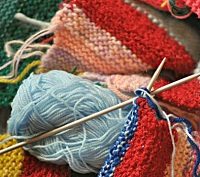 As a part of its structured breeding program launched through the National Livestock Mission, the Indian government imported 199 female and 41 male Australian Merino in 2019. After successful shearing for about five months, these sheep are expected to produce a batch of lambs that will offer the softest and the finest wool for apparels. A Down to Earth report says, these lambs are expected to reduce India’s dependence on raw wool imports, and boost pastoral economy. The government plans to replicate the program in Rajasthan, a state known for its superior carpet grade Chokla and Magra wool, informs Ashok Liladhar Bist, Additional CEO, Uttarakhand Sheep and Wool Development Board
Wool consumption drops to 10 per cent
The report says, one reason for the government’s growing sheep imports is the decline in domestic wool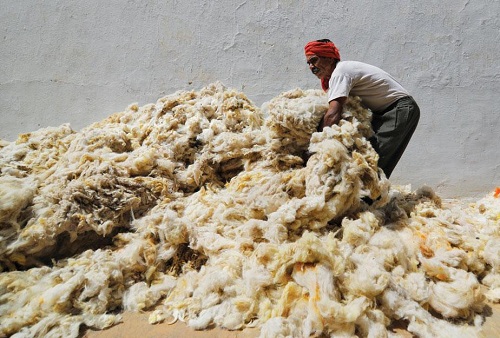 production. Data from the Ministry of Textiles indicates, as of 2018-19, India’s average annual yield in India declined to 0.9 kg as against the world average of 2.4 kg. During that year, India produced 40.42 million kg of wool against its consumption of 260.8 million kg. This increased its dependence on raw wool imports, particularly on Australia and New Zealand.
Despite an overall rise in population, sheep numbers in major wool-producing states like Himachal Pradesh, Rajasthan, Gujarat, Andhra Pradesh and Jammu and Kashmir are declining. In Rajasthan, sheep population declined by 13 per cent from 9.1 million in 2012 to 7.9 million in 2019. Historically a wool hub, the state now also sells grains. In the last 10 years, India’s consumption of indigenous wool dropped to 10 per cent as the quantity produced is not sufficient reveals a study the Centre for Pastoralism, an initiative of Gujarat-based non-profit Sahjeevan.
Incentives can boost wool sector
Imports and crossbreeding are unlikely to resolve this issue and India needs to improve the quality of wool, say experts. The Down to Earth report says, Indian farmers also need to increase focus on sheep breeding for wool rather than for meat. The government needs to incentivize wool shearing and make it a lucrative option for farmers, says Sushma Iyengar, Founder, Kutch Mahila Vikas Sangathan, Thirdly, India needs to increase land pastures across the country. Grazing land in Rajasthan fell from 1.7 million hectares in 2007-08 to 1.6 million ha in 2017-18, shows data from the State Agricultrual Department shows, Land under grazing in other states like Gujarat is also shrinking, while in Uttarakhand and Telangana, it is out of farmers’ reach.
Decline in wool shearing can also be attributed to shepherds’ reluctance to adopt modern practices like machine shearing. These practices require uninterrupted electricity supply, which is difficult in rural areas, adds HK Narula, Head, Arid Regional Centre, Central Sheep and Wool Research Institute.
Awareness and access can boost prospects
Wool shearing in India also suffers from high machine costs. Most shearing machines are imported and cost Rs 1-1.5 lakh, adds Narula. The Ministry of Textiles and IIT-Delhi have launched cheaper versions of machines but they are still in the testing stage. Around 25 per cent farmers in Uttarakhand engage in machine shearing, as against five per cent three years ago. However, sheep care has not received adequate attention in the state.
The state offers abundant scope for better processing and marketing of wool, and even a minimum support price (MSP), like in crops, affirms Narula. Yet, wool shearing in the state fails to receive adequate attention, explains Mohammad Sharif, Former Managing Director, Jammu and Kashmir Sheep Development Board. The Textiles Ministry attributes the constraints faced by the wool sector to outdated and inadequate pre- and post-loom processing facilities, the ineffective role of state wool marketing organizations, the lack of an MSP system and no educational institute for wool technology. The Ministry urges the government to raise awareness about this sector amongst shepherds and improve their access to land pastures. The government also needs to facilitate wool marketing and ensure better prices for farmers.
GSP continuation post LDC graduation can boost Bangladesh trade competitiveness
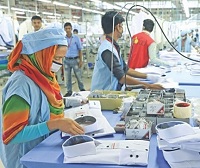 The UK’s Enhanced Generalized Scheme of Preferences (GSP) poses a huge risk to Bangladesh’s apparel trade. The rule states, Bangladesh may lose duty-free access to the UK apparel market, post its graduation to a developing nation, if its apparel exports exceed the set limit. Thereafter, regular tariffs will apply to exports.
Tough times for Bangladesh textile, apparel exports
The rule may impede Bangladesh’s duty-free export facilities to the UK. In particular, it may obstruct textile and apparel exports if the export ratio exceeds 47.2 per cent. The proposed rules are similar to those stated in the EU's GSP Plus that provide GSP benefits to low-income and lower middle income countries. Under the enhanced rules, the UK market will include Vietnam, India, Indonesia, Pakistan and Sri Lanka. Bangladesh’s garment exports to this market are most likely to exceed 47 per cent after its status shift to a developing country. Hence, to continue benefitting from the GSP facility, Bangladesh needs to comply with 26 international agreements. It needs to comply with international human and labor rights, good governance and sustainability rules.
The Enhanced Framework directs countries to agree to comply with the 27 international conventions and their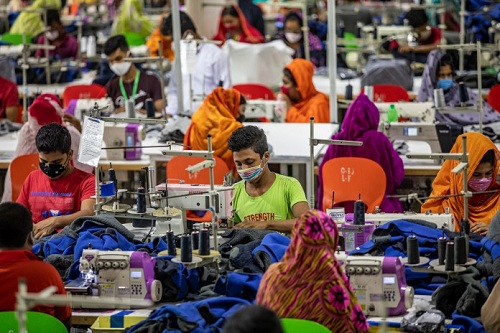 reporting requirements On the other hand, under the scheme’s General Framework, the World Bank classified low-income and lower middle income countries will continue to enjoy reduced tariffs on two-thirds of product lines.
Duty free access to UK market under theat
The Enhanced Framework also gives UK the right to cancel or suspend such facility for a country for reasons such as violations of human and labor rights, violation of international conventions on anti-terrorism and money laundering, violation of UN Single Convention on Narcotic Drugs and the failure to prevent illicit trade. Bangladesh fears this may prevent it from enjoying duty free access to UK market for another three years till 2029 after it moves out of the LDC status in 2026.
For Bangladesh, UK is the third largest export market for apparel products. As per Export Promotion Bureau last year, Bangladesh exported garments worth $3.7 billion to UK, which was 9.68 per cent of the country's total exports. Of this, export of woven garments was worth $1.33 billion, knitwear $2.11 billion and home textiles $96 million from the country in FY21.
Unconditional GSP facility for RMG exports
Bangladesh Commerce Ministry hopes UK will continue GSP benefits even under the Enhanced Framework. Meanwhile, they will try to get unconditional GSP facility for RMG exports with relaxation under product graduation rule. Post-Brexit, UK plans to sign more bilateral trade agreements, says Khandaker Golam Moazzem, Research Director, Centre for Policy Dialogue. The country plans to sign free trade agreements with various countries to reduce the importance of unilateral scheme. Therefore, Bangladesh needs to ensure continuation of GSP facility for three more years after even after status shift from LDC.
Hyosung signs MoU to produce recycled nylon from abandoned fishing nets
Hyosung has signed an MoU with the Busan metropolitan government and social venture Netspa to produce Mipan regen Ocean, a recycled nylon textile made from abandoned fishing nets.
In addition to producing Mipan regen Ocean, Hyosung is expanding investment in a depolymerization facility that will improve the purity of ingredients by removing the impurities in fishing nets. Hyosung’s goal is to produce more than 150 tons of Mipan regen Ocean per month by Q2 of 2022.
The company has also partnered with the Ministry of Environment (MOE), Jeju Provincial Government, and startup Korean-based fashion brand, Pleatsmama, to produce and launch recycled polyester made from discarded PET bottles from South Korea’s Jeju Island. Earlier this year, it launched regen Jeju, which was adopted by The North Face Korea.
Regen Jeju’s success encouraged Hyosung to expand its domestic PET collection and recycling initiative to include the city of Seoul in order to produce regen Seoul 100 per cent recycled polyester.
Shahi Exports organizes skill training program for women
India’s largest clothing export business, Shahi Exports, and the Apparel, Made-Ups, and Home Furnishing Sector Skill Council (AMHSSC) recently held a skill training program for women.
As per a Textile Value Chain report, the program aimed to uplift economically backward women by training them as sewing machine operators and self-employed tailors.
The program was sponsored by Haldiram Snacks, one of India’s most renowned snack and sweets companies.
Shahi Exports has launched a CSR program to provide employable skills to Indian women. The company aims to make these women a bigger part of the skilling eco-system and to help them secure employment. The Government of India has been proactively encouraging CSR-funded skill development activities to promote skilling, reskilling and upskilling on a massive scale.
India’s biggest apparel exporter, Shahi Exports produces women’s, men’s, and children’s clothing, as well as home furnishings, and has a client list to be reckoned with, including Gap Inc., Walmart, H&M, JCPenny, PVH, and Target among others.
Textile Ministry seeks feedback on sector’s performance from EPCs
Piyush Goyal, Minister of Textiles, Commerce & Industry, Piyush Goyal, conducted a meeting with the Export Promotion Councils (EPCs) to have a feedback on the export performance of the sectors and also seek inputs regarding various issues.
The meeting was attended by the Chairmen and Heads of around 35 EPCs, Commodity Boards along with the senior Government officers were present in this meeting.
Raj Kumar Malhotra, Chairman, EPCH raised the issue of enhancement of rates under Remission of Duties and Taxes on Exported Products (RoDTEP) scheme.
He requested the Minister to intervene in the matter as handicrafts exporters who used to get higher MEIS rates, factor in the MEIS incentive in their pricing and low RoDTEP rates will make their products uncompetitive.
He specially stressed on the need for enhancement of RoDTEP rates for the handicrafts sector as the handicrafts sector engages 7 million artisans and any increase or decrease in exports affects their livelihood.
He also raised issues like restoration of provision of duty free import of essential embellishments, trimmings, tools consumables for handicrafts sector; restoration of MAI provision for opening of showrooms, warehouses and marketing offices abroad and display in international departmental stores; high container charges levied by shipping lines; policy framework for B2B e-commerce and others.
Sri Lanka’s garment and textile exports rise by 28% from January-June 2021
Sri Lanka’s textile and garment exports increased by 28 per cent year-on-year to $2.5 billion in the January to June period, according to statistics released by the Central Bank of Sri Lanka.
As per a report by Business of Fashion, textile exports increased by 47.8 percent to $156.6 million, while garment exports surged by 30.8 percent to $2.27 billion. The two categories accounted for 56.43 percent of all industrial exports from Sri Lanka during the first half of 2021, the report said.
From January-May 2921, Sri Lanka could maintain restrict the number of COVID-19 infections that helped it gain a competitive edge over neighboring textile and garment producers struggling with major COVID-related disasters.
However, from June onwards, Sri Lanka’s infections soared and reached historic highs in August. The government has rejected calls for a lockdown or curfews to help stem this rise in infections, saying the country is on track to vaccinate everyone over the age of 18 by September.
First Las Vegas Apparel proves a huge success
Debuting August 08-10 at the Expo at World Market Center Las Vegas, the first edition of Las Vegas Apparel was a huge success.
Hosted by International Market Centers, the show welcomed buyers from more than 30 states including California, Texas, Washington, Utah, Alabama and Florida in addition to Puerto Rico. International buyers visited from Colombia and Canada.
The Atlanta-based Get It GRL boutique’s mother-daughter team of Kim Askew and Jade Goins attended the show with Patrice Hull of C2bN. At the Vintage Addiction booth, designer Alesia Longenderfer sold her line of bags made from responsible sourcing such as recycled, upcycled and vintage materials for $15–$125 wholesale.
Las Vegas Apparel showcased collections from around 150 brands. The show allows retailers to spend quality time with the brands to fully explore new styles. In addition to brand presentations, buyers also can expect the trend education and trade show floor experience they enjoy at the Atlanta Apparel markets.
Italian luxe production model needs re-haul as pandemic poses new challenges
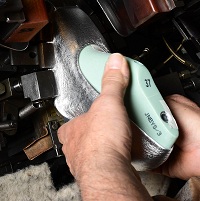 For long, luxury consumers have been coveting the ‘Made in Italy’ label on their garments. However, recent COVID-19-led disruptions have highlighted the need for reforms in this age-old industry. The industry needs to establish rules applicable to the Italian production system, says Andrea Rambaldi, Owner, FashionArt and President, Gruppo Moda Sport Calzatura of Assindustria Venetocentro. His company, which works with luxury leaders like Valentino, Armani, Ferragamo, Chanel, Lanvin and Yves Saint Laurent, plans to open its own production unit with around 20 subcontractors.
Currently, Italian luxury producers face multiple challenges including rising transport costs, pressure to reduce turnaround time and need to confirm to new sustainable strategies. They hope to resolve these issues post lockdown by making their supply chain more flexible and better organized in collaboration with artisan production networks
Highly fragmented production system
One of the foremost challenges forced by luxury makers in Italy is the complex production system in Veneto. The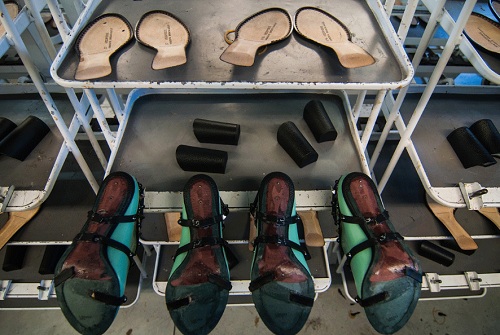 region is divided into a series of highly specialized districts including eyewear (Belluno), sportswear (Montebelluna), footwear (Riviera del Brenta) and leather (Vicenza). It houses over 10,000 companies that employ 73,000 workers. In 2020, exports from this region declined 11 per cent to €9 billion due to the pandemic, as per Unioncamere Veneto estimates.
Companies that managed to survive the crisis switched to making masks and medical devices. However, in the first quarter of 2021, demand for luxury products resurged with most orders coming from China. The Italian luxury production model relies on highly specialized small-sized companies. Vendors such as Fashion Art play an important role in ensuring compliance with deadlines, quality levels and cost controls in this production chain. The firm collaborates with the artisans to guarantee flexibility and speed. It has also started working with new brands.
The industry also suffers from lack of skilled workers, states Laura Dalla Monta, Owner, Confezioni Alice. It doesn’t make standard products. Dalla Montà relies on a vendor to procure work for her business and handle the relationship with the brands. She does not have the required infrastructure to manage contracts and comply with brands’ specifications.
Ilegal occupancy by Chinese brands
Another hurdle being faced by Italian luxury fashion industry is growing competition from Chinese companies in Veneto. As per Confartigianato Vento estimates, small Chinese-owned businesses now account for about 35 per cent of total production in the region. Most these Chinese companies operate illegally. Their production is of a lower level and standard, says Giuliano Secco, President, Confartigianato Veneto. Italian luxury brands are unaware of these subcontractors as the supply chain is managed by vendors who conceal these details from them.
To resolve these issues, some Italian suppliers plan to recruit skilled Chinese workers in their companies, while others plan to collaborate directly with Chinese firms. These firms plan to build long-term relations with luxury brands by encouraging more investments in personnel and machinery. Currently, these suppliers are struggling to fulfill orders in double-quick time. They wish to reward their workers for the efforts. But for this, the production model needs to change.
Bangladesh should follow up Accord with a new safety agreement
 With the Accord on Fire and Building Safety in Bangladesh set to expire in the next two week, time is ticking for Bangladesh to follow it up with a new safety agreement. This Accord agreement was signed by Bangladesh in 2013 after the Rana Plaza building collapse that killed over 1,100 workers and injured many more. The agreement revolutionized factory safety inspections in Bangladesh. Its binding nature, transparent reporting, and robust grievance mechanism, helped the country save thousands of lives by reducing building collapses and factory fires.
Expanding reach to other countries
In January 2020, governing brands and union assented to follow Accord up with a new agreement covering other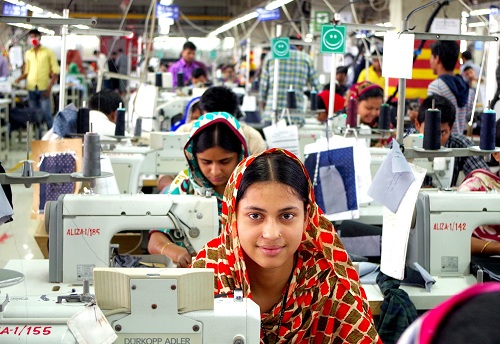 countries as well. The agreement would ensure safety rules remain binding even after the expiry of the current contract.
Negotiations for the agreement started late due to the COVID-19 pandemic and have dragged on beyond the initial deadline of May 31, 2021. The agreement did not attract brands like H&M, Aldi Nord, Otto, Auchan, and Carrefour, who failed to comply with human rights due diligence obligations, both under the French Corporate Duty of Vigilance Law or Loi de Vigilance as well as the upcoming German Act on Corporate Due Diligence Obligations in Supply Chains or Lieferkettengesetz.
Legal risks await companies leaving Accord
Miriam Saage-Maaß. European Center for Constitutional and Human Rights, believes, companies leaving the Accord risk legal proceedings under the French as well as the German law if they fail to fulfill their due diligence obligations.
Hundreds of factories in Bangladesh lack basic safety facilities such as fire alarms and sprinklers despite identifying thousands of safety hazards, reveals Accord data. The 63 Bangladeshi factories that produce for French brand Carrefour do not have a fully installed and verified fire alarm system while 43 lack completed sprinkler system. These factories pose a major risk to worker safety post Accord expiration, and a liability risk to Carrefour, says Carolijn Terwindt, Clean Clothes Campaign.
The Ready-made-garment Sustainability Council (RSC)’s mechanism alone cannot fulfill the human rights due diligence obligations in Bangladesh. The council fails to hold brands accountable for their actions. Bangladesh therefore, needs a legally binding agreement that mandates brands to continue supporting the Accord’s work -- including operating factories safely and providing them with financial assistance to so. Brands refusing to renew Accord would be solely responsible for future risks they face, adds Ben Hensler of Worker Rights Consortium.
US apparel imports surge by 26.92% in H1’21
The US apparel market has revived in 2021 following consumers’ optimism for shopping after a dreadful 2020 in both values and volumes. As per an Apparel Resources report, US’ apparel imports increased by 26.92 per cent in H1’21 to $35.38 billion from H1 ’20. Volume-wise, its imports surged by 38.39 per cent Y-o-Y to 13,365.48 million SME.
The values of US’ apparel imports declined by 11.63 per cent in H1 ‘21 to $ 40.04 billion in the first half of 2021. However, the US didn’t see any major decline in volume terms which fell marginally by just 0.23 per cent as compared to H1 ’19.
The two-year comparison and the negligible shrink in the volume-wise imports indicate that US buyers are still sourcing garment products from world over in bulk quantities. On the other hand, the decline in values says the unit prices are getting tighter – particularly for basic commodities, which will increase competition for manufacturing destinations more in the coming months!
There was steep decline in unit prices of imported apparels by the US during the first half of the year. In H1 ’21, UVR (Unit Value Realisation) was $2.64 per SME declined significantly from $2.88 in H1 ’20 and $2.99 in H1 ’19. These declining unit prices are an indication of stiff competition that apparel exporters are facing as time passes by in COVID-19 era.











