HKTDC International Sourcing Show underlines brands’ need to focus on consumers’ well-being
 In the webinar titled ‘The Perfect Storm: Future-Proofing Your Fashion Business’, Michael Ho, Marketing & Brand Partnerships Manager, Zalora, described 2020 as a year of expansion. The webinar was a part of the three fashion-related webinars hosted by the Online HKTDC International Sourcing Show recently. Ho said, as consumers were unable to travel during the pandemic, sales at most brand stores plummeted. This encouraged brands to scout for new sales channels. Zalora offered an attractive choice for such brands as it enabled them to cover losses from lack of physical sales but also increased average order frequency to 3.3 times a year.
Focus shifts to safety and comfort
The pandemic also forced industry leaders and consumers to shift focus from aesthetics to safety and comfort, said, Edwin Eeh, CEO, Hong Kong Research Institute of Textiles and Apparel (HKRITA) at a webinar tilted ‘What's In for Fashion: Sustainability is the New Normal?’ Consumers have also become more discerning about the materials used in their apparels and the production process, added Eeh. He advised all organizations to introduce practical innovations that can be adapted to the marketplace.
Humanity and morality to define future trends
Separation and loss experienced by many people in 2020 will define future fashion trends, pointed out Michael Leow, Marketing Head-Asia Pacific, Fashion Snoops at the webinar ‘The Visionary Fashion Trends: Lifestyle and Retail’. Leow explained, the four key trends for Spring/Summer 2022 will all be related to the restoration of humanity and morality. The first of this theme will be ‘Essential’ focusing on the emerging simplicity in people’s choices. The second theme ‘Nourish’ will focus on the well-being of consumers; the third ‘Liberte’ will reflect on their desire to be free from the pandemic induced restrictions while the last theme ‘Rebirth’ will focus on brands’ commitment towards environment and fair trade practices.
Matching customers’ requirements
To succeed, brands need to match their products with consumers’ tastes, said Jaana Jatyri, CEO, Trendstop, a trend and consumer taste forecasting agency. Jatyri predicts the industry will lose 50 per cent business and jobs in the next five year and advised fashion suppliers to use trend data to understand latest colors, prints and graphics, materials, shapes and detailing. This will ensure brands produce only items that consumers prefer buying and prevent avoid unwanted products from being dumping into the landfills.
In all, the Online HKTDC International Sourcing Show hosted a total of 17 webinars attended by over 60 industry luminaries.
PVH Foundation to support Americares’ relief efforts
The PVH Foundation, PVH Corp’s philanthropic fund dedicated to nonprofit donations and volunteer programs plans to support the annual emergency relief efforts of Americares, a health-focused relief and development organization. As a Sourcing Journal report says, the fund will ensure PVH readiness for emergencies, including pre-positioning relief supplies in disaster-prone countries. It will also help the organization maintain an international roster of on-call disaster response experts besides supporting their need assessments and deploying emergency response teams to disaster zones.
This initiative is a part of PVH’s Forward Fashion corporate responsibility strategy that besides eliminating wastes aims to form new collaborations to fight against effects of climate change on individuals around the world. Americares is involved in resolving over 30 natural disasters and humanitarian crises worldwide each year. The organization establishes long-term recovery projects and brings disaster preparedness programs to vulnerable communities. So far, it has provided more than $19 billion in aid to 164 countries.
It first partnered with the PVH Foundation earlier this year by providing bottled water, life-saving medicines, PPE and other essential relief items to families and local health centers affected by the severe winter weather in Texas.
Sintex Industries files for bankruptcy
Fraud-hit textile and yarn manufacturer Sintex Industries filed for bankruptcy after financial creditor Invesco Asset Management filed a suit against it for Rs 15.4 crore default in September 2019. As per VC Circle, Sintex Industries' subsidiaries include BVM Overseas, Sintex-BAPL and publicly listed Sintex Plastics Technology. In August last year, the non-bank lending arm of global private equity firm KKR approached the tribunal against a subsidiary of Sintex Plastics Technology to recover a debt it had sanctioned two years ago.
The unit called Sintex-BAPLowed KKR a principal sum of Rs 1,190 crore as well as interest. Sintex Industries said it has been working with lenders to bring a resolution plan in place for its business activities. Founded in 1931 at Kalol in Gujarat, it is a diversified company with its textile segment offering fabric and yarn.
For the December quarter of 2020, Sintex Industries posted a net loss of Rs 215 crore as against Rs 293 crore loss in the same quarter in 2019 and Rs 239 crore loss in the September quarter. Its total income improved to Rs 530 crore for the December quarter in 2020, from Rs 430 crore a year ago and Rs 323 crore in the September quarter.
Maharashtra imposes stringent curbs on fashion and e-commerce
Maharashtra has imposed stringent curbs on fashion and e-commerce for 15 days to slow rising coronavirus infections. Maharashtra accounts for about a quarter of India's 13.5 million COVID-19 cases. Chief Minister Uddhav Thackeray ordered most establishments and public places to close in the state except those which are deemed essential, including grocery shops, hospitals, banks and stock exchanges.
The curbs are likely to hit auto companies like Tata Motors, Bajaj Auto and Mahindra & Mahindra which operate factories in the state. E-commerce deliveries will be allowed but only for essential products, the government said, a decision that will affect deliveries and online ordering on companies like Amazon.com Inc and Walmart's Flipkart.
The restrictions will jolt businesses in Maharashtra but also risk having a broader impact on the Indian economy. The state accounts for nearly 15 per cent of India's gross domestic product, making it crucial for the country's economic recovery after months of slowdown.
Maharashtra had already shut down restaurants, bars, gyms, theatres and non-essential stores last week, a move some industry groups had warned will cause economic losses of billions of dollars.
Lenzing launches e-branding service for the Veocel™ brand
Lenzing is launching a certification and licensing service for the Veocel™ brand to elevate supply chain transparency for nonwoven fibers. The Lenzing e-branding Service provides the Veocel™ brand’s partners with a platform to showcase their use of sustainable, high-quality and ethically sourced materials.
The Lenzing e-branding service allowing producers, retailers and brand owners from hygiene, beauty and home care industry, to certify their use of Veocel™ branded fibers and develop co-branding campaigns that improve the value of their products.
First launched in 2018 for the textile industry, the Lenzing E-Branding Service unifies registration, application and approval in a state-of-the-art online system designed to eliminate the use of paper and reduce response times, with the aim to enhance efficiency by digitizing workflow. The system’s early success and positive feedback made the expansion to the VEOCEL™ brand a natural next step for the industry-leading platform.
As a digital hub for Veocel™ brand partners, the platform includes features to apply for new licenses, monitor application status, and manage existing licenses. Simultaneously, the platform will act as a support portal, showcasing the latest branding guidelines and support for Veocel™ brand certified products.
Indonesia, South Africa collaborate for a textile joint venture company
Indonesian garment companies collaborated with South African micro, small, and medium enterprises (MSMEs) to establish a textile joint venture company, Pan Africa. Pan Africa is a joint venture between Indonesia's leading garment company, Pan Brothers Tbk and South African MSME, Faithfulness. The company will import semi-finished personal protective equipment (PPE) garments from Indonesia and then finalize the processing at the Johannesburg factory.
At its inauguration ceremony, Indonesia’s ambassador to South Aricca, Al Farisi lauded the company as an ideal arrangement of mutually beneficial partnership. Anggun Paramita Mahidi, Head, Indonesia Trade Promotion Center in Johannesburg, emphasized that the success of the establishment of this company can serve as a precedent and pilot project for other Indonesian products, especially PPE, to enter and be accepted by the South African market.
Anne Patricia Sutanto, Deputy Managing Director, Pan Brothers Indonesia, said, the opening of the Pan Africa factory would be the start of deeper future cooperation.
H&M to launch multiple collections under new brand concept
H&M has introduced a new brand concept known as ‘Innovation Stories’. The concept includes launch of multiple collections in 2021. Each collection will emphasize on the importance of adopting forward-thinking sustainability processes, says the brand.
The first collection, Science Story, pays tribute to innovators of future fabrications. The collection introduces new materials such as EVO by Fulgar, a bio-based yarn derived from castor oil, and Desserto, which is a plant-based alternative to leather, produced from cactus plants. It includes key womenswear pieces like a wide-leg bright white jeans with removable double waistband, a lightly cropped chalk-white shirt with oversized breast-pocket and a cuffed tracksuit.
In its 2020 Sustainability Performance Report, H&M had announced its intention to use 30 per cent recycled materials by 2025. Currently, the brand uses 64.5 per cent recycled materials.
Gujarat Spinners Association assure yarn supply to Tirupur
To overcome the challenge of high yarn price, Gujarat Spinners Association assured AEPC of supplying yarn to apparel manufacturers in Tirupur. Saurin Parikh, President, Gujarat Spinners Association, said in the last 20-25 days prices had reduced, many countries, excluding Bangladesh, stopped importing from India.
Currently, Tirupur is largest consumer of yarn in India with 40 per cent consumers. AEPC invited Gujarat spinners to tap the prospect in Tirupur and join hands with knitwear exporters of this apparel hub for joint sustainable growth. For last few days, there has been lot of hue and cry in Tirupur as mills and traders had increased yarn prices in April also, while it was decided in a meeting that there will be no hike in yarn price during the April month.
Bangladesh apparel exports to the US surges to $194.08 million
Bangladesh apparel exports to the US surged to $194.08 million SME of garments in February 2021 against $89.73 SME of garments in the same period of last year. As per Apparel Resources, the value of US’ apparel imports from Bangladesh fell by 8.70 percent in February ’21 on a Y-o-Y basis. The country imported $ 5.39 billion worth of garments in February this year as against the $ 5.91 billion in the same month of 2020.
However, the import increased in volume terms by 3.20 percent to 2,069.78 million SME of garments during the month. Other exporters such as Pakistan, China, Bangladesh, Egypt, etc also noted growth in volume-wise apparel shipment to the US, while China and Pakistan upped their shipment in value and volume both terms.
Apparel exports by India, Vietnam and Indonesia to the US declined in both value-wise and volume-wise whereas exports by Bangladesh grew in volume.. Bangladesh’s apparel exports declined in terms of value to $480.98 million in February’21 against $528.47 million in the same month of the previous year.
COVID-19 leads to 80 per cent drop in demand for wool: Analyst, Australian Wool Innovation
COVID-19 has led to almost 80 per cent drop in demand for traditional woollen products, says Miles Barritt, Risk and Recovery Analyst, Australian Wool Innovation. The pandemic has led to a shift in wool’s primary consumer, as well as the marketing of the fibre, Barritt says. Demand for formal wear has faded with new casual wear, athlesiure wear, commuter wear and PPE rising in demand. The GDP of European markets contracted to – 8 per cent whereas the US’s GDP remained stable.
China emerged as the organization’s primary market with consumption of 80 per cent of its wool. The other four countries importing more than one per cent of Australian wool include the Czech Republic, Italy, India and South Korea. Pandemic has also lifted the popularity of online spending to new heights. Revenues of online retailers like Amazon and Alibaba increased by 38 per cent and 37 per cent in 2020/
Barritt predicts the wool market to have bright prospects in 2020. He expects the vaccination roll out programs to help companies restart businesses and consolidate their supply chains
More...
No shortage of yarn in the country: APTMA
APTMA has rebutted claims of non-availability of cotton yarn. The association said, Pakistan produces 200,000 tons of cotton yarn monthly with consumption of 1.3 million bales per month. Out of this, only 6 million bales were produced domestically, and balance had to be imported at international prices from the US Brazil and West Africa this year and 200,000 tonne of yarn production has been kept constant.
The spinning industry consumes 100 per cent of 30,000 tonne of synthetic fibers produced in the country, 200,000 yarn is produced from cotton and synthetic fibers monthly out of which only 100,000 tonne of yarn is consumed by value added per month balance is exported in form of 60,000 tonne of Fabric and 40,000 tonne of yarn every month. Hence, there is no question of shortage of yarn or fabric in the country.
APTMA also refuted claims of its yarn rates being above international rates. It said, the export sector already has the facility to import yarn for re-export of products free of duty from anywhere in the world except India. Export Refinance is available to value-added sector at a mere 3 per cent and should have been spent on purchasing yarn and cloth, the sector would not be reaching out to government for additional support.
Currently, cotton is at 80 cents and exchange rate is 152. The combined effect is that cotton imports are 22 per cent more expensive but the yarn manufacturers had to adjust pricing in line with the lower cotton price and exchange rate, taking a hit of approx. 10 per cent on the realized value of yarn. The rupee appreciated against the dollar by 8 per cent and thereby squeezed the textile sector by reducing the amount of rupees they would have been received
Steven Madden acquires 48.9 per cent share in European JV
American footwear, accessories and apparel group Steve Madden has acquired 49.9 per cent share in its European joint venture. The European business of the company distributes Steve Madden-branded footwear and accessories to a number of countries throughout the continent.
Founded in June 2016, the joint ventue has grown in double-digits over the last four years. This includes a 21 per cent year-over-year revenue gain in 2020. The company owns brands including its namesake Steve Madden label, Dolce Vita and Betsey Johnson. Its annual revenues decreased by 32.8 per cent year-over-year to $1.2 billion in 2020. Its annual net loss was $18.4 million, compared to net income of $141.3 million in the previous fiscal year.
By end 2020, Steve Madden had 218 company-operated retail locations, including seven internet stores, as well as 17 concessions in international markets.
India’s yarn exports increase in February 2021 as fibre exports decline
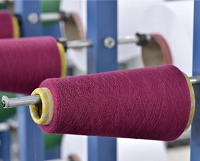 In February 2021, India’s export of basic textiles comprising fibres, spun and filament yarns increased 24 per cent Y-o-Y to $822 million. As per a report by Textile Value Chain, they accounted for about 2.9 per cent of total merchandise exported from India during the month. Driven by a sharp increase in cotton exports, these exports increased by 6.8 per cent on a cumulative basis in the first 11 months of 2020-21, compared same period a year ago.
China, largest importer of spun yarns
Export of spun yarns increased by 3.4 per cent Y-o-Y to 111 million kg worth $530 million in February 2021. Compared to January 2021, these exports declined by 16 per cent. With its import value doubling over the year, China emerged as the largest importer in spun yarns, followed by Bangladesh whose imports declined by 14 per cent. Together, these two markets accounted for about 45 per cent to total yarn imports during the month.
The volume of cotton yarn exports increased to 86 million kg worth $284 million during the month. Most of this yarn was shipped to 72 countries at an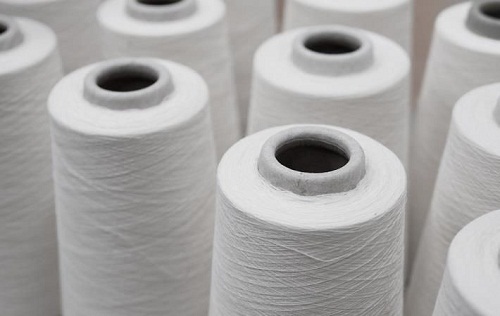 average price of $3.30 a kg, up US cents 32 from previous month and US cents 38 from a year ago. China remained the top market for cotton yarn, followed by Bangladesh, Vietnam and Peru.
Polyester dominates India’s yarn exports
The exports of 100 per cent man-made fibre yarns reached 9.2 million kg in February 2021. Majority of this included polyester yarn with exports worth 3.9 million kg, viscose yarn with exports worth 2.8 million kg and acrylic yarn with 2.3 million kg exports. The value of polyester yarn exports was $8.2 million with Brazil being the largest importer followed by the US and Turkey. The value of viscose spun yarns exports was $9 million and with Turkey being the largest importer of viscose yarn, followed by Bangladesh and Belgium.
India exported blended spun yarns worth $42 million in February. This included export of 12 million kg of PC yarns and 2.8 million kg of PV yarns. Brazil was the largest importers of PC yarn from India followed by Peru while Turkey was the largest importer of PV yarns from India followed distantly by South Africa.
India’s export of all kinds of filament yarns increased to 61 million kg. It was valued at $102 million. Its export of Nylon and viscose filament declined sharply from its level a year ago while export of polyester filament yarn increased by 1 per cent Y-o-Y and those of PP filament yarns increased by 4 per cent.
Manmade fiber exports reach 34 million kg
During the month, India exported 34 million kg of manmade staple fibres. The total value of these exports was $38 million. Of this, the volume and value of Polyester staple fibre exports declined by 8 per cent. On the other hand, the volume of viscose fibre yarn exports increased by 9 per cent while their value increased by 14 per cent.
India’s export of cotton fibers declined in February 2021 though the volume of these exports increased by 71 per cent to1.11 lakh bales worth $332 million. Bangladesh emerged as the largest market for Indian cotton during the month, followed by China and Vietnam.
India’s export price realisation for cotton declined below the Cotlook A index to US cents 80.29 per pound during February. During the month, Cotlook averaged $93.60 per pound, maintaining the competiveness of Indian cotton competitive in the global market.
Vaccine rollouts, localization to boost India’s luxury retailer’s prospects
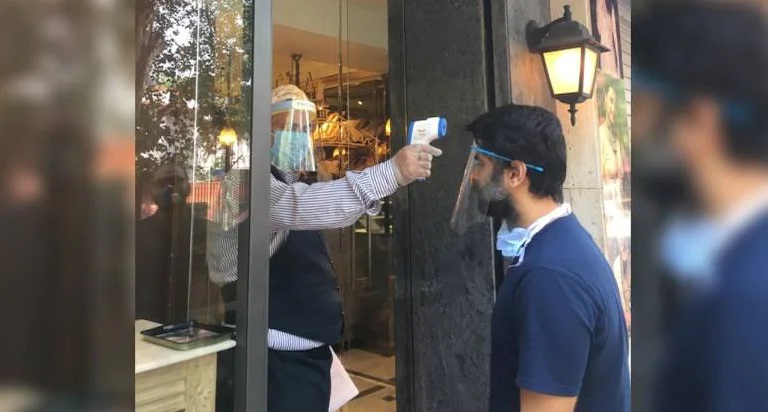
Like all other markets, the luxury fashion rental market too is bearing the brunt of recurrent COVID-induced lockdowns. As per Money Control, almost 80 per cent property owners in Indian high streets have witnessed 14 per cent decline in their rents. One of these prominent high streets is New Delhi’s Khan Market whose rents have fallen and thereby Khan Market’s position as one amongst the top 20 most expensive retail high street markets in APAC has dropped to rank 21, says a report by Cushman & Wakefield.
However, despite this, Khan Market continues to be the most expensive retail market in India with a rent of $195 per sq ft. The second position in this category is occupied by old retail hub Connaught Place which covets a rent of $153 per sq ft. The third most expensive market is the DLF Galleria in Gurgaon whose rent is $113 per sq ft.
Lockdowns lead to 9 per cent decline in rents
As per the Cushman & Wakefield report, recurrent lockdowns have led to an average 9 per cent decline in rents across India. This rents ranged between 18 per cent and 14 per cent in Kolkata and Bengaluru respectively while the decline was limited to less than 2 per cent in Chennai and Ahmedabad.
Rents for almost 60 per cent high streets in the Asia Pacific region declined in 2020. One of the worst impacted was Hong Kong’s premier shopping district Causeway Bay, whose rents declined 43 per cent to HK$870 per sq ft per month.
Anshul Jain, Managing Director India and South East Asia says, the APAC region already has the largest base of global e-commerce users. Hence, its shift to online shopping post pandemic is perfectly comprehensible. The pandemic has also led to rise of the localization trend as shoppers preferred to shop from local brands to help them survive through the pandemic.
Around 50 per cent of 8,000 consumers surveyed by Rakuten Advertising reported spending on local brands. They are also avoiding international online brands and spending their money on domestic markets.
Omnichannel retail to boost luxury purchases
The pandemic has also increased the share of online luxury purchases from 12 per cent in 2019 to 23 per cent in 2020, says analyst Bain & Company. Consumers can now enjoy an omni-channel retail experience while shopping for luxury goods. This is likely to boost their luxury purchases leading to a further evolution of the luxury fashion goods sector, says the report.
Though the recovery of high streets is likely to be slow, global roll out of vaccine programs and the gradual return of retailers to normalcy will accelerate the overall recovery of retail sector, says the report.
However, this would also split consumer spending between value added and luxury goods. The global luxury retail sector rebounded within a year after the 2008 global financial crisis. This time too, the quick recovery of Chinese luxury sector paints an optimistic picture for luxury retailers.