Global fashion retailers are rapidly changing their business models around resale, repair, and textile recovery as the secondhand apparel market evolves from a niche sustainability initiative into a major commercial growth engine. A new report, ‘The Rise of Brand Partnerships in Secondhand’, by circular economy specialist Bank & Vogue, shows apparel companies are increasingly partnering industrial sorting, resale, and remanufacturing operators to establish scalable circular retail ecosystems.
The transition reflects a strategic shift away from the traditional linear ‘take-make-dispose’ production system. Rising environmental regulation, inflation-driven consumer behaviour, and growing concerns over raw material volatility are pushing brands to treat recommerce not as an auxiliary business but as a long-term retail infrastructure strategy.
The economics behind the transition are substantial. The global secondhand apparel market is projected to reach $256 billion this year and to $367 billion by 2029, with growth rates outpacing conventional fashion retail. In the US, online resale channels are growing at nearly eight times the pace of traditional apparel retail, indicating that secondary fashion markets are institutional rather than peer-to-peer driven. Major brands are now integrating resale directly into their commercial operations to retain control over pricing, authentication, customer relationships, and product lifecycle value.
|
Strategic pillar |
Commercial objective |
Operational implementation |
|
Brand Protection & Equity |
Control secondary market pricing and counterfeit risks |
In-house authentication and branded resale platforms |
|
Customer Retention |
Capture value from existing product lifecycles |
Take-back credits redeemable only for first-hand inventory |
|
Regulatory Compliance |
Mitigate financial penalties from waste legislation |
Documented fiber-to-fiber recycling and sorting partnerships |
|
Supply Chain Resilience |
Reduce reliance on volatile virgin raw materials |
Industrial remanufacturing using post-consumer textile scraps |
Regulation, consumers push circular growth
Consumer behaviour has become one of the strongest catalysts behind the growth of recommerce. The report shows that 58 per cent of consumers purchased secondhand apparel over the past year, with Gen Z and Millennials driving most of the demand. More significantly, younger shoppers increasingly evaluate the resale value of garments before making first-hand purchases, transforming clothing into an asset with residual value rather than a disposable commodity.
Persistent inflation has increased this behavioural shift. Consumers seeking premium apparel at lower prices are turning to authenticated resale channels operated directly or indirectly by brands themselves. This enables companies to capture revenue from multiple stages of a garment’s lifecycle instead of relying solely on new inventory sales.
At the same time, governments are tightening oversight of textile waste. The EU’s Sustainable and Circular Textiles framework and France’s Anti-Waste for a Circular Economy law are imposing Extended Producer Responsibility obligations that require brands to manage post-consumer textile collection and recycling. As penalties for non-compliance increase, apparel companies are using circular partnerships to convert regulatory liabilities into recoverable commercial assets.
Brands build closed-loop retail systems
Many big fashion companies are embedding resale into their existing retail ecosystems rather than outsourcing it to third-party marketplaces. Outdoor apparel brand Patagonia has increased its ‘Worn Wear’ platform to facilitate repair and authenticated resale, while Levi Strauss & Co. operates ‘Levi’s SecondHand’ using its physical retail network as a collection channel for used denim products.
These programs are designed not only to generate resale revenue but also to strengthen customer retention. Consumers receive store credits for returned garments, encouraging future purchases while reducing customer acquisition costs. Instead of developing expensive sorting and reverse logistics systems internally, most brands are collaborating with specialist circular operators that already possess industrial-scale infrastructure for grading, cleaning, authentication, and inventory digitisation. This partnership model enables mainstream retailers to integrate circular commerce into existing customer relationship management and e-commerce systems with lower operational risk.
Reverse logistics the biggest challenge
Despite strong demand growth, scaling circular fashion remains operationally difficult. Traditional apparel supply chains are built around predictable flows of identical products moving from factories to stores. Circular systems, however, rely on fragmented streams of unique post-consumer garments arriving in inconsistent conditions, sizes, and materials.
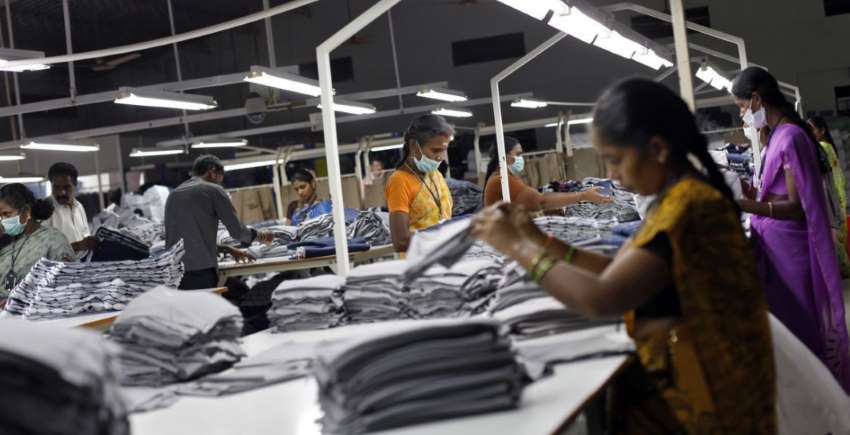
Sorting and processing these garments is highly labour intensive and difficult to automate at scale. Integrating irregular secondhand inventory into conventional retail software systems also requires major capital investment. The complexity becomes clearer when examining the grading breakdown of post-consumer garments entering reverse logistics networks.
|
Inventory grading |
Inflow |
Primary commercial destination |
|
Grade A (Premium/Like-New) |
15-20% |
Direct brand resale platforms and premium vintage retail |
|
Grade B (Minor Wear) |
35-40% |
Secondary wholesale markets and value-tier recommerce |
|
Grade C (Damaged/Stained) |
25-30% |
Industrial remanufacturing, upcycling, and repair programs |
|
Grade D (End-of-Life) |
15- 20% |
Mechanical shredding, downcycling, and fiber recycling |
Only a small portion of incoming inventory is suitable for premium resale. The remainder requires industrial repair, textile transformation, or recycling infrastructure to remain commercially viable. As a result, circular retail is moving beyond resale alone and toward industrial remanufacturing. Luxury accessories brand Coach has adopted this approach through its ‘Coachtopia’ initiative, which converts unusable leather scraps and damaged bags into new accessories designed specifically around recycled materials.
The partnership between Bank & Vogue and its retail subsidiary Beyond Retro has emerged as one of the clearest examples of industrial-scale circular retail integration. The company processes over 90 million pounds of post-consumer textiles annually across North America, Europe, and Asia. High-grade garments are channelled into Beyond Retro’s retail stores and e-commerce operations, while damaged inventory is redirected into manufacturing facilities where materials are disassembled and reconstructed into new apparel under the Beyond Retro Label.
The remanufacturing division now produces more than 500,000 upcycled garments annually, shows that textile waste can evolve into a scalable raw material stream rather than a disposal burden.
This model is becoming increasingly attractive to mainstream fashion corporations as geopolitical disruptions and climate volatility intensify pressure on virgin raw material supply chains. By securing access to reusable textile inventories, brands are building alternative sourcing systems that improve supply resilience while aligning sustainability goals with profitability. What began as an environmental initiative is now emerging as a core commercial architecture for the future of global fashion retail.