Washington’s latest trade intervention signals a break in the global apparel sourcing patterns. The Office of the United States Trade Representative (Office of the United States Trade Representative) has proposed a sweeping tariff regime covering imports from 60 economies, introducing a 10-12.5 per cent duty structure tied to findings from a Section 301 investigation into forced-labor enforcement failures.
The move, detailed in the June 3, 2026 ‘Mid-Week Market Brief’, marks the most aggressive reorientation of US trade policy since the early 2020s. For the global textiles and apparel industry, already operating on thin margins and fragmented sourcing models the shift leads to a new cost layer defined less by demand cycles and more by geopolitical compliance risk. At its core, the policy reflects a shift: sourcing decisions are no longer purely commercial. They are now embedded in a matrix of enforcement exposure, customs scrutiny, and geopolitical alignment.
Two-tier tariff anchored in compliance risk
Following investigations launched in March 2026, the USTR concluded that many trading partners have failed to adequately prohibit or enforce bans on goods linked to forced labor. U.S. Trade Representative Jamieson Greer described the global framework as structurally uneven, rewarding non-compliance and penalizing regulated producers.
The response is a dual-tier tariff:
- A 10 per cent penalty tier applied to economies with partial enforcement regimes or formal commitments
- A 12.5 per cent penalty tier applied to jurisdictions deemed to lack effective forced-labor enforcement systems
The impact is disproportionately concentrated in apparel-intensive economies where supply chains are deeply embedded in global fashion manufacturing networks.
Table: Proposed tariff exposure across key apparel economies
|
Country/Region |
Proposed tariff rate |
Role in global apparel supply chain |
Status of forced labor framework |
|
China |
12.50% |
World's largest apparel exporter; primary source of synthetic fibers and cotton. |
Failed to impose/enforce prohibitions. |
|
India |
12.50% |
Massive exporter of raw cotton, yarn, and finished garments. |
Singled out; severely complicates cotton supply chains. |
|
Vietnam |
12.50% |
Key manufacturing hub for U.S. brands seeking China alternatives. |
Facing specific product-level Section 301 scrutiny. |
|
Bangladesh |
10.00% |
Second-largest global garment exporter; relies heavily on U.S. market. |
Has a partial framework/commitments in place. |
|
European Union |
10.00% |
Major luxury apparel exporter; critical textile technology hub. |
Forced Labor Regulation exists but fails to meet U.S. timelines. |
Apparel supply chains enter a stress test
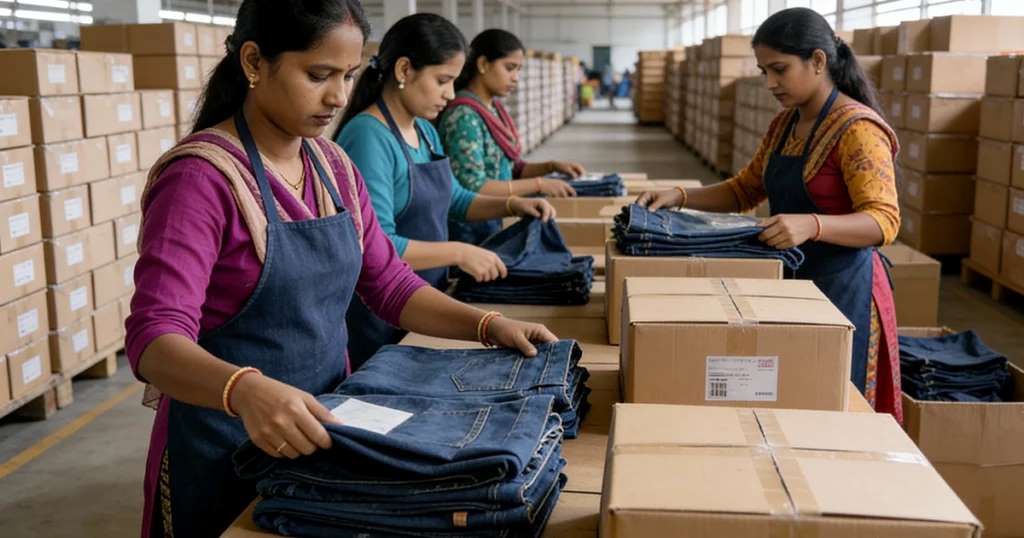
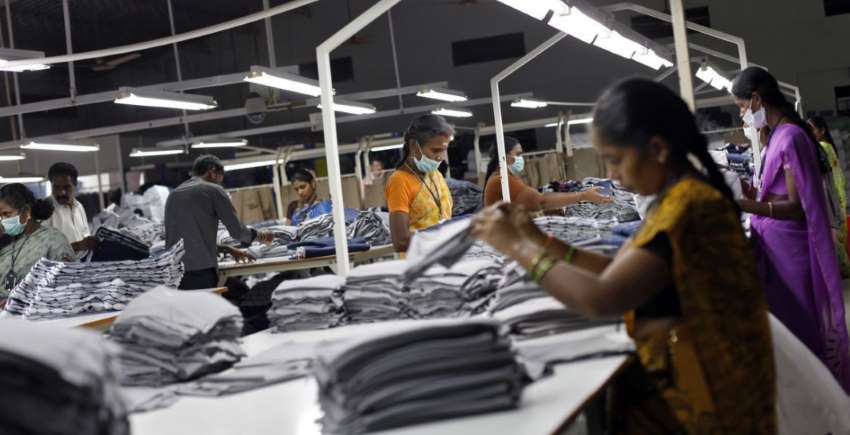
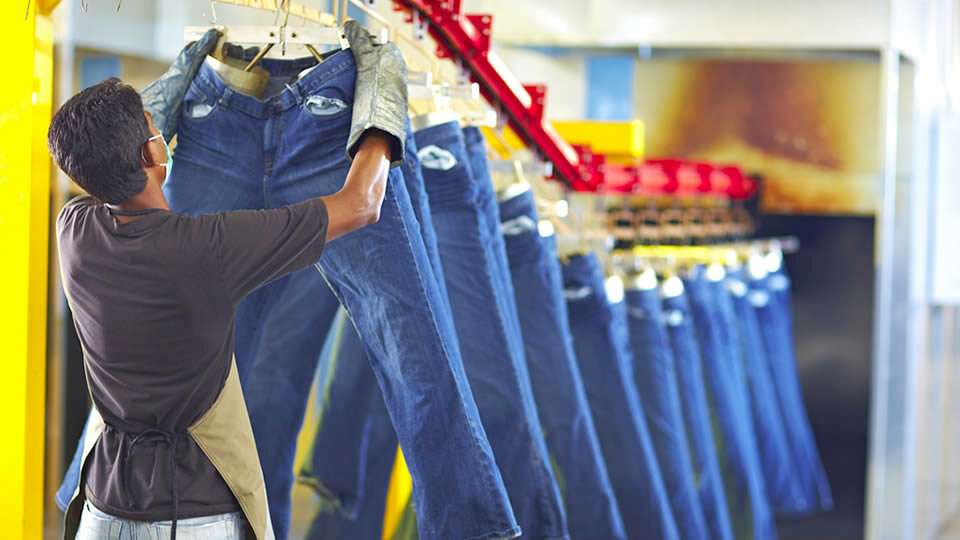
The apparel industry is uniquely exposed because of its multi-layered production geography. A single garment can involve cotton grown in one country, spun in another, woven in a third, and assembled in a fourth. This fragmentation makes forced-labor verification both complex and operationally expensive.
Reduction of low-cost sourcing models
The 12.5 per cent tariff tier effectively disrupts the cost advantage of major sourcing hubs such as India and China. Brands that had diversified away from Xinjiang-linked supply chains toward South and Southeast Asia now face a secondary wave of cost inflation. Even economies placed in the 10 per cent tier, including Bangladesh and Cambodia, lose the pricing edge that underpinned fast-fashion retail economics. The result is a broad-based repricing of basic apparel categories in the US market.
Transatlantic friction and regulatory difference
Tensions are intensifying between Washington and Brussels. The European Union argues that its Forced Labour Regulation still in phased implementation until December 2027 is being prematurely penalized. European officials have warned that tariff increase beyond politically acceptable thresholds could trigger retaliatory measures, creating friction across high-value textile and luxury trade corridors. The divergence underscores a deeper fragmentation of regulatory timelines across major trading blocs.
A controlled pressure valve
To diminish inflationary shocks, the USTR has proposed a textile mechanism allowing limited tariff relief via quota-based access for compliant economies. Access is tied to reciprocal export conditions and strict compliance verification. While designed as a stabilizer, the mechanism introduces a new administrative layer. Compliance experts warn that it may shift bottlenecks from tariffs to documentation, increasing clearance times and operational overhead across logistics networks.
Logistics under pressure
Supply chain risk is no longer confined to tariffs. Maritime instability in traditional Gulf and Red Sea corridors has forced experimentation with alternative overland routes. A notable example is the NEOM overland trucking corridor through Saudi Arabia, which offers a bypass to maritime chokepoints but adds significant cost burdens.
NEOM route vs traditional shipping
- Traditional maritime route: High geopolitical risk exposure
- NEOM overland route: +$10,000 per truck in incremental cost
- Combined with 12.5 per cent tariff exposure: Record-high landed cost for apparel imports into the U.S.
This dual pressure tariff plus logistics premium is altering landed cost structures for South Asia-to-US apparel flows.
Compliance risk becomes a core business variable
Trade experts warn that enforcement risk is becoming as consequential as production cost. As noted by Andrew Wilson of the International Chamber of Commerce, importers now carry the full burden of proof in establishing forced-labor compliance across supply chains. For large apparel brands, this introduces a vulnerability: a single flagged shipment can trigger customs holds, disrupting seasonal inventory cycles and undermining fast-fashion cadence models.
Retailers such as global mass-market apparel chains face growing uncertainty in inventory planning, as compliance failures in upstream suppliers cascade downstream into delayed or stranded goods.
A policy-led repricing of global fashion
The defining shift of 2026 is the transition from demand-driven sourcing to policy-driven cost formation. Apparel supply chains are no longer optimized solely for speed and price; they are now calibrated for regulatory survivability. Between USTR’s expanded enforcement regime, fragmented global compliance timelines, and escalating logistics volatility, the era of frictionless low-cost apparel production is effectively ending. What emerges instead is a more expensive, more bureaucratic, and structurally more volatile global apparel system where trade policy, not consumer demand, is the dominant pricing force.