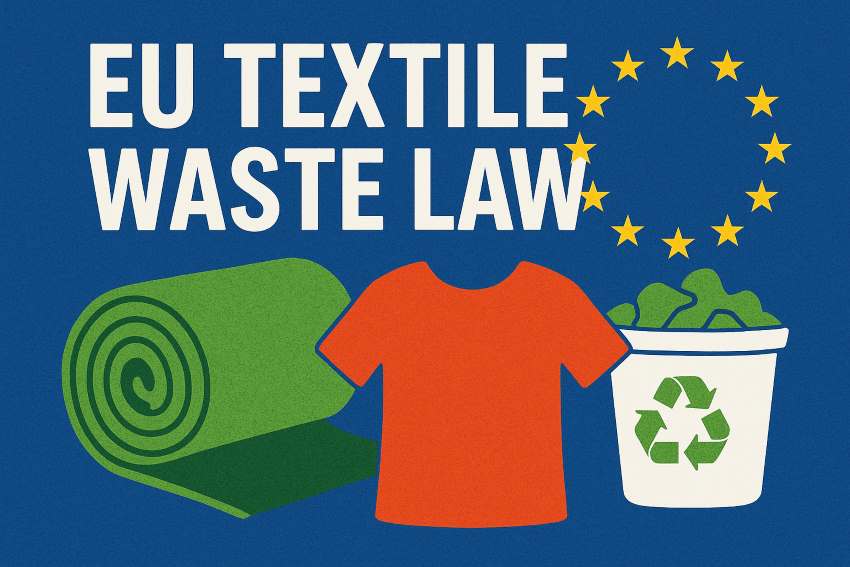
Europe’s apparel and textile industry is approaching one of its most significant regulatory transitions in decades. As the European Union moves toward finalizing revisions to its Waste Framework Directive, Extended Producer Responsibility (EPR) is shifting from policy ambition to operational reality. For fashion brands, retailers, and manufacturers, the debate is no longer about whether textile EPR will arrive, but how its implementation will reshape the economics of doing business across Europe.
Industry leaders warn that the success of the EU’s circular economy agenda could ultimately depend on whether member states can avoid creating a patchwork of national compliance systems that undermine the very concept of a unified European market.
Growing threat of regulatory fragmentation
At the centre of industry concerns lies the risk of regulatory divergence. While the EU’s objective is to create a harmonized framework that improves textile collection, reuse, and recycling rates, individual member states retain considerable flexibility in designing their own implementation models.
For retailers operating across multiple countries, this creates the prospect of navigating dozens of registration systems, reporting formats, fee structures, and compliance procedures simultaneously. The European Apparel and Textile Confederation (EURATEX) argues such fragmentation could generate substantial administrative costs and disrupt the efficient movement of goods within the bloc. The concern extends beyond paperwork. Different national systems could weaken the development of secondary raw material markets by creating inconsistent standards and reporting requirements, making it harder for businesses to scale circular business models across borders.
To address this challenge, stakeholders are advocating for a centralized EU-wide digital compliance platform. Such a system would enable companies to submit standardized data through a single interface while allowing member states to maintain country-specific fee mechanisms reflecting local waste-management infrastructure.
For retailers already managing complex sourcing, logistics, and sustainability obligations, a harmonized reporting framework is increasingly viewed as essential rather than optional.
E-commerce under regulatory spotlight
Another flashpoint in the EPR debate concerns the rapid growth of cross-border e-commerce. European apparel companies argue that domestic brands face mounting compliance costs while many non-EU sellers continue to access the European consumer market through digital platforms with comparatively limited regulatory accountability. As online marketplaces become a larger channel for fashion consumption, industry groups fear the emergence of an uneven competitive landscape.
The sector is therefore pushing for stricter enforcement mechanisms that require foreign sellers to appoint legally accountable representatives within the EU. These Authorized Representatives would be responsible for ensuring compliance with EPR obligations and other sustainability requirements.
Retailers contend that relaxing such requirements before effective enforcement systems are fully established could create a significant market distortion. Domestic companies would shoulder the costs of circularity while overseas sellers potentially benefit from lower compliance burdens. For European brands already facing intense price competition from ultra-fast-fashion platforms, the issue is increasingly being framed not only as an environmental concern but also as a matter of competitive fairness.
The economics behind eco-modulation
One of the most transformative aspects of the incoming framework is the introduction of eco-modulation fees. Under the proposed system, producers will pay varying contributions based on the environmental performance of their products. Garments that are more durable, repairable, and recyclable would attract lower fees, while products with weaker sustainability characteristics would face higher financial obligations.
The principle appears straightforward, but retailers warn that execution will be far more complex. Fashion companies are urging policymakers to align eco-modulation criteria closely with the Ecodesign for Sustainable Products Regulation (ESPR) to prevent overlapping reporting requirements. Without alignment, businesses could find themselves maintaining multiple compliance systems that evaluate similar sustainability attributes through different methodologies.
The industry is also cautioning against fee structures that penalize materials for which commercially viable recycling solutions do not yet exist. Experts argue that if policy frameworks move faster than recycling technology, eco-modulation risks becoming a cost burden rather than an incentive for innovation.
The challenge for regulators will be balancing environmental ambition with commercial practicality, ensuring that sustainability targets remain achievable within current technological and economic constraints.
The emerging data burden
Beyond fees and reporting obligations, a more technical challenge is beginning to attract attention: data management. The EU’s sustainability agenda increasingly relies on information-driven compliance systems. However, businesses are warning that separate reporting requirements are emerging across different regulatory initiatives.
Textile EPR frameworks primarily require aggregate information, such as total volumes of products placed on the market. In contrast, the forthcoming Digital Product Passport (DPP) system is designed to provide detailed, item-level information for individual products.
While both initiatives support circularity objectives, the coexistence of macro-level and micro-level reporting requirements could create significant duplication. Industry estimates show managing separate compliance streams could materially increase administrative expenses, particularly for mid-sized retailers operating on already thin margins. As a result, trade associations are advocating a ‘report once, use multiple times’ approach, whereby data submitted through Digital Product Passports can simultaneously satisfy eco-modulation and EPR requirements. Such integration could become critical as regulatory reporting evolves into a core operational function rather than a peripheral sustainability exercise.
Why SMEs lose the most
The implications of EPR enforcement are particularly significant for small and medium-sized enterprises. SMEs account for the overwhelming majority of Europe’s textile and apparel businesses, yet they typically possess the least capacity to absorb regulatory complexity. Unlike MNCs with dedicated compliance departments, smaller firms often operate with limited financial and administrative resources.
Experts argue ambiguities in regulatory definitions remain a major concern. Questions surrounding product scope, material classifications, and categories described as textiles “similar in nature and composition” could expose smaller businesses to inconsistent interpretations across different jurisdictions.
For many SMEs, regulatory certainty may prove as important as the regulations themselves. As Europe accelerates its transition toward a circular textile economy, business leaders broadly support the sustainability objectives underpinning EPR. However, they stress that implementation must remain commercially realistic, technologically achievable, and legally clear.
The coming months will likely determine whether textile EPR becomes a catalyst for a more circular European fashion industry, or a source of fragmentation that increases costs and complexity across the sector. For retailers, the challenge is no longer preparing for sustainability regulation. It is preparing for sustainability regulation at scale.