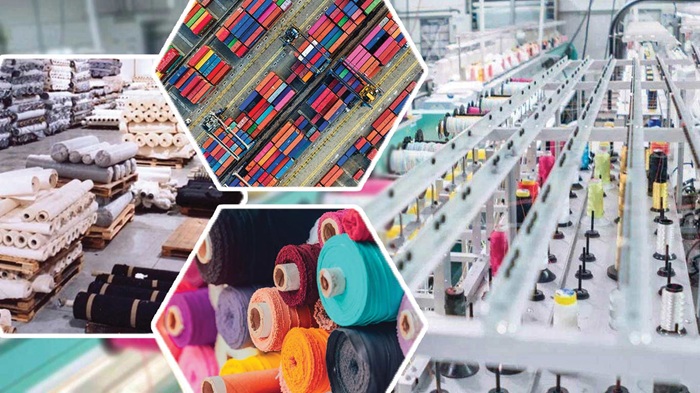
After a long time of only focusing on exports, Vietnam’s enterprises are turning to the domestic market too. Domestic consumption of textile products in Vietnam has increased 10 to 15 per cent a year. Currently the market share of Vietnam’s textile industry is only 20 per cent in rural areas and about 60 per cent in urban areas.
And in urban areas domestic enterprises’ products must compete for a market share with imported goods. In addition smuggled goods have a significant share. Tax evasion and non-documented businesses make things very difficult for domestic legal enterprises. Products of unknown origin have flooded rural areas.
Currently, Vietnam’s retailers face challenges due to high rental costs. Leases get terminated without warning, so no enterprise dares to invest a lot because they are not sure how long they can rent the shop. Vietnam’s export market is larger than its domestic market. In contrast, India’s domestic market is three times larger than the export market. Indonesia’s domestic market is double that of the export market. Hence, when export markets face difficulties, these countries still have a basis to withdraw to and develop their domestic markets, a luxury that Vietnamese enterprises don’t have.
While the domestic market is estimated at $4.5 billion, the industry’s production capacity is $35 billion. This mismatch creates a problem for domestic manufacturers.
- 1
- 2
- 3
- 4
- 5
- 6
- 7
- 8
- 9
- 10
The 2027 Mandate: Why denim’s future hinges on verifiable data
For decades, the global denim industry has relied on a narrative of durability, heritage, and authenticity. That narrative is now... Read more
Europe’s textile core unravels as costs, imports and policy pressure bite
Europe’s textile and apparel sector, long seen as a benchmark for craftsmanship and industrial depth, is slipping into a prolonged... Read more
Automation, innovation, regulation are the forces shaping textiles in 2026
The global textile sector has entered a new era. Early 2026 saw the industry breach a $1.06 trillion valuation, reflecting... Read more
The new Brussels rulebook, every EU apparel order is now a balance-sheet risk
The humble export order sheet is undergoing a transformation. What was once a straightforward commercial instrument: SKU, volume, FOB price,... Read more
Why 2026-27 could be a defining cotton year for India’s farm-to-fashion economy
The global cotton economy is entering a more constrained phase, and for India, the implications run far beyond the farm... Read more
Luxury resale’s next big battle is no longer digital, it is about who controls s…
For nearly a decade, the luxury resale story was written in the language of platforms. Market leadership was measured by... Read more
Digital Arms Race: Indian apparel giants deploy AI to neutralize tariff crisis
The Indian textile and apparel sector is in a digital survival phase in 2026, shifting from traditional labor-intensive models to... Read more
Europe’s Textile Endgame: Why Project FAE is becoming fashion’s most critical in…
Europe’s apparel majors are no longer treating circularity as a branding layer. With Project FAE or Feedstock Activation Europe, the... Read more
Engineering color at source, dye-free production is cutting cost, water, and tim…
For over a century, coloring has been anchored in wet processing, an energy-intensive, chemically saturated stage that happen post spinning.... Read more
The €11 bn deadlock, can Europe’s textile recycling catch up?
Europe is at a tipping point. Fast fashion consumption, led by rising incomes and a growing global middle class, has... Read more