The global cotton economy is entering a more constrained phase, and for India, the implications run far beyond the farm gate. The International Cotton Advisory Committee’s April 2026 outlook, which projects a 4 per cent decline in world production to 24.9 million tonnes, signals the emergence of a tighter fibre cycle just as geopolitical disruptions are reshaping trade corridors and freight economics.
For India, the world’s second-largest cotton producer and one of the most important textile manufacturing hubs, this is not merely a commodity story. It is a business issue that touches farm profits, spinning competitiveness, apparel exports, and the future resilience of the country’s vast farm-to-fashion value chain.
India is positioned to benefit from a global seller’s market, with benchmark prices expected to hover around 83 cents per pound. Yet the same tightening supply environment also exposes domestic vulnerabilities, from acreage pressures and extra-long staple shortages to rising logistics costs on exports bound for Europe and the US.
The yield-acreage equation
India’s first challenge lies within its own fields. While competing producers such as Brazil and Australia are expected to reduce planting more sharply, India’s cotton output outlook is relatively stable. But stability should not be mistaken for comfort.
The issue is increasingly one of yield protection versus acreage competition. Farmers across Gujarat, Maharashtra, and Telangana are confronting higher seed, fertiliser, and irrigation costs, while oilseeds and pulses continue to offer more attractive crop economics in several districts. The result is a cautious acreage environment where output sustainability depends less on land expansion and more on productivity gains.
Table: India’s role in global production (2026/27 projections)
|
Producer |
2026/27 Outlook |
India's competitive context |
|
China |
World #1 |
Focusing on "Efficiency Zones" in Xinjiang. |
|
India |
World #2 |
Expanding "Kasturi Cotton" branding to offset volume dips. |
|
Brazil |
World #3 |
Sharp decline in planting intentions (Down 6.8%). |
|
US |
World #4 |
Shift toward corn/soybeans in the Cotton Belt. |
The significance of this table is that India’s comparative advantage is shifting from pure volume leadership to differentiated fibre identity. China continues to compete through scale and mechanised efficiency, while Brazil’s retrenchment creates short-term room for India. However, India’s strongest lever increasingly lies in premiumisation through initiatives such as Kasturi Cotton India, which seeks to position Indian cotton as a traceable, contamination-controlled branded fibre. This matters because in a tightening global market, quality premiums can outperform volume growth.
The import paradox
The second fault line is what may be called India’s import paradox. Despite being among the world’s largest producers, India has firmly entered the ranks of the top global cotton importers. This is not a contradiction so much as a reflection of industrial sophistication. India’s export-oriented spinning and fabric mills, particularly those supplying premium shirting, home textiles, and luxury apparel, increasingly require extra-long staple (ELS) and contamination-free grades that domestic supply does not produce consistently at scale.
Table: The Asian import concentration (80% of global trade)
|
Rank |
Country |
Projected import role |
|
1 |
Bangladesh |
1.8 mn Tonnes (India's primary regional competitor). |
|
2 |
Vietnam |
Major hub for high-efficiency spinning. |
|
... |
... |
... |
|
6 |
India |
Supplementing domestic ELS shortfall for luxury exports. |
The business implication is significant. As nearly 80 per cent of global cotton trade remains concentrated in Asia, India’s mills are no longer competing only in downstream garments; they are also competing upstream for access to scarce premium fibre. Bangladesh and Vietnam, both highly efficient export-processing hubs, are now direct rivals in the race for imported cotton quality. For Indian mills, this raises the urgency of supply assurance strategies, including long-term sourcing contracts, diversified origins, and closer integration with yarn buyers.
When freight becomes a tax
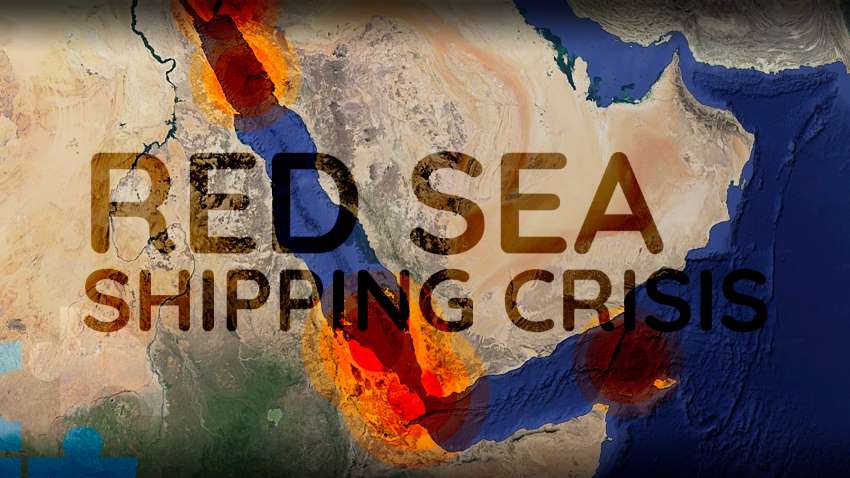
The third and perhaps most immediate stress point is logistics. In 2026, maritime volatility is functioning as an invisible tax on Indian textile competitiveness. The rerouting of vessels away from the Red Sea and Suez corridor has sharply altered the economics of Indian exports headed to Europe and the US East Coast. Transit times have grown by 15 to 20 days as ships move around the Cape of Good Hope, disrupting just-in-time inventory cycles that major global retailers increasingly depend on.
The cost shock is even more severe. Freight rates for Indian exporters have reportedly risen between 150 per cent and 250 per cent over early 2025 levels, driven by fuel, insurance, and war-risk surcharges. For a sector operating on already compressed yarn and fabric margins, this is effectively a margin erosion event. The commercial response is visible in what may be termed a shift south. Indian traders and integrated textile players are strengthening intra-Asian trade lanes, particularly with Bangladesh and Vietnam, where shorter maritime routes and faster replenishment cycles reduce exposure to Western chokepoints. This is not merely tactical rerouting, it may evolve into a lasting regionalisation of cotton and textile trade.
The cooling trade cycle
The longer historical data suggests that the current squeeze is part of a broader normalisation.
Table: Historical trade context (MMT)
|
Season |
Global trade volume |
India’s strategic stance |
|
2020/21 |
10.7 |
Peak export window for Indian surplus. |
|
2024/25 |
9.2 |
Recovery phase; focus on domestic value-addition. |
|
2026/27 (Proj) |
9.6 |
Focus on "Quality over Quantity" & Supply Chain Security. |
This table captures the transition from the post-pandemic trade surge to a leaner and more disciplined global cotton economy. For India, the lesson is clear: the era of opportunistic surplus exports is giving way to an era where quality, logistics agility, and value-added downstream conversion determine competitiveness. A 9.6 MMT global trade environment means access to raw fibre becomes strategically more valuable, particularly when global consumption at 25 million tonnes is expected to exceed production by roughly 100,000 tonnes. That imbalance is what transforms the current cycle into a likely seller’s market.
The new cotton playbook
The real response for India lies in moving from reactive trade participation to proactive ecosystem design. The first imperative is tighter farm-to-mill integration, reducing exposure to global volatility by strengthening direct procurement models, traceability systems, and contamination control at the ginning stage.
The second is brand economics. In a price environment anchored around 83 cents per pound, India’s ability to extract premium value from Kasturi Cotton and other traceable fibre initiatives could materially improve realisations for both farmers and mills.
The third is logistics resilience. The current Red Sea disruption has reinforced the need for structural alternatives, including faster progress on multimodal trade corridors and the long-term strategic promise of the India-Middle East-Europe Economic Corridor (IMEC). The countries that will emerge strongest from this tighter cotton cycle will not necessarily be those that produce the most. They will be the ones that secure fibre quality, minimise logistics friction, and convert commodity strength into branded value. For India, 2026/27 may well be the season when cotton stops being treated as a farm commodity and starts being managed as a strategic industrial asset.