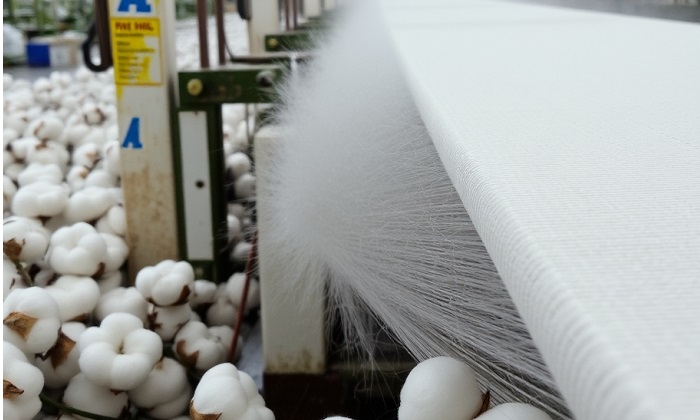
The US has renewed the Cotton Ginning Cost Share (CGCS) program. The program will allow cotton growers to receive a cost share payment based on their 2016 cotton acres reported to the Farm Service Agency (FSA), multiplied by 20 per cent of the average ginning cost for each production region.
Payments will be calculated based on a producer’s 2016 cotton acres reported to the FSA, with per-acre payment rates set at 20 per cent of the regional costs of ginning. America’s cotton producers have now faced four years of financial stress. In particular, cotton producers confront high input and infrastructure costs. That economic burden has been felt by the entire cotton market, including gins, cooperatives, marketers, cotton seed crushers and the rural communities that depend upon their success.
CGCS is aimed at providing direct marketing assistance to producers, alleviating a portion of the economic conditions producers are struggling with. US cotton is struggling due to heavily-subsidized foreign fiber competition and the immediate lack of a safety net policy on par with other crops. Reauthorizing this program for the 2016 crop will help cotton growers offset their ginning costs, which in turn will improve many growers’ financial situation and help keep them in business.

- 1
- 2
- 3
- 4
- 5
- 6
- 7
- 8
- 9
- 10
MIT’s recyclable yarn could disrupt spandex’s grip on fashion
Stretch has become essential to modern fashion. Activewear, denim, underwear and athleisure all depend heavily on elastic fibres such as... Read more
Speed, synthetics and trade pacts propel Vietnam past Bangladesh
Vietnam has overtaken Bangladesh to become the world's second-largest exporter of ready-made garments (RMG), marking more than a symbolic change... Read more
The €2,150 Question: Can Europe afford circular fashion at scale?
Europe's push to build a circular textile economy is facing an uncomfortable commercial truth. The technology capable of producing virgin-quality... Read more
From cotton peaks to polyester pressures, textile supply chains face a reset
The assumption that textile supply chains can absorb periodic swings in cotton prices has become untenable. During the first seven... Read more
Global sourcing reset exposes India’s apparel competitiveness gap
The assumption that global apparel sourcing would naturally shift from China to India is proving increasingly misplaced. Fresh trade data... Read more
The new fashion equation, quality, agility and value replace speed and discounts
The traditional order that once separated low-cost fast fashion from premium luxury is steadily breaking down as consumers become more... Read more
AI goes invisible as fashion brands rewire design studios
The fashion industry's digital transformation is entering a new phase. After investing heavily in sophisticated 3D computer-aided design (CAD) platforms... Read more
Natural fibers gain ground as global retail pushes back against polyester
A change is underway across the global textile industry as consumer preferences begin to alter sourcing decisions that have long... Read more
From exclusivity to engagement, luxury retail rewrites its growth strategy for 2…
The global luxury industry is entering a different growth cycle. After years of post-pandemic spending riding on affluent consumers and... Read more
Shaping the future of fashion at BRICS+ 2026
The upcoming BRICS+ Fashion Summit in Moscow promises to be a pivotal international gathering, offering a dedicated platform for fast-growing... Read more