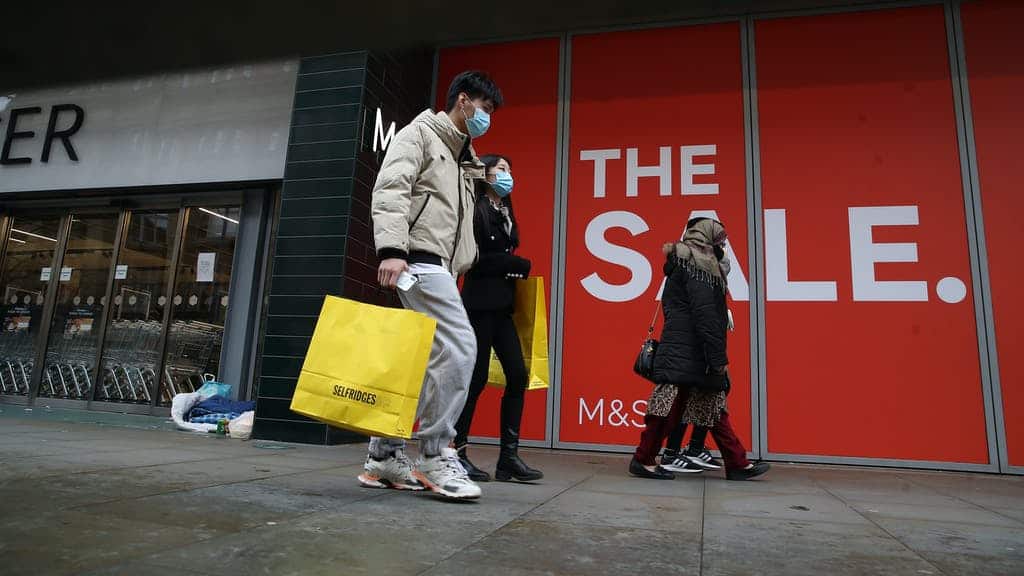
The volume of US clothing and fashion imports from all sources grew 4.8 per cent year-on-year in September 2015. Despite rising wages and a strong currency, China continues to be the largest exporter to the US, as no country can match China in terms of the size of its supply base, range of skills, quality levels, product variety and the completeness of its supply chain.
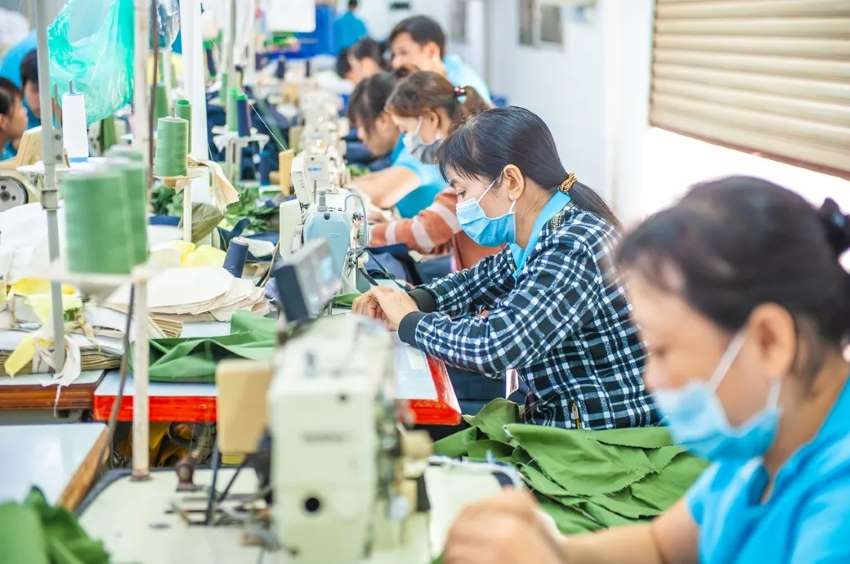
However, Vietnam’s clothing and textiles industries are increasingly receiving encouraging responses from western buyers. So while shipments from China were up 1.48 per cent, nearest rival Vietnam grew at a much faster rate, jumping 10.6 per cent compared to September 2014.
Vietnam is clearly benefiting as transnational and domestic producers operating within the country’s borders are diversifying their supply chains in a bid to position themselves to take advantage of the opportunities the Trans Pacific Partnership might open for them.
The US economy is predicted to grow at an average of three per cent as of 2016, which, if true, bodes well for domestic consumption and imports of clothing and fashion items produced in Vietnam. China, anticipating the after-effects of the TPP, has already started moving a large volume of its investments to Vietnam to boost its garment sector and take advantage of the TPP, should the trade pact become a reality.
- 1
- 2
- 3
- 4
- 5
- 6
- 7
- 8
- 9
- 10
Global cotton enters a deficit year in 2026 as supply drop meets logistics risk
The global cotton economy has entered a fragile and sensitive phase. Early projections for the 2026-27 season suggest that world... Read more
India’s textile trade gets a Pacific push as New Zealand FTA removes tariff barr…
India and New Zealand have inked a ‘once-in-a-generation’ Free Trade Agreement (FTA), one that will have a profound impact on... Read more
Lululemon’s world-first nylon circularity push signals a new apparel arms race
The global apparel industry’s circularity narrative is entering a more technically demanding phase. Polyester recycling once the flagship of sustainable... Read more
Beyond the DTC Rush: Levi’s hybrid channel strategy sets a new retail benchmark
The global apparel sector is entering a phase where channel strategy is no longer a tactical lever but a core... Read more
The New Rules of Resale: EPR turning secondhand into fashion’s strategic growth …
The global fashion industry is facing a decisive regulatory and commercial reset. What began as a sustainability narrative around reuse... Read more
The 2027 Mandate: Why denim’s future hinges on verifiable data
For decades, the global denim industry has relied on a narrative of durability, heritage, and authenticity. That narrative is now... Read more
Europe’s textile core unravels as costs, imports and policy pressure bite
Europe’s textile and apparel sector, long seen as a benchmark for craftsmanship and industrial depth, is slipping into a prolonged... Read more
Automation, innovation, regulation are the forces shaping textiles in 2026
The global textile sector has entered a new era. Early 2026 saw the industry breach a $1.06 trillion valuation, reflecting... Read more
The new Brussels rulebook, every EU apparel order is now a balance-sheet risk
The humble export order sheet is undergoing a transformation. What was once a straightforward commercial instrument: SKU, volume, FOB price,... Read more
Why 2026-27 could be a defining cotton year for India’s farm-to-fashion economy
The global cotton economy is entering a more constrained phase, and for India, the implications run far beyond the farm... Read more