The European Union’s textile and apparel imports grew to $295.66 billion in 2025, a 9.4 per cent year-on-year increase from $270.31 billion in 2024, as per ‘EU Imports 2025’ report by the Confederation of Indian Textile Industry (CITI). Yet beneath this headline lies a more complex reality: rising import volumes are being driven largely by steep global price compression rather than genuine demand-led value growth.
Industry assessments from Euratex and Emerging Textiles indicate the apparent increase masks an intensifying global price war, rerouted trade flows following US tariff disruptions, and accelerating structural stress within Europe’s domestic textile manufacturing base.
Import shows heavy dependence on finished apparel
The EU’s import basket remains overwhelmingly skewed toward finished garments, underscoring deep reliance on external manufacturing ecosystems.
Table: EU textile & apparel imports (2025)
|
Product category |
Import value (2025) |
Market share (%) |
Underlying dynamics |
|
Apparel |
$212.62 bn |
71.91% |
Fueled by sharp drops in global unit prices and aggressive Asian volume offensives. |
|
Fabric |
$22.77 bn |
7.70% |
Mainly imported for regional industrial processing and nearshoring hubs. |
|
Home Textiles |
$16.92 bn |
5.72% |
Steady demand, though constrained by weak European consumer confidence. |
|
Fibre |
$6.74 bn |
2.28% |
Dominated by man-made fibres (MMF) and specialized synthetic inputs. |
|
Yarn |
$4.39 bn |
1.48% |
Import dependencies remain high due to closures of domestic mills. |
|
Others |
$26.62 bn |
9.02% |
Includes technical textiles, accessories, and e-commerce logistics. |
|
TOTAL |
$295.66 bn |
100.00% |
Represents a 9.4% value growth over 2024. |
The dominance of apparel, accounting for nearly 72 per cent of total imports highlights Europe’s dependency on low-cost production hubs across Asia.
China retains dominance, nearshoring gains ground
The top eight supplier countries accounted for 59.56 per cent of EU imports, reflecting both concentration and diversification in sourcing networks. China remains the single largest supplier, followed by Bangladesh and key intra-EU hubs such as Germany and Italy, where a significant portion of activity is re-export driven rather than domestic manufacturing.
Top EU textile suppliers (2025)
China leads with 18.13 per cent ($53.61 billion), followed by Bangladesh at 9.91 per cent ($29.29 billion) and Germany at 9.75 per cent ($28.84 billion). Türkiye, Italy, Spain, the Netherlands, and India complete the top tier. Long-term data (2016-25) shows a shifting supply map. Poland recorded the fastest increase with an 8.90 per cent CAGR, signalling the rise of Eastern Europe as a nearshoring base. Pakistan followed at 7.40 per cent, while Spain and Germany also increased steadily within intra-European production realignment. According to trade analysis from the Centre for the Promotion of Imports (CBI), a significant share of intra-EU trade flows reflects redistribution through logistics hubs such as Rotterdam rather than primary manufacturing.
Three forces behind the 2025 surge
· US tariff diversion and supply reallocation: A major catalyst behind Europe’s import spike was the re-routing of global trade following US tariff restrictions on key manufacturing economies. China, facing excess capacity constraints in the US market, redirected production to Europe, intensifying competition and compressing global pricing structures.
· Global price war and volume expansion: The defining feature of 2025 was not demand growth but aggressive price competition. China reportedly reduced garment export prices by nearly 9.38 per cent, triggering a cascade of price cuts across Asian exporters. Bangladesh, despite growing export value to $29.29 billion, absorbed significant unit price declines, including a sharp late-year decline estimated at 12 per cent.
· Nearshoring and intra-EU redistribution: While Asia expanded aggressively, European suppliers also maintained strong positions. However, Germany, Italy, and Spain’s large import shares are partly attributable to intra-EU trade flows and re-export mechanisms. Genuine nearshoring momentum is most visible in Poland, where industrial migration has accelerated due to shorter lead times and supply chain resilience concerns.
Diverging supplier patterns: Türkiye vs Vietnam
Türkiye illustrates the pressure facing proximity-based exporters. Rising domestic inflation, energy costs, and labour expenses forced Turkish exporters to raise prices, eroding competitiveness against lower-cost Asian suppliers. In contrast, Vietnam strengthened its position by moving up the value chain. Benefiting from its EU Free Trade Agreement and a higher-margin product mix focused on man-made fibres, Vietnam achieved a 4.2 per cent increase in unit prices, even as volumes rose—avoiding the downward spiral of discount competition.
From free flow to regulated trade
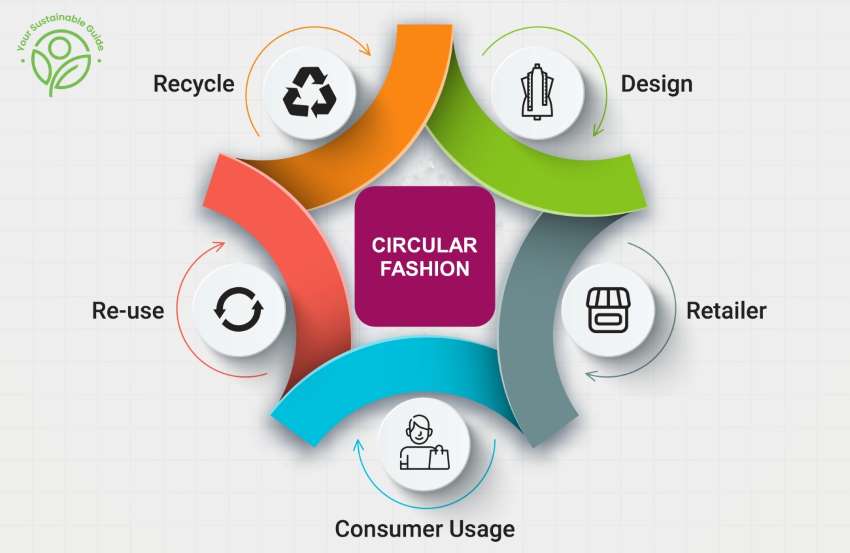
The regulatory environment is all set to reshape import dynamics. The EU is moving toward a structured sustainability framework anchored in circular economy principles. Key measures include the Ecodesign for Sustainable Products Regulation (ESPR), which bans destruction of unsold apparel from July 2026 for large firms, and the expansion of harmonised Extended Producer Responsibility (EPR) systems across member states. Future compliance mechanisms such as Digital Product Passports will further tighten traceability requirements across supply chains.
Table: Policy impact outlook
|
Policy |
Timeline |
Volume impact |
Value impact |
|
ESPR Unsold Ban |
2026-30 |
Lower speculative imports |
Higher-value product shift |
|
EPR Expansion |
2026-28 |
Reduced low-cost inflows |
Higher compliance pricing |
|
Digital Product Passport |
From 2027 |
Market access restrictions |
Higher administrative value |
France’s early implementation under its AGEC framework shows the potential impact: penalties on ultra-fast fashion have already reduced low-value synthetic imports by double-digit percentages in pilot phases.
Domestic industry under pressure
Despite strong import growth, Europe’s domestic textile manufacturing base continues to fall. According to Euratex, 2025 marked the third consecutive year of declining production, turnover, and employment across the sector. High energy costs, regulatory burdens, and aggressive global pricing have increased factory closures. Euratex has warned that continued erosion could permanently weaken Europe’s industrial autonomy if corrective measures are delayed.
A market at a regulatory inflection point
The 2025 data reveals a paradox: Europe is importing more textiles than ever, but much of the growth is price-driven rather than value-enhancing. Global supply diversion, particularly from Asia, has intensified competitive pressures, while domestic manufacturing continues to contract.
However, the regulatory pipeline from 2026 onward with sustainability mandates and circular economy enforcement signals a potential turning point. Whether Europe transitions toward a higher-value, compliance-driven import model or continues down a path of dependency will define the next phase of its textile economy.