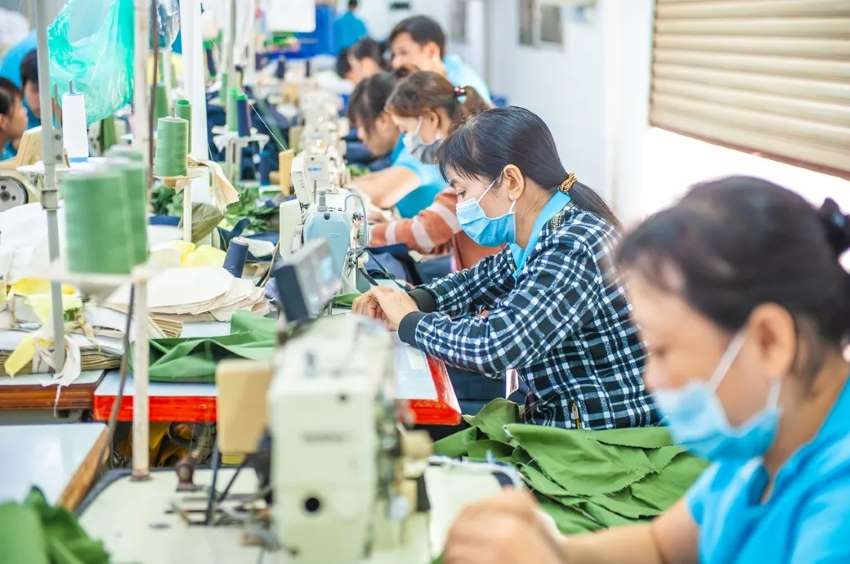
Rajasthan has emerged as the largest producer of polyester viscose yarn and synthetic suiting material in the country. Bhilwara and Kishangarh are major power loom centers in the state. Over 20,000 functional looms and over 95 crore meters of different blends of polyester fabrics such as polyester wool, polyester viscose modal, and polyester viscose elastane are produced annually in the state.
Besides PV suiting, the state has also made a name for itself in the processing of low-cost and low-weight fabric. With established backward and forward linkages, Rajasthan’s textile industry offers significant competitive advantages. Jodhpur, Pali, Sanganer, and Kota are better known for traditional handloom, fabric and printing. Jaipur is being increasingly accepted as a fashion garment hub.
The textile hub in Rajasthan provides direct and indirect jobs to nearly seven lakh people and contributes 17 per cent to the state’s exports. Rajasthan has emerged as one of the major cotton cultivating states. It contributes about 85 per cent of the country’s annual wool production.
The state provides textile units various concessions and incentives like interest subsidies ranging from five to seven percent, 50 per cent concession on VAT, and 50 per cent concession on entry tax on capital goods.
- 1
- 2
- 3
- 4
- 5
- 6
- 7
- 8
- 9
- 10
India’s textile trade gets a Pacific push as New Zealand FTA removes tariff barr…
India and New Zealand have inked a ‘once-in-a-generation’ Free Trade Agreement (FTA), one that will have a profound impact on... Read more
Lululemon’s world-first nylon circularity push signals a new apparel arms race
The global apparel industry’s circularity narrative is entering a more technically demanding phase. Polyester recycling once the flagship of sustainable... Read more
Beyond the DTC Rush: Levi’s hybrid channel strategy sets a new retail benchmark
The global apparel sector is entering a phase where channel strategy is no longer a tactical lever but a core... Read more
The New Rules of Resale: EPR turning secondhand into fashion’s strategic growth …
The global fashion industry is facing a decisive regulatory and commercial reset. What began as a sustainability narrative around reuse... Read more
The 2027 Mandate: Why denim’s future hinges on verifiable data
For decades, the global denim industry has relied on a narrative of durability, heritage, and authenticity. That narrative is now... Read more
Europe’s textile core unravels as costs, imports and policy pressure bite
Europe’s textile and apparel sector, long seen as a benchmark for craftsmanship and industrial depth, is slipping into a prolonged... Read more
Automation, innovation, regulation are the forces shaping textiles in 2026
The global textile sector has entered a new era. Early 2026 saw the industry breach a $1.06 trillion valuation, reflecting... Read more
The new Brussels rulebook, every EU apparel order is now a balance-sheet risk
The humble export order sheet is undergoing a transformation. What was once a straightforward commercial instrument: SKU, volume, FOB price,... Read more
Why 2026-27 could be a defining cotton year for India’s farm-to-fashion economy
The global cotton economy is entering a more constrained phase, and for India, the implications run far beyond the farm... Read more
Luxury resale’s next big battle is no longer digital, it is about who controls s…
For nearly a decade, the luxury resale story was written in the language of platforms. Market leadership was measured by... Read more