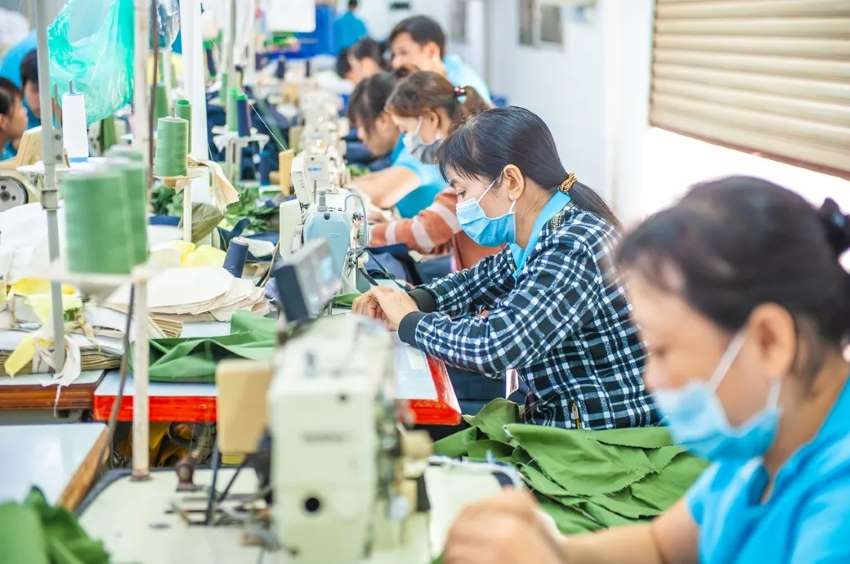
Pakistan and Turkey are working toward a free trade agreement. Currently, Turkey levies heavy duties on Pakistani textile products. The introduction of FTA would help Pakistan earn foreign exchange from the export of textiles as well as other products such as fruits and vegetables. It will also facilitate the provision of comparatively cheaper products to Turkish consumers. Pakistan views the free trade agreement with Turkey as the key to revive the textile economy.
The FTA between the two countries is expected to be signed before the end of 2016. Turkey mainly exports telecommunication equipment, televisions, textiles and machinery while imports from Pakistan include textile yarn, cotton fabrics, plastics and organic chemicals.
The two countries already have very close cooperation in diverse fields including defense and fighting war against terrorism and extremism. It’s hoped the FTA would spur joint ventures, besides increasing trade, as it would help lower the current high customs duties between the two sides.
Negotiations are being held in fields such as trade in goods, trade in services, intellectual property rights, competition policies and dispute settlement mechanisms. The two countries are embarking on new trade liberalisation initiatives.
- 1
- 2
- 3
- 4
- 5
- 6
- 7
- 8
- 9
- 10
The £7 Billion Question: Who pays for fashion’s ‘free rental’ habit?
The global fashion industry is facing an uncomfortable paradox: its most valuable customers may also be its most destructive. A... Read more
India, China Bangladesh face fresh headwinds as global apparel markets rebalance
Global apparel trade is entering a more uneven recovery phase, with demand growth persisting but losing uniform momentum across major... Read more
Global cotton enters a deficit year in 2026 as supply drop meets logistics risk
The global cotton economy has entered a fragile and sensitive phase. Early projections for the 2026-27 season suggest that world... Read more
India’s textile trade gets a Pacific push as New Zealand FTA removes tariff barr…
India and New Zealand have inked a ‘once-in-a-generation’ Free Trade Agreement (FTA), one that will have a profound impact on... Read more
Lululemon’s world-first nylon circularity push signals a new apparel arms race
The global apparel industry’s circularity narrative is entering a more technically demanding phase. Polyester recycling once the flagship of sustainable... Read more
Beyond the DTC Rush: Levi’s hybrid channel strategy sets a new retail benchmark
The global apparel sector is entering a phase where channel strategy is no longer a tactical lever but a core... Read more
The New Rules of Resale: EPR turning secondhand into fashion’s strategic growth …
The global fashion industry is facing a decisive regulatory and commercial reset. What began as a sustainability narrative around reuse... Read more
The 2027 Mandate: Why denim’s future hinges on verifiable data
For decades, the global denim industry has relied on a narrative of durability, heritage, and authenticity. That narrative is now... Read more
Europe’s textile core unravels as costs, imports and policy pressure bite
Europe’s textile and apparel sector, long seen as a benchmark for craftsmanship and industrial depth, is slipping into a prolonged... Read more
Automation, innovation, regulation are the forces shaping textiles in 2026
The global textile sector has entered a new era. Early 2026 saw the industry breach a $1.06 trillion valuation, reflecting... Read more