Kitex Garments aims to achieve 20 per cent growth in financial year 2016-’17 by expanding its customer base and increasing business share with existing customers. To achieve this goal the company is in the process of increasing its manufacturing capacity. Kitex is planning to invest about Rs 10 crores this year to upgrade its manufacturing and information technology wing.
Established in 1992, Kitex Garments is into 100 per cent exports of cotton garments, especially infant wear to the US and European markets. The vertically integrated manufacturing plant makes infant wear as well as fabrics.
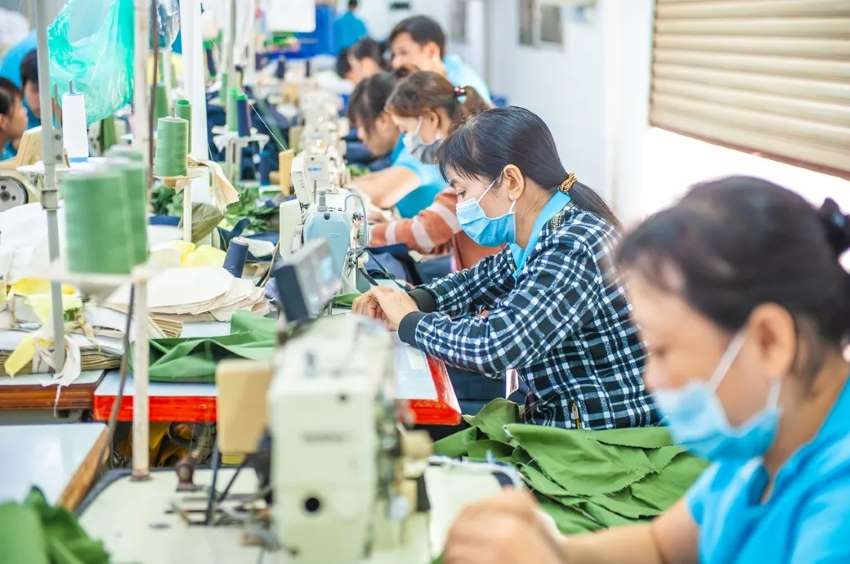
The company intends at driving its next level of organic growth by expanding markets and online and offline marketing channels, backed by capacity expansion and enhanced technological capabilities. Kitex further plans to upgrade its automation of sewing production in 2016-17 in order to increase productivity and output capacity without increasing the manpower.
With regular capex for improvement of technology and infrastructure it aims to upgrade its current facilities so as to expand its capacity from 0.55 million units to 1.1 million units per day. It is a vertical set-up with knitting and processing of fabrics, until finished garments are done in-house.
The facility is 240 meters long and 70 meters wide and covers an area of six lakh sq. ft. The process line is equipped with a digital dispenser system for error-free, automatic and computer-controlled preparation of color guidelines, high quality knitting machines, and modern dyeing, printing and finishing systems that use cutting-edge technology.
- 1
- 2
- 3
- 4
- 5
- 6
- 7
- 8
- 9
- 10
Intertextile Shanghai Spring 2026: A hub for global textile innovation
The textile industry’s pulse is quickening as Intertextile Shanghai Apparel Fabrics – Spring Edition prepares to open its doors from... Read more
Moscow Fashion Week 2026: Blending sustainable innovation with timeless glamour
Scheduled to run from March 14-19, 2026 in Moscow, Russia, the Moscow Fashion Week (MFW) is cementing its status as... Read more
The Store as Stage: How fashion is crafting immersive consumer worlds
The North American fashion retail sector in 2026 is shedding its product-first identity and shifting towards a model that values... Read more
Turning the supply chain upside down, on-demand production reshapes apparel
The global fashion industry, long celebrated for its creativity and scale, is facing a structural reckoning. For decades, retailers and... Read more
Intertex Milano 2026 - A global nexus for textile innovation
Intertex Milano is set to return this summer, confirming its status as a premier international destination for the textile and... Read more
Primark at crossroads as AB Foods weighs spin-off amid digital and Lefties press…
The long-standing supremacy of Europe’s budget fashion champion, Primark, is facing a test. As of February 2026, Associated British Foods... Read more
Vietnam, Bangladesh, Cambodia drive US apparel imports in 2025
The 2025 year-end data for the US apparel sector reveals an industry in structural flux. Despite aggressive tariff measures and... Read more
The New Dress Code: Sportswear’s takeover of modern wardrobes
For much of the last decade, fashion retail has been defined by volatility. Trends have shortened, discount cycles have intensified... Read more
Hemp finds its moment in India’s $500 billion American trade calculus
In the grand arithmetic of India’s expanding trade engagement with the US, the headlines usually gravitate toward oil cargoes, aircraft... Read more
EU PET spunbond imports under scrutiny, misclassification sparks regulatory and …
The European nonwovens and technical textiles sector is facing an unprecedented compliance crisis as a rise of customs misclassification threatens... Read more