Demand for disposable nonwovens is forecast to grow at a healthy rate in the coming years. Growth will be due in part to greater demand among the growing upper and middle classes in Asia for consumer goods which offer higher performance and are of higher added value, such as diapers and feminine hygiene products. At the same time, the market for flushable wipes is growing strongly.
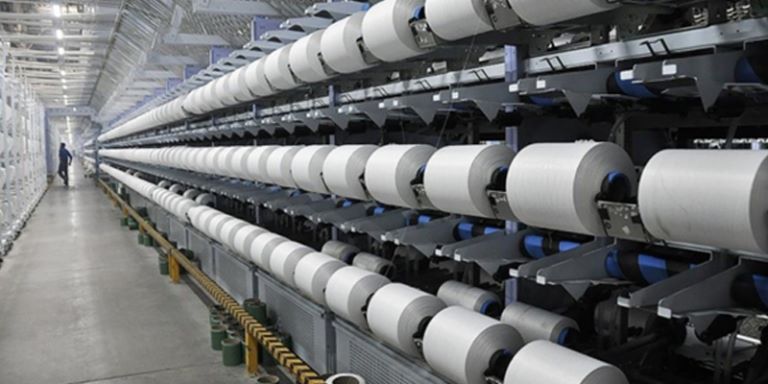
Reflecting the potential for growth in these markets, a number of nonwoven fabric producers are investing in new production lines in a bid to take advantage and increase sales. At the same time, the new lines are providing producers with the latest technologies which are enabling them to produce thinner, lighter weight fabrics that are cheaper to produce and satisfy the demand for hygiene products which are less bulky.
The world’s largest nonwovens company, Berry Plastics, has announced plans to install a new line in the US to offer customers softer materials. Also, following the installation of a new carding line, the company has launched several new products for the hygiene market.
Kimberly-Clark is adding new lines for making baby wipes and diaper pants in Singapore as it continues to look to emerging markets for growth in its consumer products businesses.
- 1
- 2
- 3
- 4
- 5
- 6
- 7
- 8
- 9
- 10
The 2027 Mandate: Why denim’s future hinges on verifiable data
For decades, the global denim industry has relied on a narrative of durability, heritage, and authenticity. That narrative is now... Read more
Europe’s textile core unravels as costs, imports and policy pressure bite
Europe’s textile and apparel sector, long seen as a benchmark for craftsmanship and industrial depth, is slipping into a prolonged... Read more
Automation, innovation, regulation are the forces shaping textiles in 2026
The global textile sector has entered a new era. Early 2026 saw the industry breach a $1.06 trillion valuation, reflecting... Read more
The new Brussels rulebook, every EU apparel order is now a balance-sheet risk
The humble export order sheet is undergoing a transformation. What was once a straightforward commercial instrument: SKU, volume, FOB price,... Read more
Why 2026-27 could be a defining cotton year for India’s farm-to-fashion economy
The global cotton economy is entering a more constrained phase, and for India, the implications run far beyond the farm... Read more
Luxury resale’s next big battle is no longer digital, it is about who controls s…
For nearly a decade, the luxury resale story was written in the language of platforms. Market leadership was measured by... Read more
Digital Arms Race: Indian apparel giants deploy AI to neutralize tariff crisis
The Indian textile and apparel sector is in a digital survival phase in 2026, shifting from traditional labor-intensive models to... Read more
Europe’s Textile Endgame: Why Project FAE is becoming fashion’s most critical in…
Europe’s apparel majors are no longer treating circularity as a branding layer. With Project FAE or Feedstock Activation Europe, the... Read more
Engineering color at source, dye-free production is cutting cost, water, and tim…
For over a century, coloring has been anchored in wet processing, an energy-intensive, chemically saturated stage that happen post spinning.... Read more
The €11 bn deadlock, can Europe’s textile recycling catch up?
Europe is at a tipping point. Fast fashion consumption, led by rising incomes and a growing global middle class, has... Read more